






Lab-GrownMay 12, 2025
Lightbox to Go Dark by Summer, De Beers Says SourcingJun 10, 2025
De Beers Turns to Brown, Yellow Diamonds for New ‘Beacon’
“Ombré Desert Diamonds” will emphasize cream-, champagne-, and brown-colored diamonds, shades that set natural stones apart from lab grown.


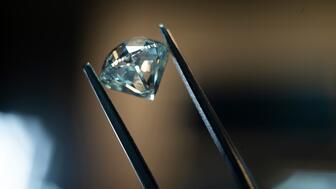
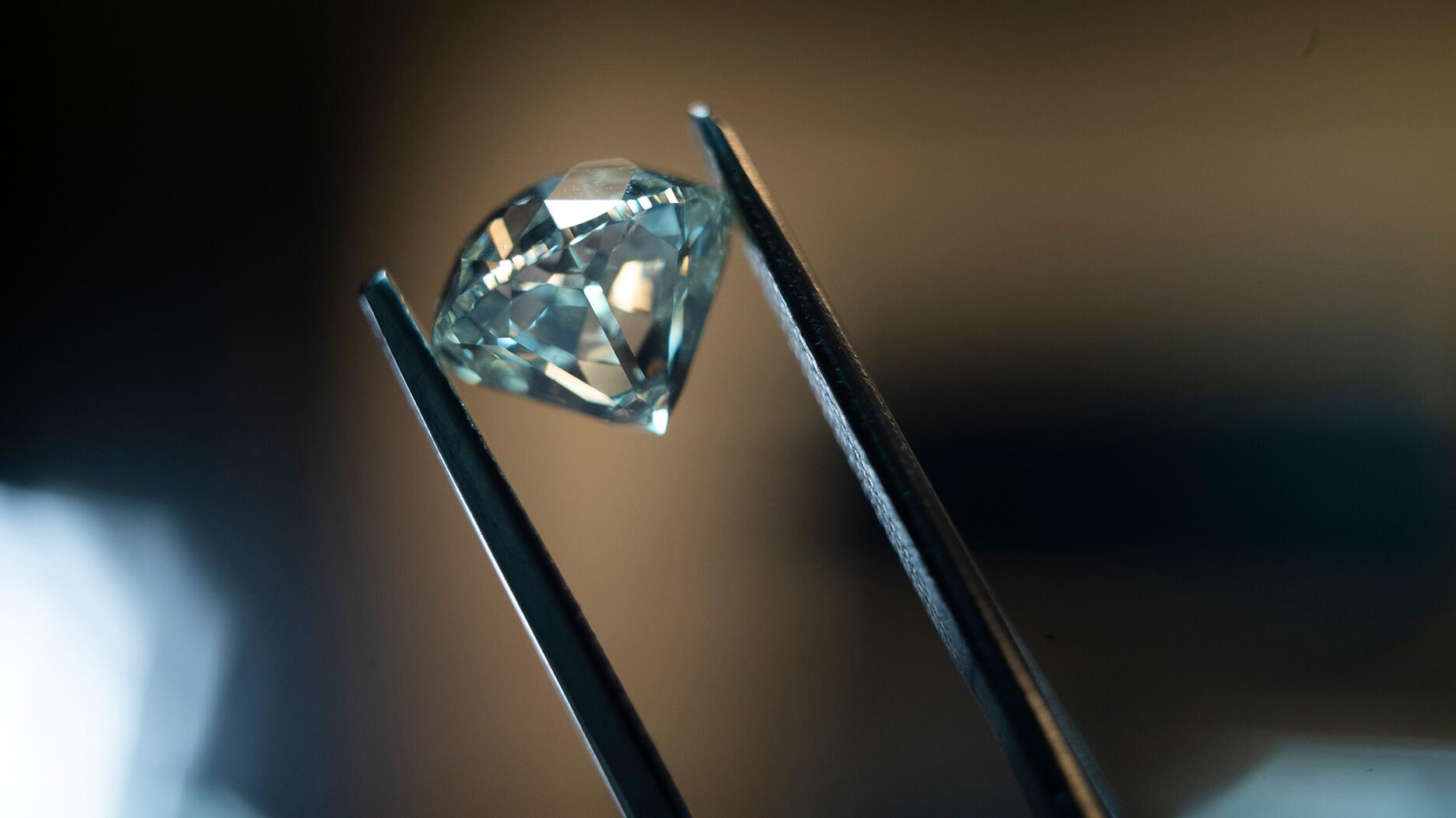
At JCK Las Vegas, De Beers Group announced a new “beacon” program for the industry centered on “desert diamonds”—off-white, light yellow-, and brown-colored diamonds that both reflect their desert origins and are easily differentiated from lab-grown diamonds. (Photo courtesy of De Beers Group)
Editor’s Note: This story was updated post-publication to include information about De Beers Group’s last “beacon” program.
Las Vegas—For the first time in 16 years, De Beers Group has created a “beacon” program, a diamond jewelry design meant to be shared industry-wide with the goal of increasing demand.
Announced by CEO Al Cook at the company’s breakfast in Las Vegas on Friday, the “Ombré Desert Diamonds” initiative will emphasize designs using warm white, champagne-, brown- and amber-colored diamonds, which De Beers will support with marketing.
Though using light yellow and brown-colored diamonds is nothing new—see Le Vian’s “Chocolate” diamonds and De Beers’ own “Talisman” collection—their widespread marketing as the centerpiece of a new beacon campaign comes at a challenging time for natural diamonds.
As the Gemological Institute of America noted last week when it announced it would begin using more general color and clarity terminology for lab-grown diamonds, man-made diamonds are increasingly colorless and of high clarity.
Emphasizing the wide range of colors possible in natural diamonds helps to set them apart from all the near-perfect lab-grown diamonds.
In an interview with National Jeweler on Friday, Cook said the process of creating this new program started with the idea of origin, wanting the customers of the future to ask, “Where is my diamond from? Is it ethical? Is it sustainable? It is responsible?”
It then evolved into wanting to reflect the “beautiful African deserts” where De Beers mines many of its diamonds while also distinguishing its natural diamonds from lab-grown stones.
“In a world where people want something unique, in a world where people are rejecting commodities, in a world where people want something that’s real, and reflects them, a Desert Diamond does exactly that,” Cook said. “Its color will be unique, and its origin will be unique, and it contrasts completely with the endless array of commoditized lab grown.
He said the industry is already seeing the bifurcation between natural and lab-grown diamonds emerging, noting that, “You can go down the corridor and get lab grown for $45 a carat now.”
“This is really a way of saying, look, we’re not really about worrying about that,” Cook said. “We’re about creating a new level of desire for diamonds.”
Las Vegas—For the first time in 16 years, De Beers Group has created a “beacon” program, a diamond jewelry design meant to be shared industry-wide with the goal of increasing demand.
Announced by CEO Al Cook at the company’s breakfast in Las Vegas on Friday, the “Ombré Desert Diamonds” initiative will emphasize designs using warm white, champagne-, brown- and amber-colored diamonds, which De Beers will support with marketing.
Though using light yellow and brown-colored diamonds is nothing new—see Le Vian’s “Chocolate” diamonds and De Beers’ own “Talisman” collection—their widespread marketing as the centerpiece of a new beacon campaign comes at a challenging time for natural diamonds.
As the Gemological Institute of America noted last week when it announced it would begin using more general color and clarity terminology for lab-grown diamonds, man-made diamonds are increasingly colorless and of high clarity.
Emphasizing the wide range of colors possible in natural diamonds helps to set them apart from all the near-perfect lab-grown diamonds.
In an interview with National Jeweler on Friday, Cook said the process of creating this new program started with the idea of origin, wanting the customers of the future to ask, “Where is my diamond from? Is it ethical? Is it sustainable? It is responsible?”
It then evolved into wanting to reflect the “beautiful African deserts” where De Beers mines many of its diamonds while also distinguishing its natural diamonds from lab-grown stones.
“In a world where people want something unique, in a world where people are rejecting commodities, in a world where people want something that’s real, and reflects them, a Desert Diamond does exactly that,” Cook said. “Its color will be unique, and its origin will be unique, and it contrasts completely with the endless array of commoditized lab grown.
He said the industry is already seeing the bifurcation between natural and lab-grown diamonds emerging, noting that, “You can go down the corridor and get lab grown for $45 a carat now.”
“This is really a way of saying, look, we’re not really about worrying about that,” Cook said. “We’re about creating a new level of desire for diamonds.”
“That combination of a design that reflects the source we think is magical.”— Al Cook, De Beers Group
De Beers last launched a beacon in 2009 with “Everlon,” a knot-shaped design based on an ancient symbol of strength, the Hercules knot.
As with past beacons, such as the right-hand ring, De Beers will invest in media and digital campaigns to drive consumer demand for “Ombré Desert Diamonds.”
It also will make marketing collateral available to beacon participants.
In the interview, Cook noted that while past beacons, like the three-stone ring and “Center of My Universe,” have been design-centric, “Ombré Desert Diamonds” will be about more than that.
“This is going to be about design—we’re working to make the most beautiful designs out there—but it is also about the source. And that combination of a design that reflects the source we think is magical.”
In addition to the new beacon program, De Beers announced the formal launch of “Origin, De Beers Group,” a loose polished diamond program supported by the Tracr blockchain platform that allows consumers to trace a diamond back to the mine from which it originated.
For the program, the company will provide retailers with digital tools that will provide consumers access to provenance information and brand storytelling.
Also in Las Vegas, De Beers provided updates on where it is with its “Origins” strategy.
They include the following.
— De Beers has completed all airborne geophysical surveying in Angola, a “key milestone” in its exploration activities. The company first announced its intention to look for diamonds in Angola in 2022.
— It completed the first production run of industrial-grade diamonds at the former Lightbox factory in Gresham, Oregon, now called the Element Six Oregon Centre.
De Beers announced last year at JCK Las Vegas that it would quit growing diamonds for jewelry. A few weeks before this year’s shows, it announced that Lightbox, its lab-grown diamond jewelry brand, would be discontinued by summer.
— The diamond miner and marketer also noted that earlier this year, it announced that single country of origin data is now available on Tracr while DiamondProof, a countertop diamond testing device, was launched in U.S. retail stores in February.
De Beers first announced “Origins” at JCK Las Vegas 2024.
The restructuring plan is designed to cut costs and streamline the business as De Beers’ parent company, Anglo American, looks to offload the business, either through a demerger or a divestment.
During Friday’s interview, Cook said he expects the separation process to culminate in the first half of 2026, noting that there will be a process that Anglo American will start “very shortly.”
“We’re quite fortunate that we’ve got two very responsible owners who both care a lot about De Beers. As a result of that, I feel like things are going in the right direction,” Cook said.
“Having said that, the volatility of the last six months has just meant that we need to proceed in the right way and make sure that we get the right buyer, rather than right now.”


More on Sourcing



The Latest

SurveysOct 16, 2026
How Inflation, Gas Prices Will Affect Holiday Sales The NRF is expecting holiday sales to increase this year, but consumers and retailers alike are facing Grinch-like headwinds.

CollectionsOct 16, 2026
Christina Puchi’s Earrings Hold the UniverseOur Piece of the Week gathers the planets, represented by a variety of colored gemstones, in a pair of 14-karat yellow gold earrings.

IndependentsOct 16, 2026
Reeds Jewelers Expands, Relocates FlagshipThe New York-based jeweler is moving its Amherst flagship store to a larger location in nearby Snyder.


Brought to you by
Meet Gemology’s Next Generation Microscope: GIA® Gemolite® NXT Professional EditionExperience gemstones with greater precision and comfort than ever before.


MajorsOct 16, 2026
Katy Chen Appointed Executive Vice President of Graff USA Chen, who worked at Cartier and Tiffany & Co., will lead retail sales and operations for the luxury jeweler’s 11 U.S. stores.
Weekly QuizOct 15, 2026
This Week’s QuizTest your jewelry news knowledge by answering these questions.


IndependentsOct 15, 2026
Retailer Hall of Fame 2026: Amy and Elise Greenberg For 40 years, sisters Amy and Elise Greenberg have helmed their 126-year-old family business, leading with appreciation and integrity.

ColumnistsOct 15, 2026
Peter Smith: What Is the Culture REP?It’s a term Smith coined and felt compelled to share following a bad experience with an aborted flight and an unfeeling flight attendant.

Brought to you by
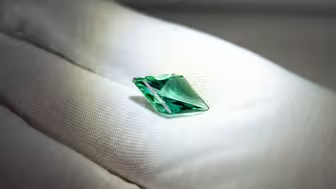
Your Piece Could Be the One Editors Talk AboutSubmit your pieces for a chance to win in this year's competition.

WatchesOct 15, 2026
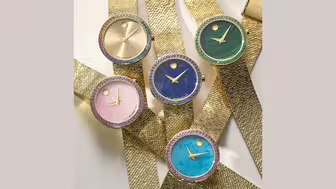
Stephanie Gottlieb’s New Movado Watches Are Made for Your Wrist StackMovado teamed up with the New York-based fine jewelry designer on a new collection of Movado Museum Velura watches.
CollectionsOct 15, 2026
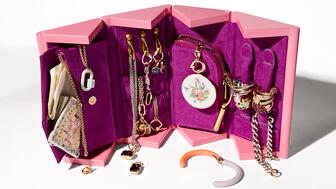
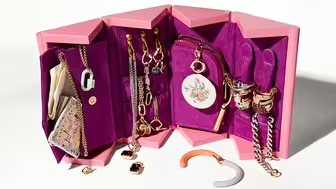
Wolf x Marla Aaron's New Jewelry Box Is for Some (Not All) of Your ThingsThe “Some of the Things” box follows the two larger “Everything” box designs with the look and function of antique sewing and toolboxes.

IndependentsOct 14, 2026
Retailer Hall of Fame 2026: Coleman and Mitchell ClarkFourth-generation jewelers Coleman and Mitchell Clark exemplify the best qualities of their predecessors: humility, modesty, and confidence.

FinancialsOct 14, 2026
LVMH’s Jewelry Brands Turn in ‘Very Good’ Performance in Q3 Tiffany & Co. continued its full-scale store renovation project while Bulgari’s high jewelry collection generated “record-breaking revenue.”

Events & AwardsOct 14, 2026
Chicago Responsible Jewelry Conference Releases 2026 ProgramThis year’s sessions feature leading voices from human rights, legal, and conservation organizations.

MajorsOct 13, 2026
David Webb Owner Purchases Lugano JewelryThe high-end jewelry retailer was sold to private investment firm Middle West Partners and a group of longtime clients.

Lab-GrownOct 13, 2026
Stephanie Gottlieb Takes Lab-Grown Diamond Collection WholesaleThe jewelry designer has partnered with Sofer Jewelry to distribute her 85-piece lab-grown diamond collection.

IndependentsOct 13, 2026
Retailer Hall of Fame 2026: Sean DunnDunn, this year’s Single-Store Independent inductee, is passionate about innovation and telling the story of natural diamonds.

AuctionsOct 13, 2026
Christie's Geneva To Auction 'Bulgari Pink' DiamondThe 24-carat fancy intense pink diamond ring could fetch up to $18 million at the November sale.

IndependentsOct 13, 2026
Greenwich St. Jewelers’ New Candle Smells Like HomeThe “Island Jewel” candle honors New York City and Puerto Rico and raises money for the island’s water relief efforts.
TechnologyOct 13, 2026
GemFind Is a New JA Member Benefit Partner The partnership will give JA members access to preferred pricing, exclusive benefits, technology solutions, education, and resources.

SurveysOct 09, 2026
These Will Be the 10 Busiest Days for In-Store Shopping This Holiday SeasonStores should expect to see the most customers on Nov. 27, and Christmas week is expected to be hectic too, as Dec. 25 falls on a Friday.

CollectionsOct 09, 2026
Elisa Solomon Collabs With Serendipity 3 on ‘Frozen Hot Chocolate’ CharmThe charm, our Piece of the Week, features brown diamond frozen hot chocolate topped with white diamond whipped cream and a ruby straw.

AuctionsOct 09, 2026
8-Carat Blue Diamond Goes Unsold at UK Jewelry Auction The top lot of Elmwood’s recent fine jewelry sale in London was a 1.84-carat, D color Tiffany & Co. solitaire diamond ring.

WatchesOct 09, 2026
Movado to Sell Majority Stake in Ebel for $66.5MThe watch company agreed to sell a 95 percent interest to a group comprised of F.P. Journe, Chanel, and Swiss watch exec Pierre Jacques.

Policies & IssuesOct 08, 2026
Third Wave of IEEPA Tariff Refunds Begins This round of tariff refunds is for importers that have sued over IEEPA tariffs in the Court of International Trade and won.

CollectionsOct 08, 2026
Brent Neale’s New Collection Goes ‘Back to Basics’It revisits the brand’s most requested silhouettes, from "Pillow"-set necklaces and bracelets to "Signature"-set rings and earrings.

SourcingOct 08, 2026
Ethical Gem Fair Heads Back to BrooklynThe trade-only event includes buying opportunities as well as educational sessions on artisanal mining, the new Paraíba source, and more.

Events & AwardsOct 08, 2026
Pattons Fine Jewelry Sweeps Local Design ContestAra Chanakian, a jeweler at Pattons, took home top honors in every category at Jewelers of Louisiana’s annual jewelry design competition.