On Wednesday at Sotheby’s, a “distinguished international collector” paid $4.4 million for this diamond brooch that once belonged to Napoleon Bonaparte, 30 times more than its lowest pre-sale estimate. The brooch has a 13.04-carat oval-shaped diamond at its center surrounded by nearly 100 old mine-cut diamonds. (Photo courtesy of Sotheby’s)
Geneva—Never underestimate the power of a jewel with provenance.
On Wednesday in Geneva, Sotheby’s sold a diamond brooch that once belonged to Napoleon Bonaparte for $4.4 million at its “Royal & Noble Jewels” auction.
The pre-sale estimate on the piece was $150,000 to $250,000, meaning it went for 30 times its low estimate following a nearly 10-minute bidding battle among six bidders.
The winning bidder was a “distinguished international collector.”
According to information provided last month by Sotheby’s ahead of the auction, the brooch, which has a 13.04-carat oval-shaped diamond at its center surrounded by nearly 100 old mine-cut diamonds, was made for the French emperor around 1810, mostly likely to affix to his hat for special occasions.
It was among a number of jewels and other treasurers Napoleon brought along with him to the Battle of Waterloo in 1815, a consequential battle that led to the end of his rule.
While fleeing the battlefield, the carriage carrying the brooch and other treasures got stuck in the mud, and the defeated emperor was forced to leave it all behind.
Three days after the battle ended, one of the victors, Prussian King Friedrich Wilhelm III, was offered the brooch and other items from the carriage as battle trophies.
According to Sotheby’s, the pin remained with the House of Hohenzollern for centuries, passed down from King Friedrich Wilhelm III to the emperors of Germany.
For the past few years, it has been part of a private collection.
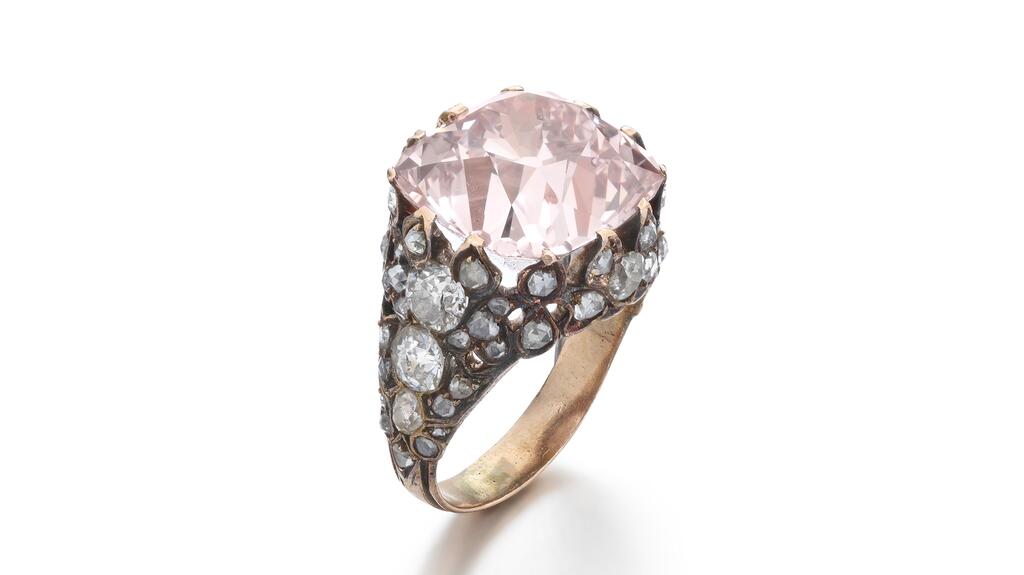
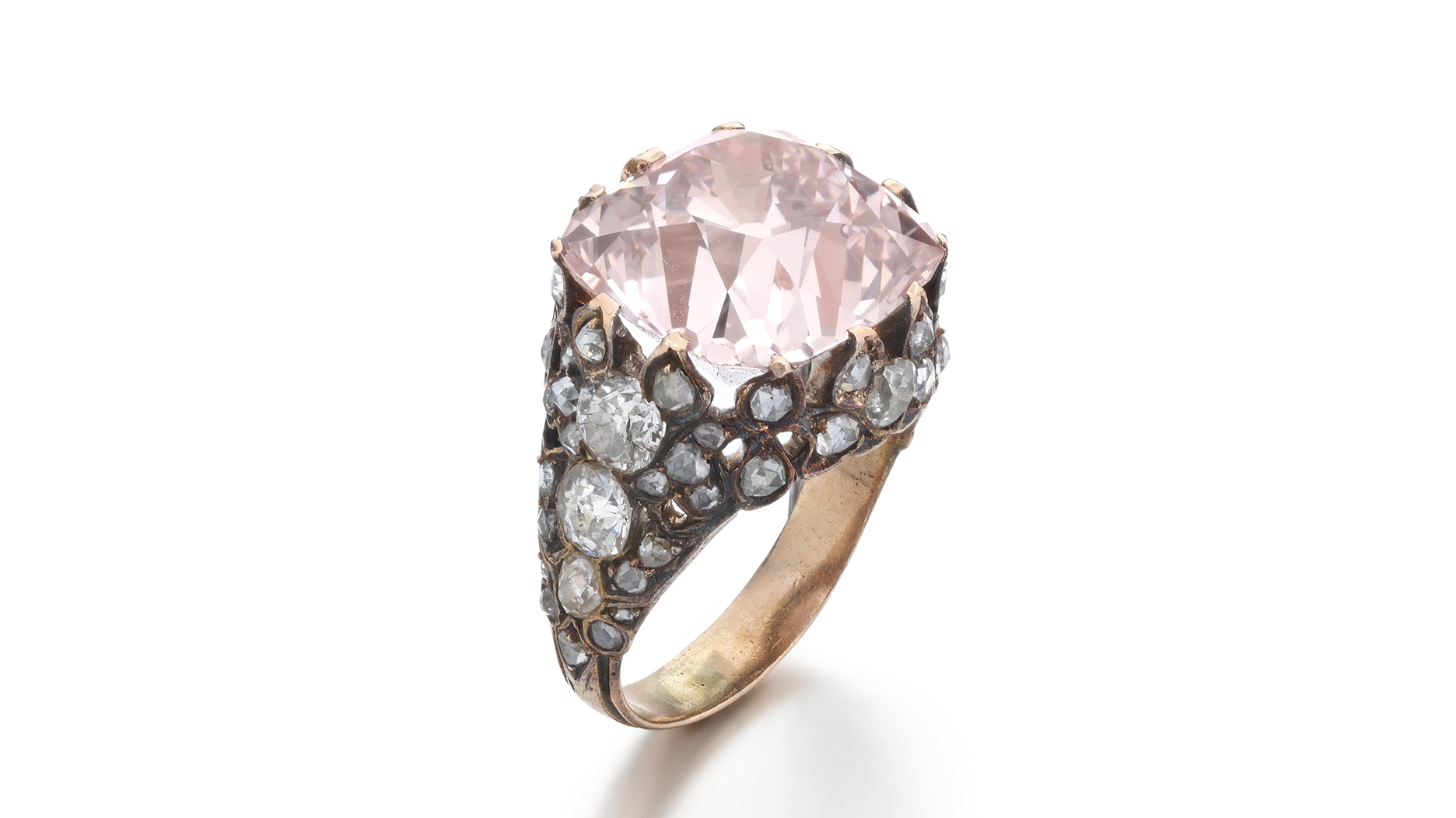
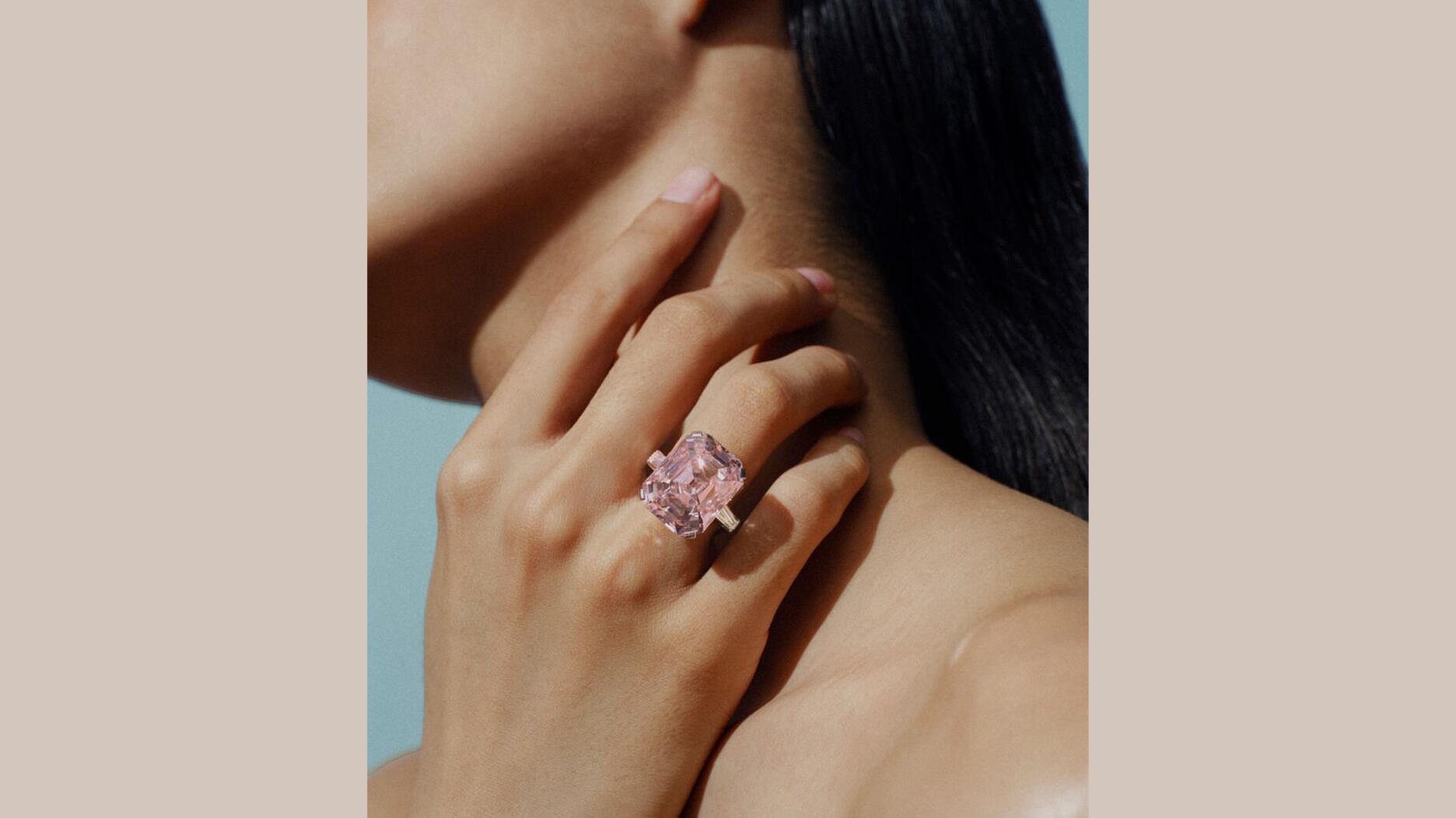
Princess Neslişah Sultan received this light pink diamond ring right before her wedding in 1940 and kept it until her death in Turkey in 2012. A buyer paid $3.6 million for it at Sotheby’s. (Photo courtesy of Sotheby’s)
Wednesday marked Sotheby’s third consecutive Royal & Noble Jewels sale in which all lots were sold, a feat auction houses refer to as a “white-glove sale.”
The auction total was $14.3 million, the highest since Sotheby’s started holding these standalone sales of royal jewelry in 2023.
The second highest-grossing lot of the sale was a 13.86-carat old mine-cut light pink diamond set into a mounting with old-mine and rose-cut diamonds (pictured above).
The ring belonged to Princess Neslişah Sultan, who received it as a gift one week before her wedding in 1940.
Expected to garner between $302,000 and $503,000, the ring also surpassed pre-sale estimates, selling for $3.6 million.
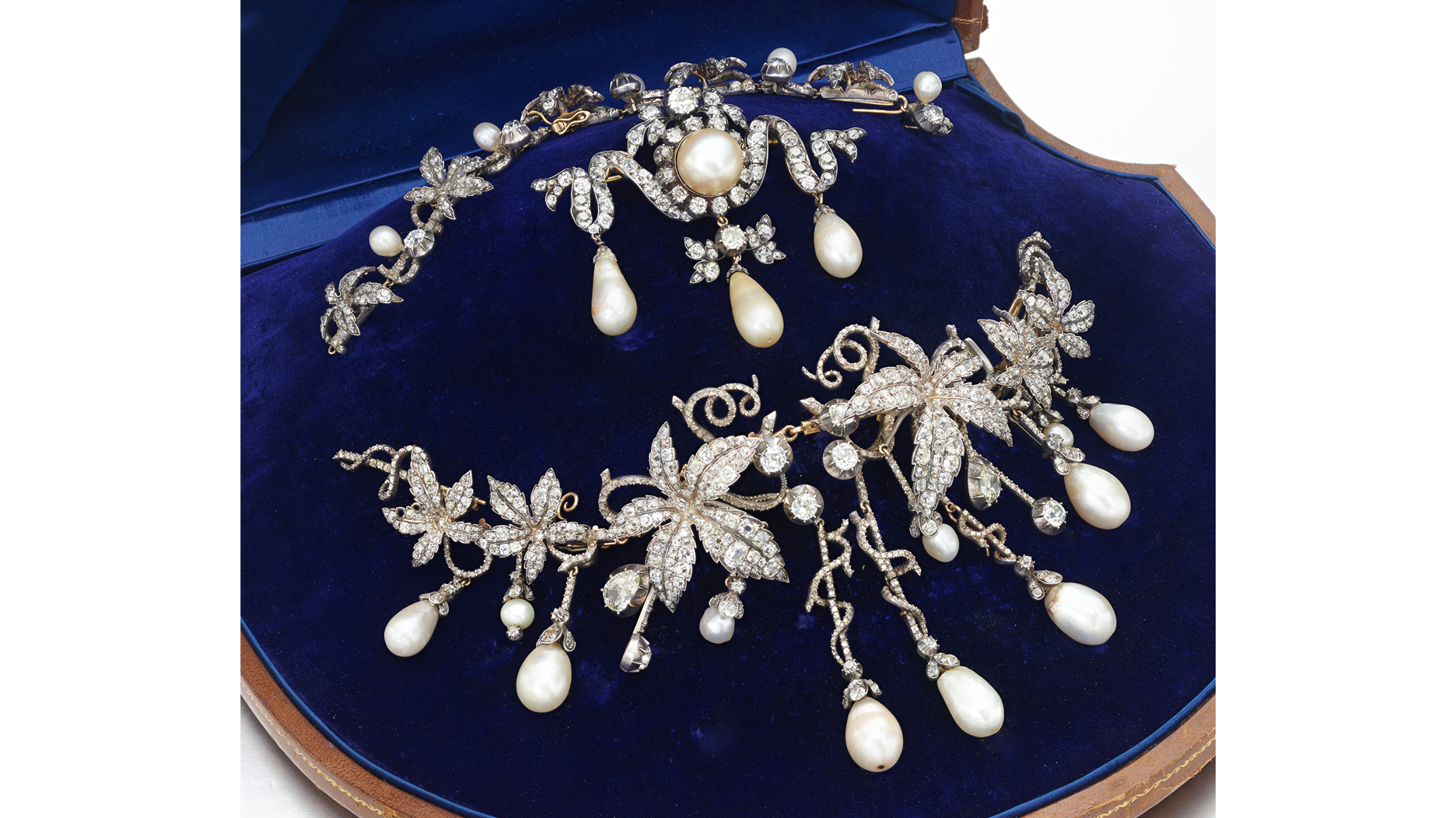
Another highlight of Wednesday’s Royal & Noble Jewels sale was a natural pearl and diamond hair ornament with a history stretching back to 1796.
According to Sotheby’s, the natural pearls in the piece once were part of a collection that belonged to Prince Franz Xaver of Saxony and Poland. They were mounted in a tiara in 1796 for the wedding of one of Xaver’s five daughters, Kunigunde of Saxony, Marchesa di Montoro.
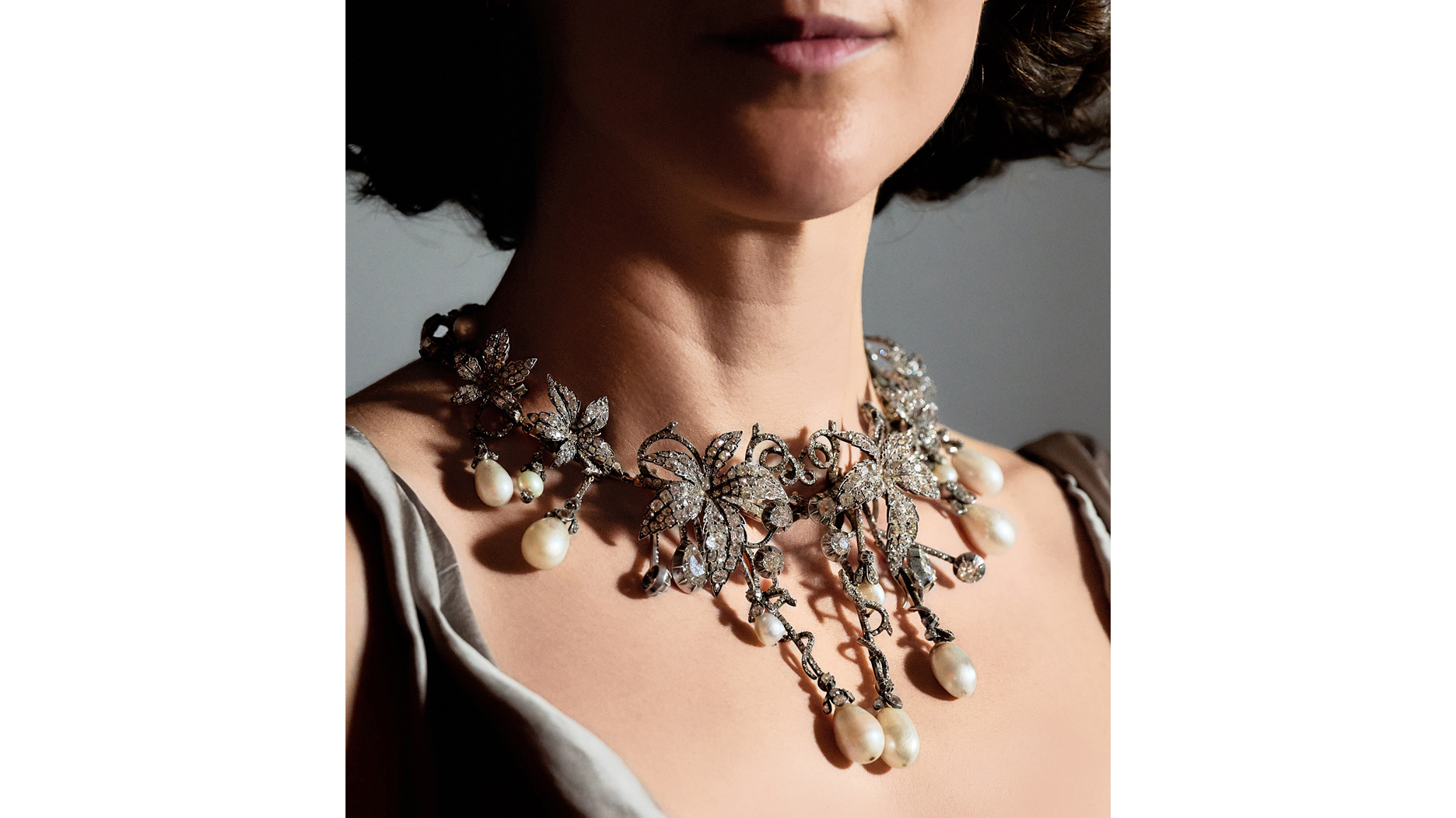
Kunigunde of Saxony, Marchesa di Montoro’s natural pearl and diamond wedding tiara from 1796 was turned into a Sévigné-style hair ornament. Later, the piece was altered so it could transform into a necklace, a devant-de-corsage, and a set of hair pins. The brooch pictured at center was made later. (Photo courtesy of Sotheby’s)
A model wearing the jewel as a necklace. Sotheby’s estimated the set would sell for as much as $628,000; it went for a little less than $450,000. (Photo courtesy of Sotheby’s)
After Kunigunde’s death in 1828, the tiara was passed down to her youngest son, Filippo.
Around 1840, the tiara was dismantled and French jewelry house Fossin (now known as Chaumet) remade it into a Sévigné-style hair ornament, which is worn across the top of the head, extending from one ear to the other.
A matching brooch was later made using natural pearls of the same provenance.
Sotheby’s estimated the hair ornament and brooch, offered as one lot, would sell for $427,000 to $628,000.
On Wednesday, a buyer paid $441,655 for the pieces.
Related stories will be right here …
Sotheby’s held its Royal and Noble Jewels sale in conjunction with its High Jewelry sale, which generated $37 million.
The auction house said 94 percent of the lots on offer sold, and 75 percent topped their highest pre-sale estimate.
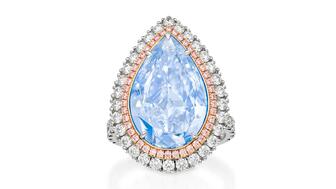
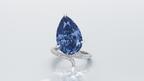
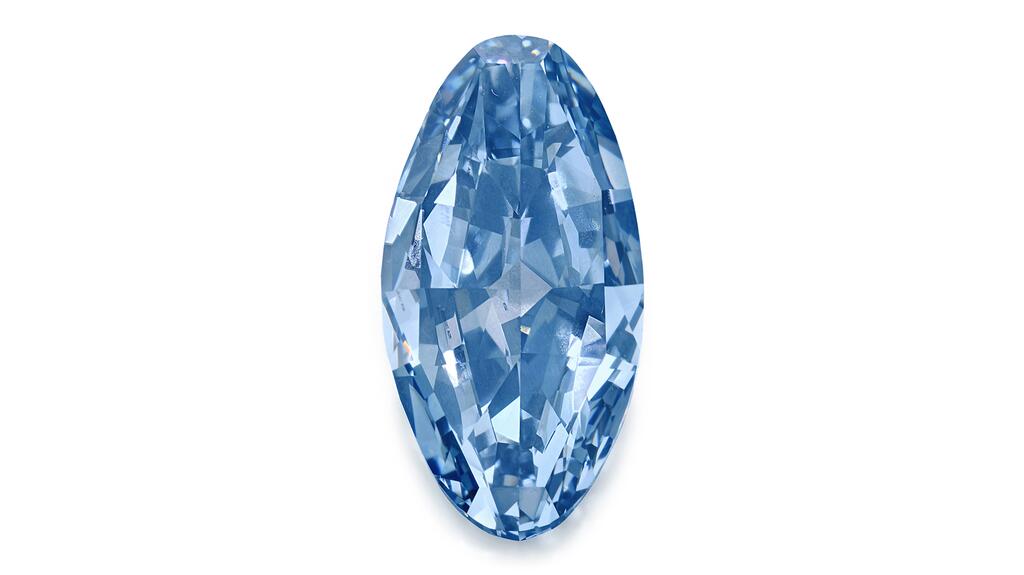
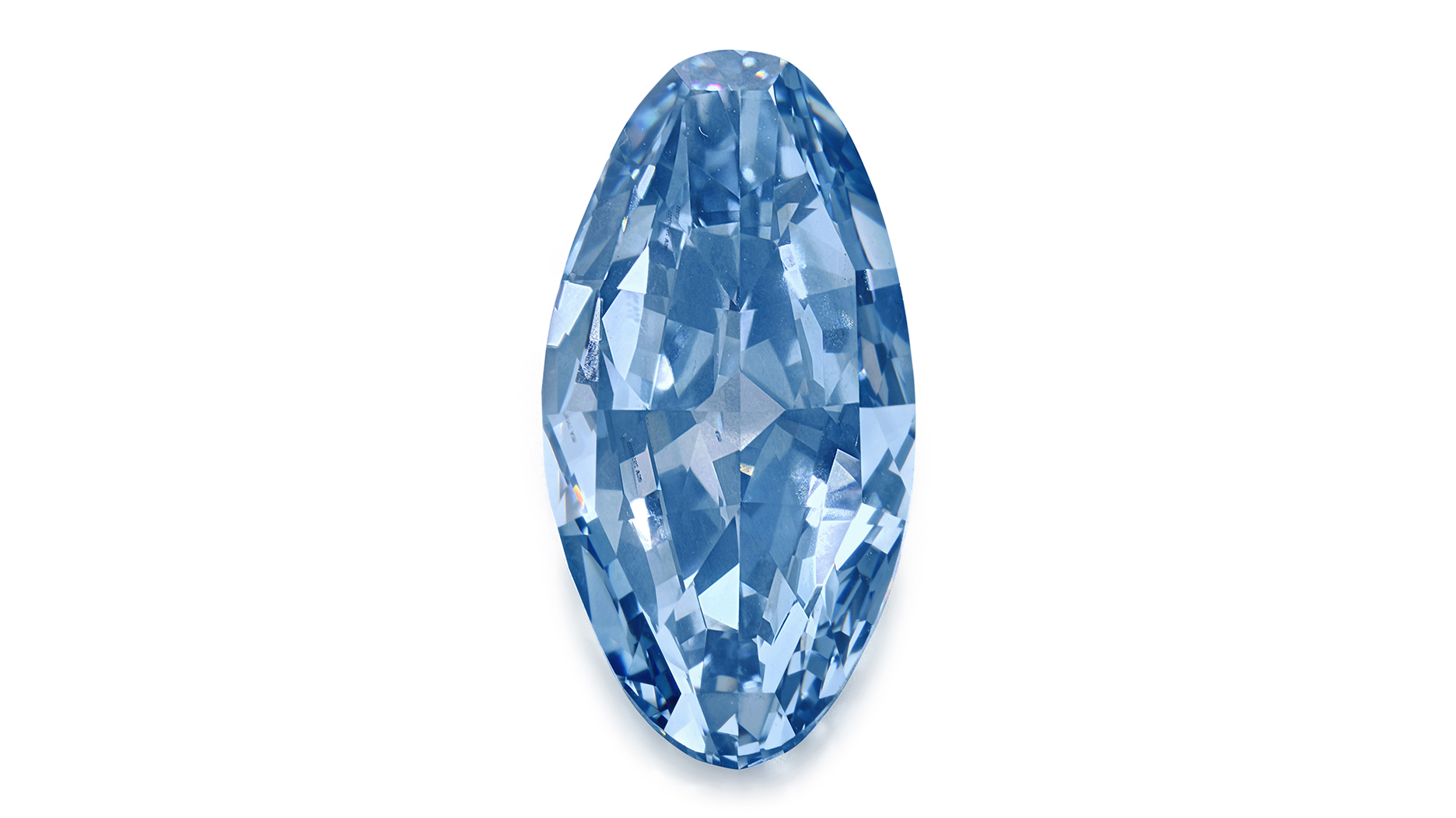
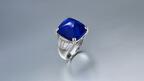
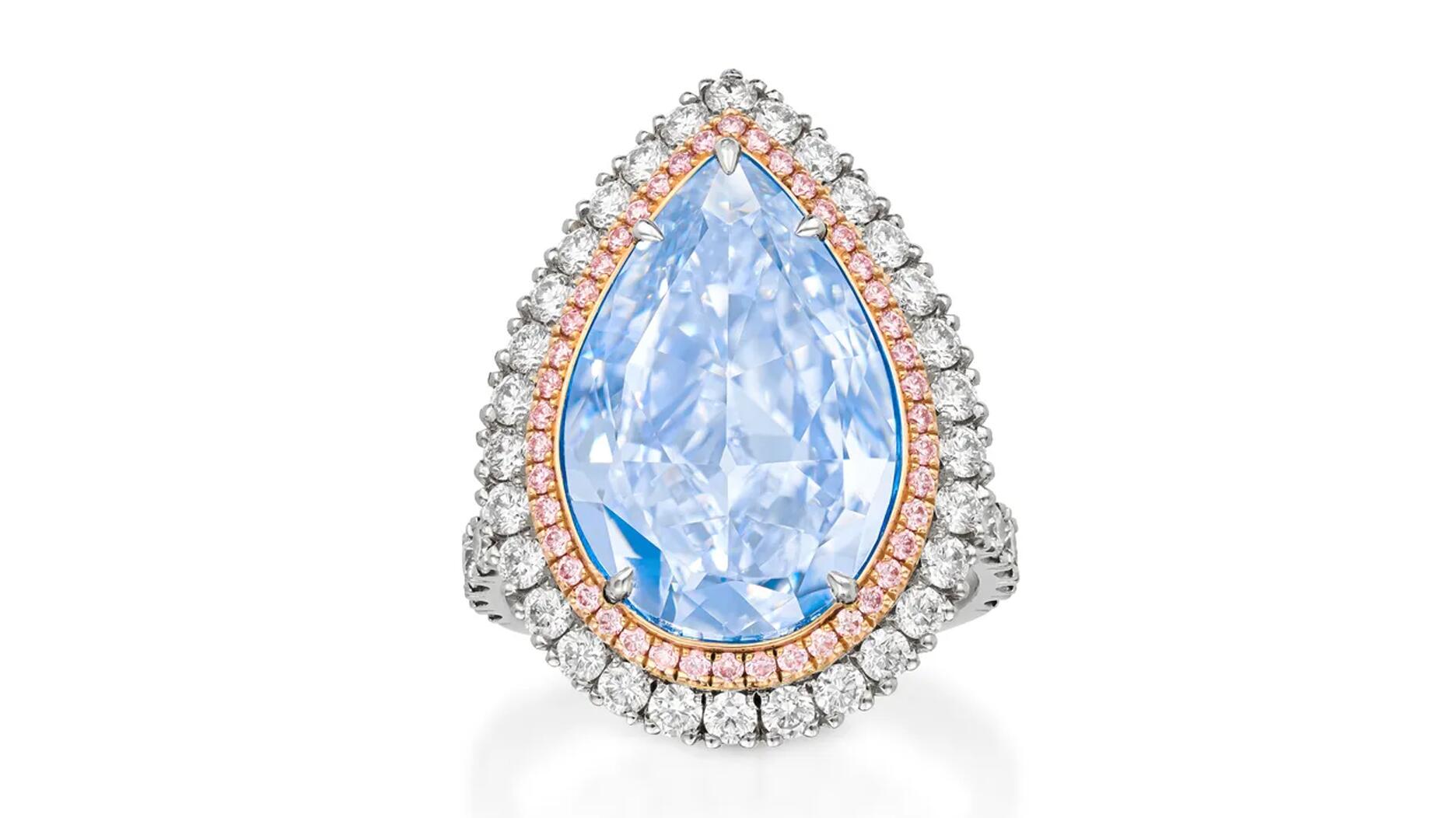
The top lot in the High Jewelry sale was a 4.5-carat oval mixed-cut fancy vivid blue diamond. A buyer paid $6 million for the stone.
This 4.5-carat oval mixed-cut fancy vivid blue diamond was the top lot in Sotheby’s High Jewelry sale. It sold for $6 million, within its estimated range. (Photo courtesy of Sotheby’s)
Combined, the two sales grossed $51.3 million, and followed Sotheby’s Important Watches sale, which took place Sunday in Geneva, all part of Luxury Week.
The watch auction generated $11.9 million and included the sale of an early Rolex Oyster watch that professional endurance swimmer Mercedes Gleitze wore when she attempted to swim across the English Channel in 1927.