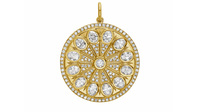
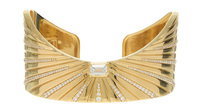
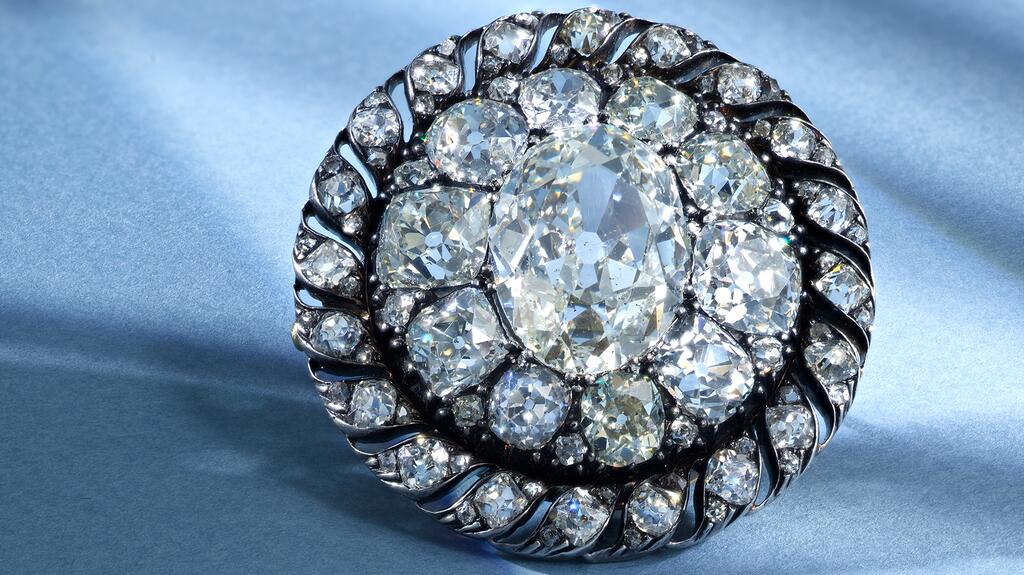
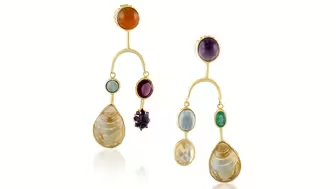
At left, the diamond brooch Napoleon left behind while fleeing Waterloo and at right, the natural pearl and diamond hair ornament. They are part of Sotheby’s “Royal & Noble Jewels” auction, scheduled for Nov. 12 in Geneva. (Photos courtesy of Sotheby’s)
Geneva—A diamond brooch Napoleon Bonaparte (1769-1821) left behind while fleeing the Battle of Waterloo in 1815 is coming to auction for the first time next month.
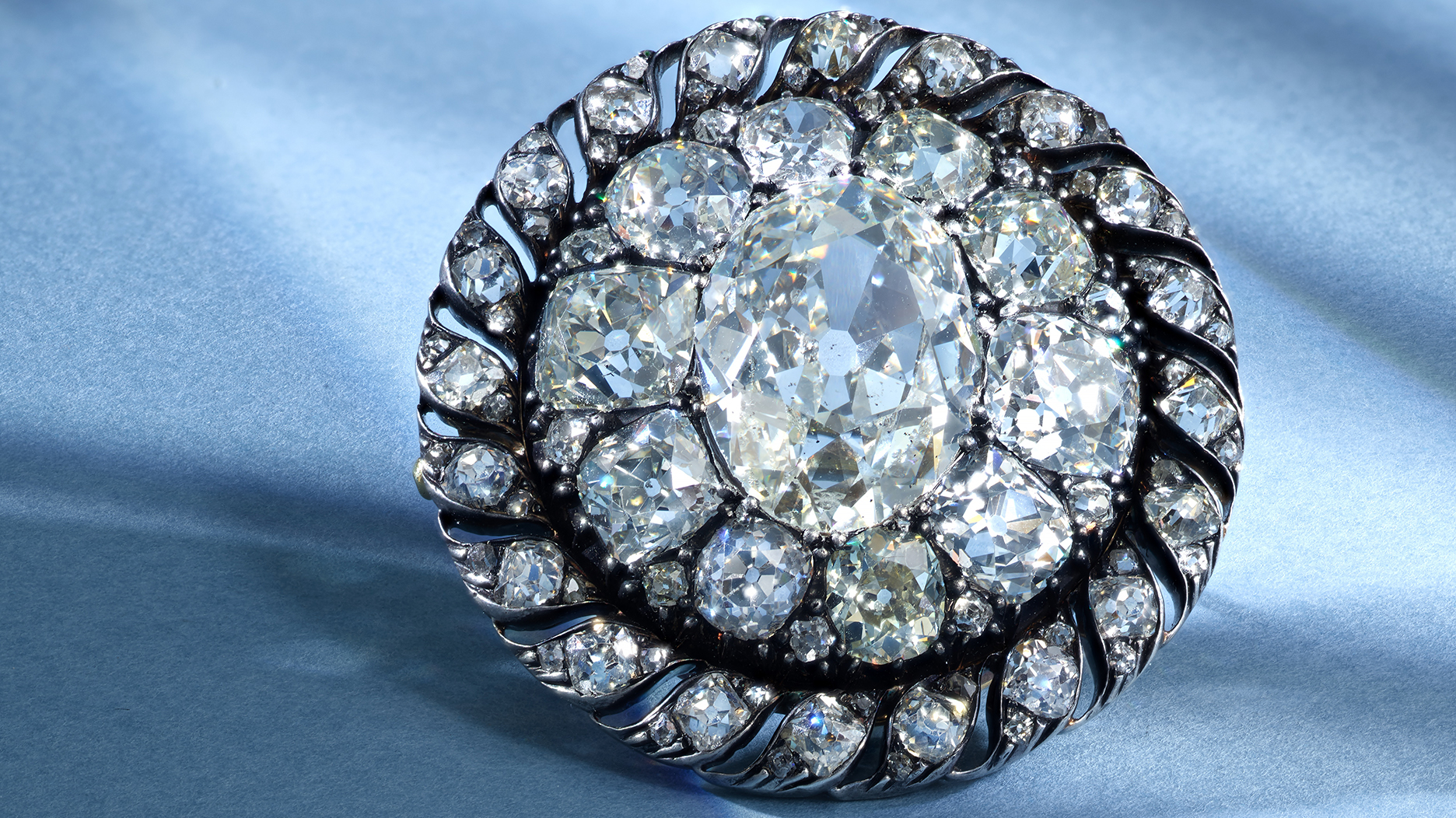
Sotheby’s announced last week that the brooch, which has a 13.04-carat oval-shaped diamond at its center surrounded by nearly 100 old mine-cut diamonds, will be part of its “Royal & Noble Jewels” auction, slated to take place Nov. 12 in Geneva.
The brooch was made for Napoleon around 1810, most likely to wear on his bicorne (hat) on special occasions.
According to the auction house, the brooch was among a number of treasures Napoleon took with him to Waterloo, where Prussian and British-led forces defeated his armies, marking the end of the Napoleonic Wars and shaping Europe as we know it today.
The brooch, along with medals, weapons, silverware, a hat, and a jewelry box containing dozens of loose diamonds and jewelry, were in a carriage that got stuck on a muddy road a few miles from the battlefield, and the defeated and fleeing French emperor ultimately left it behind.
A close-up of Napoleon’s brooch (Photo courtesy of Sotheby’s)
According to Sotheby’s, three days after the battle ended, Prussian King Friedrich Wilhelm III was offered the brooch, along with a few other items from the carriage of treasures, as battle trophies.
It remained with the House of Hohenzollern for centuries, passed down from King Friedrich Wilhelm III to the emperors of Germany. At some point, the brooch was fitted with a suspension hook so it could be worn as a pendant.
For the past few years, the brooch has been part of a private collection, Sotheby’s said.
It is expected to sell for 120,000 to 200,000 Swiss francs ($150,000 to $250,000).
Related stories will be right here …
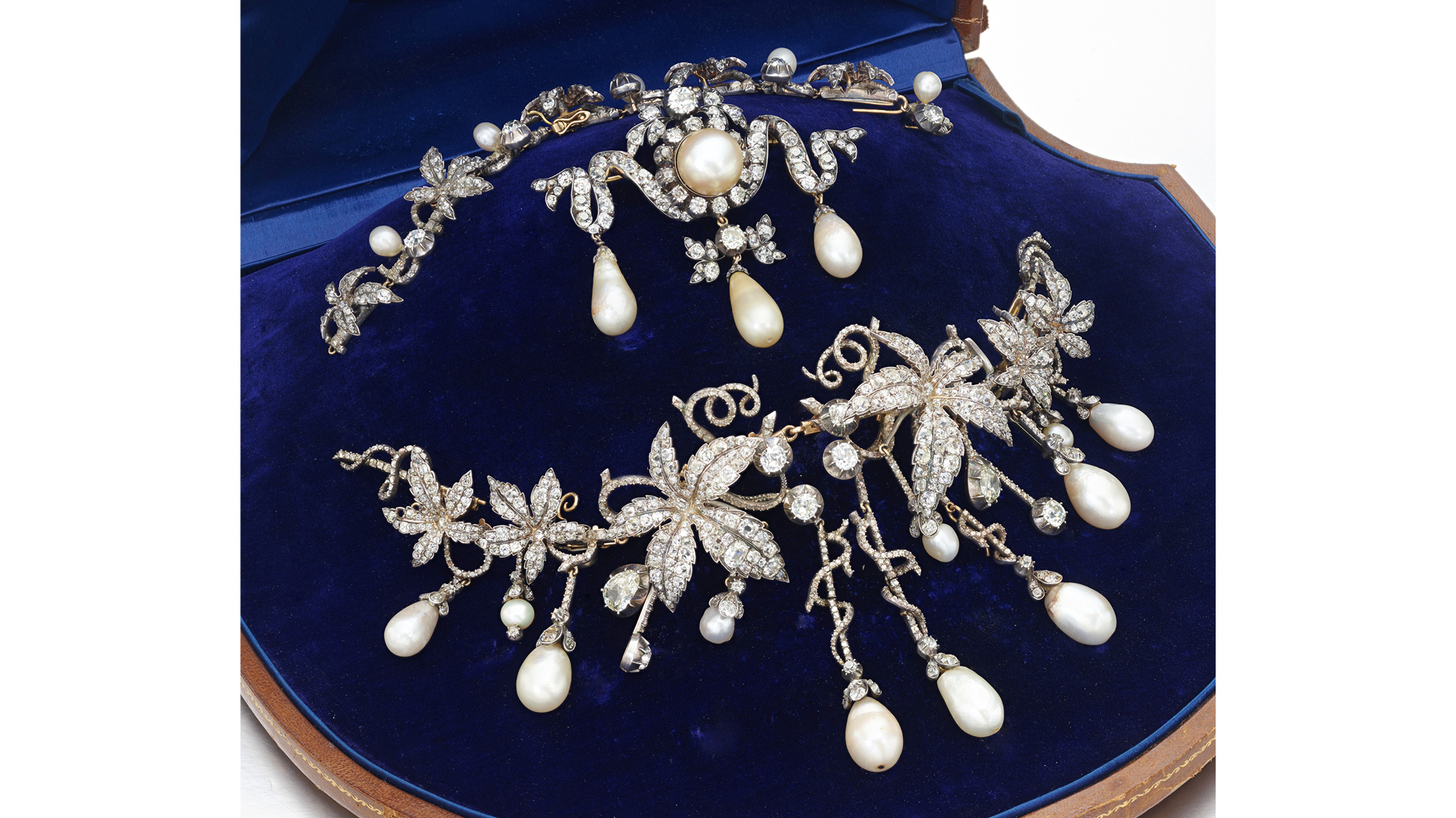
In addition to Napoleon’s brooch, Sotheby’s is selling what it described as a Sévigné-style hair ornament, meaning the piece is worn on the top of the head, extending from one ear to the other with gemstone drops framing the face (seen at the top of the article).
Offered as one lot with a matching brooch, the hair ornament is set with diamonds and natural pearls that were once part of a collection of “magnificent” natural pearls that belonged to Prince Franz Xaver of Saxony and Poland (1730 – 1806).
According to Sotheby’s, the pearls were mounted into a tiara for the 1796 wedding of one of Xaver’s five daughters, Kunigunde of Saxony, Marchesa di Montoro (1774 – 1828).
After Kunigunde’s death in 1828, the tiara was passed down to the younger of her three sons, Filippo (1801-1858).
Around 1840, the tiara was taken apart and the pearls were remounted into this elaborate hair ornament, a style that had a “very brief” surge in popularity in the 1840s, Sotheby’s said.
French jewelry house Fossin (now known as Chaumet) made it, and according to Sotheby’s, it is perhaps the last surviving example of its kind.
Sotheby’s said the reason the piece survived could be due to its versatility.
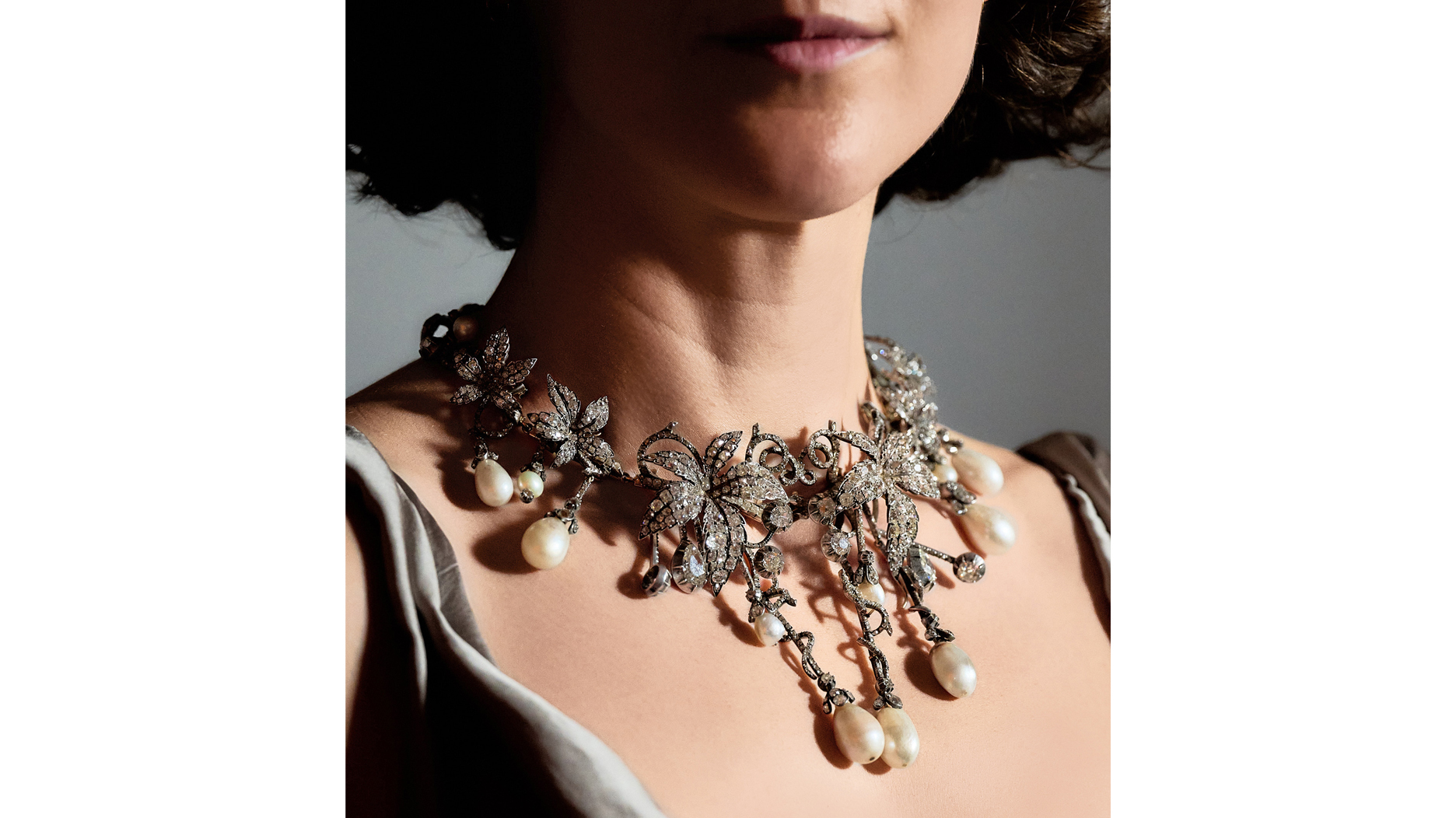
After the Sévigné went out of fashion, someone took the time to alter the piece so its owner also could wear it as a necklace (seen below), a devant-de-corsage (a piece of jewelry worn on the center of a dress’s bodice), and a set of hair pins.
Kunigunde of Saxony, Marchesa di Montoro’s natural pearl and diamond wedding tiara from 1796 was turned into a Sévigné-style hair ornament that was later altered so it could transform into a necklace, a devant-de-corsage, and a set of hair pins. The brooch pictured at center was made later. (Photo courtesy of Sotheby’s)
A model wearing the jewel as a necklace (Photo courtesy of Sotheby’s)
Sotheby’s is auctioning the jewel along with a matching brooch that was made later using pearls of the same provenance.
The lot is expected to sell for CHF 340,000 to 500,000 ($427,000-$628,000).
Sotheby’s auction also includes 20 jewels that belonged to Princess Neslişah Sultan (1921-2012), one of the last princesses of the Ottoman Empire, which dissolved in 1922.
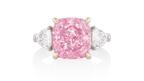
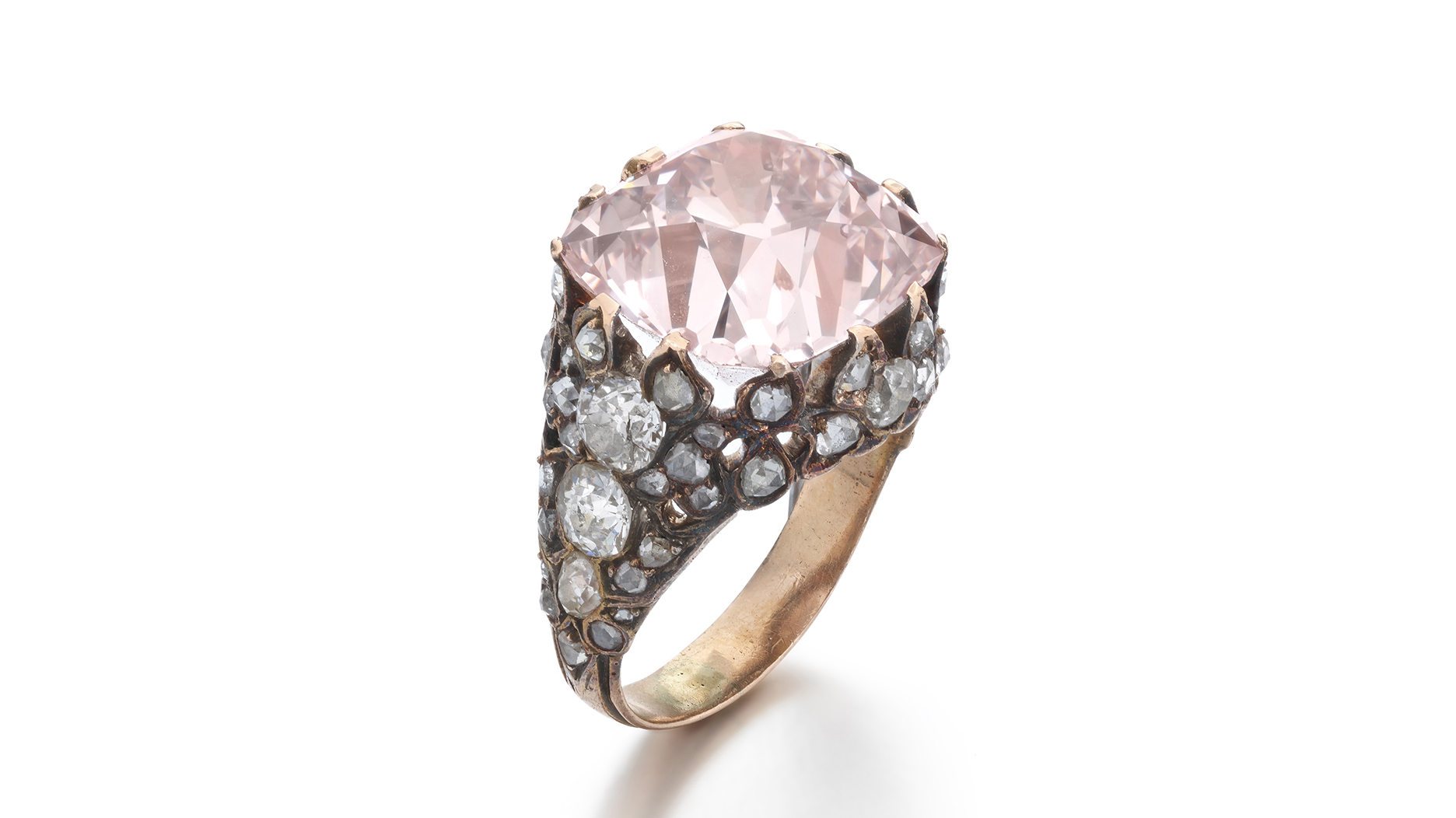
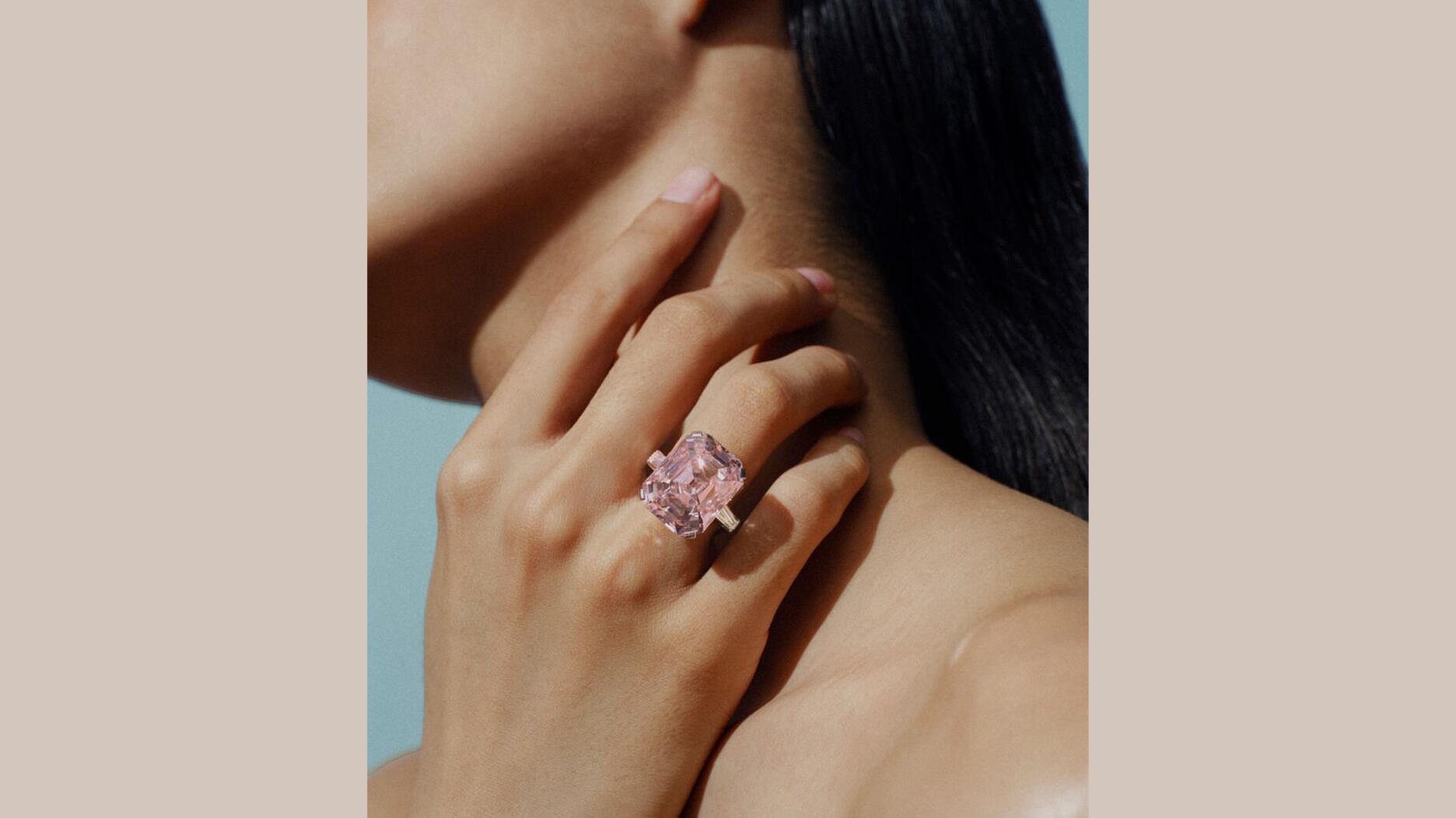
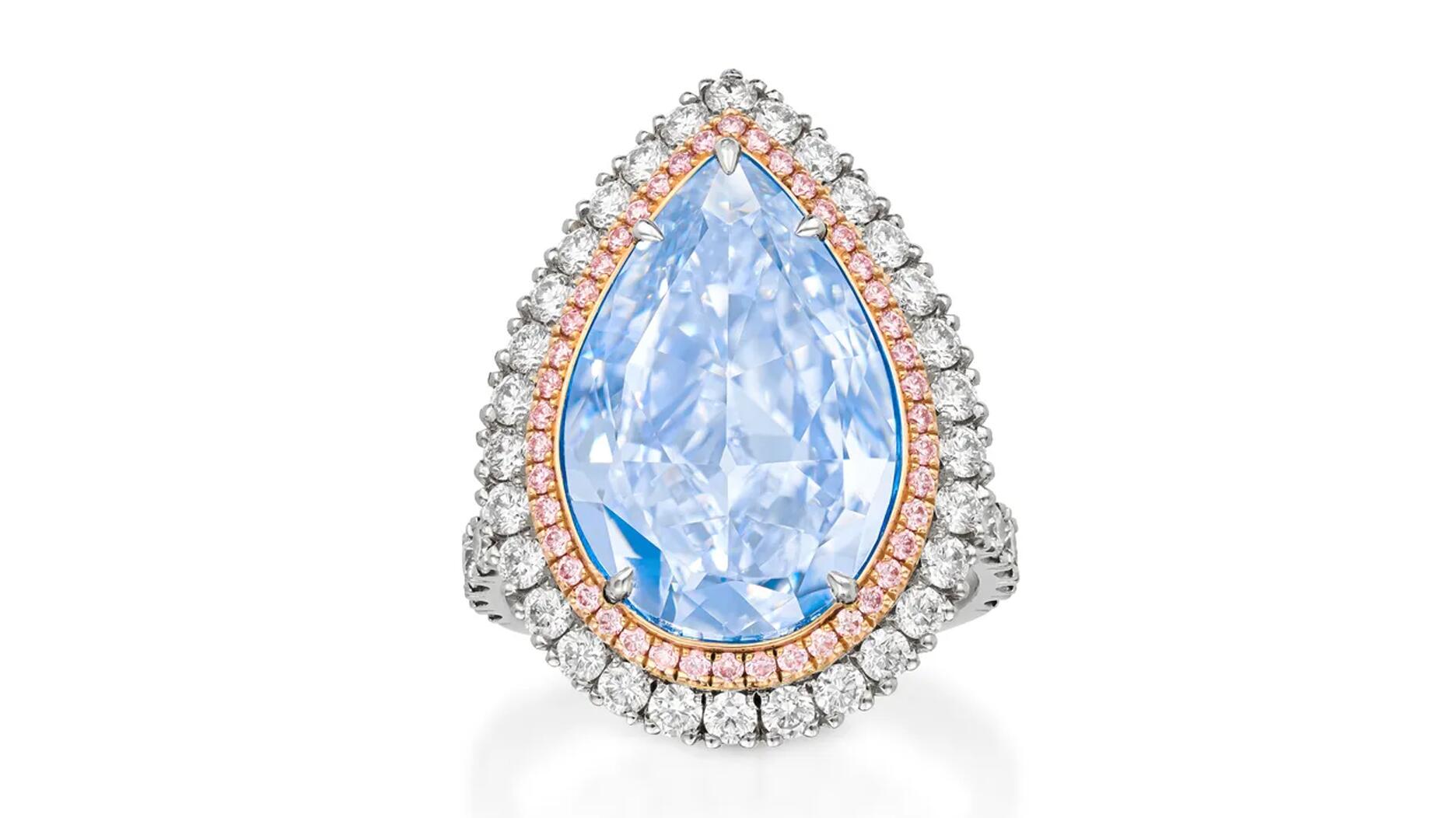
Among the pieces up for auction that belonged to Neslişah is a ring set with a 13.86-carat old mine-cut diamond in a mounting set with old-mine and rose-cut diamonds.
It is expected to sell for CHF 240,000-400,000 ($302,000-$503,000).
Neslişah Sultan received this light pink diamond ring right before her wedding in 1940 and kept it until her death in Turkey in 2012. (Photo courtesy of Sotheby’s)
Sotheby’s said one week before her 1940 wedding to Muhammad Abdel Moneim (1899 – 1979), Neslişah was given this ring by her soon-to-be husband’s aunt.
More than 200 years earlier, in 1711, Empress Catherine I, the widow of Tsar Peter the Great, presented the ring to Ottoman Sultan Ahmed III during negotiations for the Treaty of the Pruth.
The diamond remained in the Ottoman treasury for generations until Sultan Abdul Hamid II (1842-1918) gifted them to his cousin Princess Emina Ilhamy (1858-1931), who was Moneim’s paternal grandmother.
Sotheby’s said Neslişah lived through “great turmoil” in her lifetime amid the many upheavals in post-war Egypt and Turkey.
“Beyond the illustrious origins of the diamond at its heart, this historically important ring is a symbol of a life lived with grace, dignity, and resilience in the face of adversity,” the auction house said.
For those with a smaller budget, and an affection for reptiles, Neslişah’s circa 1950 Cartier turtle brooch made with coral, emeralds, and sapphires will be up for auction.
The pre-sale estimate is CHF 4,000 to CHF 6,000 ($5,000-$7,500).
Sotheby’s “Royal & Noble Jewels” auction is scheduled to take place Nov. 12 at the Mandarin Oriental in Geneva.
To see additional lots, visit the Sotheby’s website.