






AuctionsOct 06, 2025
The ‘Rolex That Made Rolex’ Heads to Auction at Sotheby’s AuctionsOct 09, 2025
This Fabergé Egg Could Crack $27M At Auction
“The Winter Egg” set the world auction record for a Fabergé piece twice at previous Christie’s sales.


“The Winter Egg,” crafted by Fabergé, is the highlight of an upcoming Christie’s sale in London.
London—A Fabergé egg known for breaking auction records will be up for sale at an upcoming Christie’s auction.
“The Winter Egg” is the highlight of its “The Winter Egg and Important Works by Fabergé from a Princely Collection” sale, set to be held during “Classic Week” in London on Dec. 2.
It was commissioned by Emperor Nicholas II as an Easter gift to his mother, Dowager Empress Maria Feodorovna, in 1913, which was also the 300th anniversary of the Romanov Dynasty, said Christie’s.
The Winter Egg is expected to sell for more than £20 million ($26.8 million).
The egg is carved from rock crystal, with a frost design on its interior. The exterior features rose-cut diamond-set platinum snowflake motifs.
Two vertical diamond-set platinum borders hide a hinge on the side with a cabochon moonstone closure.
The egg sits on a rock crystal base, made to look like a melting ice block, with rose-cut diamond-set platinum rivulets. A platinum pin supports the middle of the egg.
The Winter Egg opens to reveal a springtime surprise inside, which is a basket of flowers.
“A masterpiece of both technical skill and artistic beauty, The Winter Egg is richly imbued with clear Easter symbolism. It represents the idea of resurrection, capturing the shift from winter's harshness to the vibrant renewal of spring,” said Christie’s.
Hanging from a platinum hook is a double-handled trelliswork platinum basket, set with rose-cut diamonds. It’s filled with carved white quartz wood anemones.
Each flower has a gold wire stem and stamens with a demantoid garnet at the center and leaves made of carved nephrite. The flowers sit in a bed of gold moss.
At the base of the basket is an engraving that reads “FABERGÉ 1913.”
Related stories will be right here …
“The Winter Egg” is the highlight of its “The Winter Egg and Important Works by Fabergé from a Princely Collection” sale, set to be held during “Classic Week” in London on Dec. 2.
It was commissioned by Emperor Nicholas II as an Easter gift to his mother, Dowager Empress Maria Feodorovna, in 1913, which was also the 300th anniversary of the Romanov Dynasty, said Christie’s.
The Winter Egg is expected to sell for more than £20 million ($26.8 million).
The egg is carved from rock crystal, with a frost design on its interior. The exterior features rose-cut diamond-set platinum snowflake motifs.
Two vertical diamond-set platinum borders hide a hinge on the side with a cabochon moonstone closure.
The egg sits on a rock crystal base, made to look like a melting ice block, with rose-cut diamond-set platinum rivulets. A platinum pin supports the middle of the egg.
The Winter Egg opens to reveal a springtime surprise inside, which is a basket of flowers.
“A masterpiece of both technical skill and artistic beauty, The Winter Egg is richly imbued with clear Easter symbolism. It represents the idea of resurrection, capturing the shift from winter's harshness to the vibrant renewal of spring,” said Christie’s.
Hanging from a platinum hook is a double-handled trelliswork platinum basket, set with rose-cut diamonds. It’s filled with carved white quartz wood anemones.
Each flower has a gold wire stem and stamens with a demantoid garnet at the center and leaves made of carved nephrite. The flowers sit in a bed of gold moss.
At the base of the basket is an engraving that reads “FABERGÉ 1913.”
Fabergé designer Alma Theresia Pihl was the creative force behind the design while her uncle and workmaster Albert Holmström crafted the egg.
The idea of the snowflake design came to her when she was looking out the frost-covered window of the workshop and saw ice crystals forming, said Christie’s. She then was inspired to recreate the frost pattern in rock crystal, platinum, and rose-cut diamonds.
“It is among the most lavish of Fabergé's Imperial creations and widely regarded as one of the most original and artistically inventive Easter eggs that the house created for the Imperial family,” said the auction house.
Alma, who was born into a family of Finnish jewelers, was one of only a few female designers at Fabergé, said Christie’s.
Her mother, Fanny Holmström, was the daughter of Fabergé's workmaster, August Holmström, and her father, Oscar Pihl, led Fabergé's jewelry workshop in Moscow.
In 1908, at 20 years old, Alma began working for her Uncle Albert, painting watercolors that served as archival records. Her talent was apparent, and he had a few of her designs made in the workshop.
While working as a designer under her uncle, Alma created two of her most well-known designs, “Snowflake” and “Mosaic,” which were turned into two of the “most remarkable” Easter eggs, said Christie’s, including The Winter Egg and “The Mosaic Egg,” the latter of which is in The Royal Collection in England.
Fabergé is best known for its series of Imperial Easter Eggs, produced between 1885 and 1916.
Only 50 of these eggs were completed, and 43 of them still exist, said Christie’s, mainly in museums, though seven, including The Winter Egg, are owned by private collectors.
Most Imperial eggs took about a year to complete, with the Imperial Family giving Fabergé design freedom, it said.
The Winter Egg is among the best documented of all the Imperial Easter Eggs, said Christie’s.
After the 1917 revolution, it was moved from St. Petersburg to the Kremlin Armory in Moscow along with many other valuable possessions of the Imperial Family.
When a new Soviet government was established in the 1920s, it began to sell valuable art, including the eggs, which is how several ended up in private collections, said Christie’s.
Though it was tracked from owner to owner, The Winter Egg was believed to be lost for nearly 20 years, from 1975 to 1994.
When it reemerged, it was an auction showstopper, setting the world record for a work by Fabergé twice.
Christie’s auctioned it in 1994 in Geneva, setting a world record of 7.3 million Swiss francs ($9.1 million). When it sold again in New York in 2002, it set another record, selling for $9.6 million.
“It is a privilege for Christie's to be entrusted with the sale of the exquisite 'Winter Egg' by Fabergé for the third time in its history,” said Margo Oganesian, Christie's head of the department of Fabergé and Russian works of art.
“With only six other Imperial Easter Eggs remaining in private collections, this is an extraordinary chance for collectors to acquire what is arguably one of Fabergé's finest creations, both technically and artistically. It would undoubtedly enhance the most distinguished collection.”
Christie's holds the auction record for Fabergé, which it set in 2007 when “The Rothschild Egg” sold for £8.9 million ($11.9 million) in London.
In 2021, the auction house hosted “The Harry Woolf Collection” sale, a single-owner Fabergé collection, which sold for £5.2 million ($6.9 million).
The upcoming December sale will also feature nearly 50 other Fabergé pieces with estimates of up to £2 million ($2.7 million).
Fabergé was recently sold by Gemfields, which had owned the brand since 2013, to U.S.-based tech investment company SMG Capital LLC for $50 million.

More on Auctions


The Latest
MajorsOct 19, 2026
The Knot to Acquire Rival Wedding Planning Platform ZolaThe pending acquisition is an “exciting opportunity” for wedding vendors to grow their business, said The Knot Worldwide’s CEO.

SourcingOct 19, 2026
Jewelry Design Competition Show Airs in Thailand"The Secret Gems" features eight Thai jewelry brands paired with a team of young craftspeople who create jewelry together to win challenges.


CollectionsOct 19, 2026
John Hardy Enters the Medallion Chat With Talisman Collection The brand’s “Modern Talisman” capsule collection introduces pendants inspired by the mythology, natural world, and spiritual ethos of Bali.


Brought to you by
Meet Gemology’s Next Generation Microscope: GIA® Gemolite® NXT Professional EditionExperience gemstones with greater precision and comfort than ever before.

IndependentsOct 19, 2026
The Stories of 5 Jewelers Celebrating Their Centennials in 2026Independent jewelers from New Mexico to New Jersey answer the question: What has kept your store in business for 100 years?

Weekly QuizOct 15, 2026
This Week’s QuizTest your jewelry news knowledge by answering these questions.


SurveysOct 16, 2026
How Inflation, Gas Prices Will Affect Holiday Sales The NRF is expecting holiday sales to increase this year, but consumers and retailers alike are facing Grinch-like headwinds.
CollectionsOct 16, 2026
Christina Puchi’s Earrings Hold the UniverseOur Piece of the Week gathers the planets, represented by a variety of colored gemstones, in a pair of 14-karat yellow gold earrings.
Brought to you by
Your Piece Could Be the One Editors Talk AboutSubmit your pieces for a chance to win in this year's competition.

IndependentsOct 16, 2026
Reeds Jewelers Expands, Relocates FlagshipThe New York-based jeweler is moving its Amherst flagship store to a larger location in nearby Snyder.

MajorsOct 16, 2026
Katy Chen Appointed Executive Vice President of Graff USA Chen, who worked at Cartier and Tiffany & Co., will lead retail sales and operations for the luxury jeweler’s 11 U.S. stores.

IndependentsOct 15, 2026
Retailer Hall of Fame 2026: Amy and Elise Greenberg For 40 years, sisters Amy and Elise Greenberg have helmed their 126-year-old family business, leading with appreciation and integrity.

ColumnistsOct 15, 2026
Peter Smith: What Is the Culture REP?It’s a term Smith coined and felt compelled to share following a bad experience with an aborted flight and an unfeeling flight attendant.

WatchesOct 15, 2026
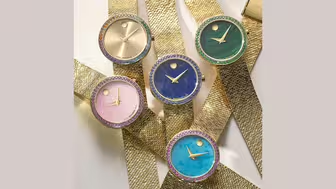
Stephanie Gottlieb’s New Movado Watches Are Made for Your Wrist StackMovado teamed up with the New York-based fine jewelry designer on a new collection of Movado Museum Velura watches.
SourcingOct 15, 2026
Signet Jewelers, Richemont May Join Bidder for De Beers, Report SaysThe two companies are reportedly in talks to join the Global Diamond Consortium, led by former De Beers CEO Gareth Penny, as per Bloomberg.
CollectionsOct 15, 2026
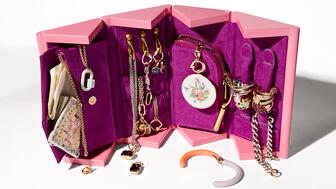
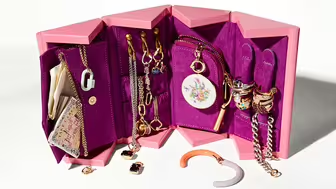
Wolf x Marla Aaron's New Jewelry Box Is for Some (Not All) of Your ThingsThe “Some of the Things” box follows the two larger “Everything” box designs with the look and function of antique sewing and toolboxes.

IndependentsOct 14, 2026
Retailer Hall of Fame 2026: Coleman and Mitchell ClarkFourth-generation jewelers Coleman and Mitchell Clark exemplify the best qualities of their predecessors: humility, modesty, and confidence.

SourcingOct 14, 2026
Manuel Marcial de Gomar, ‘The Emerald Whisperer,’ Dies at 90The gem hunter, whose 70-year career was defined by adventure and exploration, is remembered for his steadfast faith and sense of wonder.

FinancialsOct 14, 2026
LVMH’s Jewelry Brands Turn in ‘Very Good’ Performance in Q3 Tiffany & Co. continued its full-scale store renovation project while Bulgari’s high jewelry collection generated “record-breaking revenue.”

Events & AwardsOct 14, 2026
Chicago Responsible Jewelry Conference Releases 2026 ProgramThis year’s sessions feature leading voices from human rights, legal, and conservation organizations.

MajorsOct 13, 2026
David Webb Owner Purchases Lugano JewelryThe high-end jewelry retailer was sold to private investment firm Middle West Partners and a group of longtime clients.

Lab-GrownOct 13, 2026
Stephanie Gottlieb Takes Lab-Grown Diamond Collection WholesaleThe jewelry designer has partnered with Sofer Jewelry to distribute her 85-piece lab-grown diamond collection.

IndependentsOct 13, 2026
Retailer Hall of Fame 2026: Sean DunnDunn, this year’s Single-Store Independent inductee, is passionate about innovation and telling the story of natural diamonds.

IndependentsOct 13, 2026
Greenwich St. Jewelers’ New Candle Smells Like HomeThe “Island Jewel” candle honors New York City and Puerto Rico and raises money for the island’s water relief efforts.
TechnologyOct 13, 2026
GemFind Is a New JA Member Benefit Partner The partnership will give JA members access to preferred pricing, exclusive benefits, technology solutions, education, and resources.

SurveysOct 09, 2026
These Will Be the 10 Busiest Days for In-Store Shopping This Holiday SeasonStores should expect to see the most customers on Nov. 27, and Christmas week is expected to be hectic too, as Dec. 25 falls on a Friday.

CollectionsOct 09, 2026
Elisa Solomon Collabs With Serendipity 3 on ‘Frozen Hot Chocolate’ CharmThe charm, our Piece of the Week, features brown diamond frozen hot chocolate topped with white diamond whipped cream and a ruby straw.

WatchesOct 09, 2026
Movado to Sell Majority Stake in Ebel for $66.5MThe watch company agreed to sell a 95 percent interest to a group comprised of F.P. Journe, Chanel, and Swiss watch exec Pierre Jacques.