







SourcingJun 05, 2026
State of Diamonds: The Way Forward for Natural DiamondsEditorsJun 09, 2026
Q&A: Al Cook on the Lab-Grown ‘Bubble,’ Dwindling Diamond Supply
The De Beers Group CEO also discussed tariffs, Desert Diamonds, and the pending sale of De Beers in an interview with Michelle Graff.


De Beers Group CEO Al Cook sat down with National Jeweler Editor-in-Chief Michelle Graff in Las Vegas to discuss the timeline for zero percent tariffs, the bursting of the lab-grown diamond bubble, and why 2027 might be the last year for diamond mining in Canada.
During the De Beers breakfast in Las Vegas, two comments shook me out of my early morning stupor, both made by the company’s CEO, Al Cook.
First was something he said when talking about the importance of marketing diamonds to Gen Z, the generation following the millennials who are currently between about 14 and 29 years old.
“A great friend of mine, J.K. Symancyk [CEO] of Signet, pointed out to me the other day [that] back in 2024, Gen Z was just emerging. Between 2024 and 2030, just that six years, the spending power of Gen Z will go up by a factor of five … It’s going to be the richest generation in the history of the world.”
This statement caught my attention, because this is not how I think of Gen Z at all.
When I look at young people in the United States, particularly Gen Zers in their 20s, I see a generation that’s had an unthinkable number of challenges in their relatively short lives and face an uncertain future—the costs of living and housing are high and the job market is competitive.
Many of them feel anything but rich.
The second statement that caught my attention came later in the presentation, when Cook was talking about the depletion of the world’s natural diamond supply.
He said: “I believe that it’s possible that by this time next year, diamond supply out of Canada will be finished.”
Later that same day, I sat down with Cook for an interview in which we discussed these points as well as U.S. tariffs on diamonds, the lab-grown diamond “bubble,” and the pending sale of De Beers.
This interview was edited for length and clarity.
Tariff Update
First was something he said when talking about the importance of marketing diamonds to Gen Z, the generation following the millennials who are currently between about 14 and 29 years old.
“A great friend of mine, J.K. Symancyk [CEO] of Signet, pointed out to me the other day [that] back in 2024, Gen Z was just emerging. Between 2024 and 2030, just that six years, the spending power of Gen Z will go up by a factor of five … It’s going to be the richest generation in the history of the world.”
This statement caught my attention, because this is not how I think of Gen Z at all.
When I look at young people in the United States, particularly Gen Zers in their 20s, I see a generation that’s had an unthinkable number of challenges in their relatively short lives and face an uncertain future—the costs of living and housing are high and the job market is competitive.
Many of them feel anything but rich.
The second statement that caught my attention came later in the presentation, when Cook was talking about the depletion of the world’s natural diamond supply.
He said: “I believe that it’s possible that by this time next year, diamond supply out of Canada will be finished.”
Later that same day, I sat down with Cook for an interview in which we discussed these points as well as U.S. tariffs on diamonds, the lab-grown diamond “bubble,” and the pending sale of De Beers.
This interview was edited for length and clarity.
Tariff Update
“I’m optimistic that we won’t see any tariffs on diamonds.” – Al Cook, De Beers Group
Michelle Graff: You mentioned at the De Beers breakfast this morning that you recently met with [U.S. Commerce] Secretary [Howard] Lutnick. Are we close to getting back to zero percent tariffs on diamonds?
Al Cook: America is so important to diamonds that I spend a fair amount of time in Washington making sure that we build the best possible understanding of diamonds.
We’ve got quite a simple story, really, which is because diamonds aren’t found in commercial quantities in the United States, then tariffs on diamonds don’t create any American jobs. All they do is risk acting as a tax on newlyweds.
What I’ve found is very good understanding, more and more understanding in Washington, and a real desire to ensure that natural diamonds aren’t tariffed. We know there’s been a lot of volatility in tariffs going forward, but ultimately, I’m optimistic that we won’t see any tariffs on diamonds.
MG: Is there a timeline on it? A month, two months? The current 10 percent tariff is set to expire in July.
AC: I’m too experienced in geopolitics to predict exactly when agreements will come into place, but I’m confident in the ultimate destination.
De Beers’ New Owner(s)
“Anglo American, I think, has never been closer to a decision [on the sale of De Beers].” – Al Cook, De Beers Group
MG: It seems that we are close to closing the sale of De Beers. Can you comment on a timeline with that? Are we talking the next couple of weeks? And, can you give any color on who is going to be buying De Beers?
AC: I’ll take the second question first.
There have been three governments— Botswana, Namibia, and Angola— who have publicly stated that they would like to purchase or increase their stake in in De Beers. For us, that’s wonderful because these are national governments, they’re diamond producers, and they see the value that De Beers brings.
Beyond that, Anglo American has been negotiating with commercial groups that want to come in and buy De Beers, and that field is narrowing and Anglo American, I think, has never been closer to a decision going forward.
There’s no definite numbers of days or numbers of weeks. I wish there were, but I think we’re optimistic that things can now accelerate.
MG: But you can’t give us a timeline?
AC: No, what I can say is that all the buyers, commercial or government, are knowledgeable and passionate about diamonds.
I think that’s fantastic because if you look back at the greatest success De Beers has had, it is when it is owned by people who are knowledgeable and passionate about diamonds.
MG: Like Gareth Penny.
AC: (Laughs) Like Ernest Oppenheimer.
The Lab-Grown Diamond ‘Bubble’
“I think the American consumer, in the end, is pretty smart. There is nothing else in the history of America that has continued to be sold in unlimited quantities at 1,000 percent margins.”
– Al Cook, De Beers Group
MG: Let’s talk a little bit about lab-grown diamonds. You mentioned in the talk today this idea of, the lab-grown bubble is going to burst.
Can you expound a little bit on what you think that is going to look like and what that’s going to mean at the retail level? I don’t disagree about the [falling] price and the [increasing] supply, but consumer demand has been created. So where is that going to go even if the bubble bursts?
AC: So, a synthetic lab-grown diamond costs somewhere between $30 and $100 a carat to produce.
That means it should be sold to an American consumer for somewhere between $100 and $200 a carat.
What we have seen is confusion, deliberate or accidental, that has led to extraordinarily high prices for synthetic lab-grown diamonds at retail. And I think that confusion risks creating a lot of resentment.
MG: Meaning people feeling like, “I’ve way overpaid for this product I’ve bought. I’ve been way overcharged.”
AC: Listen, I think we’re already seeing people coming back to stores and saying, “How much is my lab-grown diamond ring worth?” And getting disappointed.
There is a huge difference between something that takes a billion years to create and is incredibly rare and is very costly to recover from planet Earth versus something that can be produced in Chinese factories in limitless amounts at very low prices. I think that’s really important.
I think the American consumer, in the end, is pretty smart. There is nothing else in the history of America that has continued to be sold in unlimited quantities at 1,000 percent margins, and that is why I believe the bubble will burst.
But the bursting of that bubble doesn’t mean the end of lab-grown diamonds. It just means the end of consumers getting ripped off.
MG: So, you see lab-grown diamonds gravitating toward being a product sold at Walmart as a very inexpensive product and moving out of fine jewelry stores?
AC: Yes, I do.
The Next Generation
“Gen Z is a generation prepared to make sacrifices in their everyday purchases to allow them to own things that they truly value, and that’s where we see natural diamonds playing a role.” – Al Cook, De Beers Group
MG: Let’s talk about Desert Diamonds and where that’s headed—the launch into bridal and how that’s been rolled out, and [the new] Icons [campaign].
AC: Let’s start with Generation Z. What we’ve got is the richest generation that the world will ever have seen. We’ve got a generation of people coming through whose spending power is going to [multiply by 5] over the second half of the 2020s.
Gen Z is all about individuality versus ubiquity, so people are entranced by diamonds that are as unique as themselves, right? They’re entranced by diamonds that are different from everyone else’s.
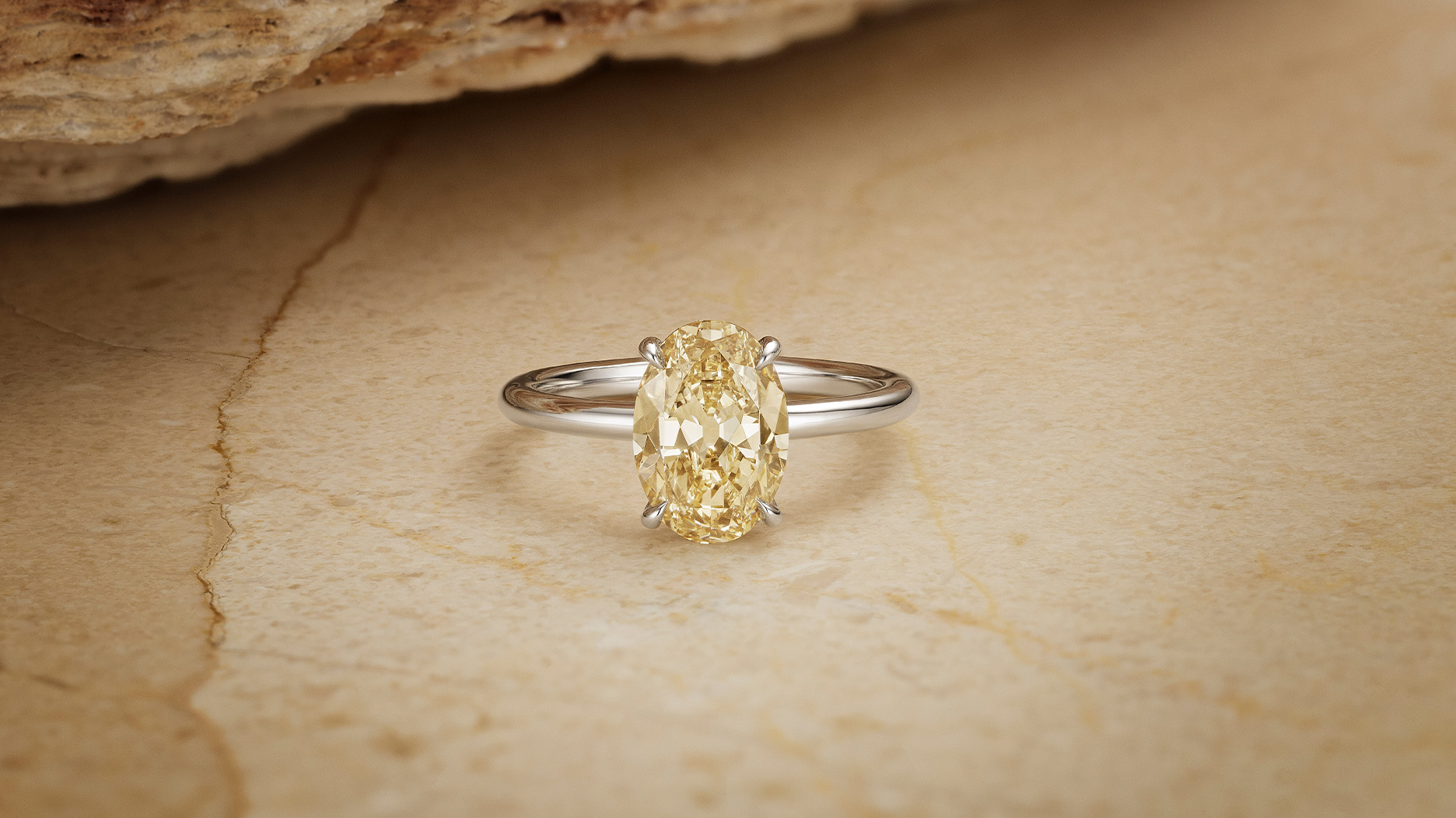
Introduced at JCK Las Vegas 2025, “Desert Diamonds” puts the spotlight on warm white, light yellow, and soft brown diamonds. It launched with fashion jewelry and expanded into bridal this past spring.
You only have to look at the kind of diamonds that the world’s trendsetters, Taylor Swift and others, are wearing to see how unique colors and unique designs are truly, truly important to Gen Z.
Desert Diamonds are about the ability to choose from a massive range of colors of diamonds, from cognacs through to near whites.
On the other hand, Gen Z does care about heritage, it does care about history, and that’s the other aspect of Desert Diamonds that we really bring forward through the Icons.
De Beers has been famous for its history in the creation of jewelry designs, whether that was the engagement ring in the 1930s, whether that is the tennis bracelet in the 1970s and ‘80s, whether that’s the eternity ring, whether that’s the three-stone ring.
What our team is doing, working with the jewelry retailers across America, is simultaneously offering Gen Z individuality and uniqueness, but rooting that in the classic designs—stud earrings, tennis bracelets, engagement rings—that hark to the heritage of diamonds that people love.
MG: You mentioned the spending power of Gen Z, but I think a lot of Gen Zers in this country feel financially challenged. They can’t afford homes, they’ve grown up in a really turbulent time, and the United States is, obviously, in a strange time.
You keep mentioning their spending power and that they’re going to be the richest, but I don’t necessarily see it that way. I don’t think they’re going to be the richest. I think a lot of them feel that their lives are not going to be better than their parents’.
AC: I think it’s a complex situation where what we see through our research and what we put together in the new Diamond Report is a generation that has been through turbulence. [They’ve] been through COVID, a recession, questions on geopolitics, [and] a constant stream of social media that can concern you.
The result of that is that Gen Z is a generation prepared to make sacrifices in their everyday purchases to allow them to own things that they truly value, and that’s where we see natural diamonds playing a role.
We actually see Gen Z spending more of their money than baby boomers do. But when they spend their money, we don’t see it being spent all over the place. We see it being spent on fewer, better things and on things that they can be truly proud of and that reflect their own individuality.
That’s really why Desert Diamonds are so important, because it is a special purchase.
If we can produce something for Gen Z that allows them to express their individuality but will be a store of emotional value for the rest of their lives, [they] are willing to put their investment into that.
MG: I think it’s interesting too to think about how my generation and generations before me were trained to want white diamonds with high color and high clarity, and now it’s having to shift, right? Is that because the old message was not resonating, not working with Gen Z, or is it because they were just not raised with it?
AC: It’s a multitude of things. You look back to our advertisements in the 1940s. White man gives white woman white diamond, right?
And then you look at the way that the United States has evolved since then, the blend of cultures here, unrecognizable to the 1940s.
You’ve also got, I think, a generation that cares about individuality and wants their jewelry to express their individuality in a way that we didn’t see in the 1940s when everyone wanted the same flawless engagement ring.
Natural Diamond Supply
“The number of countries that have commercially viable diamond deposits are getting fewer and fewer.” – Al Cook, De Beers Group
MG: You said in your speech at the breakfast this morning that you expect next year will be the end of diamond mining in Canada. Did I understand this correctly?
AC: I think that could be the truth. We’ve already seen Rio Tinto and its mining at Diavik [come to an end]. We saw Stornoway’s mine close a couple of years ago.
We’ve now seen Burgundy, its Ekati mine, going into bankruptcy. We’ve announced that we are suspending the new development at Gahcho Kué.
You look around the world, there are no more commercial diamonds produced out of Australia.
Brazil used to be a great diamond-producing country. It’s gone down to next to nothing.
India used to be the great diamond-producing country. It’s gone down to next to nothing.
I wouldn’t be surprised if Canada is the next one.
It’s just a reminder that diamonds are getting rarer, and that the number of countries that have commercially viable diamond deposits are getting fewer and fewer.
MG: Why have you decided to suspend development at Gahcho Kué?
AC: For financial reasons, because as we go deeper and deeper into the Gahcho Kué mine, it gets more and more expensive to recover the diamonds.
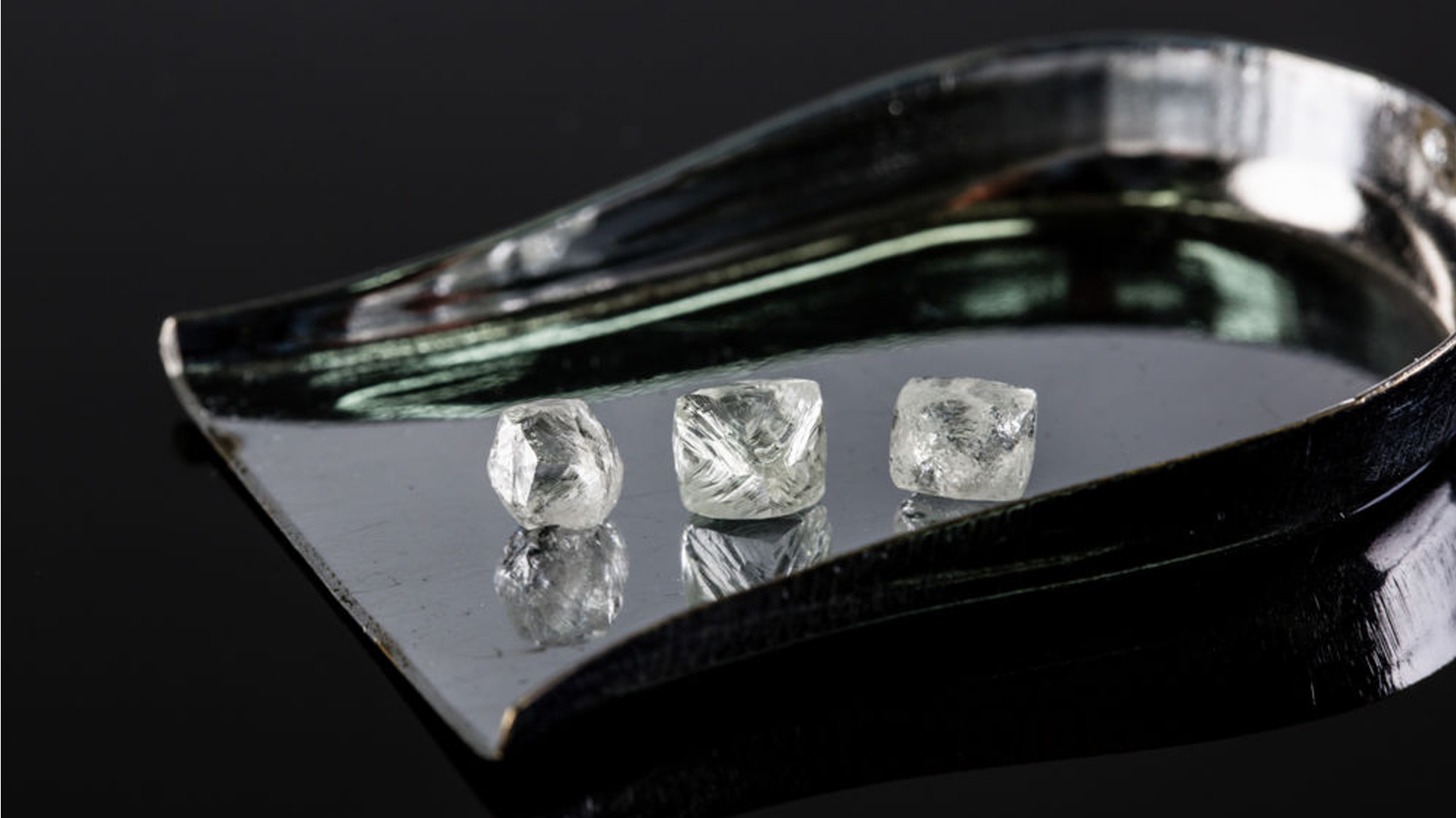
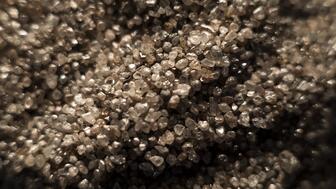
Rough diamonds from the Gahcho Kué mine in Canada’s Northwest Territories. De Beers announced that it is suspending new expansion at the mine due to current market conditions.
MG: You mentioned diamond supply going down, diamonds getting rarer, but you also mentioned exploration in Angola. Do you think whatever is found in Angola is not going to be enough to make up for all the mines that have closed recently?
AC: Yes. I mean, just look at the last quarter of a century. There’s been one commercial diamond mine discovered in the last 25 years. That’s the Luele mine [in Angola].
I announced this morning that we’ve discovered a new set of kimberlite pipes in Angola. They’re diamondiferous; we’re very excited by that.
Even if we can demonstrate the commercial viability of that, even if we can develop it economically, that will not come on stream until well into the 2030s, by which time many of today’s mines will be running out of diamonds.
So, although it’s exciting for us, it won’t make up for the fact that the world is running out of diamonds.
Final Thoughts
“We are seeing the recovery in diamonds at this show.” – Al Cook, De Beers Group
MG: Is there anything else from this morning’s presentation, or about De Beers in general, that you want to get across to retailers, to the trade at large?
AC: I think the final point would be that we are seeing the recovery in diamonds at this show.
It’s starting with the larger, more high-quality goods, but the buzz around this show is really positive.
We already saw, courtesy of Tenoris, the very positive sales of diamonds in the first half of this year.
MG: Do you attribute that to the marketing your team has done, all the celebrity placements we saw in the video at breakfast this morning?
AC: Yeah, we can actually see it.
Diamond sales are generally up single-digit percentages year on year, and then we can see that Desert Diamonds up 20 percent year on year.
That’s a demonstration that Desert Diamonds are resonating with consumers, that our marketing is working, and that if you’re smart, you’ll get behind it.
Editors' Picks
Sponsored by

More on Editors




The Latest

SurveysOct 09, 2026
These Will Be the 10 Busiest Days for In-Store Shopping This Holiday SeasonStores should expect to see the most customers on Nov. 27, and Christmas week is expected to be hectic too, as Dec. 25 falls on a Friday.

CollectionsOct 09, 2026
Elisa Solomon Collabs With Serendipity 3 on ‘Frozen Hot Chocolate’ CharmThe charm, our Piece of the Week, features brown diamond frozen hot chocolate topped with white diamond whipped cream and a ruby straw.


AuctionsOct 09, 2026
8-Carat Blue Diamond Goes Unsold at UK Jewelry Auction The top lot of Elmwood’s recent fine jewelry sale in London was a 1.84-carat, D color Tiffany & Co. solitaire diamond ring.


Brought to you by
Meet Gemology’s Next Generation Microscope: GIA® Gemolite® NXT Professional EditionExperience gemstones with greater precision and comfort than ever before.


WatchesOct 09, 2026
Movado to Sell Majority Stake in Ebel for $66.5MThe watch company agreed to sell a 95 percent interest to a group comprised of F.P. Journe, Chanel, and Swiss watch exec Pierre Jacques.

Weekly QuizOct 08, 2026
This Week’s QuizTest your jewelry news knowledge by answering these questions.


Policies & IssuesOct 08, 2026
Third Wave of IEEPA Tariff Refunds Begins This round of tariff refunds is for importers that have sued over IEEPA tariffs in the Court of International Trade and won.

CollectionsOct 08, 2026
Brent Neale’s New Collection Goes ‘Back to Basics’It revisits the brand’s most requested silhouettes, from "Pillow"-set necklaces and bracelets to "Signature"-set rings and earrings.
Brought to you by
Your Piece Could Be the One Editors Talk AboutSubmit your pieces for a chance to win in this year's competition.


SourcingOct 08, 2026
Ethical Gem Fair Heads Back to BrooklynThe trade-only event includes buying opportunities as well as educational sessions on artisanal mining, the new Paraíba source, and more.

Events & AwardsOct 08, 2026
Pattons Fine Jewelry Sweeps Local Design ContestAra Chanakian, a jeweler at Pattons, took home top honors in every category at Jewelers of Louisiana’s annual jewelry design competition.

AuctionsOct 08, 2026
Reba McEntire’s Jewelry, Watches Head to Julien’s AuctionsThe live charity benefit sale in Nashville will also feature gowns, boots, and other memorabilia from the country music legend.


Supplier BulletinOct 08, 2026
Overnight Mountings’ Bridal Builder Helps Jewelers Turn Custom Design into a Hands-On Selling ExperienceSponsored by Overnight Mountings

Policies & IssuesOct 07, 2026
The Plumb Club Amplifies Its Voice as Geopolitical Pressures MountThe supplier organization recently joined JA and JVC to have more input on political issues affecting the jewelry industry.

CollectionsOct 07, 2026
Blue Nile, Royal Asscher Collection Highlights Natural Diamond BeautyBlue Nile, a Signet Jewelers-owned brand, is now Royal Asscher’s exclusive licensed retailer in North America.

CollectionsOct 07, 2026
4 Standout Pieces in Audemars Piguet’s First High Jewelry Collection “Royal Oak” pays homage to the brand’s most popular watch model using 18-karat gold as well as diamonds, emeralds, and sapphires.

MajorsOct 07, 2026
Empire Safe & Vault Promotes Juan Morales to CEOAs part of the transition, Joseph Nicosia has stepped into the role of COO.

SourcingOct 07, 2026
AGTA Extends Deadline for 2026 Spectrum Awards EntriesParticipants now have until Oct. 14 to complete their submissions.

CrimeOct 06, 2026
6 Charged in Connection to String of New Jersey Smash-and-GrabsThe alleged thieves used crow bars and sledgehammers to smash into jewelry stores across the state.

ColumnistsOct 06, 2026
Sherry Smith: Is the Consumer Really Trading Up?Ahead of the holidays, Smith urges jewelers to take a hard look at who’s buying jewelry, what they’re purchasing, and who’s stopped buying.


SourcingOct 06, 2026
DDG Taps Influencers for ‘My Diamond Does Good’ CampaignIn the new consumer-facing campaign, four fashion and lifestyle creators share the stories behind their natural diamond pieces.

MajorsOct 06, 2026
Frederick Goldman Names COO, CMOFGI President John Orrico is also leaving the company after more than 13 years.

Events & AwardsOct 06, 2026
JIS Fall Returns to MiamiThe 2026 edition will feature presentations on alternative materials and design trends, as well as pop-up activations on the show floor.

SourcingOct 05, 2026
De Beers to Take Full Ownership of Gahcho KuéIt is the last fully operational diamond mine in Canada following the recent closures of Ekati and Diavik.

AuctionsOct 05, 2026
The Star Cats of the Sandy Lerner AuctionThese jewels stood out at Bonhams’ sale of the cat-loving tech entrepreneur’s collection of objects depicting the feline form.

CollectionsOct 05, 2026
Sorellina Writes Another Love Letter for ‘Postscript’ CollectionThe fine jewelry brand has expanded the collection that debuted at Couture with four new designs based on its most popular styles.

SourcingOct 05, 2026
Bruce Bridges Joins CIBJO BoardThe AGTA president was elected for a two-year term on the board of directors.

SourcingOct 02, 2026
De Beers, National Geographic Society Renew Okavango Eternal Partnership The partnership, a pledge to protect Africa’s Okavango River Basin, has been extended for an additional five years.