








SourcingApr 29, 2026
De Beers’ Production Rises, Market Remains ‘Challenged’SourcingMay 06, 2026
Canada’s Oldest Diamond Mine Faces Uncertain Future
The owner of the Ekati mine, which opened in 1998, has filed for insolvency protection amid the significant decline in diamond prices.


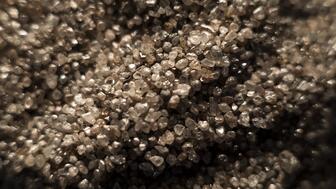
A mix of white and yellow rough diamonds from the Ekati Diamond Mine in Canada’s Northwest Territories. The owner of the mine, Burgundy Diamond Mines Ltd., has filed for insolvency protection as it attempts to restructure and cut costs to keep the financially struggling mine open. (Photo courtesy of Burgundy Diamond Mines Ltd.)
Calgary, Canada—The owner of the Ekati Diamond Mine in Canada has filed for insolvency protection, citing the steep drop in diamond prices and the regulatory requirements and costs associated with operating in the Northwest Territories.
Burgundy Diamond Mines Ltd. announced via a news release on Friday that its subsidiary, Arctic Canadian Diamond Company Ltd., filed for and was granted insolvency protection under Canada’s Companies’ Creditors Arrangement Act (CCAA), which allows companies with more than $5 million in debt to restructure under court supervision.
The protection extends to Burgundy via a non-applicant, stay party order.
Burgundy said it intends use the CCAA process to restructure Arctic Canadian financially and operationally as it continues to navigate “difficult geopolitical, economic and industry conditions.”
In the meantime, Arctic Canadian will continue to be responsible for handling day-to-day operations at Ekati, which will not be disrupted by the CCAA process, it said.
In an affidavit filed on April 30, Brent Mierau, corporate secretary and head of finance for Burgundy and Arctic Canadian, elaborated on the issues impacting Ekati.
He wrote that diamond prices have been on the decline and the market has been under pressure since 2023 due to competition from lab-grown diamonds and lower diamond jewelry demand in China, with U.S. tariffs exacerbating the situation.
The average price per carat for a diamond from Ekati was $92 per carat at the end of 2024, according to the affidavit.
Since U.S. President Donald Trump began imposing tariffs in early 2025, the average price per carat has dropped to $24 per carat as of December 2025, with Ekati diamonds achieving an average price of $27 per carat in its last two sales.
“United States tariffs on jewelry imports have caused lower demand and lower diamond prices,” Mierau wrote.
“A particularly significant impact relates to the current tariffs imposed on India. While I understand that a reduction in the United States tariffs imposed on India has occurred in 2026, the tariffs have continued to result in a reduced American demand and a buildup of inventory with wholesalers … In summary, the tariffs imposed by the United States and other global forces have had a sudden and blunting impact on the diamond market, with direct negative implications for upstream producers such as [Arctic Canadian] and the Burgundy Group.”
Mierau’s affidavit and the Burgundy release both also mentioned the ongoing conflict in the Middle East—which they said has further depressed diamond prices and driven up fuel costs—as contributing to Ekati’s troubles.
Related stories will be right here …
Burgundy Diamond Mines Ltd. announced via a news release on Friday that its subsidiary, Arctic Canadian Diamond Company Ltd., filed for and was granted insolvency protection under Canada’s Companies’ Creditors Arrangement Act (CCAA), which allows companies with more than $5 million in debt to restructure under court supervision.
The protection extends to Burgundy via a non-applicant, stay party order.
Burgundy said it intends use the CCAA process to restructure Arctic Canadian financially and operationally as it continues to navigate “difficult geopolitical, economic and industry conditions.”
In the meantime, Arctic Canadian will continue to be responsible for handling day-to-day operations at Ekati, which will not be disrupted by the CCAA process, it said.
In an affidavit filed on April 30, Brent Mierau, corporate secretary and head of finance for Burgundy and Arctic Canadian, elaborated on the issues impacting Ekati.
He wrote that diamond prices have been on the decline and the market has been under pressure since 2023 due to competition from lab-grown diamonds and lower diamond jewelry demand in China, with U.S. tariffs exacerbating the situation.
The average price per carat for a diamond from Ekati was $92 per carat at the end of 2024, according to the affidavit.
Since U.S. President Donald Trump began imposing tariffs in early 2025, the average price per carat has dropped to $24 per carat as of December 2025, with Ekati diamonds achieving an average price of $27 per carat in its last two sales.
“United States tariffs on jewelry imports have caused lower demand and lower diamond prices,” Mierau wrote.
“A particularly significant impact relates to the current tariffs imposed on India. While I understand that a reduction in the United States tariffs imposed on India has occurred in 2026, the tariffs have continued to result in a reduced American demand and a buildup of inventory with wholesalers … In summary, the tariffs imposed by the United States and other global forces have had a sudden and blunting impact on the diamond market, with direct negative implications for upstream producers such as [Arctic Canadian] and the Burgundy Group.”
Mierau’s affidavit and the Burgundy release both also mentioned the ongoing conflict in the Middle East—which they said has further depressed diamond prices and driven up fuel costs—as contributing to Ekati’s troubles.
Burgundy Diamond is the fourth company to own and operate Ekati, and the second to file for insolvency protection while operating the remote mine.
Ekati opened in 1998 and was Canada's first diamond mine, owned by BHP Billiton (80 percent) and geologists Chuck Fipke and Stewart Blusson (20 percent).
BHP later decided to get out of the diamond business and offloaded its stake in Ekati in April 2013, selling the mine to Dominion Diamond Corp. for more than $500 million.
Dominion was acquired by The Washington Companies, a group of privately held North American mining and transportation businesses, for about $1.2 billion in 2017.
In April 2020, the early days of the pandemic, Dominion was granted insolvency protection.
An initial deal to sell the mine fell through later that year, but Dominion found another buyer for Ekati, selling the diamond mine to a trio of wealth management firms that formed a new entity, Arctic Canadian Diamond Co. Ltd., in early 2021.
In 2023, the mine changed hands again, with current owner Burgundy Diamond buying Arctic Canadian Diamond Co. and Arctic Canadian Marketing N.V., the mine’s Antwerp, Belgium-based sales office, in a deal valued at $136 million.
Burgundy said in the release on Friday that it “continues to believe in the long-term viability” of the Ekati Diamond Mine, though Mierau wrote in his affidavit that Ekati, as well as the other diamond mines in the Northwest Territories, will need additional help from the government to stay afloat.
“[Arctic Canadian] and similarly situated industry participants in the Northwest Territories have incurred hundreds of millions in losses over the past couple of years. This has translated into significant losses for the communities serving these operations,” Mierau stated.
“[Arctic Canadian] and other northern diamond mine operators have advised the Government of the Northwest Territories that absent concerted action, the survival of an industry that is responsible for a collective workforce of approximately 3,200 (with over 1,000 northern workers) and a joint expenditure of approximately CA$1.3 billion per year will be placed in jeopardy.”
Editors' Picks
Sponsored by

More on Sourcing



The Latest

IndependentsOct 14, 2026
Retailer Hall of Fame 2026: Coleman and Mitchell ClarkFourth-generation jewelers Coleman and Mitchell Clark exemplify the best qualities of their predecessors: humility, modesty, and confidence.


FinancialsOct 14, 2026
LVMH’s Jewelry Brands Turn in ‘Very Good’ Performance in Q3 Tiffany & Co. continued its full-scale store renovation project while Bulgari’s high jewelry collection generated “record-breaking revenue.”

Events & AwardsOct 14, 2026
Chicago Responsible Jewelry Conference Releases 2026 ProgramThis year’s sessions feature leading voices from human rights, legal, and conservation organizations.


Brought to you by
Meet Gemology’s Next Generation Microscope: GIA® Gemolite® NXT Professional EditionExperience gemstones with greater precision and comfort than ever before.


MajorsOct 13, 2026
David Webb Owner Purchases Lugano JewelryThe high-end jewelry retailer was sold to private investment firm Middle West Partners and a group of longtime clients.
Weekly QuizOct 08, 2026
This Week’s QuizTest your jewelry news knowledge by answering these questions.


Lab-GrownOct 13, 2026
Stephanie Gottlieb Takes Lab-Grown Diamond Collection WholesaleThe jewelry designer has partnered with Sofer Jewelry to distribute her 85-piece lab-grown diamond collection.

IndependentsOct 13, 2026
Retailer Hall of Fame 2026: Sean DunnDunn, this year’s Single-Store Independent inductee, is passionate about innovation and telling the story of natural diamonds.
Brought to you by
Your Piece Could Be the One Editors Talk AboutSubmit your pieces for a chance to win in this year's competition.


AuctionsOct 13, 2026
Christie's Geneva To Auction 'Bulgari Pink' DiamondThe 24-carat fancy intense pink diamond ring could fetch up to $18 million at the November sale.


IndependentsOct 13, 2026
Greenwich St. Jewelers’ New Candle Smells Like HomeThe “Island Jewel” candle honors New York City and Puerto Rico and raises money for the island’s water relief efforts.
TechnologyOct 13, 2026
GemFind Is a New JA Member Benefit Partner The partnership will give JA members access to preferred pricing, exclusive benefits, technology solutions, education, and resources.

SurveysOct 09, 2026
These Will Be the 10 Busiest Days for In-Store Shopping This Holiday SeasonStores should expect to see the most customers on Nov. 27, and Christmas week is expected to be hectic too, as Dec. 25 falls on a Friday.

CollectionsOct 09, 2026
Elisa Solomon Collabs With Serendipity 3 on ‘Frozen Hot Chocolate’ CharmThe charm, our Piece of the Week, features brown diamond frozen hot chocolate topped with white diamond whipped cream and a ruby straw.

AuctionsOct 09, 2026
8-Carat Blue Diamond Goes Unsold at UK Jewelry Auction The top lot of Elmwood’s recent fine jewelry sale in London was a 1.84-carat, D color Tiffany & Co. solitaire diamond ring.

WatchesOct 09, 2026
Movado to Sell Majority Stake in Ebel for $66.5MThe watch company agreed to sell a 95 percent interest to a group comprised of F.P. Journe, Chanel, and Swiss watch exec Pierre Jacques.

Policies & IssuesOct 08, 2026
Third Wave of IEEPA Tariff Refunds Begins This round of tariff refunds is for importers that have sued over IEEPA tariffs in the Court of International Trade and won.

CollectionsOct 08, 2026
Brent Neale’s New Collection Goes ‘Back to Basics’It revisits the brand’s most requested silhouettes, from "Pillow"-set necklaces and bracelets to "Signature"-set rings and earrings.

Events & AwardsOct 08, 2026
Pattons Fine Jewelry Sweeps Local Design ContestAra Chanakian, a jeweler at Pattons, took home top honors in every category at Jewelers of Louisiana’s annual jewelry design competition.

AuctionsOct 08, 2026
Reba McEntire’s Jewelry, Watches Head to Julien’s AuctionsThe live charity benefit sale in Nashville will also feature gowns, boots, and other memorabilia from the country music legend.


Supplier BulletinOct 08, 2026
Overnight Mountings’ Bridal Builder Helps Jewelers Turn Custom Design into a Hands-On Selling ExperienceSponsored by Overnight Mountings

Policies & IssuesOct 07, 2026
The Plumb Club Amplifies Its Voice as Geopolitical Pressures MountThe supplier organization recently joined JA and JVC to have more input on political issues affecting the jewelry industry.

CollectionsOct 07, 2026
Blue Nile, Royal Asscher Collection Highlights Natural Diamond BeautyBlue Nile, a Signet Jewelers-owned brand, is now Royal Asscher’s exclusive licensed retailer in North America.

CollectionsOct 07, 2026
4 Standout Pieces in Audemars Piguet’s First High Jewelry Collection “Royal Oak” pays homage to the brand’s most popular watch model using 18-karat gold as well as diamonds, emeralds, and sapphires.

MajorsOct 07, 2026
Empire Safe & Vault Promotes Juan Morales to CEOAs part of the transition, Joseph Nicosia has stepped into the role of COO.

SourcingOct 07, 2026
AGTA Extends Deadline for 2026 Spectrum Awards EntriesParticipants now have until Oct. 14 to complete their submissions.

CrimeOct 06, 2026
6 Charged in Connection to String of New Jersey Smash-and-GrabsThe alleged thieves used crow bars and sledgehammers to smash into jewelry stores across the state.

ColumnistsOct 06, 2026
Sherry Smith: Is the Consumer Really Trading Up?Ahead of the holidays, Smith urges jewelers to take a hard look at who’s buying jewelry, what they’re purchasing, and who’s stopped buying.