




SourcingJun 05, 2026
State of Diamonds: The Way Forward for Natural DiamondsColumnistsMay 18, 2026
Edahn Golan: What a K-Shaped Economy Means for Fine Jewelry
In a column for the 2026 State of the Majors issue, Golan spells out how the growing economic divide in the U.S. is reshaping the market.


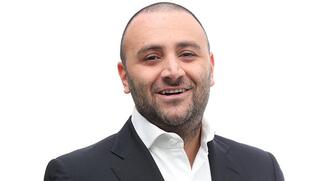
Edahn Golan is an industry analyst and researcher and managing partner of trend analytics company Tenoris. He compiles the sales figures for the $100 Million Supersellers list.
Editor’s Note: This story first appeared in the print edition of the 2026 State of the Majors. The author, Edahn Golan, compiles the sales figures that appear in the issue’s “$100 Million Supersellers” list. Read more of Golan’s industry research on EdahnGolan.com.
The jewelry industry is always evolving, but the past six years, from the COVID shock to geopolitical tensions in the Middle East, have reshaped both costs and consumer behavior.
Gold and silver prices have surged. Energy costs have risen. Tariffs have changed repeatedly.
Financing has become more expensive. Shipping and logistics remain volatile.
Each of these factors has affected manufacturing costs, the availability of materials, and ultimately, the prices consumers see in stores.
At the same time, consumer purchasing patterns have changed.
These shifts mean that businesses across the value chain—retailers, manufacturers, wholesalers, and suppliers—can no longer operate exactly as they did before.
Companies that fail to adjust their strategy to the new market reality may find themselves struggling.
One of the most important structural changes is the growing divide in the U.S. consumer base, with American jewelry buyers increasingly split into two distinct groups.
The first group is spending less overall and buying fewer pieces, particularly jewelry priced below $1,500.
Over the past year, these consumers did spend slightly more per item, but not enough to offset the decline in unit sales. As a result, revenue from this segment has generally declined.
The one notable exception is lab-grown diamond jewelry. Demand for the category continues to grow, although much of the volume is concentrated in relatively simple items such as stud earrings, not higher-value pieces.
The jewelry industry is always evolving, but the past six years, from the COVID shock to geopolitical tensions in the Middle East, have reshaped both costs and consumer behavior.
Gold and silver prices have surged. Energy costs have risen. Tariffs have changed repeatedly.
Financing has become more expensive. Shipping and logistics remain volatile.
Each of these factors has affected manufacturing costs, the availability of materials, and ultimately, the prices consumers see in stores.
At the same time, consumer purchasing patterns have changed.
These shifts mean that businesses across the value chain—retailers, manufacturers, wholesalers, and suppliers—can no longer operate exactly as they did before.
Companies that fail to adjust their strategy to the new market reality may find themselves struggling.
One of the most important structural changes is the growing divide in the U.S. consumer base, with American jewelry buyers increasingly split into two distinct groups.
The first group is spending less overall and buying fewer pieces, particularly jewelry priced below $1,500.
Over the past year, these consumers did spend slightly more per item, but not enough to offset the decline in unit sales. As a result, revenue from this segment has generally declined.
The one notable exception is lab-grown diamond jewelry. Demand for the category continues to grow, although much of the volume is concentrated in relatively simple items such as stud earrings, not higher-value pieces.
“The middle of the market is shrinking. Businesses that try to serve everyone risk serving no one particularly well.”
– Edahn Golan, Tenoris
The second group of consumers is moving in the opposite direction.
Shoppers buying jewelry priced above $1,500 are spending significantly more overall.
However, their average spending per item has remained relatively stable. The increase in total spending is mainly due to more units being bought, rather than higher prices.
This group continues to spend heavily on bridal jewelry, diamond stud earrings, and tennis bracelets, most often set with natural diamonds.
In economic terms, this is a classic K-shaped market: one segment of consumers is pulling back, while the other continues to expand its spending.
The strategic challenge for retailers is that the middle of the market is shrinking. Businesses that try to serve everyone risk serving no one particularly well.
This divide has major implications not only for inventory, but also for positioning.
Stores that want to serve the lower-price segment likely will need to go heavy on lab-grown diamonds, offer competitive pricing, and build their business model around being a higher-volume retailer.
Retailers targeting higher-end consumers face a different set of decisions. Their stores must communicate luxury: fewer pieces on display, more space around each item, and stronger storytelling around craftsmanship and materials.
Inventory strategy also becomes critical. Can a retailer serving this segment afford not to hold natural diamonds on hand for custom work?
Manufacturers face similar strategic choices.
Some will focus on producing fast-moving everyday jewelry at accessible price points.
Others will concentrate on higher-end designs, emphasizing craftsmanship, innovation, and differentiation.
Trying to straddle both segments, or continuing to rely on the $1,000-$2,500 price range, may prove increasingly difficult.
There is a reason I’m discussing this in an issue dedicated to the largest U.S. jewelry retailers.
Most of the major players already have chosen which side of the market they want to serve.
They are either volume-driven retailers or luxury-focused sellers. They are either heavily invested in lab-grown diamonds or strongly oriented toward natural diamonds.
Signet Jewelers is the exception to the rule.
It remains the largest jewelry retailer in North America in terms of both sales ($100 Million Supersellers list) and number of stores (Top 50 Specialty Jewelers list), operating across multiple market segments through its various banners.
Behind it on the $100 Million Supersellers list are two mass-market retailers (Amazon and Walmart), and two high-end, iconic luxury companies with well-established brands, Richemont and LVMH.
Notably, many of the mass-market players are currently experiencing declines in jewelry sales.
U.S. specialty jewelers performed better year-over-year than multi-item retailers. That is not surprising.
Specialty jewelers, especially independents, are deeply rooted in their communities. They know their products well and speak about them with confidence and passion.
Large chains, by contrast, are designed to move substantial volumes of product while tightly controlling costs. Turnover among sales staff is often high, meaning that while large chains offer consumers a bargain, they do not always build long-term relationships.
The U.S. jewelry retail landscape remains fragmented compared with most other industries for one reason—because this dynamic works. It serves customers well and often generates strong returns for successful operators.
The key takeaway from all of this is that the split in the market is likely to continue for the foreseeable future.
Adjusting to changing consumer demand will require businesses to adapt accordingly.
In today’s market, success increasingly depends on choosing a clear position: volume or luxury, lab-grown or natural, price leadership or product differentiation.
The middle of the market is becoming harder to defend, and the largest U.S. retailers have already made their choice.


More on Columnists

The Latest

Policies & IssuesOct 06, 2026
6 Charged in Connection to String of New Jersey Smash-and-GrabsThe alleged thieves used crow bars and sledgehammers to smash into jewelry stores across the state.


SourcingOct 06, 2026
DDG Taps Influencers for ‘My Diamond Does Good’ CampaignIn the new consumer-facing campaign, four fashion and lifestyle creators share the stories behind their natural diamond pieces.


MajorsOct 06, 2026
Frederick Goldman Names COO, CMOFGI President John Orrico is also leaving the company after more than 13 years.


Brought to you by
Meet Gemology’s Next Generation Microscope: GIA® Gemolite® NXT Professional EditionExperience gemstones with greater precision and comfort than ever before.


Events & AwardsOct 06, 2026
JIS Fall Returns to MiamiThe 2026 edition will feature presentations on alternative materials and design trends, as well as pop-up activations on the show floor.
Weekly QuizOct 01, 2026
This Week’s QuizTest your jewelry news knowledge by answering these questions.


SourcingOct 05, 2026
De Beers to Take Full Ownership of Gahcho KuéIt is the last fully operational diamond mine in Canada following the recent closures of Ekati and Diavik.

AuctionsOct 05, 2026
The Star Cats of the Sandy Lerner AuctionThese jewels stood out at Bonhams’ sale of the cat-loving tech entrepreneur’s collection of objects depicting the feline form.
Brought to you by
Your Piece Could Be the One Editors Talk AboutSubmit your pieces for a chance to win in this year's competition.


CollectionsOct 05, 2026
Sorellina Writes Another Love Letter for ‘Postscript’ CollectionThe fine jewelry brand has expanded the collection that debuted at Couture with four new designs based on its most popular styles.

SourcingOct 05, 2026
Bruce Bridges Joins CIBJO BoardThe AGTA president was elected for a two-year term on the board of directors.

SourcingOct 02, 2026
De Beers, National Geographic Society Renew Okavango Eternal Partnership The partnership, a pledge to protect Africa’s Okavango River Basin, has been extended for an additional five years.


MajorsOct 02, 2026
Pandora Opens New $150M Manufacturing Facility in VietnamThe new facility, its first outside of Thailand, will boost its manufacturing capacity by 50 percent.

TrendsOct 02, 2026
Hearts On Fire Celebrates 30th Anniversary With Heart PendantThe special-edition “Dream” pendant, our Piece of the Week, was created to mark Hearts On Fire’s 30-year milestone with 30 diamonds.

CrimeOct 01, 2026
Police Looking for 4 Suspects in $600K Smash-and-Grab RobberyDubai Jewelers in Springfield, Virginia, was once again the target of an armed robbery.

SurveysOct 01, 2026
Rolex Ranks Among Most Recommended Brands in US, Survey Says YouGov’s 2026 U.S. Most Recommended Brands report’s out, and a fast-fashion giant is sitting at No. 1 while Rolex is just shy of the top 5.

SourcingOct 01, 2026
Columbia Gem House Opens ‘Cutting Toward Change’ FundraiserProceeds from its jewelry raffle will benefit an organization working in India to combat silicosis, a lung disease affecting stone cutters.

TrendsOct 01, 2026
Carolina Hurricanes’ Championship Ring Reveals Hidden Hockey Puck PendantThe rings, crafted by Jason of Beverly Hills, celebrate the hockey team’s Stanley Cup win with design elements that honor its traditions.

TrendsOct 01, 2026
Amanda’s Style File: October’s Color Range This roundup of birthstone jewelry for October features vibrant tourmalines and opals with personality.


SourcingSep 30, 2026
Botswana’s President, De Beers CEO Say Diamond Demand Is RecoveringPresident Duma Boko spoke at back-to-back events in the city last week, touting Botswana’s stability and the diamond “bounceback.”

CollectionsSep 30, 2026
Oscar Heyman’s Holiday Book Is ‘A Living Archive’ The catalog showcases 112 new, one-of-a-kind pieces amid highlights from the jeweler’s historic archive.

SourcingSep 30, 2026
Gemfields Posts $98.5M Loss, Writes Down Value of Ruby MineIts Montepuez Ruby Mining operation in Mozambique, which is not yielding enough high-quality rubies, has taken a $125 million hit.

SurveysSep 30, 2026
Consumer Confidence Falls to 12-Year Low in SeptemberThose surveyed were worried about the present and the future, with write-in responses mentioning high oil and gas prices.

Events & AwardsSep 30, 2026
Jewelers of America, JA New York to Host Networking EventThe event will take place on the evening of Oct. 26 in New York City.

IndependentsSep 29, 2026
Christy Bromberg, Longtime Gift Buyer for Underwood Jewelers, Dies at 68She is remembered for her joie de vivre, upbeat personality, genuine interest in other people, and love of the Alabama Crimson Tide.

AuctionsSep 29, 2026
Dionne Warwick’s Jewelry Goes Up for AuctionOnline bidding is open now for Julien’s sale of items owned by the “Walk On By” singer, whose final album comes out this fall.

Events & AwardsSep 29, 2026
Matt Stuller to Receive 2027 Gem Award for Lifetime AchievementThe founder and executive chairman of Stuller Inc. is being honored for his impact on the jewelry industry at the 25th annual Gem Awards.

AuctionsSep 29, 2026
If You Love Cats, This Jewelry Auction Is for YouCat ladies of the jewelry world, unite. Sandy Lerner’s collection of cat jewelry and other objects is going up for auction Wednesday.