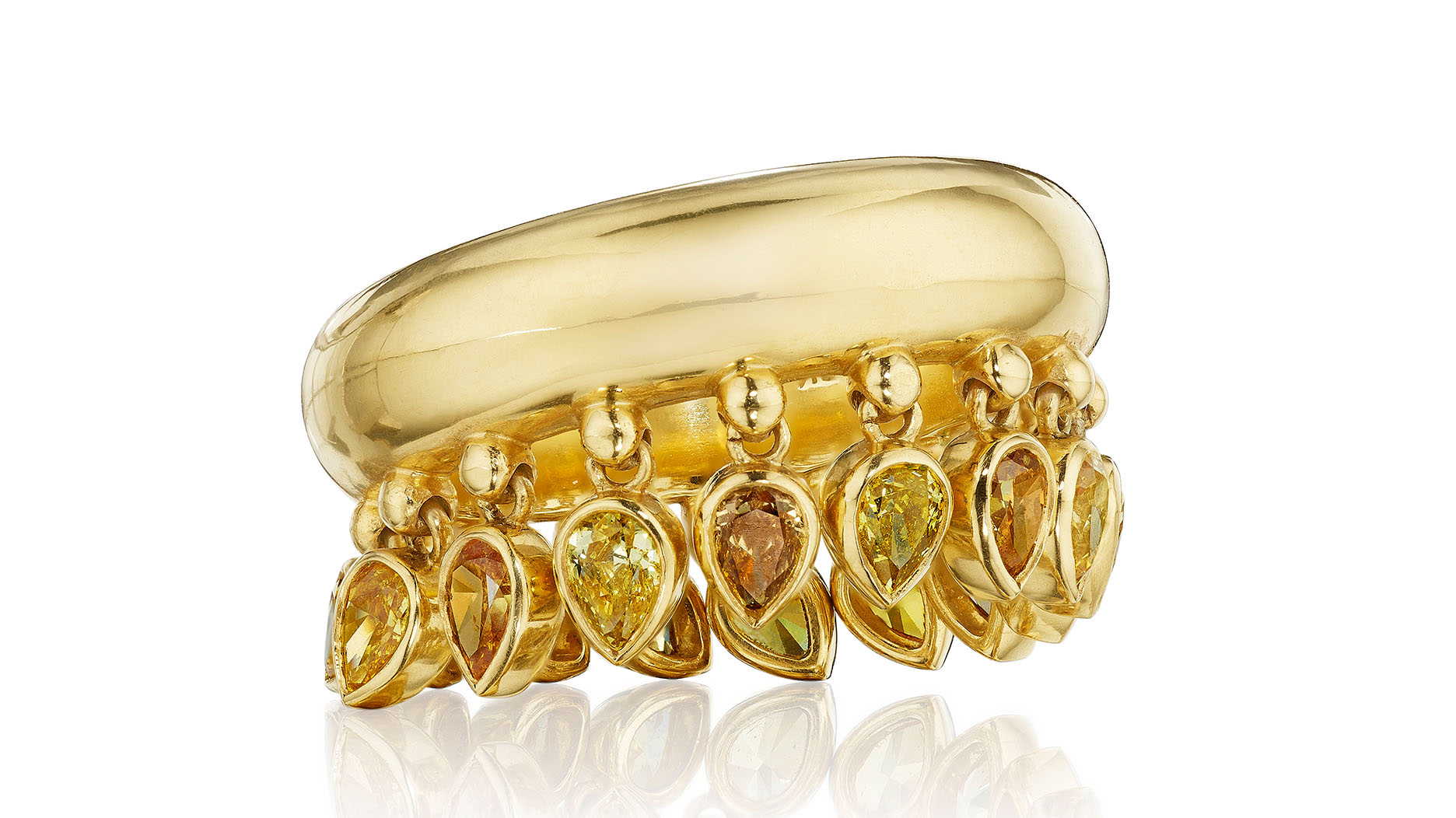
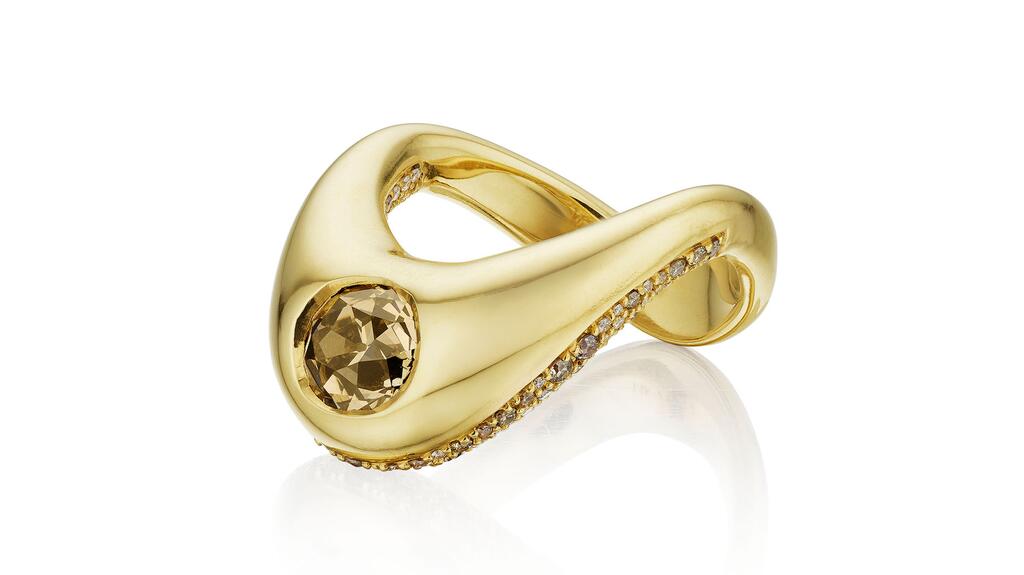
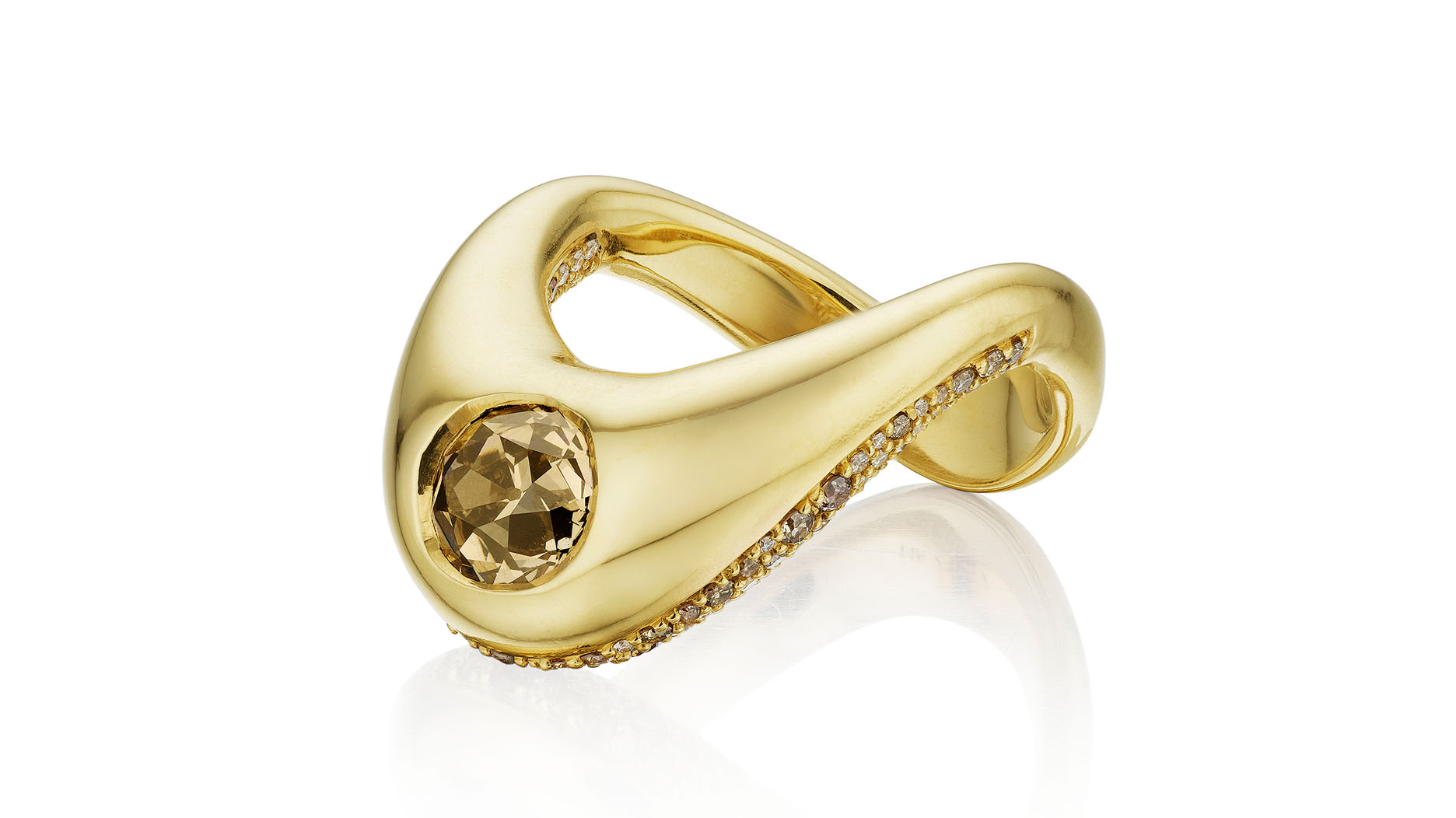
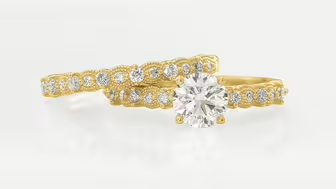
Rings set with brown- and yellow-hued diamonds by Ten Thousand Things. For the State of Diamonds story in the 2026 State of the Majors issue, contributor Avi Krawitz explored the repositioning of natural diamonds amid competition from lab-grown diamonds and consumers’ shrinking budgets.
Editor’s Note: This story first appeared in the print edition of the 2026 State of the Majors. Click here to see the full issue.
Rodnae Tucker-Natoli is something of an outlier among her peers.
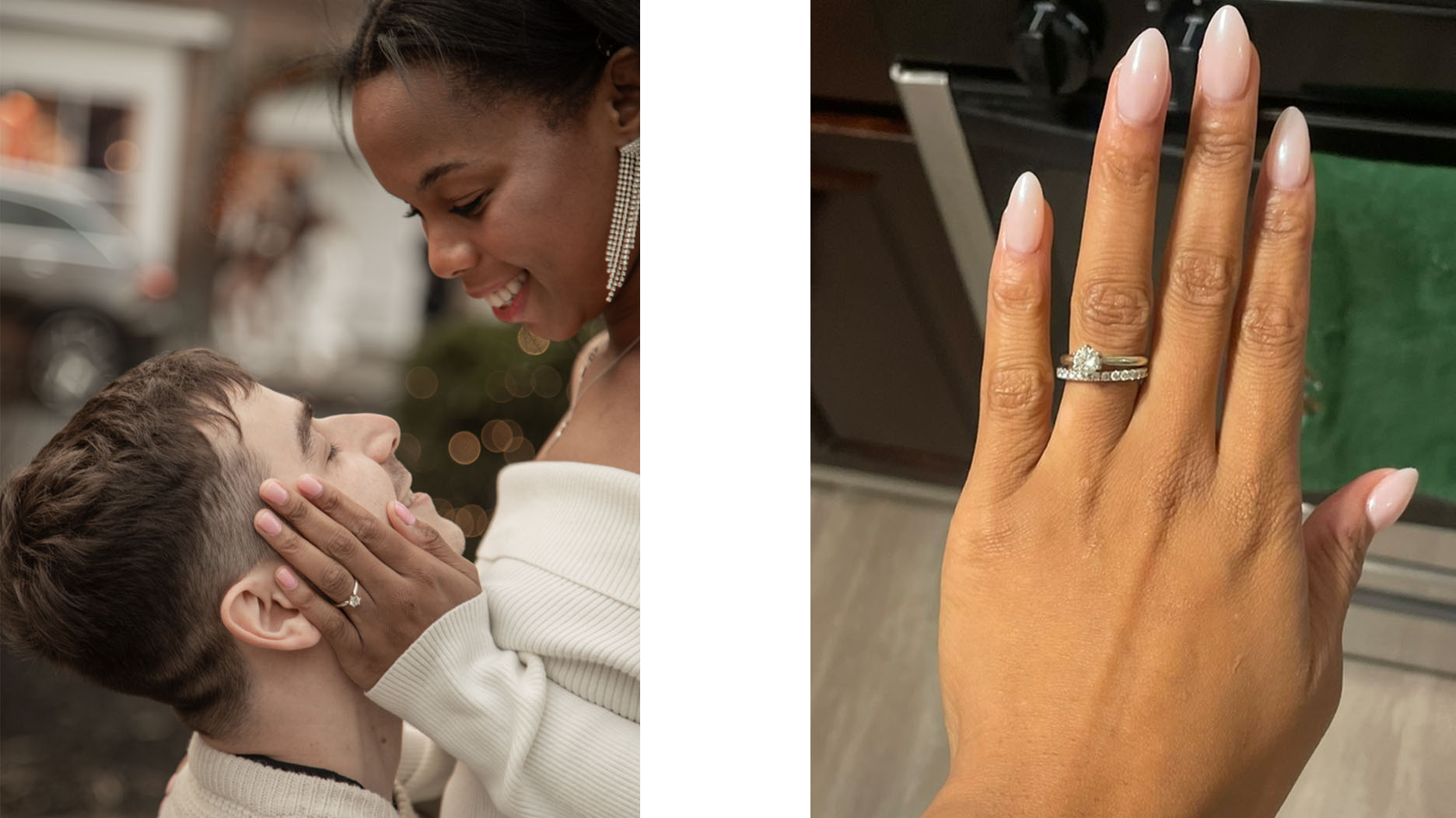
The 26-year-old speech pathologist gave her then boyfriend, now husband, clear instructions when they went ring shopping in 2023.
“I wanted a mined diamond,” she says, glancing at her left hand. “My mom has a real diamond, my mother-in-law has a real diamond, my grandma has a real diamond, so I wanted to keep the tradition going.”
Many of her friends who recently got engaged chose lab-grown stones, the New Jersey resident notes.
“They wanted a bigger ring but couldn’t afford what a larger natural diamond would have cost, whereas I opted for a smaller stone that was a real diamond.”
At the jewelry chain where her husband ultimately made the purchase, larger lab-grown diamonds were priced similarly to smaller natural ones, Tucker-Natoli recalls.
The less expensive option was moissanite, and she says the sales associate encouraged them to consider a larger lab-grown stone or moissanite instead of a natural diamond.
“I know a lot of people are choosing moissanite,” she says, “but for me, and for what it symbolizes, I wanted a real diamond.”
Falling Market Share The positioning of lab-grown against natural diamonds remains a challenge the diamond industry continues to grapple with.
The two are often presented side by side, and the industry is still working through what that means for pricing, messaging, and long-term value.
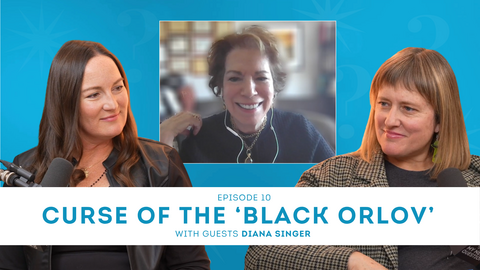
“Natural diamonds remain incredibly important, and that will continue, but we’re still figuring out this lab-grown disruptor, which is not brand new but is still in its infancy,” Sherry Smith, principal partner at The Retail Smiths, said on the first episode of Jewelers of America and National Jeweler’s “My Next Question” podcast.
“There’s a new willingness, especially among Gen Z, who are OK with the lab-grown engagement ring, and that is a disruptor to our industry.”
Lab-grown center stones accounted for 61 percent of all engagement ring purchases in 2025, a 239 percent increase since 2020, according to The Knot Real Weddings Study 2026.
The increase has been driven by economic pragmatism and evolving values, with 40 percent of couples stating specifically that it is important that their engagement ring center stone be lab grown, the survey noted.
In general, the diamond category has lost ground, with its share of annual jewelry sales slipping from around 50 percent to about 41 percent last year, Smith said.
Related stories will be right here …
What’s more, lab-grown diamonds outperformed natural diamonds in 2025, according to data from The Edge that Smith shared during the podcast.
She said sales of finished natural diamond engagement rings dropped 4 percent in 2025. The number of units sold, as well as the average retail sale, slipped 2 percent.
Sales of lab-grown diamond engagement rings, meanwhile, rose 31 percent. The number of units sold was up 30 percent and the average retail sale was flat.
Industry analyst Edahn Golan, who guested alongside Smith on the podcast, shared similar data from the company he co-founded, Tenoris.
He said lab grown continues to gain market share and now accounts for about 15 percent of total diamond sales.
He estimates the category accounted for just over half of engagement ring units sold in 2025.
“We need to re-educate consumers about the uniqueness of natural diamonds, and we need to move toward that differentiation sooner rather than later.” – Mahiar Borhanjoo, De Beers Group
A Unified Message The trend reflects a lack of clear differentiation between the two products and underscores the need to better articulate what makes natural diamonds distinct, says Mahiar Borhanjoo, chief commercial officer at De Beers Group.
“We haven’t really targeted the consumer for more than a decade,” he says, referring to the point when De Beers stepped back from funding and leading category marketing campaigns.
“We need to re-educate consumers about the uniqueness of natural diamonds, and we need to move toward that differentiation sooner rather than later.”
That urgency prompted De Beers to resume category marketing in 2024 and 2025, revitalizing “A Diamond Is Forever” as a channel for industry campaigns and introducing its “Desert Diamonds” concept to spotlight stones with warm yellow, white, and brown hues.
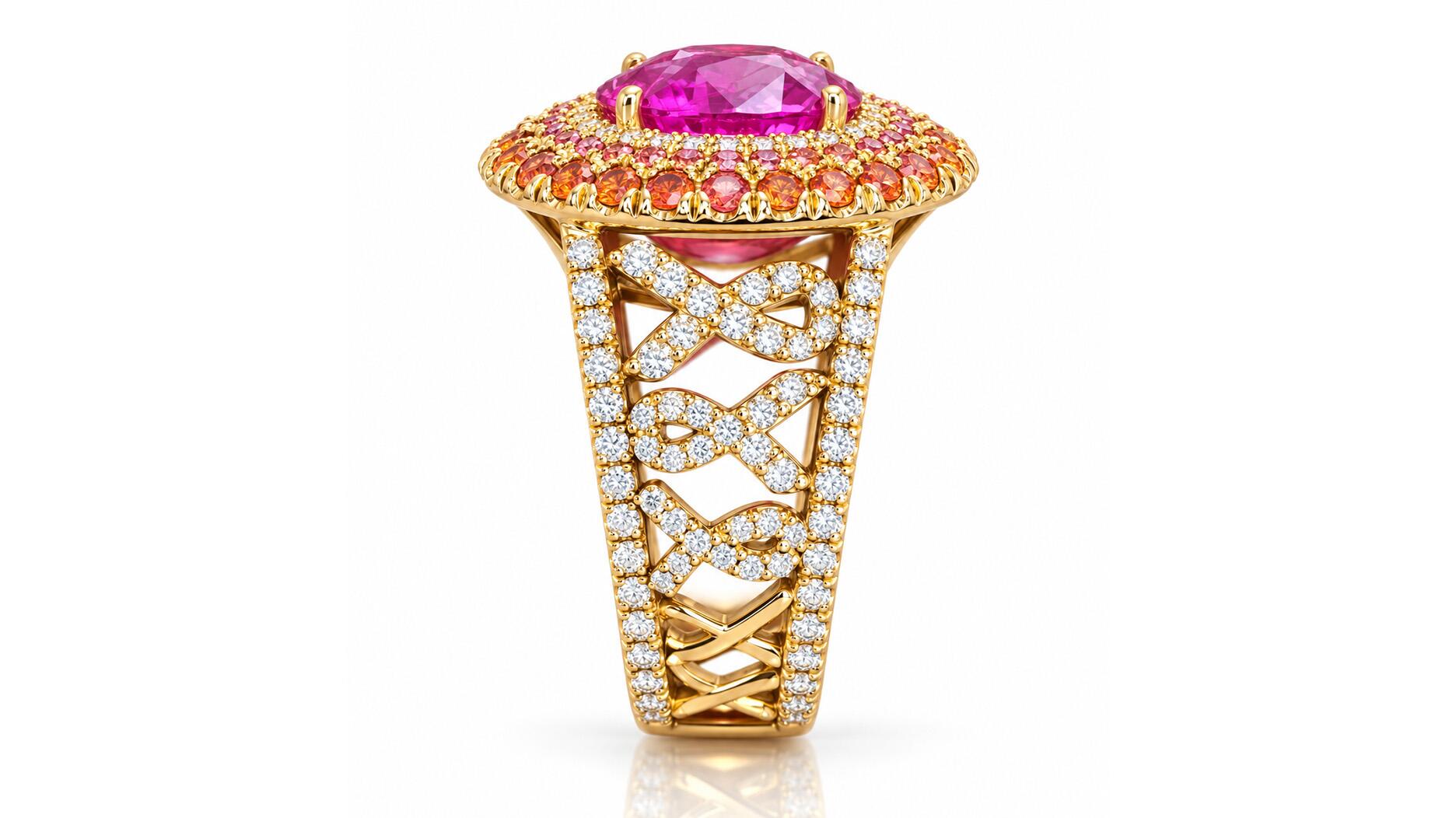
Designer Jade Ruzzo made a version of her 18-karat yellow gold “Tennessee” ring featuring 2.02-carats of pear-shaped champagne-colored diamonds.
The marketing moves come amid growing recognition that natural diamonds do not hold the same significance for Gen Z as they did for previous generations, who grew up with “A Diamond Is Forever,” beacon programs like the right-hand ring, and dancing shadows suggesting that two months’ salary can last forever.
Raluca Anghel, head of external affairs and industry relations at the Natural Diamond Council (NDC), maintains that the industry has been speaking to consumers, pointing to NDC’s strong engagement on social media.
However, she stresses, it has not done so with one clear, unified voice.
That fragmented messaging has confused the consumer, adds Borhanjoo.
“We need to be much more collective, much more aligned, and really drive this together, especially when it comes to getting the consumer’s attention,” he says.
“There’s a lot of information out there, and people don’t have the appetite for overload. The real challenge is making that first impression.” – Rebecca Foerster, Hearts On Fire
That calls for greater consistency and coherence in how diamonds are presented, argues Rebecca Foerster, president of Hearts On Fire.
She urges the trade to settle on a handful of core messages it can rally around in its outreach.
“What are the five big ideas we could craft together as a consistent story that’s really going to make that consumer look at this product category and say, ‘I want to be part of this,’” Foerster asks.
“Then we need to communicate it properly. There’s a lot of information out there, and people don’t have the appetite for overload. The real challenge is making that first impression.”
Tapping the Experience Economy It isn’t only a matter of messaging. It’s also economic.
Consumers have less discretionary income than they did 10 to 15 years ago and far more options competing for it, from technology to travel, Borhanjoo notes.
Gen Z is directing a greater share of spending toward experiences rather than products, Christina Adams, a partner at McKinsey & Co., said on a company podcast.
That shift is also evident across the luxury market, where consumers worldwide are increasingly favoring experiential indulgence over the conspicuous consumption that defined prior cycles, according to Bain & Company’s annual Luxury Goods Market Study.
However, the growth in spending on concerts, major sporting events, fine dining, and travel does not have to come at jewelry’s expense, Anghel argues.
Another “Desert Diamonds” piece, this one from Zahn-Z. The jewelry brand’s 14-karat yellow gold “Zaha’s Secrets” stacking ring features a 1.57-carat oval brilliant-cut warm fancy yellow-brown diamond and 1 carat of champagne-colored round brilliant diamonds.
“Jewelry is your forever companion because you’ll always have it on you,” she says. “You’re using jewelry as an accessory to enhance those experiences you’re having.”
Raj Mehta, CEO of Antwerp-based polished supplier Spectrum B.V., shares that view.
The industry often frames the experience around the moment of purchase, he says, but the more meaningful experience is in the wearing.
That includes everyday wear, particularly as fashion trends have shifted toward combining accessible clothing with high-end accessories, Mehta observes.
Consumers are pairing jeans and a T-shirt from Zara or H&M with a Birkin bag, a Rolex watch, or diamond jewelry without it feeling ostentatious.
Diamonds Versus Jewelry Emphasizing the enjoyment of wearing diamond jewelry does not dismiss the importance of providing a compelling in-store experience, which independent jewelers typically do well, Mehta acknowledges.
He observes that many anchor their sales pitch in the material components of the piece of jewelry rather than in lifestyle, heritage, or symbolism, elements more commonly emphasized by high-end luxury houses.
“We want jewelers to talk about the piece of jewelry, the design, how special the piece is, but also about symbolic values,” Mehta says.
Foerster recognizes the tension many jewelers and brands face between leading with the jewelry design or with the diamond content.
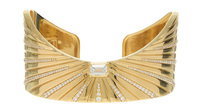
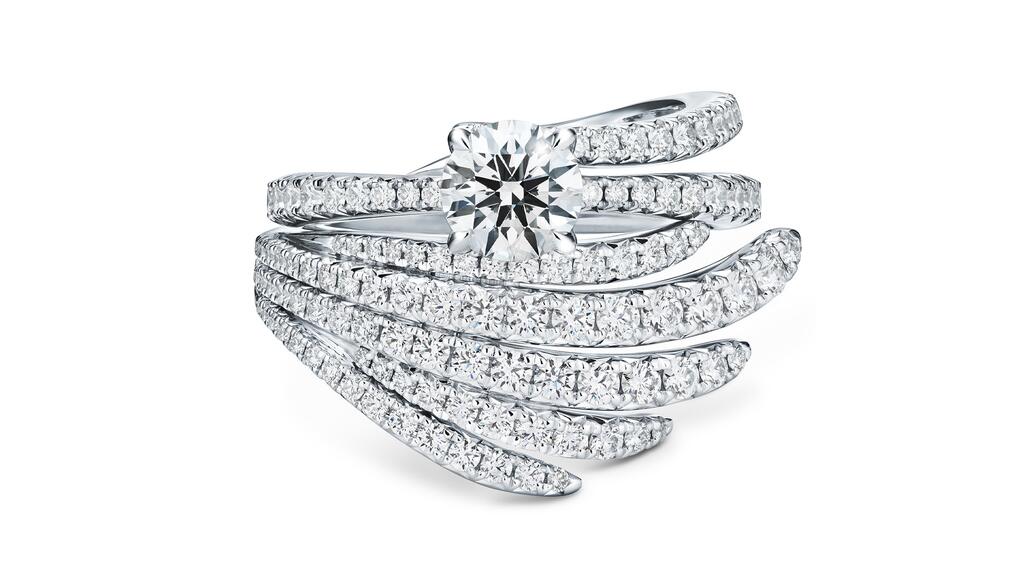
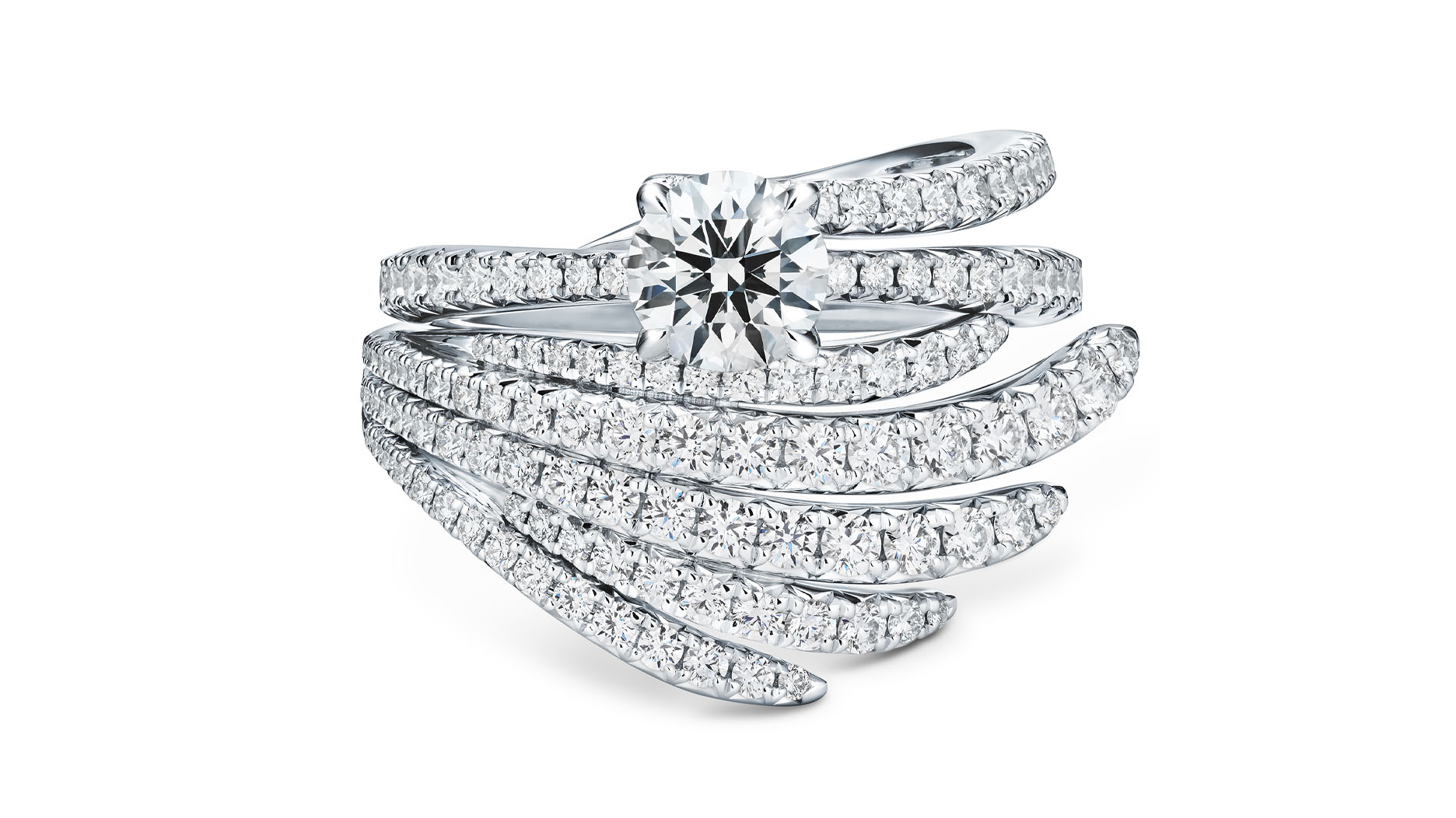
Two new rings from Hearts On Fire. At top is the white gold “Vela” solitaire diamond ring with a 1-carat center stone and pavé diamond band, and the ring on the bottom is the feather-inspired “Vela” diamond cocktail ring in white gold.
That debate sat at the core of Hearts On Fire’s repositioning over the past two years, from being marketed primarily as a diamond brand with an emphasis on the superb cut of its stones to presenting itself as a diamond jewelry brand with design being the point of distinction.
“We had to emphasize the jewelry in that journey,” she says.
“Now that our value proposition has changed and the brand has been repositioned, we can lean back into our diamond story.”
That shift allows Hearts On Fire to integrate the physical attributes of the diamond into a broader narrative about the piece itself, rather than treating the stone as the sole focal point.
For De Beers, which last year introduced its Origin diamond brand, the differentiator lies in the individuality of each diamond, particularly in the context of lab-grown competition.
For example, Borhanjoo explains, an I1 or SI2 clarity stone carries features that tell a story.
Those inclusions are not flaws but birthmarks, he says, holding billions of years of geological history and energy within them.
“Our big challenge is to show consumers what’s really unique in their piece of jewelry,” he says.
“Beyond the design or whatever they fall in love with, the diamond itself is the component that has a unique element to it.”
What Gen Z Wants This natural individuality stands in stark contrast to lab-grown diamonds, which don’t have that backstory and are typically sold based on price, Anghel stresses.
The move toward lower price points aligns with broader spending patterns among Gen Z consumers, who reduced overall spending in early 2025, particularly in categories such as apparel, accessories, and electronics, according to PwC research on consumer behavior.
In the fine jewelry world, they’re turning to lab-grown diamonds to get a bigger stone while spending a fraction of what they would pay for an equivalent natural diamond.
However, the pullback is more nuanced than simple belt-tightening, PwC researchers noted.
“It’s a generational shift in how value is defined and where money feels worth spending,” they wrote.
“It turns out Gen Z isn’t just price-conscious, they’re value-conscious, with an emphasis on emotional and social value, not just discounts.”
In other words, Gen Z is not necessarily spending less across the board; they’re reallocating, trading down on routine purchases to make room for what they see as meaningful indulgences, PwC concluded.
These more nuanced trends played out clearly in the jewelry market in 2025, when revenue growth was driven by higher ticket prices offsetting a drop in units sold, according to data from The Edge and Tenoris.
Gold’s surge was part of the story, but the pattern showed up in natural diamonds as well.
Sales of loose natural diamonds, typically used in custom engagement rings, fell 4 percent by value, with unit sales down 10 percent, even as the average purchase price climbed 6.3 percent to $11,000, Tenoris reported, highlighting the same trend conveyed by The Edge’s data.
That, Golan noted, reflects a broader shift among American consumers toward buying fewer pieces but spending more on each one.
It also underscores a market that is becoming increasingly segmented.
The higher average price was driven in part by softer sales at lower price points and a move toward larger stones, with the average size reaching 1.46 carats, Golan reported.
Erosion of the Middle U.S. retail is splitting into two distinct camps, observes Ravi Bhansali, CEO of Rosy Blue Antwerp, a polished diamond supplier.
At the top are high-end independents and luxury brands serving affluent clients, where natural diamonds still carry a strong value narrative, he explains.
At the other end, the volume game is largely controlled by the majors selling commercial-quality goods, many of which continue to migrate to lab-grown.
That hollowing out of the middle helped drive Hearts On Fire’s decision to reposition further upmarket, Foerster says.
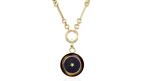
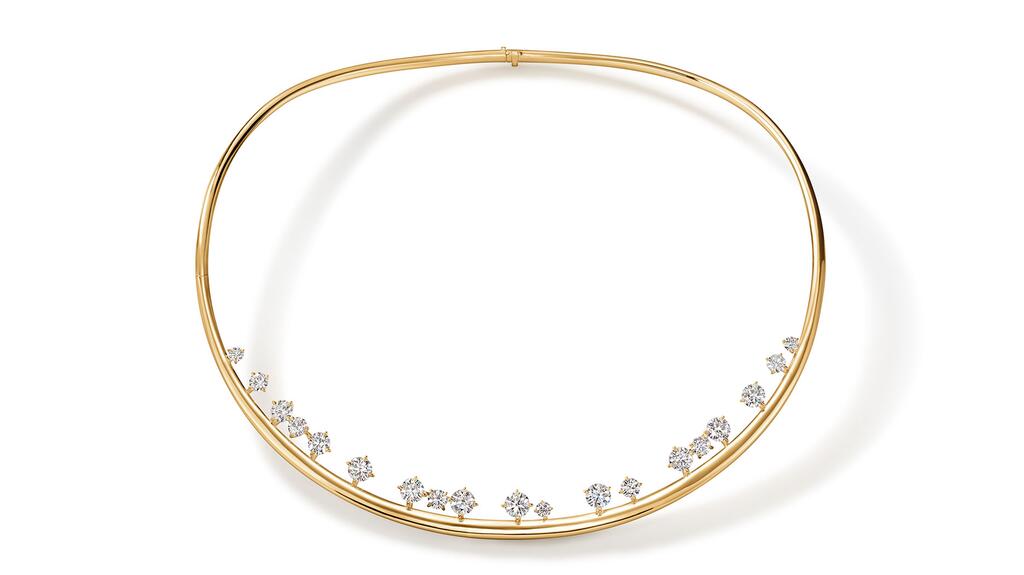
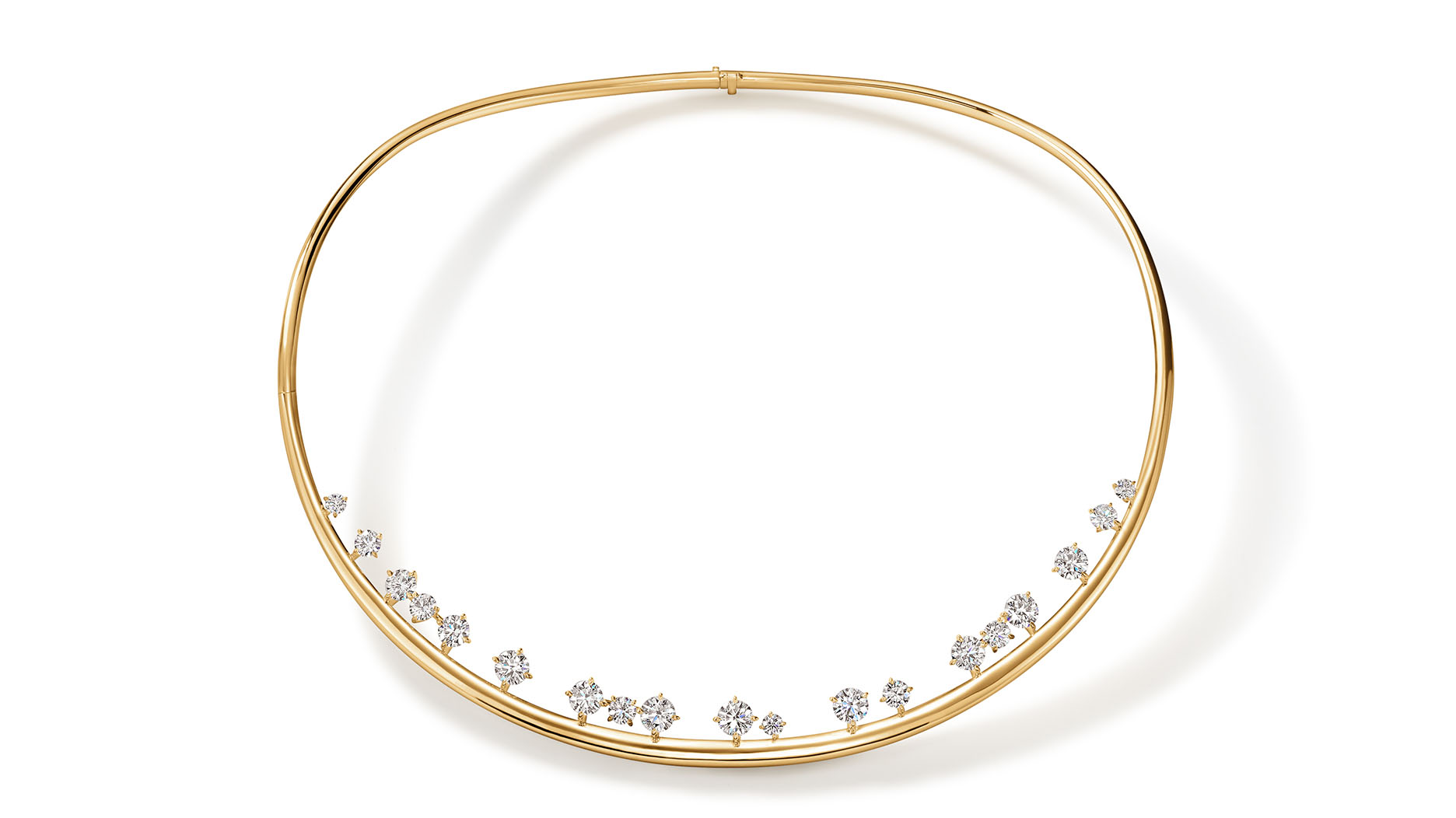
Hearts On Fire’s “Barre Floating Diamond Choker” with 4.85 carats of diamonds retails for $53,000. “Barre,” a new signature collection for the brand, was released in conjunction with Hearts On Fire’s 2024 rebrand.
“We saw the trend and recognized the need to get out of the lab-grown pool,” she explains. “At the same time, there has definitely been a shift among affluent consumers buying more jewelry.”
In the two years since shifting its focus to the high end, Hearts On Fire has nearly doubled its average transaction value, Foerster reports.
The strategy also moves the emphasis from chasing revenue growth to driving profitability and partnering with the right retailers serving the right customer profile.
The impact of that bifurcation is being felt across the supply chain.
Manufacturers and dealers are competing for a slimmer slice of goods that are in demand, Bhansali says. The traditional 0.50- to 1.50-carat range, long the backbone of the U.S. bridal market, has thinned out.
Borhanjoo agrees, noting that many retail jewelers he works with say they miss selling those bread-and-butter goods.
“That’s the area that we really need to understand, how do we get those customers back,” he says.
Eliciting Emotions Rebuilding demand, Foerster argues, starts with redefining value by unapologetically positioning diamonds as a luxury product.
That work begins at the point of sale, where a diamond’s perceived value is shaped. It requires a full in-store experience and a disciplined focus on storytelling, she says.
The conversation cannot revolve around price, adds Anghel.
It must be about aspiration, presenting natural diamonds in an inspirational, luxury environment that shifts the focus away from discounts and toward desire.
“With virtual reality becoming more part of everyday life, people are going to want real things and products … This is why it’s so important for us to connect them with our authentic story.” – Mahiar Borhanjoo, De Beers Group
That also means leaning into emotion, creating a connection in-store, and reminding consumers what the diamond represents in their lives.
The task has become more urgent as online channels, social media, and artificial intelligence reshape how people interact, progressively in more isolated and transactional ways.
That digital saturation is creating a counterreaction. The more time consumers spend in virtual spaces, the greater the pull toward tangible, real-world experiences, the PwC report noted.
Gen Z may be digitally native, but their path to purchase is anything but linear.
They discover on social media and compare prices online, yet increasingly visit stores to touch and see products, experience displays and atmospheres, and pursue promotions, the analysts stressed.
At left, Rodnae Tucker-Natoli and her husband Thomas Natoli and at right, Tucker-Natoli’s ring. The pair went shopping in person for her diamond engagement ring, with Tucker-Natoli opting for a smaller natural diamond over a larger lab-grown diamond.
According to The Knot’s study, which surveyed more than 10,000 U.S. couples who got married in 2025, most engagement ring shoppers prefer to do so in person.
On average, proposers visit two retailers and look at 10 rings in person during the buying process, with 64 percent of surveyed proposers choosing to make their ring purchase at a physical store and one-third doing so online.
Borhanjoo recognizes that human need for in-person interactions, and sees an opportunity for the diamond industry, especially amid the rise of AI and the immersive digital environment.
“With virtual reality becoming more part of everyday life, people are going to want real things and products,” he says.
“They’re going to be excited about things that are of age, and this is why it’s so important for us to connect them with our authentic story, with the hardest substance created by Mother Earth more than a billion years ago.”
Consumers are also seeking connection to heritage, history, and the traditions associated with brands and their products, Mehta adds. That is where jewelers can tap into the emotional equity of natural diamonds.
“It has great symbolic value, building memories when you gift a diamond, whether that’s in a relationship or from generation to generation,” he says. “I think it’s the only product that we can wear and also share with our loved ones in that way.”
“It’s a generational thing with these real diamonds, which hold value, and they hold so much love in my family.” – Rodnae Tucker-Natoli, consumer
That sentiment resonated with Tucker-Natoli, who was drawn to her natural diamond ring in part because of the generational role jewelry has played in her family and her own perception of the enduring nature of natural diamonds.
“My nana passed down her wedding ring to my grandma when she passed away, and my grandma’s going to do the same thing to my mom. So, it’s also a generational thing with these real diamonds, which hold value, and they hold so much love in my family,” she says.
“My nana’s ring from over 100 years ago still looks brand new. I don’t know what a lab grown or a moissanite ring is going to look like in 100 years.”