






SourcingJun 05, 2026
State of Diamonds: The Way Forward for Natural DiamondsTrendsJun 03, 2026
State of Design: Only the Innovative Will Survive
The price of gold has risen, affecting the number of pieces designers make, the materials they use, and how they position themselves.


Anna Maccieri Rossi’s “Carpe Diem” pendant. For the State of Design story in the 2026 State of the Majors issue, National Jeweler spoke with designers about how the high price of gold has changed their approach to design, the materials they use, and marketing.
Editor’s Note: This story first appeared in the print edition of the 2026 State of the Majors. Click here to see the full issue.
The jewelry industry has been struggling under the weight of the unprecedented price of gold but among jewelry designers, a trait is emerging from the tumult.
The best among them are not just making thinner pieces or repricing merchandise over and over again. They are learning to be more flexible, creative, and intentional.
Designers are embracing the use of materials like wood and leather, creating smaller yet more thoughtful collections, and in some cases, leaning into the investment value of gold when telling stories through their jewelry.
To paraphrase one designer interviewed for this story, the only way out is to follow the gold price, which has gone straight up.
In 2025, gold was $2,625 an ounce.
So far in 2026, the price has basically doubled ($5,340 was its 2026 peak as of press time), says David Siminski, vice president of sales and marketing at United Precious Metals.
The problem is not just gold. The other precious metals have followed its path.
Platinum was $800 an ounce in 2025. As of press time, it was about $1,960.
Silver has gone up almost 300 percent, from $28 an ounce in 2025 to a peak of $114 so far in 2026, and Siminski thinks it could hit $500.
“That has created unbelievable chaos for many people. [With] the tariffs, it’s almost like the perfect storm,” he says.
There are numerous contributing factors, one of the biggest being a lack of confidence in the U.S. dollar and U.S. Treasury-backed derivatives, according to Siminski.
“With all the fallout when it comes to the current presidency and the constant bickering back and forth with geopolitical stuff, a lot of countries and central banks are buying physical metal. They’re driving up the price,” he explains.
He notes that the other factor is retail investors “hitching onto the wagon” by adding or increasing the amount of metal in their portfolios through physical metal purchases, exchange-traded funds, or stocks.
“Gold is like another form of currency because there’s a real question about the U.S. dollar, which has been the stabilizing factor around the world,” Siminski says.
Metal is also in demand in the electronics industry, specifically gold and copper, for the circuit boards found in computers, phones, and cars.
That drives up the price too.
The jewelry industry has been struggling under the weight of the unprecedented price of gold but among jewelry designers, a trait is emerging from the tumult.
The best among them are not just making thinner pieces or repricing merchandise over and over again. They are learning to be more flexible, creative, and intentional.
Designers are embracing the use of materials like wood and leather, creating smaller yet more thoughtful collections, and in some cases, leaning into the investment value of gold when telling stories through their jewelry.
To paraphrase one designer interviewed for this story, the only way out is to follow the gold price, which has gone straight up.
In 2025, gold was $2,625 an ounce.
So far in 2026, the price has basically doubled ($5,340 was its 2026 peak as of press time), says David Siminski, vice president of sales and marketing at United Precious Metals.
The problem is not just gold. The other precious metals have followed its path.
Platinum was $800 an ounce in 2025. As of press time, it was about $1,960.
Silver has gone up almost 300 percent, from $28 an ounce in 2025 to a peak of $114 so far in 2026, and Siminski thinks it could hit $500.
“That has created unbelievable chaos for many people. [With] the tariffs, it’s almost like the perfect storm,” he says.
There are numerous contributing factors, one of the biggest being a lack of confidence in the U.S. dollar and U.S. Treasury-backed derivatives, according to Siminski.
“With all the fallout when it comes to the current presidency and the constant bickering back and forth with geopolitical stuff, a lot of countries and central banks are buying physical metal. They’re driving up the price,” he explains.
He notes that the other factor is retail investors “hitching onto the wagon” by adding or increasing the amount of metal in their portfolios through physical metal purchases, exchange-traded funds, or stocks.
“Gold is like another form of currency because there’s a real question about the U.S. dollar, which has been the stabilizing factor around the world,” Siminski says.
Metal is also in demand in the electronics industry, specifically gold and copper, for the circuit boards found in computers, phones, and cars.
That drives up the price too.
“The rising price of gold has certainly changed the conversation, but it hasn’t diluted the creativity. If anything, it’s pushed designers to be even more intentional.” –Jennifer Shanker, Muse
Siminski predicts that, based on gold’s trajectory, it will continue to rise for years and could reach $10,000 an ounce.
He believes that one day people will look back at $5,000 gold as a bargain.
“Even if gold or silver corrects by 10 percent or even 20 percent, it doesn’t matter,” he says.
“Usually what happens is, it’ll fall, it’ll build a base, it’ll go up a little higher, then come back down. This is just shooting up like a rocket ship.”
The Trend Rising with the Price of Gold
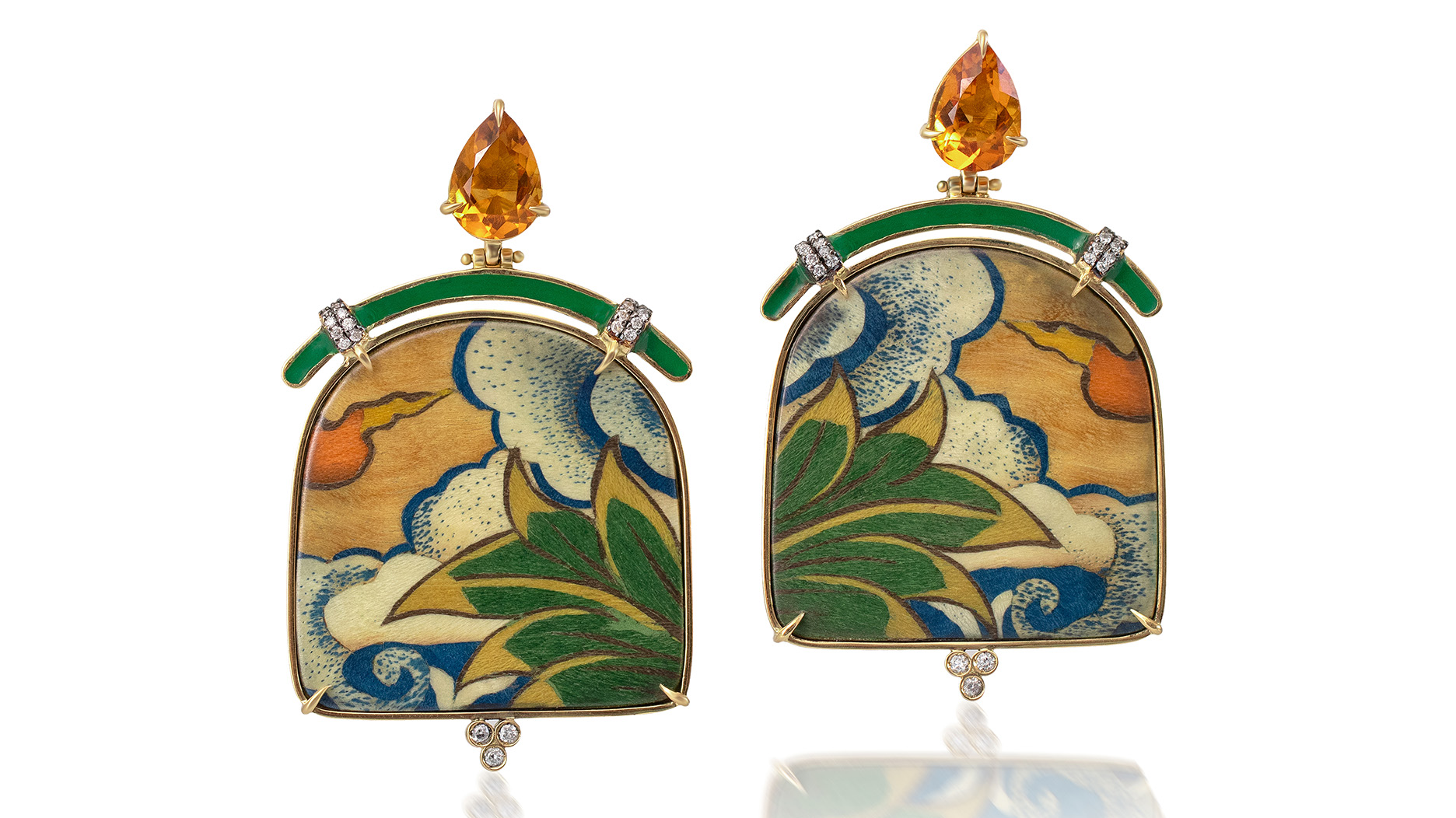
Silvia Furmanovich’s Tibetan leaf print marquetry earrings incorporate wood, green enamel, pear-cut citrines, diamond accents, and 18-karat yellow gold ($8,800).
One trend coming to the forefront as the price of gold continues to increase is the use of alternative materials.
Many designers don’t choose to use materials like leather, glass, wood, or resin specifically to make their jewelry cheaper. The alternative material trend is about being creative and designing in ways that are both true to one’s brand and cause them to stand out among the many gold pieces in the market.
If the materials cost less, that’s simply a plus.
“The rising price of gold has certainly changed the conversation, but it hasn’t diluted the creativity. If anything, it’s pushed designers to be even more intentional,” says Jennifer Shanker, founder and creative director of Muse, a fine jewelry showroom in New York City.
The Muse family includes brands like Anna Maccieri Rossi, Bea Bongiasca, Francesca Villa, Lorraine West, Mark Davis, Silvia Furmanovich, Ten Thousand Things, and Vice Versa.
Shanker is seeing an increase in jewelry that is meaningful rather than excessive.
She says, “That mindset translates into pieces that justify their value through craftsmanship, concept, and longevity.”
It also brings one-of-a-kinds to the forefront because it allows designers to be more flexible and thoughtful with pricing than they can be with production pieces, which constantly need to be repriced because of the volatile market, explains Randi Molofsky, founder of brand development agency For Future Reference.
“It’s about being thoughtful and making things unique so they aren’t overlapping with other things in the market,” says Molofsky, noting that the brands she represents are continuing to use the gold, diamonds, and colored gemstones that are their standards.
For Future Reference’s brands include Harwell Godfrey, Jade Ruzzo, HOWL (Handle Only With Love), Vanessa Fernández Studio, Circa 1700, Retrouvaí, Buddha Mama, and For Future Reference Vintage.
“Every brand needs to find their own skill, their own material, their own characteristic.” –Anna Maccieri, Anna Maccieri Rossi
Anna Maccieri, founder and creative director of Anna Maccieri Rossi, says designers can view the problems created by the rising price of gold in one of two ways.
“You can see it as a problem or you can see it as an opportunity,” she says. “I think this is an opportunity to find a way to share light instead of darkness.”
She is not tackling the price of gold from the point of view of a sales manager. While she thinks more about her use of gold to take care of her clients, she has branched out to include alternative materials like wood because of its design possibilities.
Maccieri says, “I feel that if you are driven by the idea of choosing a material just because it’s a commercial object, the result could be without soul … Every brand needs to find their own skill, their own material, their own characteristic. The secret is that when the message is authentic, people feel it.”
Silvia Furmanovich has done this successfully. The Brazilian designer uses materials like wood, horse mane, bamboo, and papier mâché along with 18-karat gold and diamonds; it is a core element of her brand.
HOWL, the Los Angeles-based jewelry brand headed by designer Tini Courtney, has as well, using antique Venetian glass set in 18-karat gold.
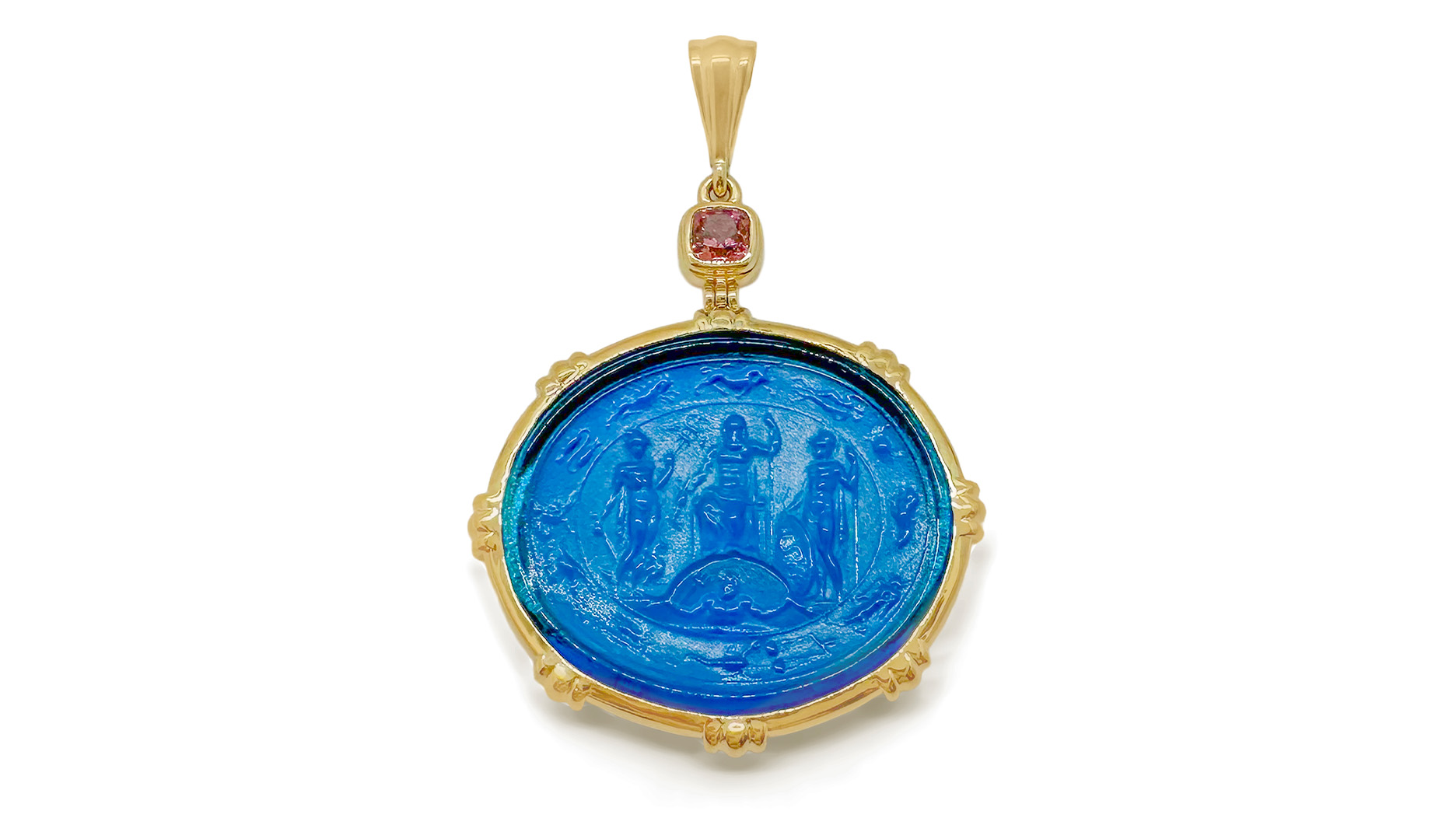
HOWL’s one-of-a-kind “Tembo” pendant features a cobalt blue Venetian glass intaglio set in 18-karat yellow gold and accented by a 1.35-carat rose tourmaline ($12,000).
This gives the vibe of a colored gemstone without the price, instead showcasing a carved image that fits into the brand’s aesthetic, as Courtney takes inspiration from history.
“That’s a really clever way to get that look for less, if you will, but [it’s] still something that’s unique and enduring and has some history to it,” Molofsky says.
While designers are experimenting with alternative materials, their use doesn’t have to be an either-or proposition, trend experts noted at a talk at the September 2025 Vicenzaoro show.
“The future of the jewelry market is about using new materials. It can be carbon fiber [or] ceramic but combined with precious metals. It can be a new opportunity, it doesn’t have to be a competition with precious materials,” said trend forecaster Giorgia Musci, a presenter at Paola De Luca’s “Trends for Breakfast” talk.
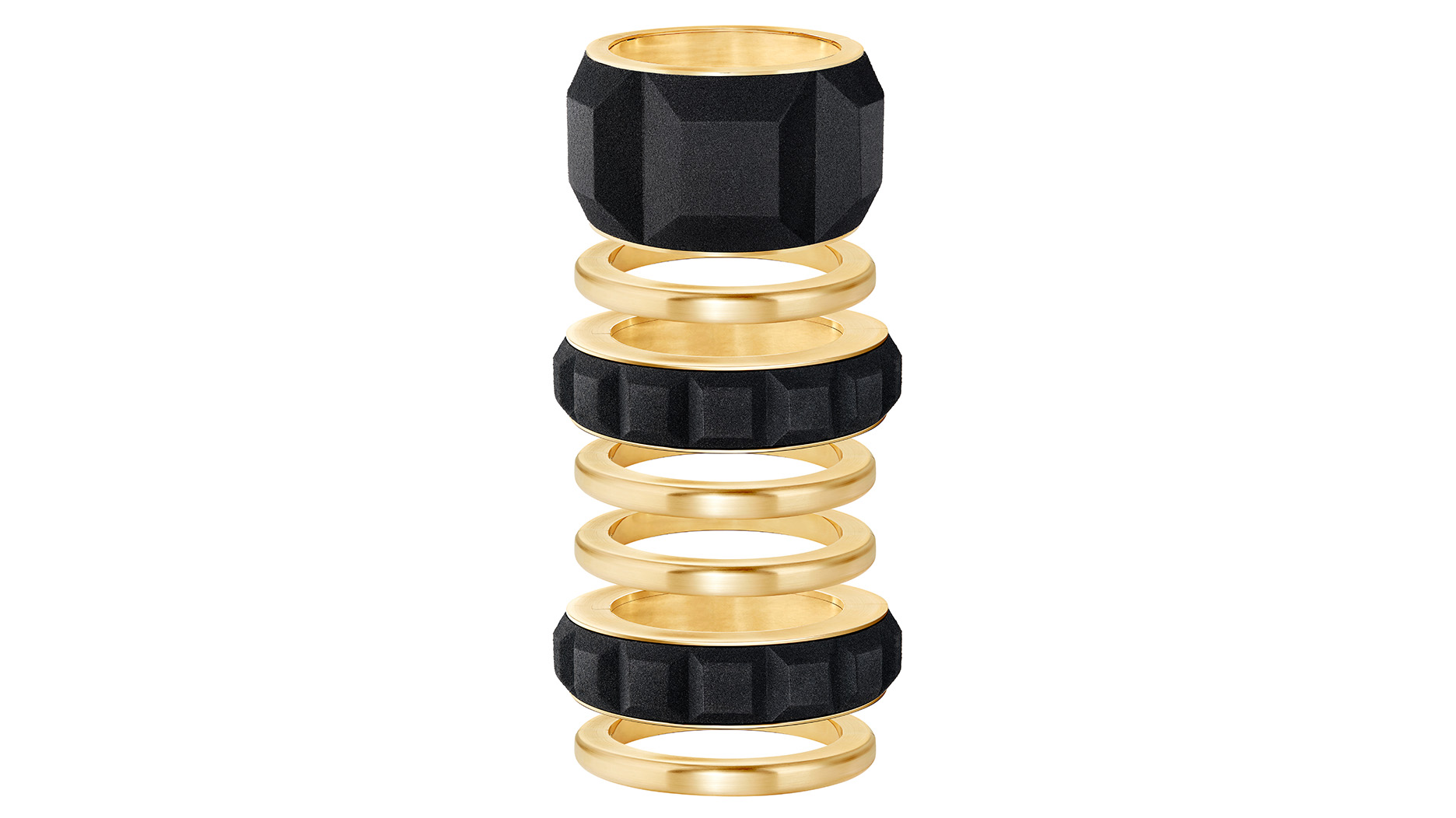
Boucheron’s “Quatre Sand” capsule collection consists of four 18-karat yellow gold bracelets and three with black sand 3D printed in a “Clou de Paris” pattern over 18-karat yellow gold (price upon request). (Image courtesy of Boucheron)
Innovation is one trend De Luca highlighted during her presentation, and jewelers like Boucheron have done exactly this with alternative materials.
Its capsule collection, “Quatre Sand,” focuses on oversized cuffs created with 18-karat yellow gold and black sand.
Through 3D printing technology, sand and a polymer binder were built in layers and affixed to a gold base to create large pieces that would have been heavy and pricey if they were all gold.
“Winning the global competition is mixing technology with craftsmanship,” De Luca said.
The Warmth of Wood
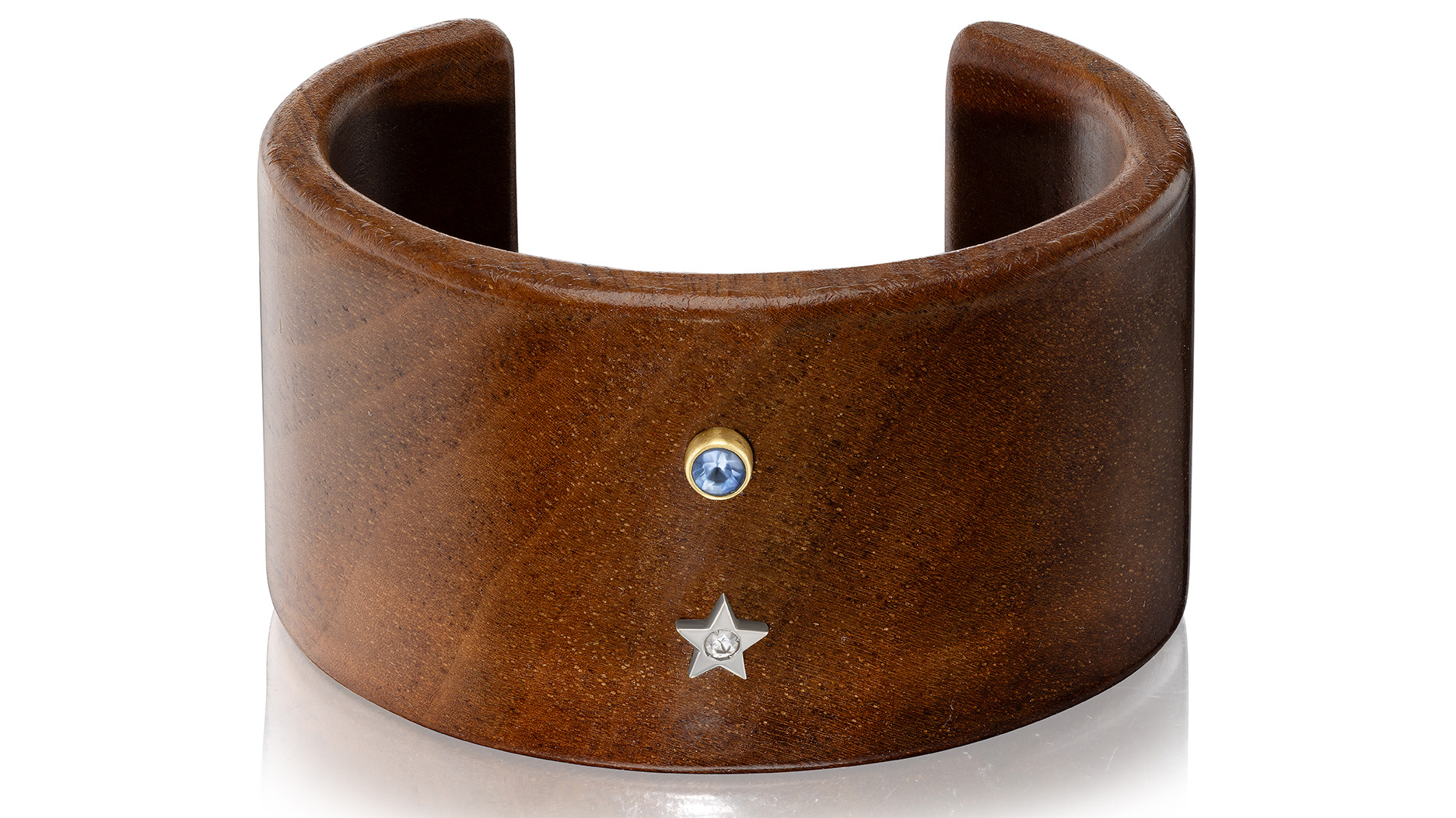
Anna Maccieri Rossi’s “Ora Wood Sunrise” cuff uses walnut wood accented by a diamond-studded 18-karat white gold star and a blue sapphire set in yellow gold (price upon request).
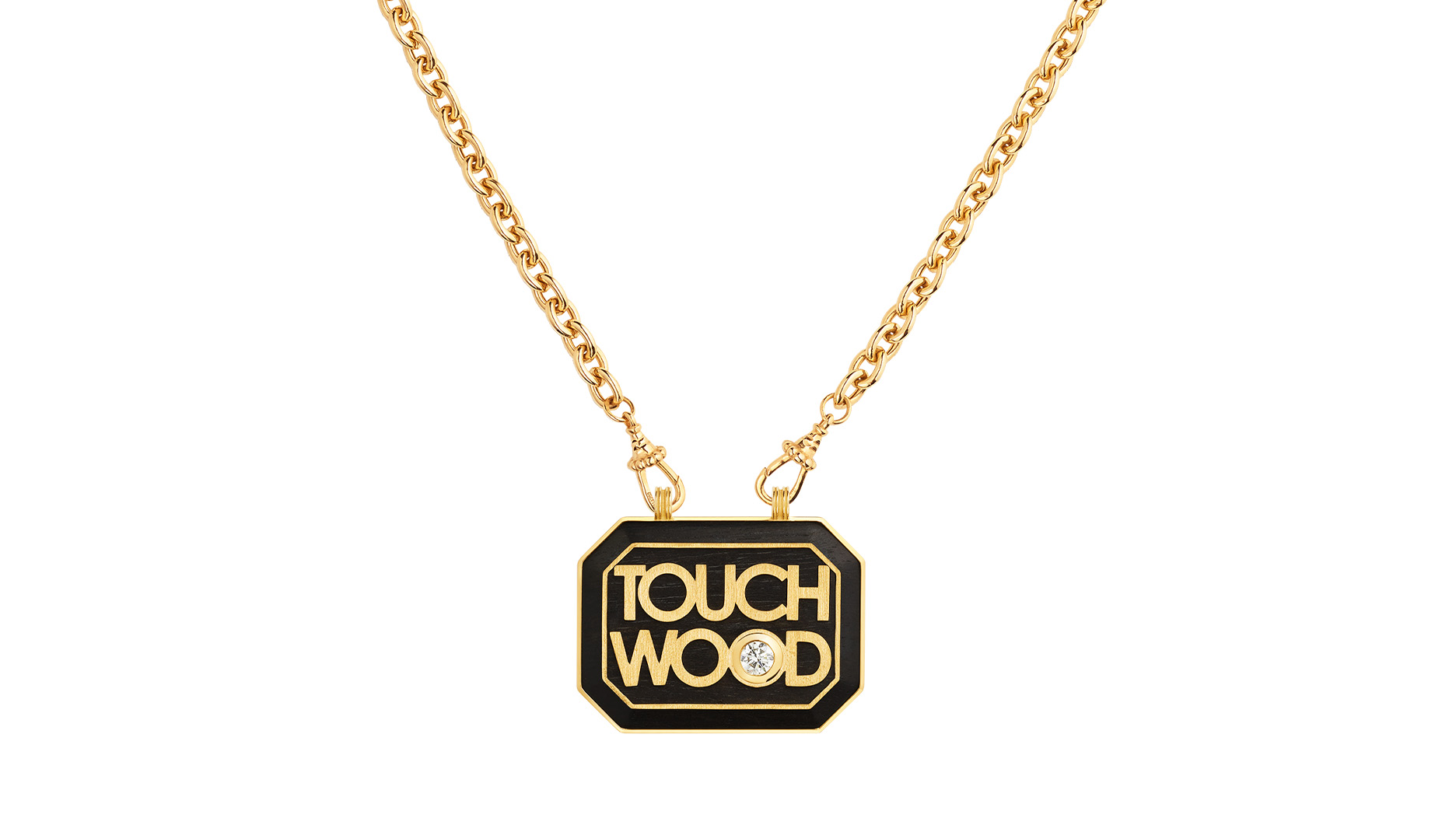
Marie Lichtenberg’s “Touch Wood” scapular featuring a 0.57-carat diamond and ebony set in 18-karat yellow gold and styled on a “Rosa” classic chain ($35,760)
Wood is an alternative material rising in popularity among designers, chosen for its warmth, contrast, and narrative.
It offers its own nuance of color, with different grain patterns visible on every piece.
For Maccieri, the addition of wood came from her desire to create larger-scale pieces that are not possible in gold because of both the price and weight of the metal.
Her “Touch Wood” collection showcases a balance between olive tree and walnut wood and precious materials like 18-karat gold, diamonds, and sapphires.
In the “Ora Wood Sunrise” cuff, the foundation is walnut wood. Accents of precious materials showcase that balance while tying in reoccurring motifs for the brand, like an 18-karat gold star that is also seen in its “Carpe Diem” pendants.
“It was challenging because I had to find the right artisans to work by hand in Italy,” Maccieri says.
“What I love is that it is a natural material, warm, something that immediately arrives to the heart.”
Maccieri’s Touch Wood collection, which debuted at Couture in 2025, marked the first time she has used wood for her own brand, though she has worked with it as a designer for other brands’ projects.
Since its debut, her wooden disk bead necklace has become popular, especially when paired with the Carpe Diem pendants, she says.
Trading Chains for Leather
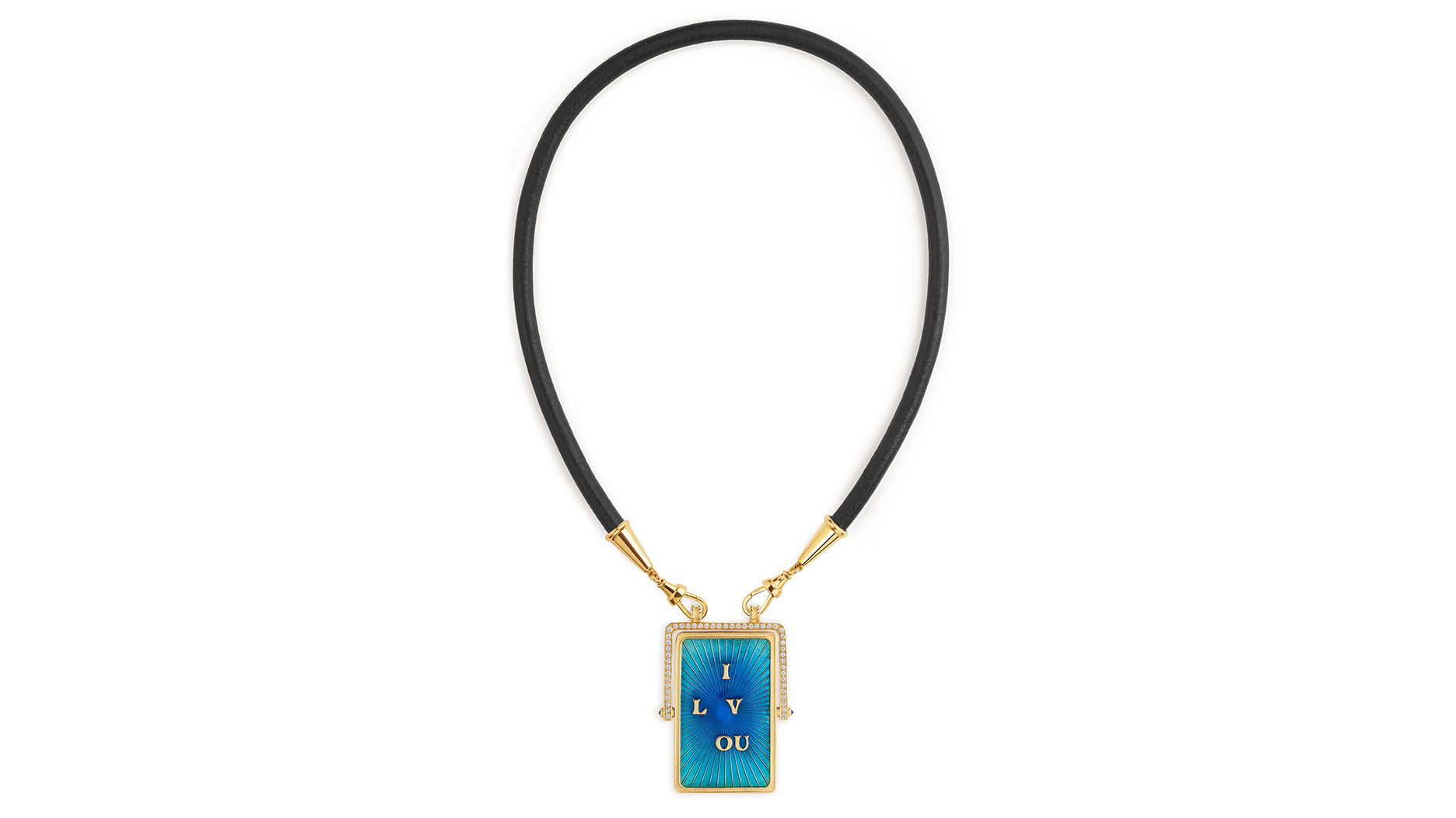
Marie Lichtenberg’s “Love You” spinning scapular with sapphires, diamonds, and blue enamel on 18-karat yellow gold is styled on a “Lasso” cord using black calf leather with 18-karat yellow gold findings ($28,920)
Leather is another alternative material that many designers have been featuring in recent collections.
The use of the material fits into not only the alternative material trend but also the Western wear trend that gained traction last year during Beyonce’s “Cowboy Carter” tour and again in 2026 for the year of the Fire Horse.
“It’s nice to have an option that doesn’t cost as much as a gold chain. It’s also become cool fashion-wise because designers have moved more towards detachable pendants than when everything used to come as a necklace with a chain,” Molofsky says.
“I think leather is here to stay and that’s one thing we’ve seen growing; people want that option for their expensive, gold-heavy pieces.”
As the price of gold kept rising, designer Marie Lichtenberg elevated her brand from 14- to 18-karat gold and quit using silk cord, a signature component of her locket and scapular necklaces.
Instead, the designer has been embracing leather with her “Lasso” baby locket bracelets, which debuted in January, featuring Italian calf leather and 18-karat gold accented by a diamond, ruby, or emerald.
“It’s a little step into the leather world that we’re going to explore a bit more,” Lichtenberg says.
However, she notes that using leather won’t bring down the cost of her pieces because the price of production drives it up.
“Whatever pieces we’re doing are a pain in the ass, meaning that everything is complicated, intricate, difficult to make, difficult to produce. The baby locket is 18-karat gold, intricate opening and closing, heavy, [and] expensive.
“The ‘Lasso’ necklace that we are making, the clasp on everything, they are handmade in heavy gold. It’s not inexpensive. This is very expensive,” says Lichtenberg.
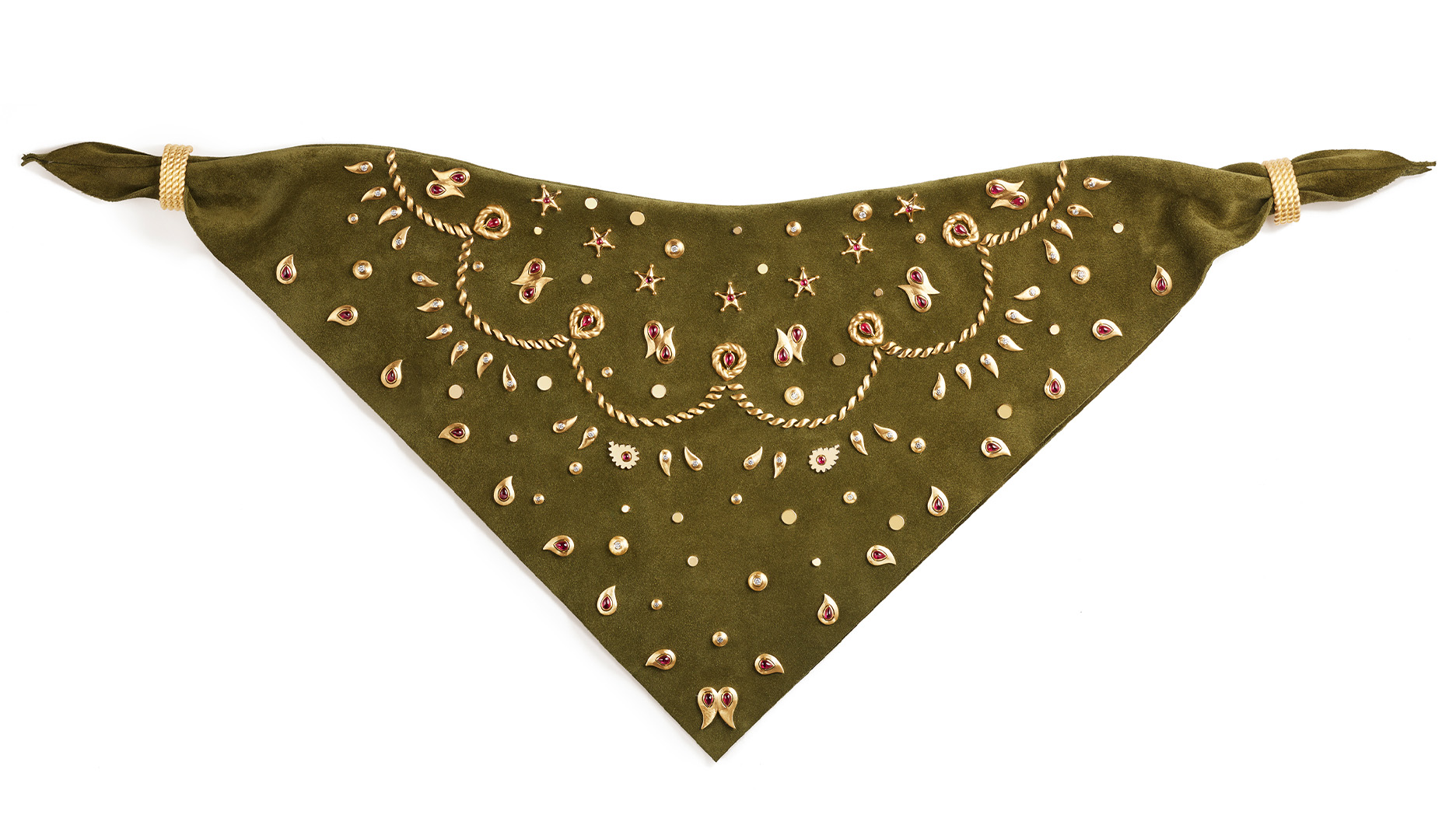
Marie Lichtenberg’s high jewelry bandana featuring 17.68 carats of rubies, 3.09 carats of diamonds, and 18-karat yellow gold embroidered on suede leather ($282,840)
At the 2025 Couture show, she debuted a khaki-colored suede leather bandana featuring 18-karat yellow gold, rubies, and diamonds.
It was crafted at a workshop in Bologna, Italy, by the same craftsmen who have done the embellishment work and embroidery for Prada for the last 14 years.
The high jewelry bandana retails for $282,840.
“Whatever we’re going to use, we want to use it in the best and most luxurious way,” Lichtenberg says. “Now it’s leather but maybe it’s going to be cashmere in two years. I don’t know.”
Lichtenberg also is playing with the idea of using glass, resin, and wood—with the latter an already existing offering—in future designs.
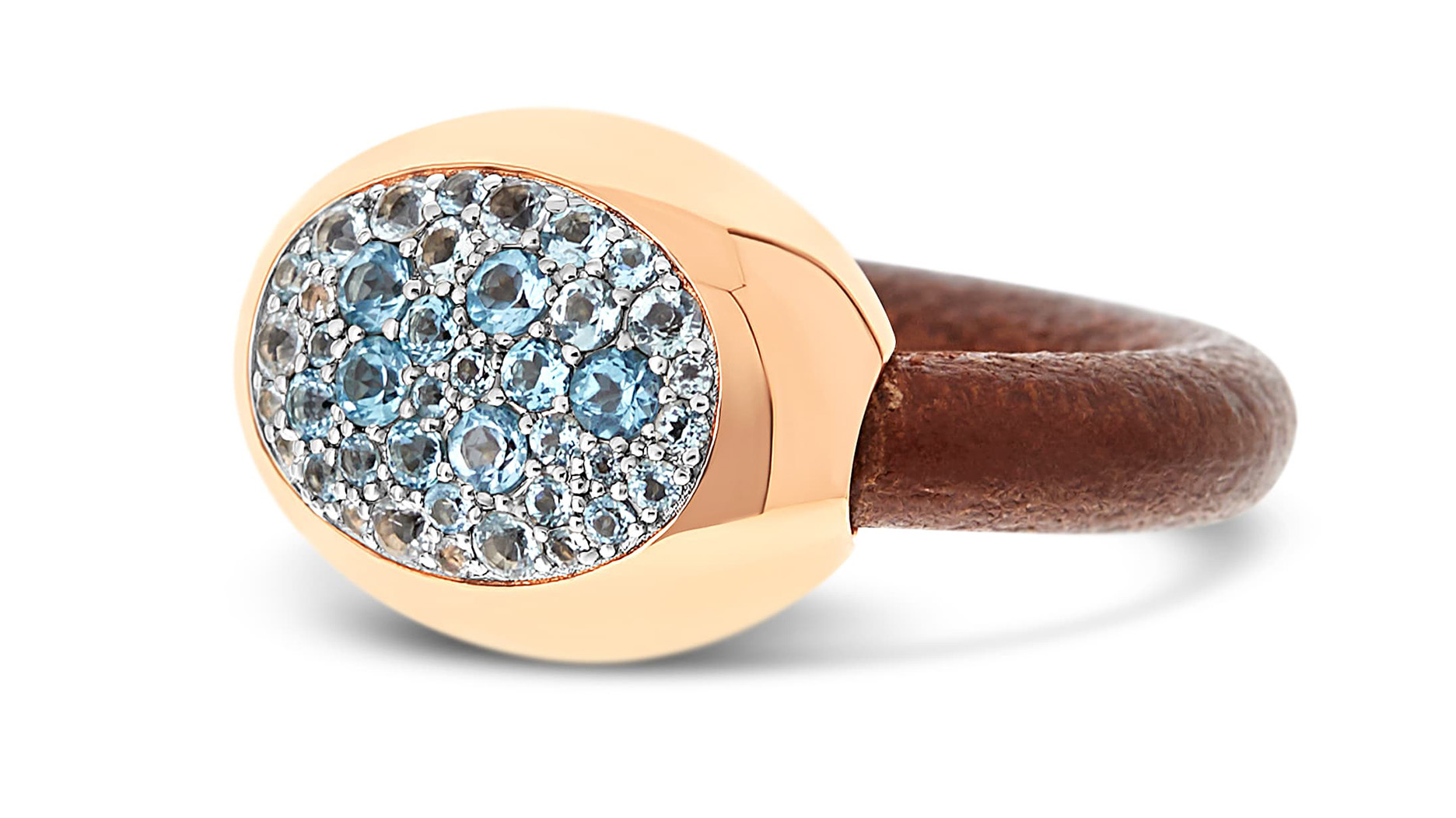
Nanis’ large “Duo” ring featuring blue topaz and Swiss blue topaz pavé in 18-karat rose gold on a leather band ($5,130)
Nanis Italian Jewels also debuted an 18-karat gold and leather collection of bracelets, necklaces, and rings in January.
The “Duo” pieces feature leather straps in three colors with the brand’s “boule” motif in 18-karat gold as the clasp, set with stones like onyx, turquoise, malachite, or pavé tsavorites and green sapphires, diamonds, and blue topaz.
In a press release, Nanis President and Creative Director Laura Bicego explained that the Duo collection belongs to neither gender; it is the meeting of “softness and structure, technique and instinct.”
Its name is a metaphor for a balance of two materials, leather and gold.
The Only Way Out Is Up
Pricing has been an issue because the cost of gold has rapidly increased, causing many to home in on the intrinsic value of their pieces.
Molofsky explains that a piece’s intrinsic and investment value has validated her designers’ decision to continue using precious metals, diamonds, and colored gemstones.
“How it stands the test of time, how these pieces don’t go down in value. In fact, we’ve only seen them go up. It’s sparked a conversation that, in some ways, has really helped us,” Molofsky says.
Educated customers are excited by the investment opportunity inherent in a one-of-a-kind piece valued above $10,000, while the consumers most affected are those who normally buy from a designer with a price point between $1,000 to $4,000, according to Molofsky.
However, that doesn’t mean designers who continue to use all gold are not feeling the effects of the precious metal’s high price.
“No matter what we’re doing, it’s going to be expensive so let’s go big.” –Marie Lichtenberg
Molofsky says collections may be smaller, but the pieces that are created and sold are intentional and thoughtful in their design direction and the story they tell.
Lichtenberg found herself in a battle over her brand’s response to the increasing price of gold.
Rather than increase the prices on her existing pieces, she halted production of the brand’s current collection, created a new collection exclusively in 18-karat gold, and indexed it on the new price of gold.
“For us, the only way out was the way up,” Lichtenberg says. “What I’m going to do now is bring to the table new craftsmanship, new ways of making jewelry, but not because it’s less expensive. We’re going to try to make beautiful things in a more healthy way.”
It would not be genuine if Marie Lichtenberg suddenly started selling simple and light jewelry; the brand’s DNA is intricate, bold, and heavy gold pieces.
In this new collection, she chose to create more gold pieces using chain rather than her signature silk cord because of the perceived value of jewelry.
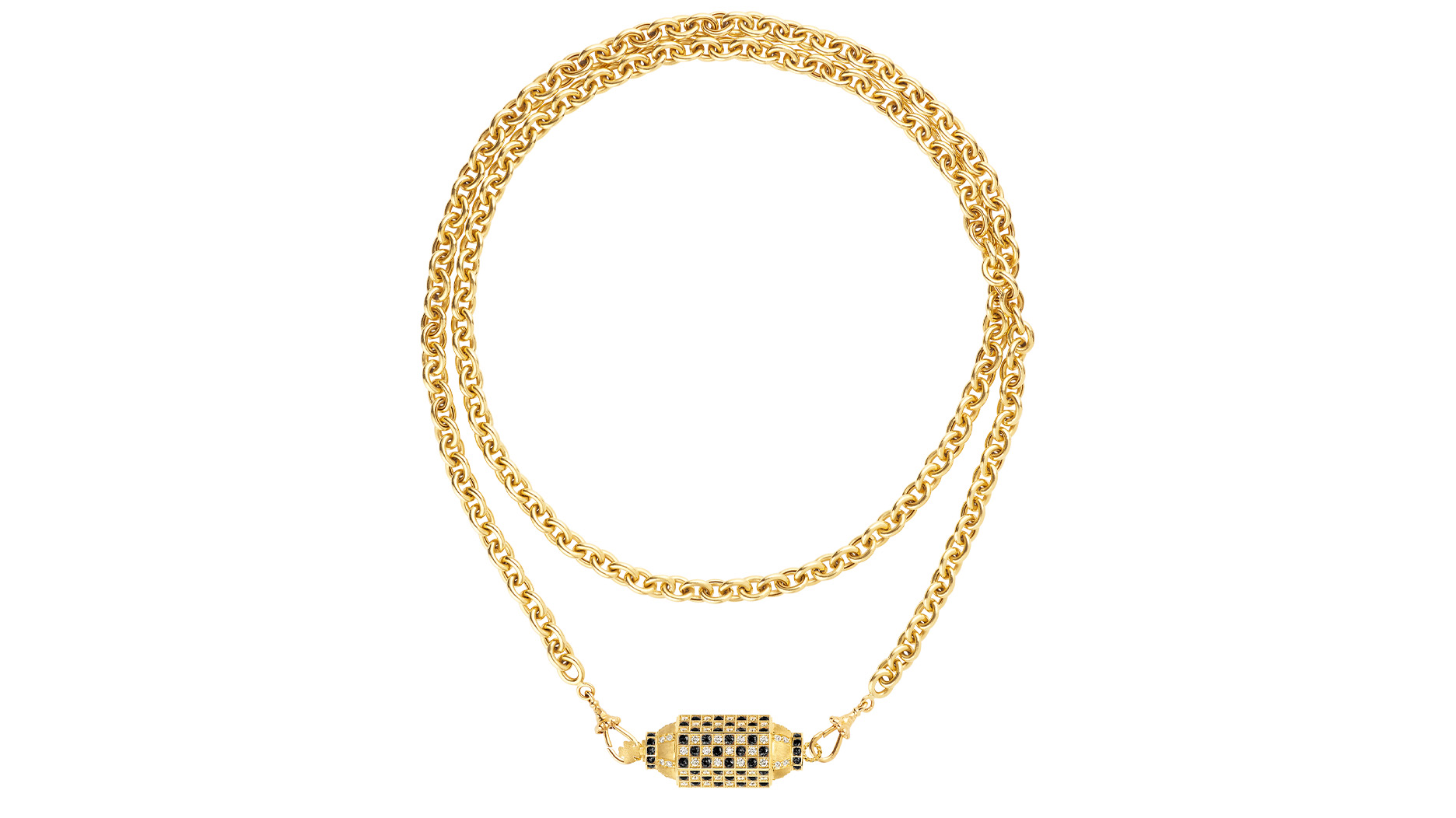
Marie Lichtenberg’s “Check” locket with white and black diamonds totaling 4.28 carats on an 18-karat yellow gold “Rosa” classic chain ($40,200)
“You need to be coherent with what you’re making because if you have an 18-karat gold locket at $10,000 or $15,000 on a cord, I think it’s really cool, but a lot of people don’t understand that. They prefer to spend $10,000 more to have a full gold version,” Lichtenberg explains.
“No matter what we’re doing, it’s going to be expensive so let’s go big because when it’s big, the perceived value is easy to understand. [The price of gold] changed the perspective, it changed the client, it changed everything.”
Like what Molofsky has seen, Lichtenberg is no longer producing as many pieces as she previously did.
“We don’t have the money. We are not Cartier. We can’t buy too much gold in advance,” Lichtenberg says.
Rather than working a whole collection together at the same time, she is breaking up its development into parts with more expensive jewelry set to release at Couture and entry-level pieces coming later.
She says, “Even buying some gold at this price, maybe the price is going to crash at some point? We don’t know. We just have to be super good on design. That’s the only way to make a difference.”
Touches of Gold
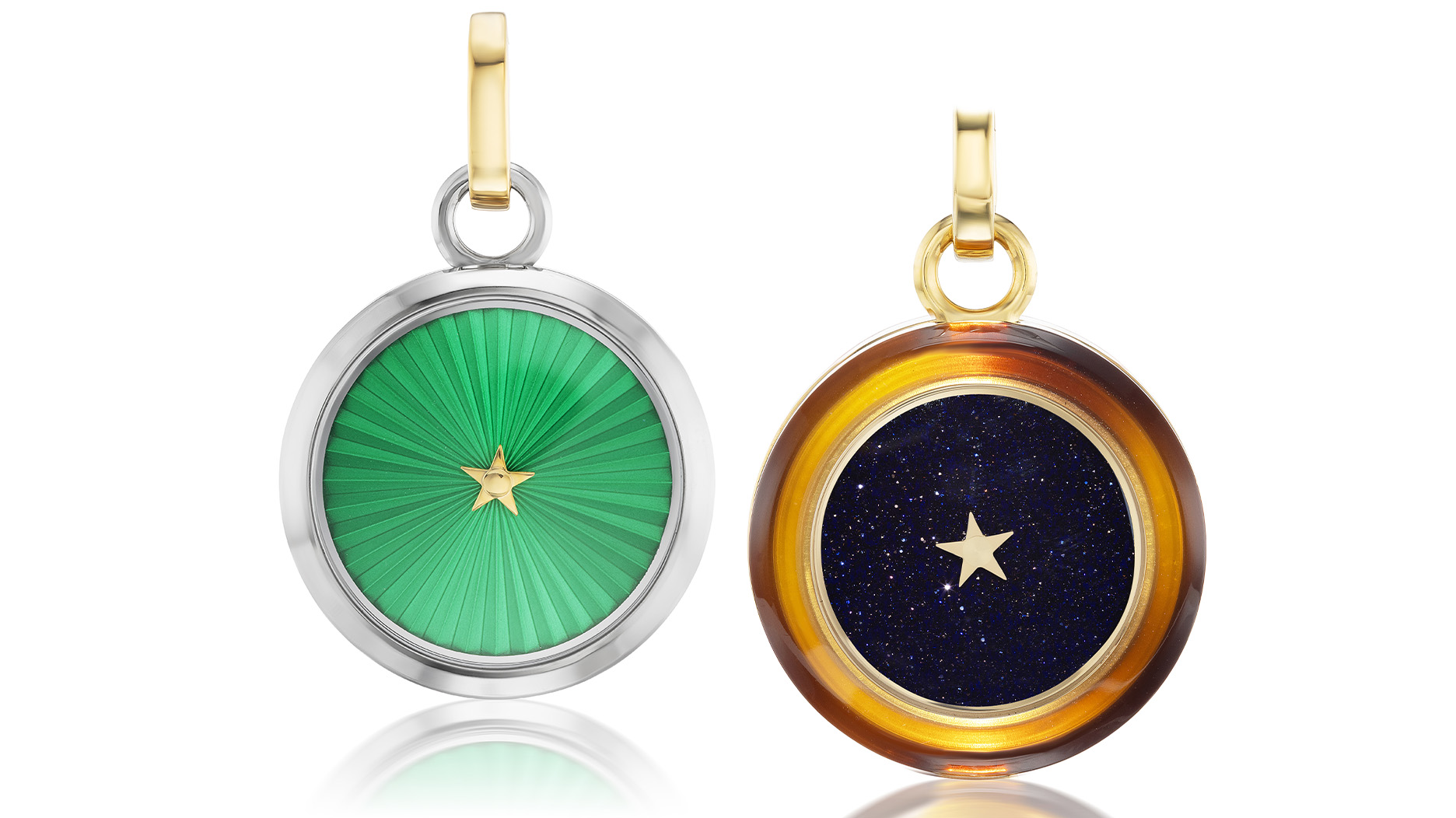
Two Anna Maccieri Rossi “Carpe Diem” pendants featuring an 18-karat yellow gold star that ticks like the seconds hand on a watch. The pendant at left has a green guillochè enamel dial in a titanium case while the one at right has a blue aventurine glass dial in a golden titanium case with brown resin (both price upon request).
Using other precious metals isn’t a replacement for gold, but an addition.
Platinum might seem like the answer because its price per ounce is lower than gold, but its production costs are higher.
“It’s harder to work in and sometimes we’ll price things out in platinum, and they end up being very similar to what it would be in gold,” says Molofsky.
For example, Harwell Godfrey’s platinum watch bracelet is smaller than the 18-karat gold version yet is a similar price.
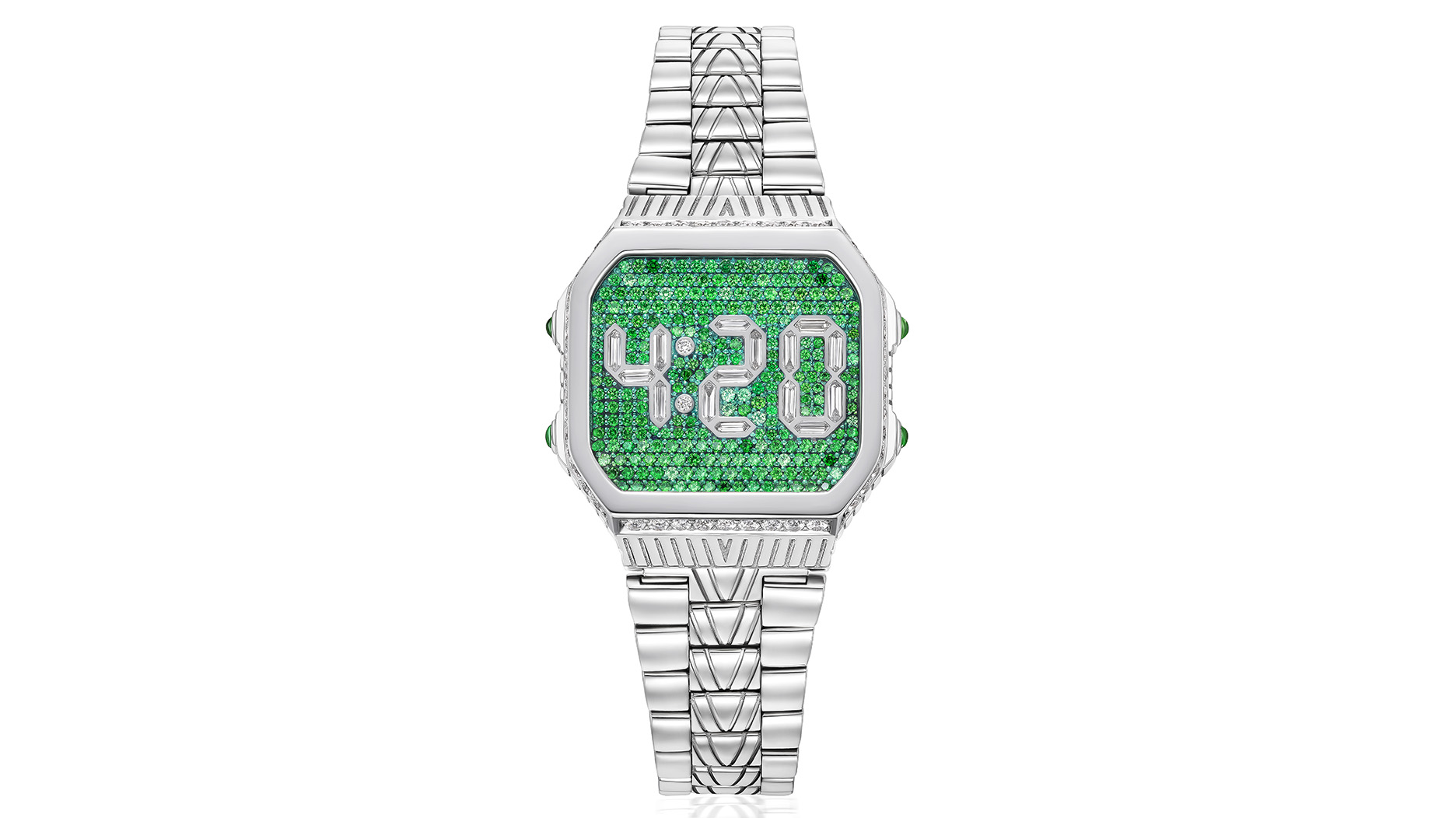
Harwell Godfrey’s platinum “High Time 4:20” watch bracelet featuring tsavorites, diamonds, sapphire crystal, and titanium (price upon request)
Lichtenberg has dabbled in silver but explains that because of her craftsmanship standards, her silver offerings will not be inexpensive.
She is slated to release a new version of her “Magic 8 Ball” pendant as a sterling silver objet d’art that will retail for $16,800.
A collaboration with Mattel, Lichtenberg's Magic 8 Ball creations are high-end versions of the popular fortune-telling toy. The 18-karat yellow gold Magic 8 Ball pendant, which won a Couture Design Award in the “Best in Innovative” category in 2023, retails for $36,900.
Designer Stephanie Gottlieb began designing silver and gold vermeil jewelry via her “All Hours” collaborative collection with Oak and Luna that debuted in September 2025.
The fine jewelry designer partnered with the demi-fine jewelry brand to introduce her eponymous brand to a younger demographic with a more approachable price point while keeping its luxurious aesthetic.
Related stories will be right here …
Maccieri, the Muse-represented designer, incorporates various metals as well as other materials in her work.
Coming from the watch industry, where she worked as a senior watch manager and designer for many years with Cartier, Jaeger-LeCoultre, Bulgari, Tiffany & Co., and Ferragamo, she often uses titanium for her Carpe Diem pendants.
“I wanted to develop many pieces in 18-karat gold of course, but also in brown resin, in ceramic, in titanium, always with a touch of gold,” Maccieri says.
“I feel that playing with gold and other materials always offers this preciousness and refinement that a jewel must have.”
Titanium and aluminum are used in her watch-like Carpe Diem pieces because of the materials’ durability and are paired with touches of gold for balance.
“It’s very important to be creative, to be yourself, to follow your DNA, but at the same time it’s important to find the balance between creativity and rationality, to not exaggerate with gold,” she says.
Maccieri says as the price of gold continued to rise, suppliers offered to make her the same chain but lighter. However, this was not an option because if the piece was too light it would not align with her standards.
She prefers to change materials instead of offering a lighter piece.
“Of course there is gold, but there are so many materials. It could be aluminum, ceramic, titanium,” says Maccieri.
“For me, gold should not always be the protagonist. We have this saying in Italian, ‘la ciliegina sulla torta,’ which is the cherry on the cake. I really like the fact that we refine with a touch of gold.”
Creativity Wins
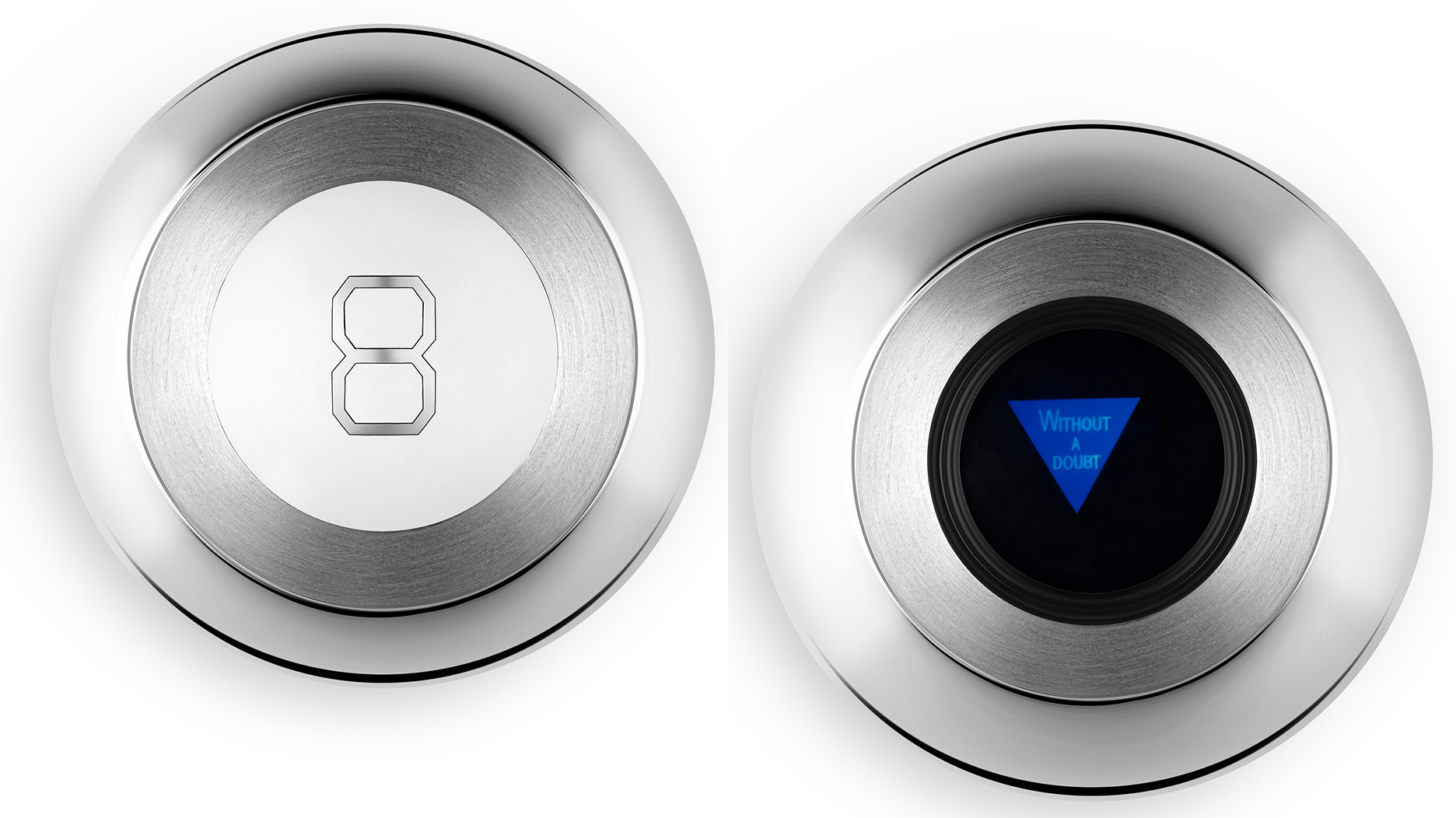
Marie Lichtenberg’s sterling silver “Magic 8 Ball” objet d’art created in collaboration with Mattel ($16,800)
There is no replacement for gold. In fact, the price of the precious metal has only increased its desirability.
“Our customers aren’t buying less gold, they’re just buying more thoughtfully,” Shanker says.
Molofsky says, “I really believe that gold jewelry has become a bit of a flex. You can actually wear your investment on your sleeve, literally.
“Gold—it’s like money in the bank.”
While the use of alternative materials like wood and leather is increasing, the chunky and sculptural gold pieces that have been popular are not going anywhere.
What’s truly trending now is uniqueness and creativity.
Prices are high and the way brands can stand out is to remain true to their message with designs that are uniquely, and recognizably, theirs.
Lichtenberg sees it as a test that only the best will survive, especially for independent designers like herself.
“There’s a quote in France saying, ‘Difficult times make strong people. Easy times make weak people.’ What’s happening is going to make us strong,” she says.
Editors' Picks
Sponsored by


More on Trends

The Latest

SurveysOct 09, 2026
These Will Be the 10 Busiest Days for In-Store Shopping This Holiday SeasonStores should expect to see the most customers on Nov. 27, and Christmas week is expected to be hectic too, as Dec. 25 falls on a Friday.


CollectionsOct 09, 2026
Elisa Solomon Collabs With Serendipity 3 on ‘Frozen Hot Chocolate’ CharmThe charm, our Piece of the Week, features brown diamond frozen hot chocolate topped with white diamond whipped cream and a ruby straw.

AuctionsOct 09, 2026
8-Carat Blue Diamond Goes Unsold at UK Jewelry Auction The top lot of Elmwood’s recent fine jewelry sale in London was a 1.84-carat, D color Tiffany & Co. solitaire diamond ring.


Brought to you by
Meet Gemology’s Next Generation Microscope: GIA® Gemolite® NXT Professional EditionExperience gemstones with greater precision and comfort than ever before.


WatchesOct 09, 2026
Movado to Sell Majority Stake in Ebel for $66.5MThe watch company agreed to sell a 95 percent interest to a group comprised of F.P. Journe, Chanel, and Swiss watch exec Pierre Jacques.

Weekly QuizOct 08, 2026
This Week’s QuizTest your jewelry news knowledge by answering these questions.


Policies & IssuesOct 08, 2026
Third Wave of IEEPA Tariff Refunds Begins This round of tariff refunds is for importers that have sued over IEEPA tariffs in the Court of International Trade and won.

CollectionsOct 08, 2026
Brent Neale’s New Collection Goes ‘Back to Basics’It revisits the brand’s most requested silhouettes, from "Pillow"-set necklaces and bracelets to "Signature"-set rings and earrings.
Brought to you by
Your Piece Could Be the One Editors Talk AboutSubmit your pieces for a chance to win in this year's competition.


SourcingOct 08, 2026
Ethical Gem Fair Heads Back to BrooklynThe trade-only event includes buying opportunities as well as educational sessions on artisanal mining, the new Paraíba source, and more.

Events & AwardsOct 08, 2026
Pattons Fine Jewelry Sweeps Local Design ContestAra Chanakian, a jeweler at Pattons, took home top honors in every category at Jewelers of Louisiana’s annual jewelry design competition.

AuctionsOct 08, 2026
Reba McEntire’s Jewelry, Watches Head to Julien’s AuctionsThe live charity benefit sale in Nashville will also feature gowns, boots, and other memorabilia from the country music legend.


Supplier BulletinOct 08, 2026
Overnight Mountings’ Bridal Builder Helps Jewelers Turn Custom Design into a Hands-On Selling ExperienceSponsored by Overnight Mountings

Policies & IssuesOct 07, 2026
The Plumb Club Amplifies Its Voice as Geopolitical Pressures MountThe supplier organization recently joined JA and JVC to have more input on political issues affecting the jewelry industry.

CollectionsOct 07, 2026
Blue Nile, Royal Asscher Collection Highlights Natural Diamond BeautyBlue Nile, a Signet Jewelers-owned brand, is now Royal Asscher’s exclusive licensed retailer in North America.

CollectionsOct 07, 2026
4 Standout Pieces in Audemars Piguet’s First High Jewelry Collection “Royal Oak” pays homage to the brand’s most popular watch model using 18-karat gold as well as diamonds, emeralds, and sapphires.

MajorsOct 07, 2026
Empire Safe & Vault Promotes Juan Morales to CEOAs part of the transition, Joseph Nicosia has stepped into the role of COO.

SourcingOct 07, 2026
AGTA Extends Deadline for 2026 Spectrum Awards EntriesParticipants now have until Oct. 14 to complete their submissions.

CrimeOct 06, 2026
6 Charged in Connection to String of New Jersey Smash-and-GrabsThe alleged thieves used crow bars and sledgehammers to smash into jewelry stores across the state.

ColumnistsOct 06, 2026
Sherry Smith: Is the Consumer Really Trading Up?Ahead of the holidays, Smith urges jewelers to take a hard look at who’s buying jewelry, what they’re purchasing, and who’s stopped buying.


SourcingOct 06, 2026
DDG Taps Influencers for ‘My Diamond Does Good’ CampaignIn the new consumer-facing campaign, four fashion and lifestyle creators share the stories behind their natural diamond pieces.

MajorsOct 06, 2026
Frederick Goldman Names COO, CMOFGI President John Orrico is also leaving the company after more than 13 years.

Events & AwardsOct 06, 2026
JIS Fall Returns to MiamiThe 2026 edition will feature presentations on alternative materials and design trends, as well as pop-up activations on the show floor.

SourcingOct 05, 2026
De Beers to Take Full Ownership of Gahcho KuéIt is the last fully operational diamond mine in Canada following the recent closures of Ekati and Diavik.

AuctionsOct 05, 2026
The Star Cats of the Sandy Lerner AuctionThese jewels stood out at Bonhams’ sale of the cat-loving tech entrepreneur’s collection of objects depicting the feline form.

CollectionsOct 05, 2026
Sorellina Writes Another Love Letter for ‘Postscript’ CollectionThe fine jewelry brand has expanded the collection that debuted at Couture with four new designs based on its most popular styles.

SourcingOct 05, 2026
Bruce Bridges Joins CIBJO BoardThe AGTA president was elected for a two-year term on the board of directors.

SourcingOct 02, 2026
De Beers, National Geographic Society Renew Okavango Eternal Partnership The partnership, a pledge to protect Africa’s Okavango River Basin, has been extended for an additional five years.