







EditorsMar 30, 2026
Tom Moses Looks Back on His Decades at GIA SourcingMay 05, 2026
Doug Hucker Returns to His Roots
Following decades of association leadership, the “semi-retired” colored gemstone expert is turning his focus to gemstone education.


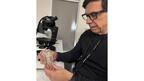
Doug Hucker has retired from his role as CEO at ICA, but he has plans to stay involved in the industry.
New York—Last month, The International Colored Gemstone Association (ICA) announced that its CEO Doug Hucker was retiring after four years in the role.
Prior to ICA, Hucker was the CEO of the American Gem Trade Association (AGTA) for 25 years.
In an interview with National Jeweler, he discussed his decision to retire, reflected on his career as a colored gemstone expert and association leader, and shared his plans for the future.
Hucker, who said he prefers the term “semi-retired,” is looking forward to dedicating more time to gemstone education—an aspect of his career he has enjoyed since he first entered the industry.
“I am definitely retired from running associations,” he clarified.
“What I have decided to do is spend a little more time renewing my love affair with gemstones.”
Hucker got his start as a 22-year-old writer and photographer, when he took a job at the Gemological Institute of America (GIA) assembling microscopes to put himself through photography school.
While there, he discovered a love for gemstones. Aided by mentors that included Richard Liddicoat, he became a GIA instructor, traveling across the United States teaching week-long educational courses on diamonds and gemstones to retailers and manufacturers.
Hungry for experience, he at one point sought out additional retail experience by offering to work for free in a local jewelry store.
Shortly after AGTA was founded in 1981, Hucker met Ray Zajicek, a founding member and then-president of AGTA (1985–1986), and was appointed to the board.
He also worked with Richard Krementz at the now-dissolved manufacturing firm Krementz & Co. and later served as president and partner of The Registry Ltd., a company that specialized in antique and estate jewelry.
In the mid-1990s, he was approached about running AGTA, to which he agreed, launching into what would become a decades-long run in association leadership, bookended by four years at the helm of ICA.
“My love of gemstones is what's kept me in this game for a long, long time. From the early days when I entered the industry at GIA, colored gemstones and the industry and the people in the industry were the rewarding aspect of a career in the industry,” he said.
“But there was a lot of work involved as well. Looking back, what helped me make my decision [to retire] is that there comes a time when you need to pass a torch on to a younger generation. It just was time.”
Related stories will be right here …
Prior to ICA, Hucker was the CEO of the American Gem Trade Association (AGTA) for 25 years.
In an interview with National Jeweler, he discussed his decision to retire, reflected on his career as a colored gemstone expert and association leader, and shared his plans for the future.
Hucker, who said he prefers the term “semi-retired,” is looking forward to dedicating more time to gemstone education—an aspect of his career he has enjoyed since he first entered the industry.
“I am definitely retired from running associations,” he clarified.
“What I have decided to do is spend a little more time renewing my love affair with gemstones.”
Hucker got his start as a 22-year-old writer and photographer, when he took a job at the Gemological Institute of America (GIA) assembling microscopes to put himself through photography school.
While there, he discovered a love for gemstones. Aided by mentors that included Richard Liddicoat, he became a GIA instructor, traveling across the United States teaching week-long educational courses on diamonds and gemstones to retailers and manufacturers.
Hungry for experience, he at one point sought out additional retail experience by offering to work for free in a local jewelry store.
Shortly after AGTA was founded in 1981, Hucker met Ray Zajicek, a founding member and then-president of AGTA (1985–1986), and was appointed to the board.
He also worked with Richard Krementz at the now-dissolved manufacturing firm Krementz & Co. and later served as president and partner of The Registry Ltd., a company that specialized in antique and estate jewelry.
In the mid-1990s, he was approached about running AGTA, to which he agreed, launching into what would become a decades-long run in association leadership, bookended by four years at the helm of ICA.
“My love of gemstones is what's kept me in this game for a long, long time. From the early days when I entered the industry at GIA, colored gemstones and the industry and the people in the industry were the rewarding aspect of a career in the industry,” he said.
“But there was a lot of work involved as well. Looking back, what helped me make my decision [to retire] is that there comes a time when you need to pass a torch on to a younger generation. It just was time.”
Hucker navigated many changes in the industry throughout his career.
He was leading at a time when advanced technology and increased popularity of colored gemstones began to give way to more sophisticated methods of treatment, irradiation, and fracture filling.
“A lot of the education and the focus on comfort with gemstones started to evolve around that. If you [went] to Tucson to buy gemstones, you had to be sure you knew what you were buying, because it could be heated, it could be synthetic,” he said.
“And that was one of the foundational principles of AGTA when it was formed—full disclosure of the new treatments, identity, and things. That was very important. That was kind of a process that the industry went through, getting people comfortable with color gemstones.”
Now, the emphasis is on understanding supply chain, the environment and the places where gemstones are mined.
Hucker continued, “That has brought a significant change in our industry, especially in the past 10 to 15 years. ‘Are we doing good with these gemstones? And the people where these gemstones originate, are they benefiting as much as the people who are bringing them to market in other places in the world?’”
Advocacy was a major part of his leadership.
Hucker shared a story about a Wall Street Journal (WSJ) article published shortly after 9/11 that claimed colored gemstones from Tanzania were funding al-Qaeda. At that time, the gemstone was growing to be a big part of the industry, he said, and the article “shut it off immediately.”
AGTA collaborated with the Jewelers Vigilance Committee, Jewelers of America, and others to create a task force, and they traveled to Tanzania to disprove the claim.
“We spent a lot of time climbing down in mines and working with dealers in the bush and working with ministers of mines and local mine officials, and what we achieved was clear evidence that [the WSJ’s claims] were not the case. We brought that evidence to the State Department, and the State Department sent a representative to Tucson and said, ‘You guys are right,’” Hucker recounted.
“That was a great success.”
Less than a year after he left AGTA, Hucker joined ICA.
Though it has international members and influence, AGTA is focused on the American market, while ICA is a global organization with a focus on improving global trade relationships and supporting mining communities.
When asked about his proudest moments in his tenure, Hucker humbly mentioned his knack for collaboration.
“Who really runs a trade association, if the trade association is done effectively, is the board. You have to have a board that's engaged and active, and they establish the priorities and the direction of the association,” he said.
“I think the thing I'm most proud of is that, throughout my career, I've had an ability to accomplish the things that the board wanted to accomplish, to bring the association forward. I didn't shy away from controversy or conflict with the board, because it's part of the process. I think I was able to help people reach consensus when there were disagreements.”
He notably didn’t mention his 2018 win of the Shipley Award, AGS’s highest honor, which in his speech he called “probably one of the proudest moments of my life.”
Editors' Picks
Sponsored by
Among Hucker’s other fondest memories are the moments he was able to share the magic of colored gemstones with others.
In one instance, during a judging day at the Spectrum awards, he took a top-quality alexandrite and led a group of editors into a small, cramped room, turned off the main light, and lit a candle next to the stone.
“The thing just screamed red,” he said, his smile evident on the other side of the phone.
“One of the most rewarding things—it happened every time I did that—everyone went, ‘Oh my gosh.’ And that’s when I felt I was doing a good job.”
His plans for the future are, in a way, a return to his earliest endeavors of teaching.
“I’ve spent the last 30 to 40 years lecturing and talking about gemstones and teaching people about gemstones and manufacturing and selling gemstones,” he said.
“I think I'll probably spend time getting back to that, to working with gemstones, teaching people, and spending time in retail stores, which I've done throughout my career. It's very rewarding. It's nowhere near as demanding and it is more focused on what I want to do with gemstones, rather than association work.”
He was also recently elected to the geology department board at Paris Junior College in Paris, Texas, where he will be an adviser.
“I'm not going to be traveling and trekking all over the world like I used to, but I'll be doing a considerable amount of moving around,” Hucker said.


More on Sourcing




The Latest

Lab-GrownOct 13, 2026
Stephanie Gottlieb Takes Lab-Grown Diamond Collection WholesaleThe jewelry designer has partnered with Sofer Jewelry to distribute her 85-piece lab-grown diamond collection.


IndependentsOct 13, 2026
Retailer Hall of Fame 2026: Sean DunnDunn, this year’s Single-Store Independent inductee, is passionate about innovation and telling the story of natural diamonds.

AuctionsOct 13, 2026
Christie's Geneva To Auction 'Bulgari Pink' DiamondThe 24-carat fancy intense pink diamond ring could fetch up to $18 million at the November sale.

Brought to you by
Meet Gemology’s Next Generation Microscope: GIA® Gemolite® NXT Professional EditionExperience gemstones with greater precision and comfort than ever before.


IndependentsOct 13, 2026
Greenwich St. Jewelers’ New Candle Smells Like HomeThe “Island Jewel” candle honors New York City and Puerto Rico and raises money for the island’s water relief efforts.

Weekly QuizOct 08, 2026
This Week’s QuizTest your jewelry news knowledge by answering these questions.

TechnologyOct 13, 2026
GemFind Is a New JA Member Benefit Partner The partnership will give JA members access to preferred pricing, exclusive benefits, technology solutions, education, and resources.


SurveysOct 09, 2026
These Will Be the 10 Busiest Days for In-Store Shopping This Holiday SeasonStores should expect to see the most customers on Nov. 27, and Christmas week is expected to be hectic too, as Dec. 25 falls on a Friday.
Brought to you by
Your Piece Could Be the One Editors Talk AboutSubmit your pieces for a chance to win in this year's competition.


CollectionsOct 09, 2026
Elisa Solomon Collabs With Serendipity 3 on ‘Frozen Hot Chocolate’ CharmThe charm, our Piece of the Week, features brown diamond frozen hot chocolate topped with white diamond whipped cream and a ruby straw.

AuctionsOct 09, 2026
8-Carat Blue Diamond Goes Unsold at UK Jewelry Auction The top lot of Elmwood’s recent fine jewelry sale in London was a 1.84-carat, D color Tiffany & Co. solitaire diamond ring.

WatchesOct 09, 2026
Movado to Sell Majority Stake in Ebel for $66.5MThe watch company agreed to sell a 95 percent interest to a group comprised of F.P. Journe, Chanel, and Swiss watch exec Pierre Jacques.

Policies & IssuesOct 08, 2026
Third Wave of IEEPA Tariff Refunds Begins This round of tariff refunds is for importers that have sued over IEEPA tariffs in the Court of International Trade and won.

CollectionsOct 08, 2026
Brent Neale’s New Collection Goes ‘Back to Basics’It revisits the brand’s most requested silhouettes, from "Pillow"-set necklaces and bracelets to "Signature"-set rings and earrings.

Events & AwardsOct 08, 2026
Pattons Fine Jewelry Sweeps Local Design ContestAra Chanakian, a jeweler at Pattons, took home top honors in every category at Jewelers of Louisiana’s annual jewelry design competition.

AuctionsOct 08, 2026
Reba McEntire’s Jewelry, Watches Head to Julien’s AuctionsThe live charity benefit sale in Nashville will also feature gowns, boots, and other memorabilia from the country music legend.


Supplier BulletinOct 08, 2026
Overnight Mountings’ Bridal Builder Helps Jewelers Turn Custom Design into a Hands-On Selling ExperienceSponsored by Overnight Mountings

Policies & IssuesOct 07, 2026
The Plumb Club Amplifies Its Voice as Geopolitical Pressures MountThe supplier organization recently joined JA and JVC to have more input on political issues affecting the jewelry industry.

CollectionsOct 07, 2026
Blue Nile, Royal Asscher Collection Highlights Natural Diamond BeautyBlue Nile, a Signet Jewelers-owned brand, is now Royal Asscher’s exclusive licensed retailer in North America.

CollectionsOct 07, 2026
4 Standout Pieces in Audemars Piguet’s First High Jewelry Collection “Royal Oak” pays homage to the brand’s most popular watch model using 18-karat gold as well as diamonds, emeralds, and sapphires.

MajorsOct 07, 2026
Empire Safe & Vault Promotes Juan Morales to CEOAs part of the transition, Joseph Nicosia has stepped into the role of COO.

CrimeOct 06, 2026
6 Charged in Connection to String of New Jersey Smash-and-GrabsThe alleged thieves used crow bars and sledgehammers to smash into jewelry stores across the state.

ColumnistsOct 06, 2026
Sherry Smith: Is the Consumer Really Trading Up?Ahead of the holidays, Smith urges jewelers to take a hard look at who’s buying jewelry, what they’re purchasing, and who’s stopped buying.


SourcingOct 06, 2026
DDG Taps Influencers for ‘My Diamond Does Good’ CampaignIn the new consumer-facing campaign, four fashion and lifestyle creators share the stories behind their natural diamond pieces.

MajorsOct 06, 2026
Frederick Goldman Names COO, CMOFGI President John Orrico is also leaving the company after more than 13 years.

Events & AwardsOct 06, 2026
JIS Fall Returns to MiamiThe 2026 edition will feature presentations on alternative materials and design trends, as well as pop-up activations on the show floor.

SourcingOct 05, 2026
De Beers to Take Full Ownership of Gahcho KuéIt is the last fully operational diamond mine in Canada following the recent closures of Ekati and Diavik.

AuctionsOct 05, 2026
The Star Cats of the Sandy Lerner AuctionThese jewels stood out at Bonhams’ sale of the cat-loving tech entrepreneur’s collection of objects depicting the feline form.