










ColumnistsApr 30, 2026
Peter Smith: A Sleazy Salesman and the Case for Regret Avoidance ColumnistsMay 26, 2026
The Key Mindset for Better Trade Show Buying
Buying discipline at trade shows starts with clarity about your inventory levels, Smith writes.


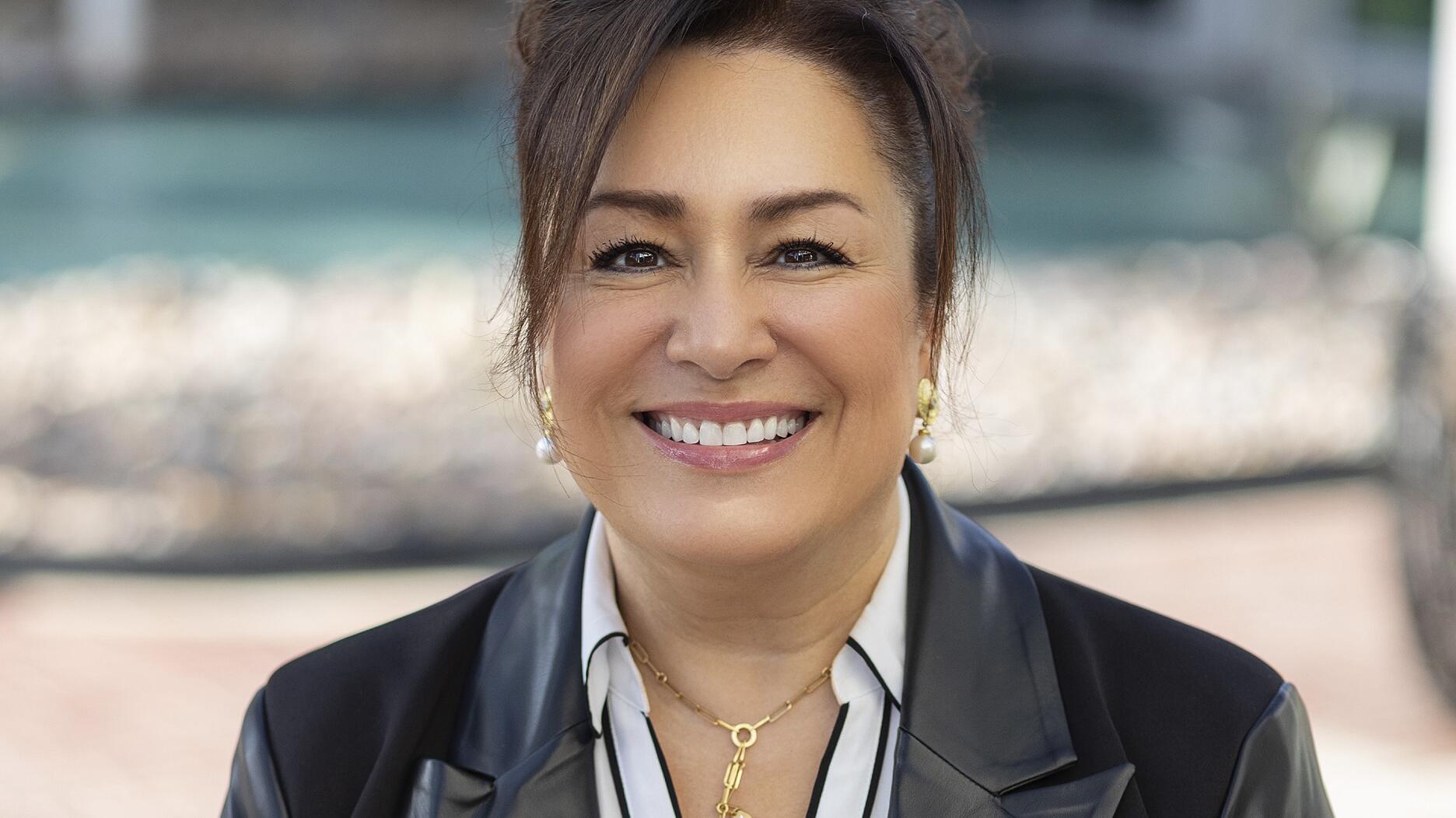
Sherry Smith is a principal partner at The Retail Smiths, a consultancy for retailers and vendors. She can be reached at sherrytrs@gmail.com.
Across the jewelry industry, the conversation around growth has become more complex.
While rising metal prices and pricing adjustments have helped support top-line sales in many stores, unit performance has softened.
At the same time, inventory levels remain elevated across a significant portion of the independent channel, placing steady pressure on both cash flow and margins.
Recent market data reinforces this shift.
Analysis from Tenoris founder and industry analyst Edahn Golan points to a growing imbalance between inventory and demand, particularly in categories such as lab-grown diamonds.
While revenue has been supported by higher average retail prices, unit sales have declined, and inventory levels have continued to rise relative to sales.
In practical terms, retailers are carrying more inventory per dollar of demand than they were just a few years ago.
As sell-through slows, more capital is being tied up in goods that are taking longer to move.
This is not a short-term fluctuation. It is a structural shift in how inventory is behaving within the independent channel.
While rising metal prices and pricing adjustments have helped support top-line sales in many stores, unit performance has softened.
At the same time, inventory levels remain elevated across a significant portion of the independent channel, placing steady pressure on both cash flow and margins.
Recent market data reinforces this shift.
Analysis from Tenoris founder and industry analyst Edahn Golan points to a growing imbalance between inventory and demand, particularly in categories such as lab-grown diamonds.
While revenue has been supported by higher average retail prices, unit sales have declined, and inventory levels have continued to rise relative to sales.
In practical terms, retailers are carrying more inventory per dollar of demand than they were just a few years ago.
As sell-through slows, more capital is being tied up in goods that are taking longer to move.
This is not a short-term fluctuation. It is a structural shift in how inventory is behaving within the independent channel.
“Inventory is not just what a store sells. It is where its cash resides.” – Sherry Smith, The Retail Smiths
In this environment, buying decisions carry more weight than they have in years.
And yet, one of the most critical buying moments of the year, the trade show, is still too often approached without the level of discipline the current market demands.
Trade shows are typically framed as environments of discovery: new vendors, new collections, new opportunities. But from a financial perspective, they function differently.
They are not moments that create outcomes. They are moments that amplify existing ones.
They do not create inventory problems. They reveal them.
Retailers often leave a show feeling productive. Orders were written. Relationships were strengthened. The assortment feels refreshed.
On the surface, it looks like a successful few days, but the real measure of a trade show does not show up on the show floor. It shows up months later.
That is when the questions begin.
Did the product integrate into the existing assortment, or did it sit alongside already underperforming inventory?
Did it turn as expected, or did it require markdown support?
Did it improve margin or quietly erode it?
The answers are often less favorable than anticipated, not because the product was wrong, but because the decision-making process behind the purchase lacked structure.
One of the most consistent gaps I see is how inventory is framed inside the business. It is still frequently treated as a merchandising function rather than a financial one.
But inventory is not just what a store sells. It is where its cash resides.
Every buying decision is, at its core, a capital allocation decision. Without a clear understanding of current inventory productivity, those decisions are being made without full visibility into their financial impact.
Before attending a trade show, a retailer should be able to clearly articulate their position. How current inventory compares to optimal levels. How much of it is aged beyond 12 months. Which categories are producing healthy turns and margins. Which vendors are underperforming relative to their investment.
Without that clarity, buying becomes directional at best and reactive at worst.
This is where open-to-buy discipline often breaks down.
While most retailers understand the concept, far fewer execute it effectively in a trade show environment. Instead of arriving with a defined plan, many attempt to determine what they can spend in real time, standing in a booth and reacting to product, relationships, and perceived opportunity.
Spending, in those moments, tends to expand.
An effective open-to-buy is not a guideline. It is a boundary. It should be established before the show, grounded in performance data, and allocated intentionally by category and vendor.
Without those constraints, even experienced buyers can find themselves making inconsistent decisions.
And inconsistency is where profitability begins to slip.
What makes this particularly challenging is how quietly the impact compounds. A modest overbuy across several categories does not immediately feel significant. Over time, however, it creates a heavier inventory position, often in areas that were already underperforming.
Excess inventory does not remain passive. It creates pressure throughout the business. Pressure on cash flow. Pressure on the sales floor. Pressure on pricing.
That pressure almost always leads to discounting.
Discounting is often viewed as a sales issue. In reality, it is frequently the delayed result of earlier buying decisions. By the time a piece is marked down, the most important decision about it has already been made.
Another area that warrants closer attention is vendor allocation.
Trade shows are, by nature, relationship driven. That is part of their value. But relationships can also introduce bias when they are not anchored in performance. Dollars tend to follow familiarity, not always results.
Not every vendor should receive more investment. Some should receive less. Some, none at all.
That requires clarity. It requires discipline. And it requires a willingness to make different decisions than in years past, even when those decisions are uncomfortable.
The retailers who navigate trade shows most effectively approach them with a fundamentally different mindset. They are not there primarily to discover. They are there to execute.
They arrive with a defined open-to-buy, a clear understanding of where they are over and under invested, and a set of guardrails that guide decision making in real time. This does not eliminate flexibility, but it ensures that flexibility operates within a structure.
The objective is not to buy more. It is to buy better.
Trade shows remain one of the most valuable tools available to independent jewelers. They provide access, insight, and connection. But they do not determine financial outcomes on their own. Preparation does.
Because the truth is, most inventory problems are not created in the months after a show. They are set in motion during it.
And the most disciplined retailers understand something that others do not. The success of a trade show is not defined by what you bring back. It is defined by what performs once you do.
Editors' Picks
Sponsored by


More on Columnists

The Latest

CrimeOct 22, 2026
Jeweler Shot and Killed in His Suburban Cincinnati Store Tara Sinchuri was the owner of Everest Jewels in Fairfield, Ohio, and a father of three. He was found dead in his store on Tuesday.


MajorsOct 22, 2026
Neiman Marcus Has Gifts for the Jewelry Lover Who Has EverythingBespoke experiences from Buccellati and Verdura are on the retailer’s 2026 “Fantasy Gifts” list.


Events & AwardsOct 22, 2026
JIS Fall 2026 Reports Record-Breaking Attendance The number of participants at the fall show was up 12 percent.


Brought to you by
A Diamond Is Forever Launches 2026 Holiday Campaign Championing Natural DiamondsA Diamond Is Forever's holiday campaign reimagines natural diamond icons for a new generation celebrating individuality.


CollectionsOct 22, 2026
Billie Eilish, Finneas Co-Design Collection for John HardyThe Academy and Grammy award-winning siblings have collaborated with John Hardy on a new jewelry line inspired by their personal style.

Weekly QuizOct 22, 2026
This Week’s QuizTest your jewelry news knowledge by answering these questions.



PodcastsOct 21, 2026
Episode 10: This Episode Is Haunted Diana Singer shared the stories of two “cursed” diamonds on this month’s podcast, which was inexplicably riddled with technical issues.

IndependentsOct 21, 2026
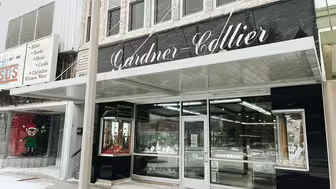
Gardner-Collier Jewelry to Close After 9 Decades in BusinessThe family-owned jeweler has three locations across Missouri and Iowa.

Brought to you by
Open an Account, Get $50 Off Your First Order. No Code Needed.Built on Relationships. Refined by Craft.


SourcingOct 21, 2026
Venetia Mines Final Carats Ahead of 2-Year ShutdownThe De Beers-owned diamond mine in South Africa is being put on ice as part of a round of previously announced cost-cutting measures.

CollectionsOct 21, 2026
Helzberg, Nordstrom Carrying New Jewelry Collection From Off-WhiteThe collection centers designs with clean geometric lines, chunky sculptural pieces, and recognizable details from the luxury fashion brand.

SourcingOct 21, 2026
Gemfields’ Mixed-Quality Ruby Auction Earns $52MThe miner said it saw particularly strong prices for larger, fine-quality rubies at the sale.

CrimeOct 20, 2026
Security Guard Charged With Murder in Shooting at Texas MallThe guard opened fire on a man who was smashing a jewelry display case at La Gran Plaza in Fort Worth last week, police said.
IndependentsOct 20, 2026
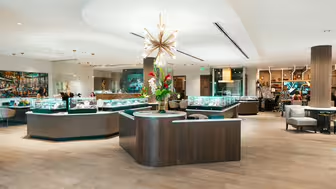
David Gardner’s Jewelers Unveils Newly Expanded, Revamped ShowroomThe Texas jeweler added 2,000 square feet to its reimagined showroom, complete with a new design studio and an event space.
SourcingOct 20, 2026
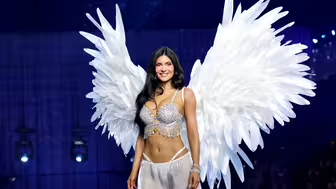
The $50M Victoria’s Secret ‘Fantasy Bra’ By The NumbersJacob & Co.'s diamond masterpiece is the most expensive Fantasy Bra ever worn on the Victoria’s Secret Fashion Show runway.

CollectionsOct 20, 2026
Mignon Faget’s Collection Chooses Handmade Over AIThe “Atelier” collection was inspired by the tools, rituals, and objects in an artist’s studio as a quiet rebuttal to an automated world.
MajorsOct 19, 2026
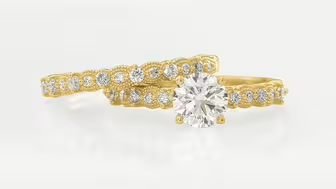
The Knot to Acquire Rival Wedding Planning Platform ZolaThe pending acquisition is an “exciting opportunity” for wedding vendors to grow their business, said The Knot Worldwide’s CEO.

SourcingOct 19, 2026
Jewelry Design Competition Show Airs in Thailand"The Secret Gems" features eight Thai jewelry brands paired with a team of young craftspeople who create jewelry together to win challenges.

CollectionsOct 19, 2026
John Hardy Enters the Medallion Chat With Talisman Collection The brand’s “Modern Talisman” capsule collection introduces pendants inspired by the mythology, natural world, and spiritual ethos of Bali.
IndependentsOct 19, 2026
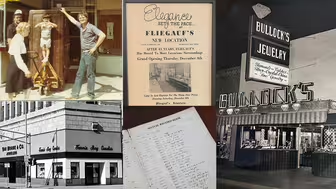
The Stories of 5 Jewelers Celebrating Their Centennials in 2026Independent jewelers from New Mexico to New Jersey answer the question: What has kept your store in business for 100 years?

SurveysOct 16, 2026
How Inflation, Gas Prices Will Affect Holiday Sales The NRF is expecting holiday sales to increase this year, but consumers and retailers alike are facing Grinch-like headwinds.
CollectionsOct 16, 2026
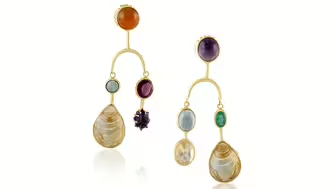
Christina Puchi’s Earrings Hold the UniverseOur Piece of the Week gathers the planets, represented by a variety of colored gemstones, in a pair of 14-karat yellow gold earrings.
IndependentsOct 16, 2026
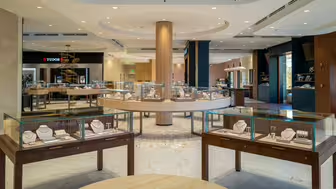
Reeds Jewelers Expands, Relocates FlagshipThe New York-based jeweler is moving its Amherst flagship store to a larger location in nearby Snyder.

MajorsOct 16, 2026
Katy Chen Appointed Executive Vice President of Graff USA Chen, who worked at Cartier and Tiffany & Co., will lead retail sales and operations for the luxury jeweler’s 11 U.S. stores.

IndependentsOct 15, 2026
Retailer Hall of Fame 2026: Amy and Elise Greenberg For 40 years, sisters Amy and Elise Greenberg have helmed their 126-year-old family business, leading with appreciation and integrity.

WatchesOct 15, 2026
Stephanie Gottlieb’s New Movado Watches Are Made for Your Wrist StackMovado teamed up with the New York-based fine jewelry designer on a new collection of Movado Museum Velura watches.

SourcingOct 15, 2026
Signet Jewelers, Richemont May Join Bidder for De Beers, Report SaysThe two companies are reportedly in talks to join the Global Diamond Consortium, led by former De Beers CEO Gareth Penny, as per Bloomberg.
CollectionsOct 15, 2026
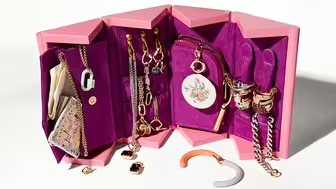
Wolf x Marla Aaron's New Jewelry Box Is for Some (Not All) of Your ThingsThe “Some of the Things” box follows the two larger “Everything” box designs with the look and function of antique sewing and toolboxes.