






ColumnistsMar 31, 2026
Q1 Clues That Reveal Where Your Jewelry Store’s Sales Are Heading ColumnistsApr 09, 2026
Jewelry Demand Isn’t Stronger, Prices Are Just Higher
Jewelers who misinterpret the state of the jewelry market risk employing the wrong retail strategy, cautions columnist Sherry Smith.


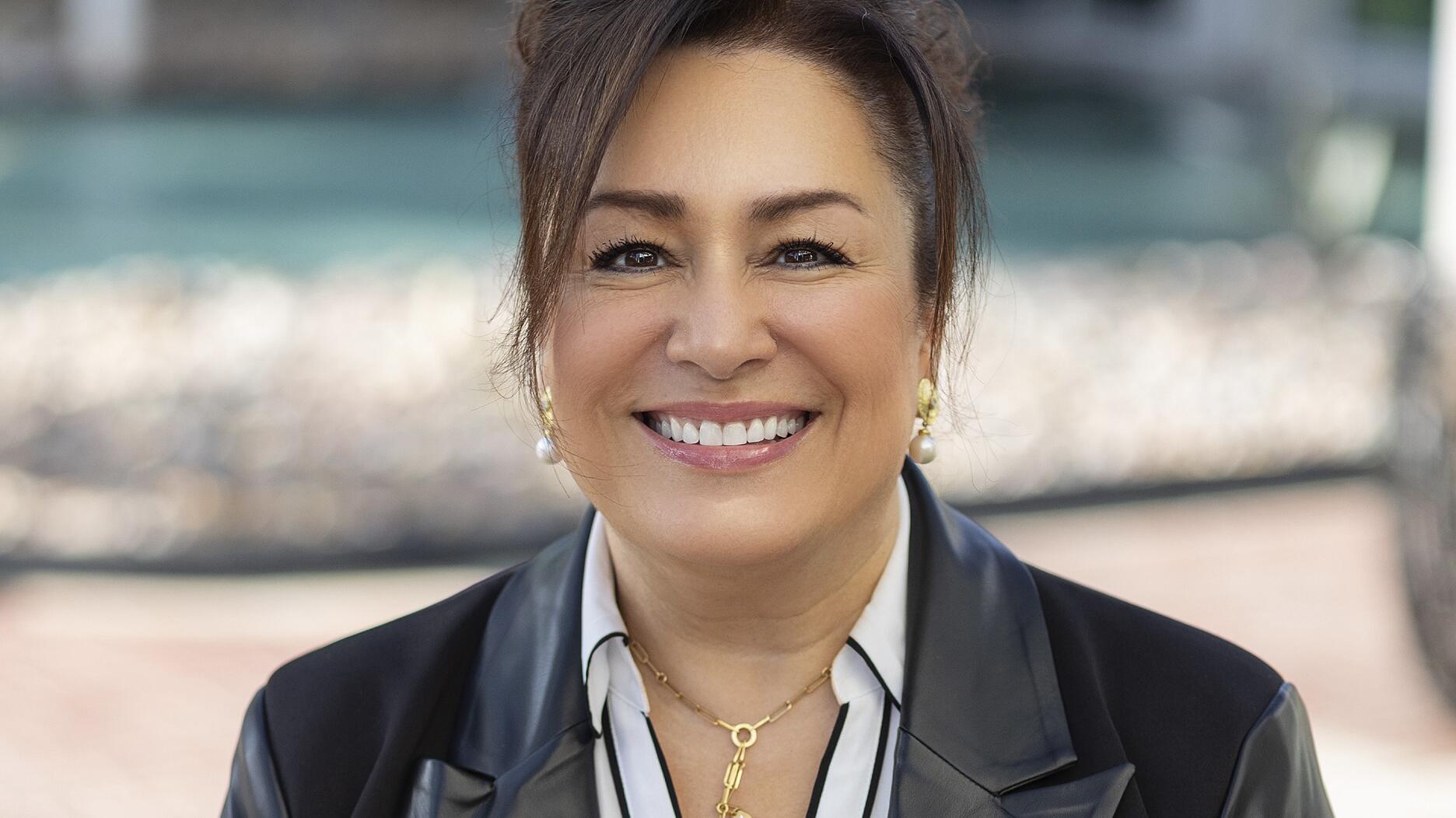
Sherry Smith is a principal partner at The Retail Smiths, a consultancy for retailers and vendors. She can be reached at sherrytrs@gmail.com.
We need to be careful about the story we’re telling ourselves right now.
There’s a growing narrative in the jewelry industry that what we’re seeing is “premiumization,” meaning consumers are buying fewer pieces, but going for higher-priced, higher-value goods.
It’s a compelling idea, but it’s not entirely accurate.
Industry data suggests something more nuanced is happening: unit sales are declining while average retail prices are rising.
On paper, that can look like strength. In reality, it may be masking something very different because higher average tickets don’t always signal stronger demand. Sometimes, they simply reflect a more expensive product.
The Difference Between Premiumization and Price Inflation
True premiumization is driven by the customer. It reflects a deliberate shift toward higher-quality, higher-value, or more meaningful purchases.
It suggests intent. Choice. Movement upmarket.
What we are seeing, in many cases, is something quite different.
Industry data suggests that while average retail prices have increased, unit volumes have declined across multiple categories.
That combination of higher dollars and lower units should immediately prompt a more nuanced question: Is this demand-driven growth, or price-driven preservation?
Those are two very different realities.
The Gold Factor: Value Up, Volume Down
To understand what is happening, we need to look beyond the store and into the macro environment.
Gold pricing alone has fundamentally reshaped the economics of jewelry retail over the past 18
months.
In its Gold Demand Trends report for Q4 and full-year 2025, the World Gold Council (WGC) reported that 2025 saw 53 all-time highs in gold pricing, with the average annual price reaching $3,431 per ounce, a 44 percent year-over-year increase and the highest annual average ever recorded.
At the same time, WGC said global jewelry demand fell to a five-year low, even as the total value of that demand reached a record $172 billion.
That is a critical distinction. Value increased, volume decreased. This is not a sign of stronger consumer demand; it is a reflection of rising input costs.
More recently, Reuters reported that gold prices surged past $5,100 per ounce in January 2026 before falling back to roughly $4,600 by late March, underscoring just how volatile the pricing environment has become.
When your primary raw material behaves like that, it changes everything:
— Retail price points rise
— Replacement costs accelerate
— Inventory risk increases
— Margin discipline becomes more complex
More importantly, average retail sale increases even if consumer demand does not.
There’s a growing narrative in the jewelry industry that what we’re seeing is “premiumization,” meaning consumers are buying fewer pieces, but going for higher-priced, higher-value goods.
It’s a compelling idea, but it’s not entirely accurate.
Industry data suggests something more nuanced is happening: unit sales are declining while average retail prices are rising.
On paper, that can look like strength. In reality, it may be masking something very different because higher average tickets don’t always signal stronger demand. Sometimes, they simply reflect a more expensive product.
The Difference Between Premiumization and Price Inflation
True premiumization is driven by the customer. It reflects a deliberate shift toward higher-quality, higher-value, or more meaningful purchases.
It suggests intent. Choice. Movement upmarket.
What we are seeing, in many cases, is something quite different.
Industry data suggests that while average retail prices have increased, unit volumes have declined across multiple categories.
That combination of higher dollars and lower units should immediately prompt a more nuanced question: Is this demand-driven growth, or price-driven preservation?
Those are two very different realities.
The Gold Factor: Value Up, Volume Down
To understand what is happening, we need to look beyond the store and into the macro environment.
Gold pricing alone has fundamentally reshaped the economics of jewelry retail over the past 18
months.
In its Gold Demand Trends report for Q4 and full-year 2025, the World Gold Council (WGC) reported that 2025 saw 53 all-time highs in gold pricing, with the average annual price reaching $3,431 per ounce, a 44 percent year-over-year increase and the highest annual average ever recorded.
At the same time, WGC said global jewelry demand fell to a five-year low, even as the total value of that demand reached a record $172 billion.
That is a critical distinction. Value increased, volume decreased. This is not a sign of stronger consumer demand; it is a reflection of rising input costs.
More recently, Reuters reported that gold prices surged past $5,100 per ounce in January 2026 before falling back to roughly $4,600 by late March, underscoring just how volatile the pricing environment has become.
When your primary raw material behaves like that, it changes everything:
— Retail price points rise
— Replacement costs accelerate
— Inventory risk increases
— Margin discipline becomes more complex
More importantly, average retail sale increases even if consumer demand does not.
“The customer is not necessarily choosing to spend more. They often have to spend more for the same or a similar product.” —Sherry Smith, The Retail Smiths
Tariffs: The Hidden Multiplier
Gold is only part of the story.
Tariffs are quietly adding another layer of pressure that many retailers are now feeling in real time.
Recent coverage in National Jeweler and JCK has outlined ongoing tariff exposure on jewelry imports, which, after soaring as high as 50 percent (India), stand at 10 percent across the board, as of press time.
These costs do not stay at the supplier level; they move through the supply chain and ultimately show up at retail, which means the customer is not necessarily choosing to spend more. They often have to spend more for the same or a similar product.
That is not premiumization, that is cost pressure working its way through the system.
Why This Distinction Matters
At first glance, rising average tickets can feel like a win.
However, if retailers misinterpret what is driving that increase, the consequences can be significant.
If this is framed as premiumization, a retailer might assume:
— Consumers are trading up
— Demand for higher-end goods is strengthening
— The market can absorb continued price increases
But if this is price-driven growth, the reality is very different:
— Units are declining
— Traffic may be softening
— Conversion pressure is increasing
— The lower and middle segments of the market may be under more strain than it appears
Those are not small differences. They directly impact buying decisions, inventory strategy, pricing discipline, and how aggressively a retailer should pursue growth.
A More Accurate Read of the Market
I believe what many retailers are experiencing is a market in which elevated input costs, driven by gold pricing volatility and tariff pressures, are pushing average retail prices higher while underlying unit demand remains sluggish.
Revenue is being supported by price, not demand. If we misread that, we risk building strategy on the wrong foundation.
What the Best Retailers Are Doing Differently
The strongest operators I work with are not getting distracted by labels.
They are asking better questions, such as:
— What portion of our growth is price versus volume?
— Are we seeing true trade-up behavior, or are customers simply absorbing higher costs?
— How sustainable is our current average retail if gold remains volatile?
— Where are units declining and why?
— Are we managing inventory based on demand, or based on inflated replacement costs?
Most importantly, they are adjusting their strategy accordingly, which means:
— Protecting margin with intention, not assumption
— Being disciplined and surgical in inventory buys
— Watching unit trends as closely as top-line revenue
—Clienteling not as a trend, but as a necessity in a lower-transaction environment
— Avoiding overconfidence driven by higher average tickets
Final Thoughts
This is where language matters more than most realize, because the words we use to describe the market ultimately shape how we respond to it.
Right now, average retail sales are rising. In some cases, revenue is holding or even growing. On the surface, that can feel like momentum.
But momentum driven by pricing and momentum driven by demand are not the same thing.
One reflects a strengthening consumer. The other reflects a more expensive product.
If we fail to distinguish between the two, we risk building strategy on a version of the market that doesn’t fully exist.
Clarity matters because in this market, misreading the signals is more dangerous than missing them.
Editors' Picks
Sponsored by



More on Columnists


The Latest

SurveysOct 09, 2026
These Will Be the 10 Busiest Days for In-Store Shopping This Holiday SeasonStores should expect to see the most customers on Nov. 27, and Christmas week is expected to be hectic too, as Dec. 25 falls on a Friday.


CollectionsOct 09, 2026
Elisa Solomon Collabs With Serendipity 3 on ‘Frozen Hot Chocolate’ CharmThe charm, our Piece of the Week, features brown diamond frozen hot chocolate topped with white diamond whipped cream and a ruby straw.


AuctionsOct 09, 2026
8-Carat Blue Diamond Goes Unsold at UK Jewelry Auction The top lot of Elmwood’s recent fine jewelry sale in London was a 1.84-carat, D color Tiffany & Co. solitaire diamond ring.


Brought to you by
Meet Gemology’s Next Generation Microscope: GIA® Gemolite® NXT Professional EditionExperience gemstones with greater precision and comfort than ever before.


WatchesOct 09, 2026
Movado to Sell Majority Stake in Ebel for $66.5MThe watch company agreed to sell a 95 percent interest to a group comprised of F.P. Journe, Chanel, and Swiss watch exec Pierre Jacques.

Weekly QuizOct 08, 2026
This Week’s QuizTest your jewelry news knowledge by answering these questions.

Policies & IssuesOct 08, 2026
Third Wave of IEEPA Tariff Refunds Begins This round of tariff refunds is for importers that have sued over IEEPA tariffs in the Court of International Trade and won.

CollectionsOct 08, 2026
Brent Neale’s New Collection Goes ‘Back to Basics’It revisits the brand’s most requested silhouettes, from "Pillow"-set necklaces and bracelets to "Signature"-set rings and earrings.
Brought to you by
Your Piece Could Be the One Editors Talk AboutSubmit your pieces for a chance to win in this year's competition.


SourcingOct 08, 2026
Ethical Gem Fair Heads Back to BrooklynThe trade-only event includes buying opportunities as well as educational sessions on artisanal mining, the new Paraíba source, and more.

Events & AwardsOct 08, 2026
Pattons Fine Jewelry Sweeps Local Design ContestAra Chanakian, a jeweler at Pattons, took home top honors in every category at Jewelers of Louisiana’s annual jewelry design competition.

AuctionsOct 08, 2026
Reba McEntire’s Jewelry, Watches Head to Julien’s AuctionsThe live charity benefit sale in Nashville will also feature gowns, boots, and other memorabilia from the country music legend.


Supplier BulletinOct 08, 2026
Overnight Mountings’ Bridal Builder Helps Jewelers Turn Custom Design into a Hands-On Selling ExperienceSponsored by Overnight Mountings

Policies & IssuesOct 07, 2026
The Plumb Club Amplifies Its Voice as Geopolitical Pressures MountThe supplier organization recently joined JA and JVC to have more input on political issues affecting the jewelry industry.

CollectionsOct 07, 2026
Blue Nile, Royal Asscher Collection Highlights Natural Diamond BeautyBlue Nile, a Signet Jewelers-owned brand, is now Royal Asscher’s exclusive licensed retailer in North America.

CollectionsOct 07, 2026
4 Standout Pieces in Audemars Piguet’s First High Jewelry Collection “Royal Oak” pays homage to the brand’s most popular watch model using 18-karat gold as well as diamonds, emeralds, and sapphires.

MajorsOct 07, 2026
Empire Safe & Vault Promotes Juan Morales to CEOAs part of the transition, Joseph Nicosia has stepped into the role of COO.

SourcingOct 07, 2026
AGTA Extends Deadline for 2026 Spectrum Awards EntriesParticipants now have until Oct. 14 to complete their submissions.

CrimeOct 06, 2026
6 Charged in Connection to String of New Jersey Smash-and-GrabsThe alleged thieves used crow bars and sledgehammers to smash into jewelry stores across the state.

SourcingOct 06, 2026
DDG Taps Influencers for ‘My Diamond Does Good’ CampaignIn the new consumer-facing campaign, four fashion and lifestyle creators share the stories behind their natural diamond pieces.

MajorsOct 06, 2026
Frederick Goldman Names COO, CMOFGI President John Orrico is also leaving the company after more than 13 years.

Events & AwardsOct 06, 2026
JIS Fall Returns to MiamiThe 2026 edition will feature presentations on alternative materials and design trends, as well as pop-up activations on the show floor.

SourcingOct 05, 2026
De Beers to Take Full Ownership of Gahcho KuéIt is the last fully operational diamond mine in Canada following the recent closures of Ekati and Diavik.

AuctionsOct 05, 2026
The Star Cats of the Sandy Lerner AuctionThese jewels stood out at Bonhams’ sale of the cat-loving tech entrepreneur’s collection of objects depicting the feline form.

CollectionsOct 05, 2026
Sorellina Writes Another Love Letter for ‘Postscript’ CollectionThe fine jewelry brand has expanded the collection that debuted at Couture with four new designs based on its most popular styles.

SourcingOct 05, 2026
Bruce Bridges Joins CIBJO BoardThe AGTA president was elected for a two-year term on the board of directors.

SourcingOct 02, 2026
De Beers, National Geographic Society Renew Okavango Eternal Partnership The partnership, a pledge to protect Africa’s Okavango River Basin, has been extended for an additional five years.

MajorsOct 02, 2026
Pandora Opens New $150M Manufacturing Facility in VietnamThe new facility, its first outside of Thailand, will boost its manufacturing capacity by 50 percent.