






SourcingMar 18, 2026
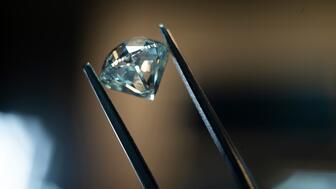
Lucara Recovers Nearly 37-Carat Blue DiamondSourcingMar 30, 2026
Rio Tinto Hauls Last Load from Diavik
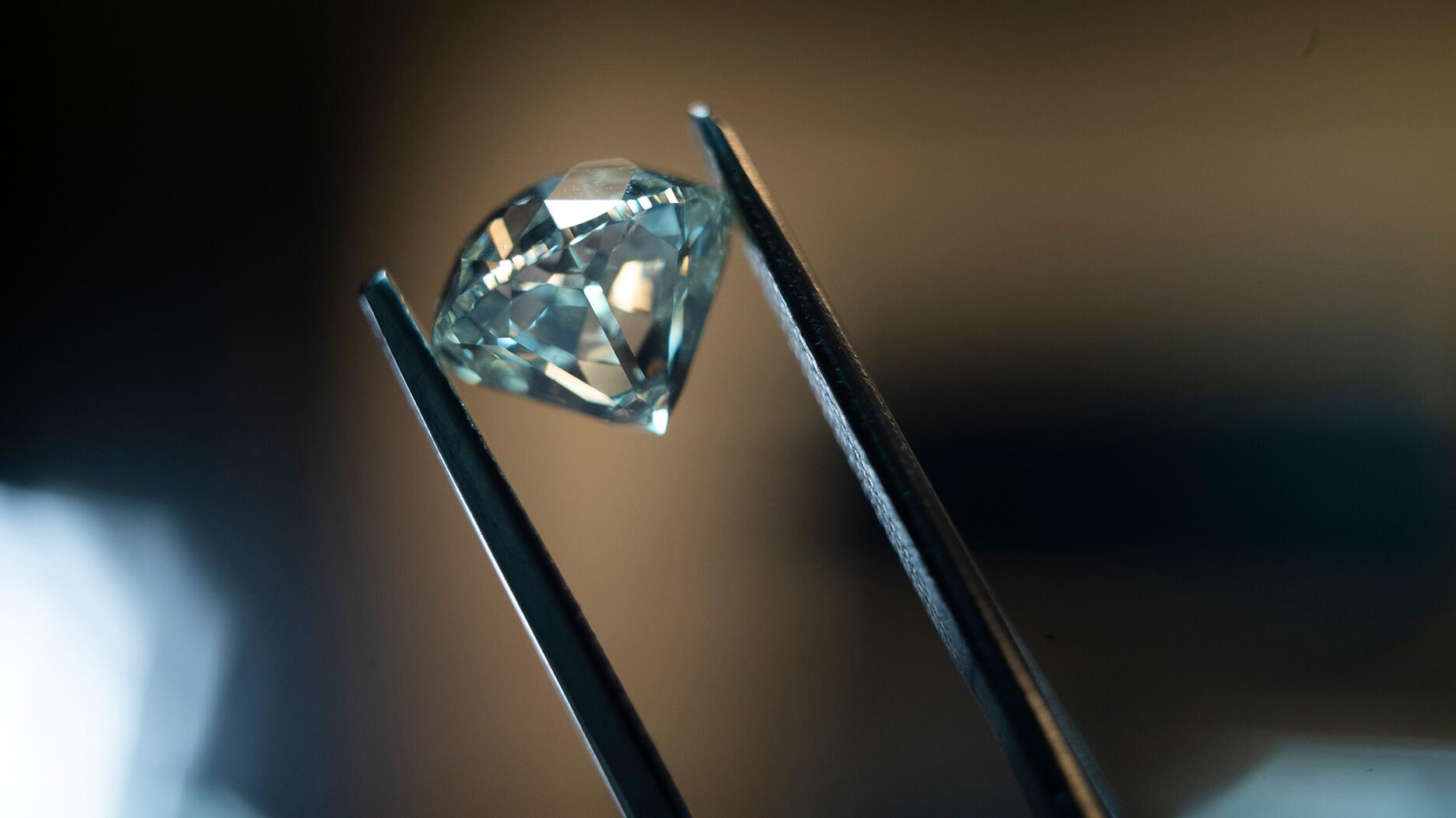
Production has ceased at the Canadian diamond mine, which has yielded more than 150 million carats of rough diamonds in its 23-year run.


The Diavik mine, which is closing after more than two decades in operation, was discovered in 1991 beneath a frozen lake in the sub-arctic tundra of the Northwest Territories of Canada.
Yellowknife, Canada—Rio Tinto delivered its final production of ore from the Diavik diamond mine in the Northwest Territories (NWT) of Canada on March 24, marking the beginning of the end for the 23-year-old mine.
The mine, located in a remote area less than 150 miles south of the Arctic Circle, produced more than 150 million carats of rough diamonds while in operation and became a major economic pillar of the region.
“This is an historic day for Diavik and the Northwest Territories and a great source of pride for this unique Canadian success story,” said Diavik Chief Operating Officer Matthew Breen.
“Diavik has been an inspired collaboration between a modern mining company and Indigenous partners with an enduring legacy of socioeconomic benefits for the North.”
Indigenous government organizations, government representatives, and other stakeholders attended a celebration at the mine, formally marking the completion of production.
Closure activities will extend to 2029, followed by a period of post-closure monitoring, said Rio Tinto, the mine’s sole owner since 2021.
“We look forward to continuing to respectfully reclaim the land in line with our commitments to, and in partnership with, the Government of the Northwest Territories and Indigenous partners,” Breen said.
The final production of rough diamonds will be polished and sold through 2026 and beyond by Rio Tinto’s international network of customers and its Select Diamantaires.
Related stories will be right here …
The mine, located in a remote area less than 150 miles south of the Arctic Circle, produced more than 150 million carats of rough diamonds while in operation and became a major economic pillar of the region.
“This is an historic day for Diavik and the Northwest Territories and a great source of pride for this unique Canadian success story,” said Diavik Chief Operating Officer Matthew Breen.
“Diavik has been an inspired collaboration between a modern mining company and Indigenous partners with an enduring legacy of socioeconomic benefits for the North.”
Indigenous government organizations, government representatives, and other stakeholders attended a celebration at the mine, formally marking the completion of production.
Closure activities will extend to 2029, followed by a period of post-closure monitoring, said Rio Tinto, the mine’s sole owner since 2021.
“We look forward to continuing to respectfully reclaim the land in line with our commitments to, and in partnership with, the Government of the Northwest Territories and Indigenous partners,” Breen said.
The final production of rough diamonds will be polished and sold through 2026 and beyond by Rio Tinto’s international network of customers and its Select Diamantaires.
Excluding Diavik, there are two active diamond mines in Canada—Ekati (owned by Burgundy Diamond Mines) and Gahcho Kué (owned by De Beers Group).
Diavik, comprising four pipes, was discovered in 1991 beneath Lac de Gras, a lake in the sub-arctic tundra of Canada, about 190 miles northeast of Yellowknife.
Mining began in 2003.
Utilizing both open pit and underground mining methods, Diavik produced predominantly white gem-quality diamonds, a small proportion of yellow diamonds, and a handful of pink stones.
In a remarkably rare instance last summer, it yielded a violet diamond.
Among the most noteworthy discoveries is a 552.74-carat yellow diamond recovered in 2018, which holds the title for the largest diamond ever found in North America.
The Government of Northwest Territories has called Diavik “a pillar of the NWT economy.”
In addition to producing more than 150 million carats of rough diamonds, the operation has supported more than 1,100 jobs annually and contributed nearly 10 percent of territorial GDP.
“The mine invested approximately $11.75 billion over its lifespan, including $8 billion in the North, while helping build Indigenous partnerships, local businesses, and a highly skilled northern workforce,” it said in a statement.
Though its original life-of-mine was forecast for 2025, the transition of its A21 pipe to underground mining in late 2024 extended Diavik’s life into the first quarter of 2026.
Planning for the mine’s closure, however, commenced before the mine even began production, Rio Tinto said, with considerations for safety, land use, landforms, water, biodiversity, community capacity, and resource development.
The buildings on site are designed to be demolished and disposed of safely, according to its website, and when mining ends, the embankments will be breached and lake water will flow back into the open mines, to be connected to the lake.
“Forty years ago, there were very few people who believed there were diamonds in Canada – even fewer could have foreseen how the Diavik story would unfold. To arrive at this milestone has required vision, courage, and determination to overcome significant challenges to mine diamonds beneath a frozen lake in one of the world’s most remote and pristine ecosystems," said Sophie Bergeron, Rio Tinto’s iron, titanium, and diamonds managing director.
“Today, Diavik’s influence stretches into many spheres and over many continents, and I am very proud to acknowledge all those people who have contributed to the discovery and development of the mine and the production and marketing of some of the finest diamonds the world has ever seen.”
SourcingMar 17, 2026
Cruzeiro Mine Debuts ‘Winter Tourmaline’
SourcingNov 04, 2020
Australia’s Argyle Mine Is Now ClosedMore on Sourcing



The Latest

SurveysOct 16, 2026
How Inflation, Gas Prices Will Affect Holiday Sales The NRF is expecting holiday sales to increase this year, but consumers and retailers alike are facing Grinch-like headwinds.

CollectionsOct 16, 2026
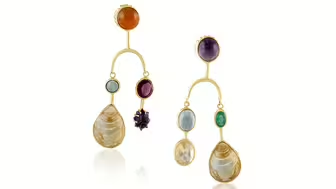
Christina Puchi’s Earrings Hold the UniverseOur Piece of the Week gathers the planets, represented by a variety of colored gemstones, in a pair of 14-karat yellow gold earrings.


IndependentsOct 16, 2026
Reeds Jewelers Expands, Relocates FlagshipThe New York-based jeweler is moving its Amherst flagship store to a larger location in nearby Snyder.

Brought to you by
Meet Gemology’s Next Generation Microscope: GIA® Gemolite® NXT Professional EditionExperience gemstones with greater precision and comfort than ever before.


MajorsOct 16, 2026
Katy Chen Appointed Executive Vice President of Graff USA Chen, who worked at Cartier and Tiffany & Co., will lead retail sales and operations for the luxury jeweler’s 11 U.S. stores.

Weekly QuizOct 15, 2026
This Week’s QuizTest your jewelry news knowledge by answering these questions.


IndependentsOct 15, 2026
Retailer Hall of Fame 2026: Amy and Elise Greenberg For 40 years, sisters Amy and Elise Greenberg have helmed their 126-year-old family business, leading with appreciation and integrity.

ColumnistsOct 15, 2026
Peter Smith: What Is the Culture REP?It’s a term Smith coined and felt compelled to share following a bad experience with an aborted flight and an unfeeling flight attendant.

Brought to you by
Your Piece Could Be the One Editors Talk AboutSubmit your pieces for a chance to win in this year's competition.


WatchesOct 15, 2026
Stephanie Gottlieb’s New Movado Watches Are Made for Your Wrist StackMovado teamed up with the New York-based fine jewelry designer on a new collection of Movado Museum Velura watches.
CollectionsOct 15, 2026
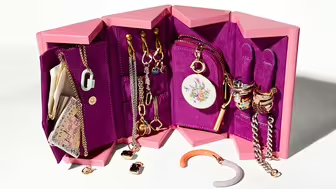
Wolf x Marla Aaron's New Jewelry Box Is for Some (Not All) of Your ThingsThe “Some of the Things” box follows the two larger “Everything” box designs with the look and function of antique sewing and toolboxes.

IndependentsOct 14, 2026
Retailer Hall of Fame 2026: Coleman and Mitchell ClarkFourth-generation jewelers Coleman and Mitchell Clark exemplify the best qualities of their predecessors: humility, modesty, and confidence.

FinancialsOct 14, 2026
LVMH’s Jewelry Brands Turn in ‘Very Good’ Performance in Q3 Tiffany & Co. continued its full-scale store renovation project while Bulgari’s high jewelry collection generated “record-breaking revenue.”

Events & AwardsOct 14, 2026
Chicago Responsible Jewelry Conference Releases 2026 ProgramThis year’s sessions feature leading voices from human rights, legal, and conservation organizations.

MajorsOct 13, 2026
David Webb Owner Purchases Lugano JewelryThe high-end jewelry retailer was sold to private investment firm Middle West Partners and a group of longtime clients.

Lab-GrownOct 13, 2026
Stephanie Gottlieb Takes Lab-Grown Diamond Collection WholesaleThe jewelry designer has partnered with Sofer Jewelry to distribute her 85-piece lab-grown diamond collection.

IndependentsOct 13, 2026
Retailer Hall of Fame 2026: Sean DunnDunn, this year’s Single-Store Independent inductee, is passionate about innovation and telling the story of natural diamonds.

AuctionsOct 13, 2026
Christie's Geneva To Auction 'Bulgari Pink' DiamondThe 24-carat fancy intense pink diamond ring could fetch up to $18 million at the November sale.

IndependentsOct 13, 2026
Greenwich St. Jewelers’ New Candle Smells Like HomeThe “Island Jewel” candle honors New York City and Puerto Rico and raises money for the island’s water relief efforts.
TechnologyOct 13, 2026
GemFind Is a New JA Member Benefit Partner The partnership will give JA members access to preferred pricing, exclusive benefits, technology solutions, education, and resources.

SurveysOct 09, 2026
These Will Be the 10 Busiest Days for In-Store Shopping This Holiday SeasonStores should expect to see the most customers on Nov. 27, and Christmas week is expected to be hectic too, as Dec. 25 falls on a Friday.

CollectionsOct 09, 2026
Elisa Solomon Collabs With Serendipity 3 on ‘Frozen Hot Chocolate’ CharmThe charm, our Piece of the Week, features brown diamond frozen hot chocolate topped with white diamond whipped cream and a ruby straw.

AuctionsOct 09, 2026
8-Carat Blue Diamond Goes Unsold at UK Jewelry Auction The top lot of Elmwood’s recent fine jewelry sale in London was a 1.84-carat, D color Tiffany & Co. solitaire diamond ring.

WatchesOct 09, 2026
Movado to Sell Majority Stake in Ebel for $66.5MThe watch company agreed to sell a 95 percent interest to a group comprised of F.P. Journe, Chanel, and Swiss watch exec Pierre Jacques.

Policies & IssuesOct 08, 2026
Third Wave of IEEPA Tariff Refunds Begins This round of tariff refunds is for importers that have sued over IEEPA tariffs in the Court of International Trade and won.

CollectionsOct 08, 2026
Brent Neale’s New Collection Goes ‘Back to Basics’It revisits the brand’s most requested silhouettes, from "Pillow"-set necklaces and bracelets to "Signature"-set rings and earrings.

SourcingOct 08, 2026
Ethical Gem Fair Heads Back to BrooklynThe trade-only event includes buying opportunities as well as educational sessions on artisanal mining, the new Paraíba source, and more.

Events & AwardsOct 08, 2026
Pattons Fine Jewelry Sweeps Local Design ContestAra Chanakian, a jeweler at Pattons, took home top honors in every category at Jewelers of Louisiana’s annual jewelry design competition.