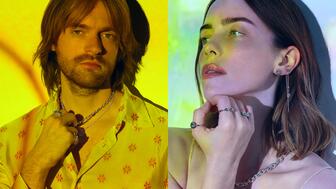
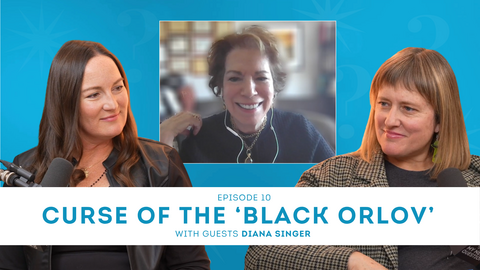
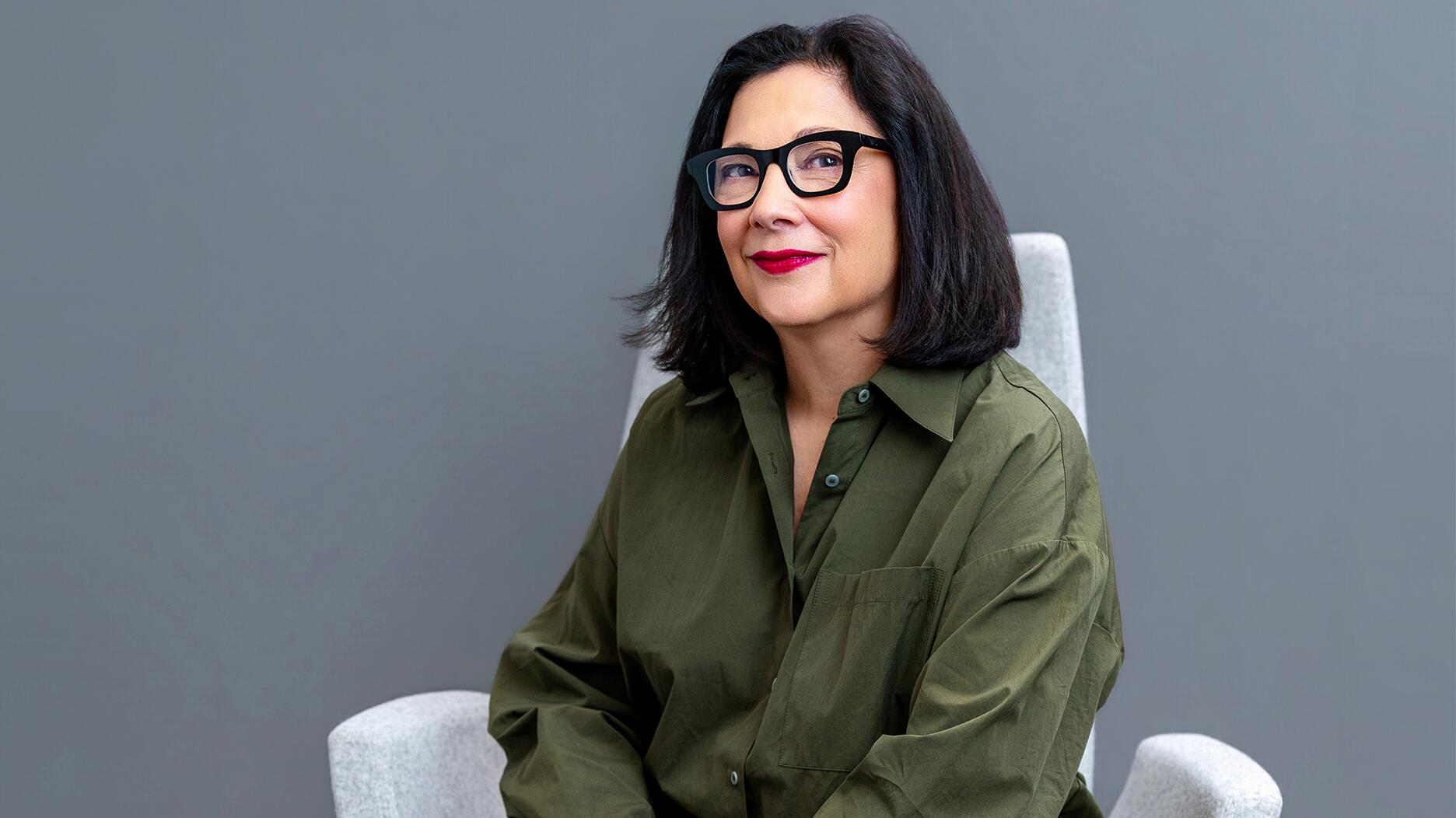
Guzema’s founder and creative director Valeriya Guzema (left) and co-owner and CEO Mariana Lenha (right) sat down for a Q&A with National Jeweler ahead of the opening of the brand’s first U.S. store.
Ukrainian jewelry brand Guzema is celebrating multiple milestones this year as it turns 10 and opens its first store in the United States.
The brand was founded in 2016 by former fashion journalist and designer Valeriya Guzema in Kyiv, Ukraine, and has become known for its timeless pieces that evoke a refined, feminine minimalism through geometric shapes.
Over the last decade, it has released more than 20 collections and opened three locations in and around Kyiv.
Since the Russia-Ukraine War began in 2022, the brand has branched out.
Three years ago, it established a U.S. base for its global headquarters, which is led by co-owner and CEO Mariana Lenha.
On Wednesday, it opened its first U.S. store at 112 Wooster St. in New York City’s SoHo neighborhood.
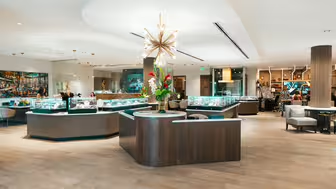
The 1,100-square-foot store was designed in collaboration with Ukrainian architect and designer Victoria Yakusha of Yakusha Studio to embody the same minimalistic elegance that defines Guzema’s jewelry.
The space features soft gray tones and a nearly monochromatic palette punctuated by Yakusha’s “Faina” collection of furniture, lighting, and décor, as well as bespoke works by contemporary artisans.
Just before the store officially opened, National Jeweler Associate Editor Natalie Francisco sat down with Guzema and Lenha to look back on the last 10 years, discuss the new store, and peek into the future.
This interview has been edited for length and clarity.
Natalie Francisco: Valeriya, what inspired you to transition from fashion editor to jewelry designer and found Guzema in 2016?
Valeriya Guzema: I was working as a fashion journalist for almost 6 years, first at Elle and then on fashion TV. Every day I was surrounded by beauty, and I was always involved in someone’s vision about someone else’s story.
One day, I thought about if I would like to create something, what that would be? I understood that jewelry is the thing I really admire. I was thinking about what it would look like if I would express Ukrainian femininity, Ukrainian symbolism, what kind of shapes I would use if I would express this type of woman. That interested me a lot, and I decided to start.
The design I was imagining I couldn’t find. There was not anything like that in the market and like this, my first collection was born.
I didn’t expect that one day it would be a big business and that it would be an international one. After a decade, it’s like a dream for me that we’re opening a boutique in New York.
I still cannot totally believe that because, the way it started, I didn’t expect that it would grow so fast and we would be where we are today in 10 years.
NF: I understand that you used funds from melting your grandfather’s gold teeth to help start the business. Can you tell us about that?
VG: Now I’m laughing with this story, but when I first told this story, I didn’t tell it very lightly. It was about how I was doing at the time, because I didn't have a lot of money and I didn’t have the capital this industry usually requires for opening a jewelry brand.
That’s why I went to my parents. I asked my mom, “Maybe you can help me with some money,” because at that time, I didn’t earn enough. She opened our grandmother’s jewelry box. It’s quite small, but we had it, and we found my grandpa’s [gold] teeth.
I make jokes that he is my investor.
NF: What was the first piece you designed for Guzema?
VG: It was actually our classic collection, which is still popular. It was [motifs of] flat shapes, balls, and this is where it all starts from.
At that time, I didn’t think I would work with diamonds but never say never. I was growing up and my tastes were changing.
NF: How do you decide what you want to design and build into a full collection for Guzema?
VG: I was always about something minimalistic and very playful.
For me, it was important that the jewelry describes a woman’s beauty, not just catch your eye, but that you feel very special in it.
NF: How do you choose who to partner with for collections and campaigns?
VG: For the first years, I was the face of our photo shoots, and since my children were born, I understood that the business was growing up.
Mariana Lenha: For partnerships and campaigns, we like things to work organically at Guzema. Even though it’s a commercial world as well, we believe in building relationships through the community, through the friends of the brand.
This is the best partnership, the most real one. We like to work with real people to show real stories, to build beautiful storytelling.
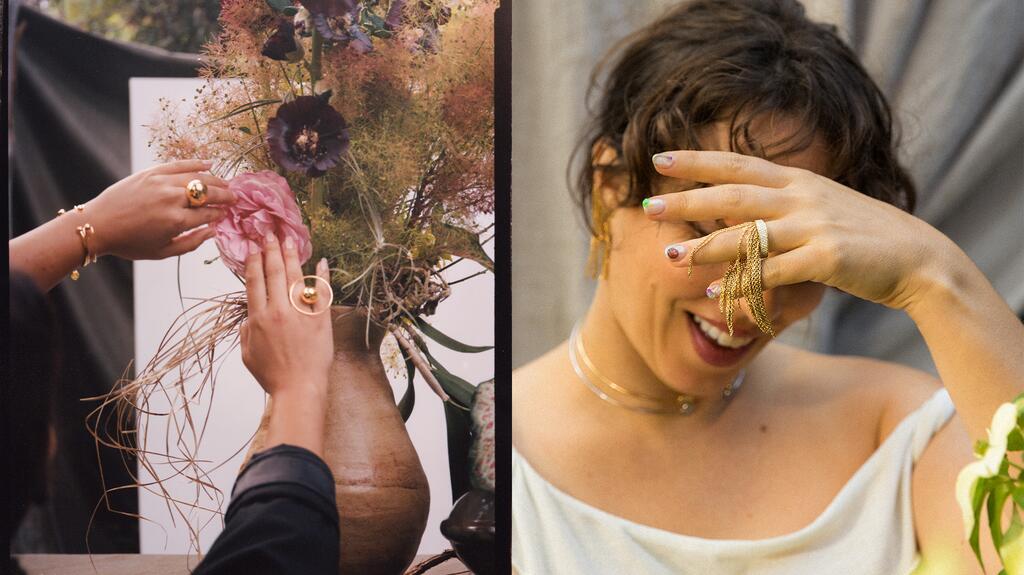
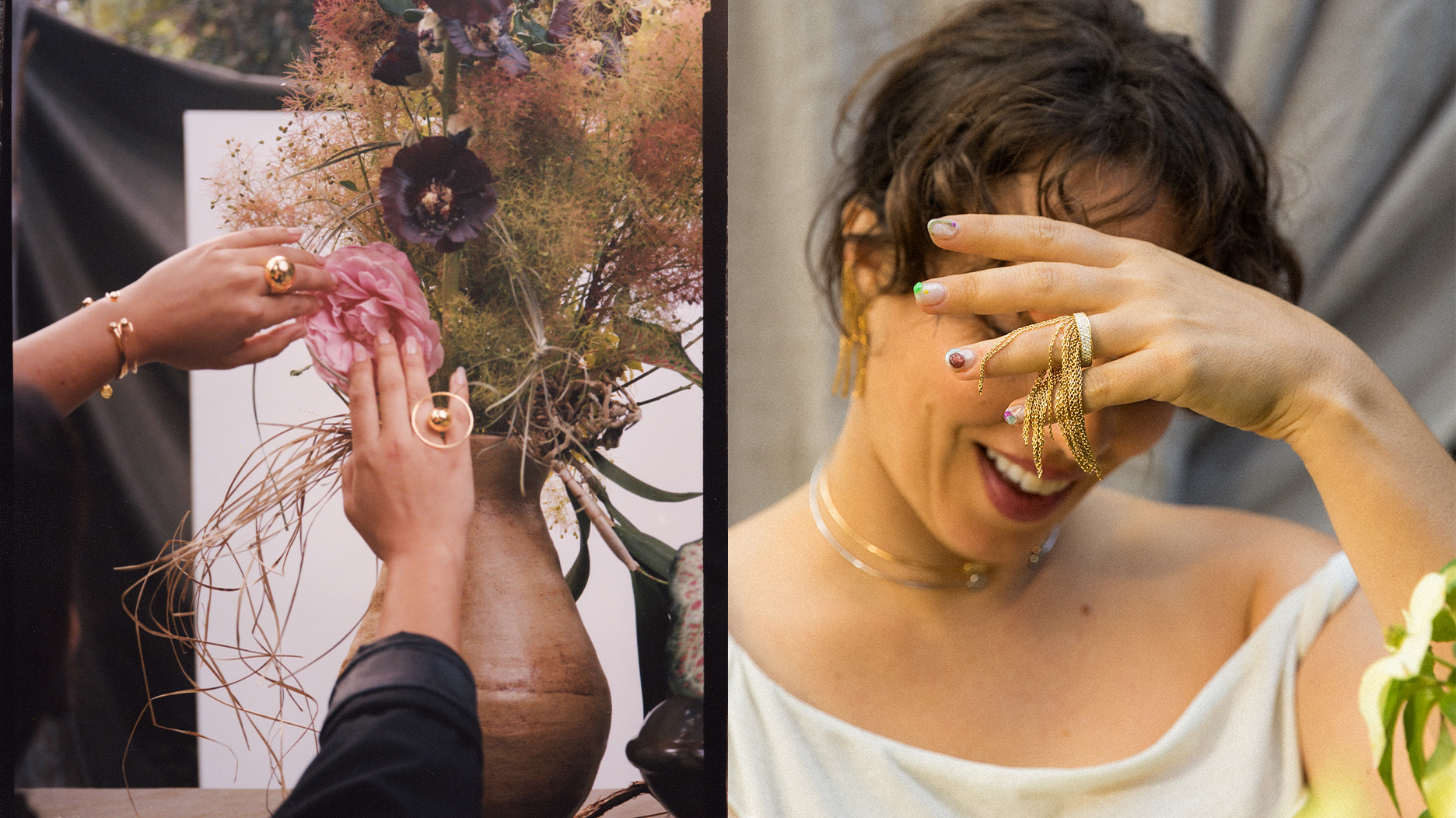
NF: I must say my favorite campaign from Guzema has always been the one where you partnered with the florists.
ML: Yes, thank you. It was our first American campaign actually. We flew to Los Angeles, and Lisa [Voloshin, the photographer], she opened the door to her home, and we shot it in her garden.
At left, florist Brittany Asch of Brrch Floral wears pieces from the “Space” collection and, at right, Sophia Moreno-Bunge of floral design studio Isa Isa wears the “Chainfall” ring for Guzema’s “Flower Power” campaign.
It wasn’t planned much. They brought the flowers, they put it on the table, they started creating the piece, and we were shooting during the process.
NF: What has your experience been creating jewelry during the war in Ukraine?
VG: It was very difficult for me to make creations, especially during the first years of war.
I’m a sensitive person, and it touched me so deeply that I just couldn’t find any inspiration. Then I understood that I would show [the impact through] jewelry.
We go more deeply in Ukrainian history, in Ukrainian culture, in that symbolism which we identify in ourselves and which we really care about.
That’s why the war had such an influence on me and on the brand and on our collections as well. The culture, the crafts, the jewelry—all this beauty, it didn’t stop just because of war.
ML: I remember what you started creating when the war started.
Valeriya started doing the charity collections to give back to Ukraine. As soon as the war started, you created the “Freedom” collection. She saw the opportunity to give back to Ukraine, that we had to do something to help.
That year we also expanded operations to the U.S. market.
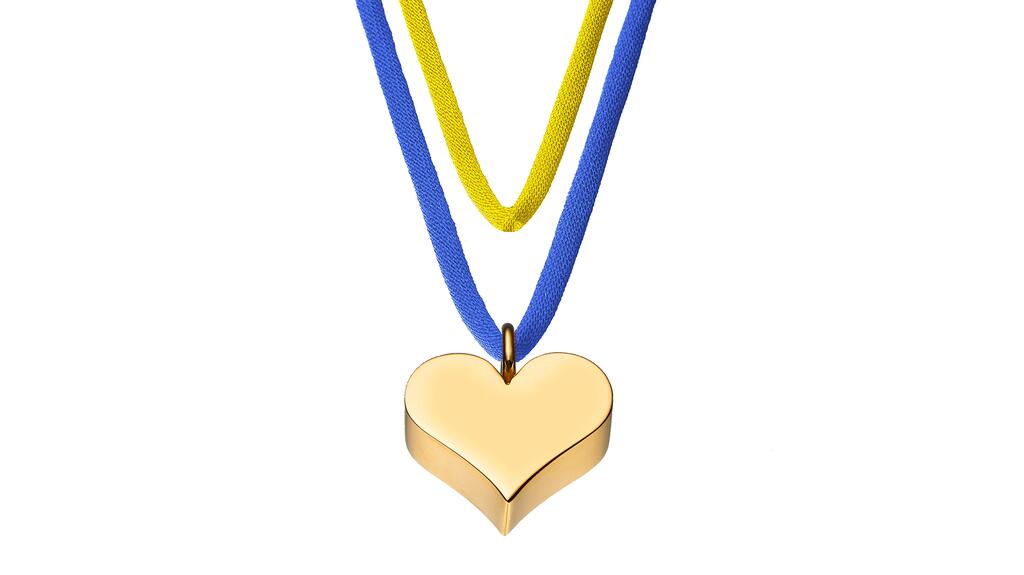
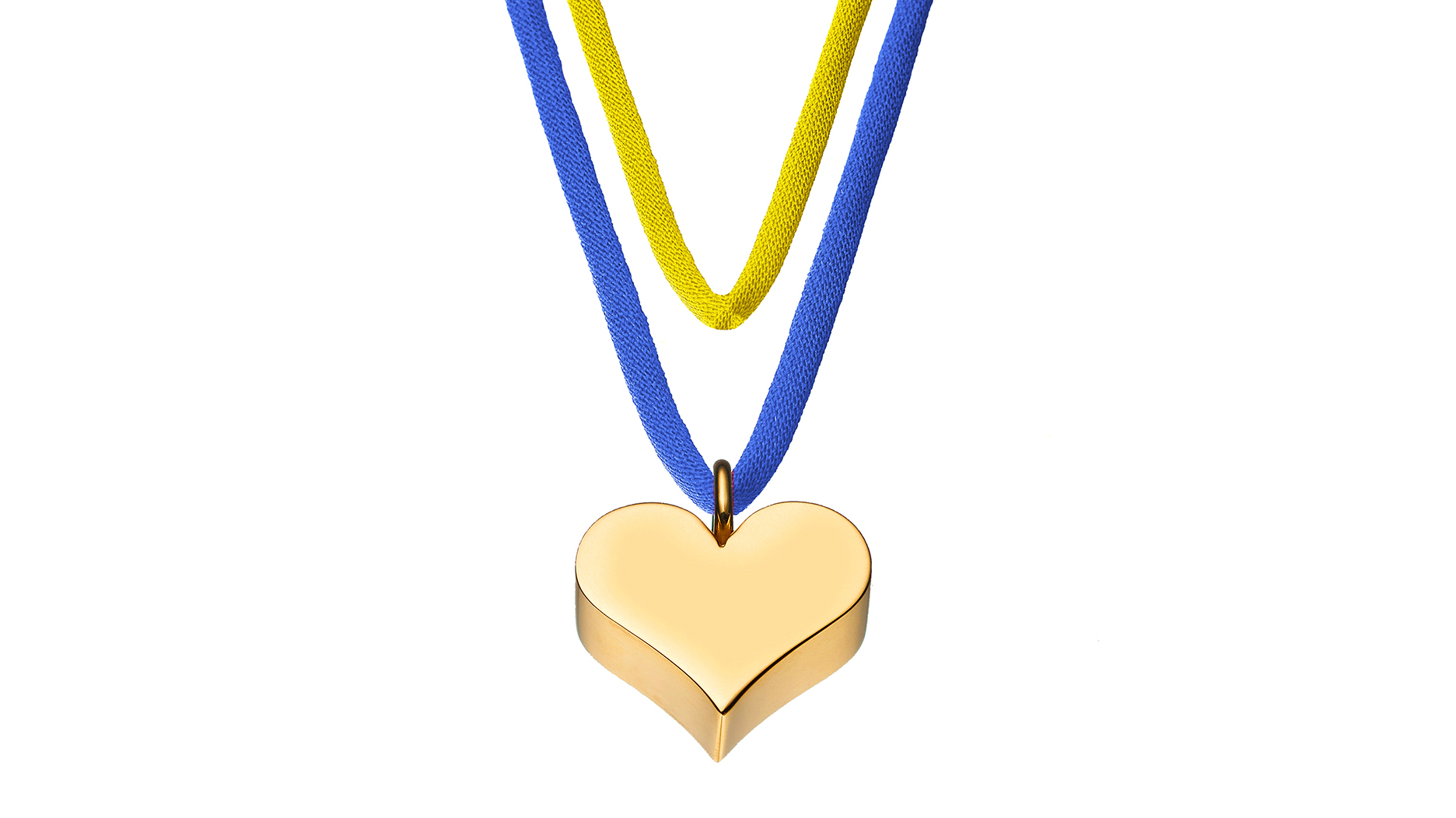
Guzema’s “Freedom” pendant in 14-karat yellow gold on blue and yellow silk strings as a nod to the Ukrainian flag. All proceeds from the sale of this piece were donated to the Guzema Foundation to support the people of Ukraine.
NF: Would you say that the war is still affecting your designs today by bringing more deep symbolism and tying elements back to Ukraine?
VG: Yes, because, for example, we created one of our charity projects.
We have jewelry like a flower of Narbut (a brooch inspired by Ukrainian artist Heorhiy Narbut from which a portion of the proceeds are donated to the Ukrainian School of Political Studies).
Also, one of our last collections, “Once Upon a Time,” was about Ukrainian fairy tale heritage. We decided to create a book of real Ukrainian national fairy tales and from this topic, our collection was born.
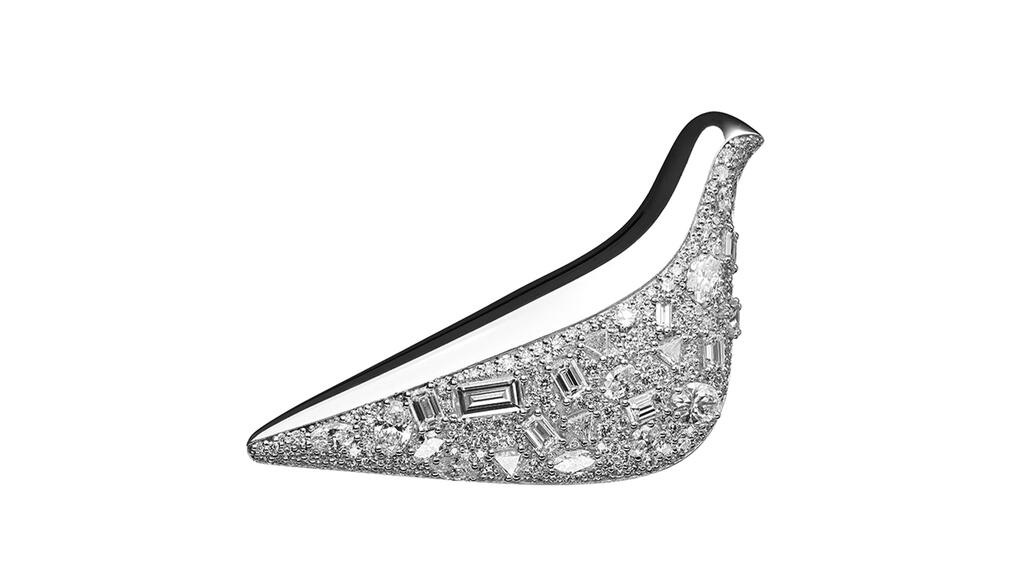
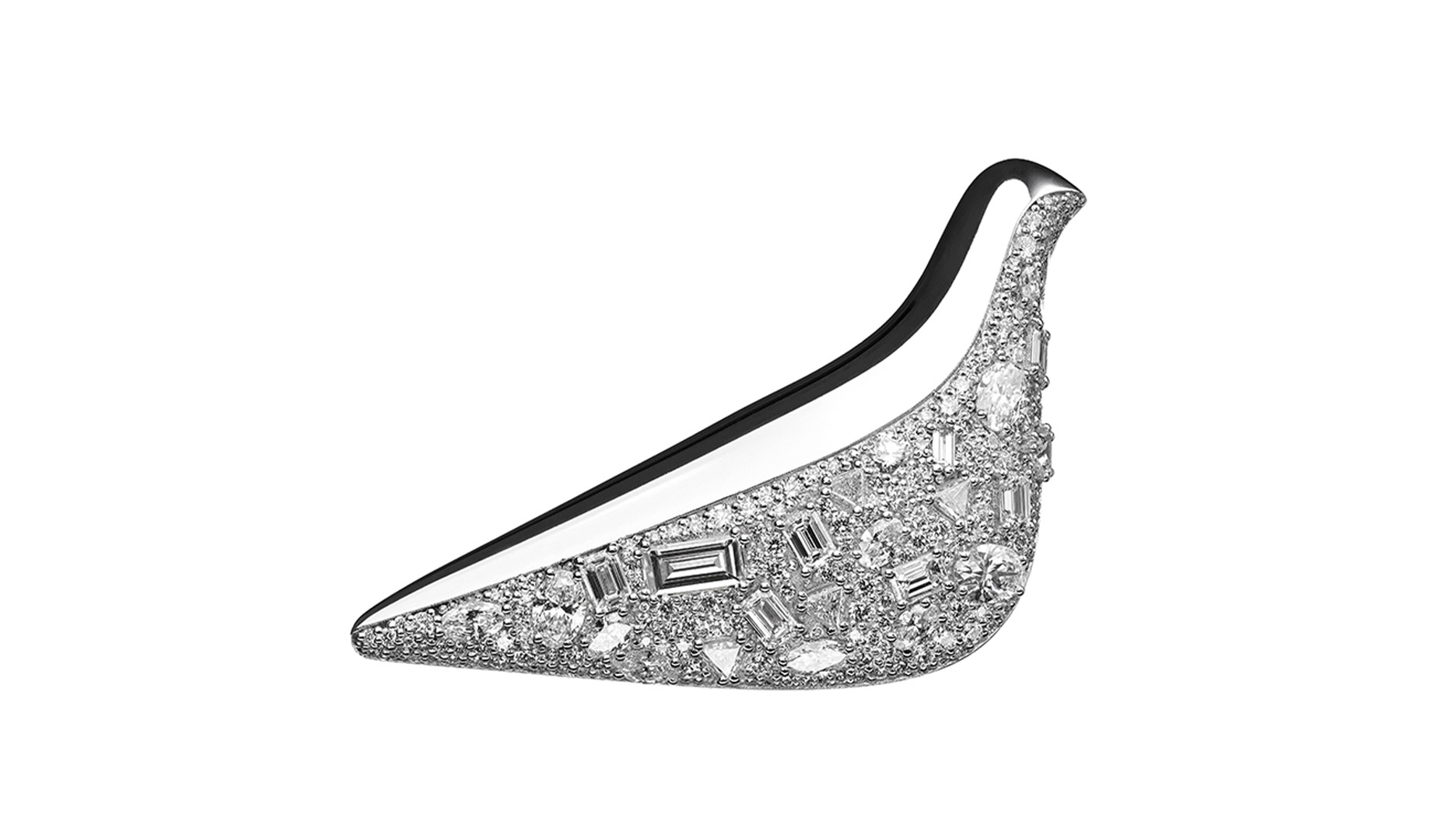
The “Bird Girl” brooch from the “Once Upon a Time” collection with mixed-cut diamond pavé set in 18-karat white gold
The main role in this collection is a bird. There is a fairy tale in Ukrainian folklore about one very beautiful, very feminine bird, but she was so strong. She saved the man, she saved her house, she saved everything. This is a parallel to Ukrainian women today.
NF: Mariana, transitioning to the business side, how did the war affect the expansion of the business?
ML: We made a decision to expand to the international markets when the war started.
Obviously, war has impacted not only the people but the economy, the businesses back home. We have a big team behind us in Ukraine, so we wanted to diversify the risks.
At the same time, despite the war, I felt the brand was ready for expansion.
We celebrate 10 years this year, and the brand was doing really well in Ukraine. We have a lot of Ukrainian ambassadors in the world, so we saw the potential to share the experience of Guzema and our storytelling on the international market.
The brand became more brave doing business in Ukraine during the war and expanding to what I would say is the hardest market in the world, opening a store in New York.
Related stories will be right here …
People in Ukraine went through a lot and became braver and we feel like we have a beautiful story that we can share with people here as well.
There were a lot of changes business-wise. We have our own design and production center in Ukraine, but we started looking for partners on international markets in the U.S. We started creating our pieces there.
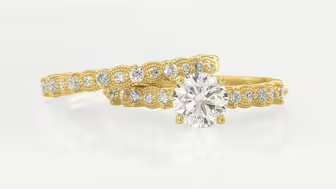
It was not the smoothest process, as everything is handmade. We do natural diamonds only. We put a lot of pride and work into each piece. That’s why a lot of work has been done behind the scenes on the production side.
Also, building the team and combining two teams here in the U.S. and Ukraine. We’re so proud of both of our teams.
Then we started creating this project. It took us a whole year to build the space.
We wanted the space to show what Guzema is really about—to provide that experience, that service, that hospitality, and meet clients all around the world. New York is a very touristy place, and we have an opportunity to meet people from different countries and communicate our story to them.
I feel very excited and incredibly proud.
NF: Tell me more about the New York store. What makes it special?
ML: It’s special because it’s our fourth store, but the first store in the U.S.
I think we’ve been so lucky and fortunate to find so many people on our way that helped us to put this together. It makes the design special. We worked on every single corner. We wanted people to feel like this is a store, but at the same time to get the experience.
Guzema’s first U.S. store is located at 112 Wooster St. in New York City’s SoHo neighborhood.
The store was designed in collaboration with Ukrainian architect and designer Victoria Yakusha of Yakusha Studio and is decorated with furniture, lighting, and décor from her “Faina” collection.
We built a VIP room for more private fittings and to work with stylists, personal buyers, anyone who’s open to work with Guzema.
We built the office here. We wanted to have a space where the whole team can come together.
We designed this space according to [ADA] regulations to be a comfortable place for people with disabilities. We wanted everyone to feel welcome and everyone to feel that they have been a part of a beautiful community.
We worked with the Ukrainian designers. I feel like this space has a combination of both the arts. It’s jewelry, the arts, and something deeply personal.
NF: Do you have anything planned to celebrate the brand’s 10-year anniversary this year?
VG: To tell you the truth, we already twice made the date [to celebrate], but in Ukraine, it’s a very difficult time with bombings. That’s why we changed it every time.
For us, a very important and big step is the celebration of the opening of our New York boutique. I think that’s the main celebration for all of our team, for all our community, because Ukrainians, they are so proud that we are in New York.
I hope that, of course, we will also have a bright celebration of our 10th anniversary in Ukraine.
NF: Where do you two see your jewelry brand 10 years from now?
ML: I feel like it’s growing faster than we are ready for.
Guzema has its own spaces around the world, and to see the community growing and additional eyes on the brand, from an investment standpoint, I only see a bright future. We have prepared for anything, but I feel like we’re in the right spot right now for the U.S. market.
VG: For me, it’s very important that in these 10 years, the world understands the Ukrainian craft.
Not just a brand that survived in spite of war but one that can show the Ukrainian identity, its hospitality, and of course, we would love to be all over the world in 10 years.