






SourcingJul 21, 2026
Anglo Reportedly Selects Gareth Penny’s Consortium as Top Bidder for De BeersEditorsJul 29, 2026
Q&A: The Past and Future of Angola’s Diamond Industry
Endiama Commercial Director Elton Escrivão knows people have a lot of misperceptions about Angola. He wants to change that.


Endiama Commercial Director Elton Escrivão, pictured center at the 2026 African Mining Indaba held earlier this year, sat down with National Jeweler’s editor-in-chief in Las Vegas to discuss diamond mining and exploration in Angola, and the country’s desire to expand beyond diamond production.
In 2025, Angola produced 15.2 million carats of diamonds worth a total of $1.81 billion, Kimberley Process statistics show.
Only two countries—Russia (31.5 million) and Botswana (15.5 million)—produced more.
Angola accounted for 15 percent of global diamond production by volume, and 20 percent by volume, again trailing only Russia and Botswana in both categories.
Yet, “Angolan diamonds” don’t enjoy the same brand recognition, so to speak, as diamonds from Botswana or Canada, something the Angolan government wants to change.
The country wants to expand beyond mining, with an ultimate vision of jewelry on the market that’s made in Angola by Angolans using diamonds mined, cut, and polished in the country.
After attending for the first time last year, Angola made its presence known at the JCK Las Vegas show in 2026.
Under the banner of “Angola’s Diamond Potential,” it hosted a panel discussion on the ways in which its diamonds support local communities and sponsored Jesse Itzler’s keynote talk, while multiple Angolan producers exhibited in one booth in the Natural Diamonds section.
Amid all this, Elton Escrivão, commercial director for Endiama, Angola’s state-run diamond company, sat down with me to talk about the country’s past and future in the diamond industry.
We discussed Angola’s mines and cutting factories, current exploration activities, and why now is a good time to be looking for new opportunities.
This interview has been edited for length and clarity.
Michelle Graff: I realize this question has a long answer, but what do you think were the roadblocks and barriers in the past to Angola realizing its diamond potential, so to speak?
Elton Escrivão: I think when we start talking about diamond industry in Angola, we have to go back 100 years at least. That was when diamonds started being mined in Angola.
At that time, it used to be mined by a colonial company called Diamang that was owned by Portuguese people. Portugal was colonizing Angola by that time.
We got independent in 1975. We started the transition from there on.
We started having a civil war between two parties [that lasted] until 2002.
Angola has been a stable country for 24 years now, very stable politically and economically, and has been positioning itself as a very influential country in the region and in the continent as well.
MG: Right around the time of the COVID-19 pandemic I wrote an article on diamond supply and everybody I interviewed said Angola was the next hotspot, for lack of a better term, in the world for diamonds.
I know Rio Tinto has been exploring in Angola, Alrosa had a presence there, and De Beers has been exploring in Angola too. How is that coming along?
EE: During the last 10 years, we have been going through lots of reforms to create a better business environment so we could attract more investors, right?
As a result of the policies that we have been changing in Angola for the last 10 years, we were able to attract back De Beers and to attract Rio Tinto to Angola.
Currently, they are exploring. Rio Tinto is closer to starting its production.
De Beers is in an earlier stage, but already with very good results, so they are very excited about that.
All of that was only possible because of the reforms and improvements that we were able to do.
First, when it comes to the market policy, [it’s] the way we sell diamonds. We now have a more transparent system, a more open system, and we allow everyone to bid and to see, you know, which one is offering the highest price and the fair price for the diamonds.
We have established as well a very strict system to make sure no diamonds are being used for financing wars or for any other illegal activity.
The proof of that is that we are still at peace 24 years later because we were able to make sure that no one would use any of our resources to finance a war again, and currently no one is able to do that.
[Angola is] politically stable, the parties can talk to each other. For sure there are questions on which they do not agree, but at the end of the day, it’s all about the country.
MG: Right.
EE: Currently, we are going from a country that was focused only on producing diamonds to moving through the value chain, just trying to create a kind of vertical integration to capture more value and to create more value for our communities.
We have invested a lot when it comes to cutting and polishing diamonds. We built a diamond hub that was inaugurated in 2021 to create more jobs and to attract investors. It has been working.
Currently, we have around nine to 10 factories.
Only two countries—Russia (31.5 million) and Botswana (15.5 million)—produced more.
Angola accounted for 15 percent of global diamond production by volume, and 20 percent by volume, again trailing only Russia and Botswana in both categories.
Yet, “Angolan diamonds” don’t enjoy the same brand recognition, so to speak, as diamonds from Botswana or Canada, something the Angolan government wants to change.
The country wants to expand beyond mining, with an ultimate vision of jewelry on the market that’s made in Angola by Angolans using diamonds mined, cut, and polished in the country.
After attending for the first time last year, Angola made its presence known at the JCK Las Vegas show in 2026.
Under the banner of “Angola’s Diamond Potential,” it hosted a panel discussion on the ways in which its diamonds support local communities and sponsored Jesse Itzler’s keynote talk, while multiple Angolan producers exhibited in one booth in the Natural Diamonds section.
Amid all this, Elton Escrivão, commercial director for Endiama, Angola’s state-run diamond company, sat down with me to talk about the country’s past and future in the diamond industry.
We discussed Angola’s mines and cutting factories, current exploration activities, and why now is a good time to be looking for new opportunities.
This interview has been edited for length and clarity.
Michelle Graff: I realize this question has a long answer, but what do you think were the roadblocks and barriers in the past to Angola realizing its diamond potential, so to speak?
Elton Escrivão: I think when we start talking about diamond industry in Angola, we have to go back 100 years at least. That was when diamonds started being mined in Angola.
At that time, it used to be mined by a colonial company called Diamang that was owned by Portuguese people. Portugal was colonizing Angola by that time.
We got independent in 1975. We started the transition from there on.
We started having a civil war between two parties [that lasted] until 2002.
Angola has been a stable country for 24 years now, very stable politically and economically, and has been positioning itself as a very influential country in the region and in the continent as well.
MG: Right around the time of the COVID-19 pandemic I wrote an article on diamond supply and everybody I interviewed said Angola was the next hotspot, for lack of a better term, in the world for diamonds.
I know Rio Tinto has been exploring in Angola, Alrosa had a presence there, and De Beers has been exploring in Angola too. How is that coming along?
EE: During the last 10 years, we have been going through lots of reforms to create a better business environment so we could attract more investors, right?
As a result of the policies that we have been changing in Angola for the last 10 years, we were able to attract back De Beers and to attract Rio Tinto to Angola.
Currently, they are exploring. Rio Tinto is closer to starting its production.
De Beers is in an earlier stage, but already with very good results, so they are very excited about that.
All of that was only possible because of the reforms and improvements that we were able to do.
First, when it comes to the market policy, [it’s] the way we sell diamonds. We now have a more transparent system, a more open system, and we allow everyone to bid and to see, you know, which one is offering the highest price and the fair price for the diamonds.
We have established as well a very strict system to make sure no diamonds are being used for financing wars or for any other illegal activity.
The proof of that is that we are still at peace 24 years later because we were able to make sure that no one would use any of our resources to finance a war again, and currently no one is able to do that.
[Angola is] politically stable, the parties can talk to each other. For sure there are questions on which they do not agree, but at the end of the day, it’s all about the country.
MG: Right.
EE: Currently, we are going from a country that was focused only on producing diamonds to moving through the value chain, just trying to create a kind of vertical integration to capture more value and to create more value for our communities.
We have invested a lot when it comes to cutting and polishing diamonds. We built a diamond hub that was inaugurated in 2021 to create more jobs and to attract investors. It has been working.
Currently, we have around nine to 10 factories.
“There are still a lot of misconceptions about Angola. That’s why we always say, don’t judge Angola from distance, just come and visit us and see.” – Elton Escrivão, Endiama
MG: So, you’re cutting and polishing diamonds there and employing all local people?
EE: The average [percentage of] locals [employed in the diamond manufacturing facilities] is around 75 to 77 percent. They were all trained from scratch; they didn’t know anything about polishing.
Currently, the biggest investor is KGK [Group] and they are planning to invest more for sure.
We are investing a lot as well on local transformation. Besides diamonds, we have built the first gold refinery in Angola.
All of that we did to create the conditions so we can move into the jewelry sector, so we can be able to produce locally as well—jewelry produced with diamonds mined and polished in Angola.
MG: And made in facilities employing Angolans.
EE: Exactly. At the end of the day, that’s the most important, right? We have been able to do that.
What we feel sometimes is that people do not know that much about Angola. There are still a lot of misconceptions about Angola.
That’s why we always say, don’t judge Angola from distance, just come and visit us and see. For sure we are still not, you know, a perfect country.
MG: I mean, neither [is the United States], to be fair.
EE: There are no perfect countries in the world, but for sure we have been making huge progress.
Sometimes I see people talking about that certain things that are not good [in Angola]. [And they are] different from, let’s say, Botswana. Diamonds in Angola, they represent around 2 percent of our GDP, but the impact they make is usually greater than oil, than other sources of income that we have, because they are linked to people.
Usually, oil people are exploiting [our resources] offshore, but diamonds, we are usually onshore with communities surrounding our activities.
We have a very good relationship with the communities [surrounding our mines] because they do understand that we are doing that to create value for them, to create development for them.
And that’s why the investing that we are doing, we are doing in the mining areas. The diamond hub we built in Lunda Sul, that is where we have Catoca and Luele, those are our biggest mines.
MG: This is what I wanted to ask about next. Tell us about your diamond mines: how many are in operation, what are they called, and where are they exactly?
EE: We have bought around 25 mines. Out of the 25, four of them are kimberlites and 21 of them are alluvial mines.
All of them are industrial activity, large-scale mining. None are artisanal.
For sure, we are still struggling with certain activities from the past that we are trying to convert into legal mining. And we do understand, and that’s why we approved the regulation so we could convert certain illegal miners who were there before these reforms into cooperatives first, so we could control [the activities], and we call them semi-industrial.
They are using some machines and some hand work, right? And they have a certain period of time so they can convert into large-scale mining operations.
That’s because some of the people who were there, they are Angolans, and we don’t want to create unemployment. What we want is to support our people. If they are working, then they have a way of getting income and supporting their families. We are not there to take it [away from] them.
We are giving them training, giving them machines, trying to find financing for them, trying to find international or local partners so they can go together and they can grow.
That’s the policy that we adopted, and up to now, it’s working very well.
[In addition,] we have more than 50 companies that are still exploring to see if they can find something.
MG: More kimberlite pipes.
EE: Exactly, kimberlites or alluvial deposits.
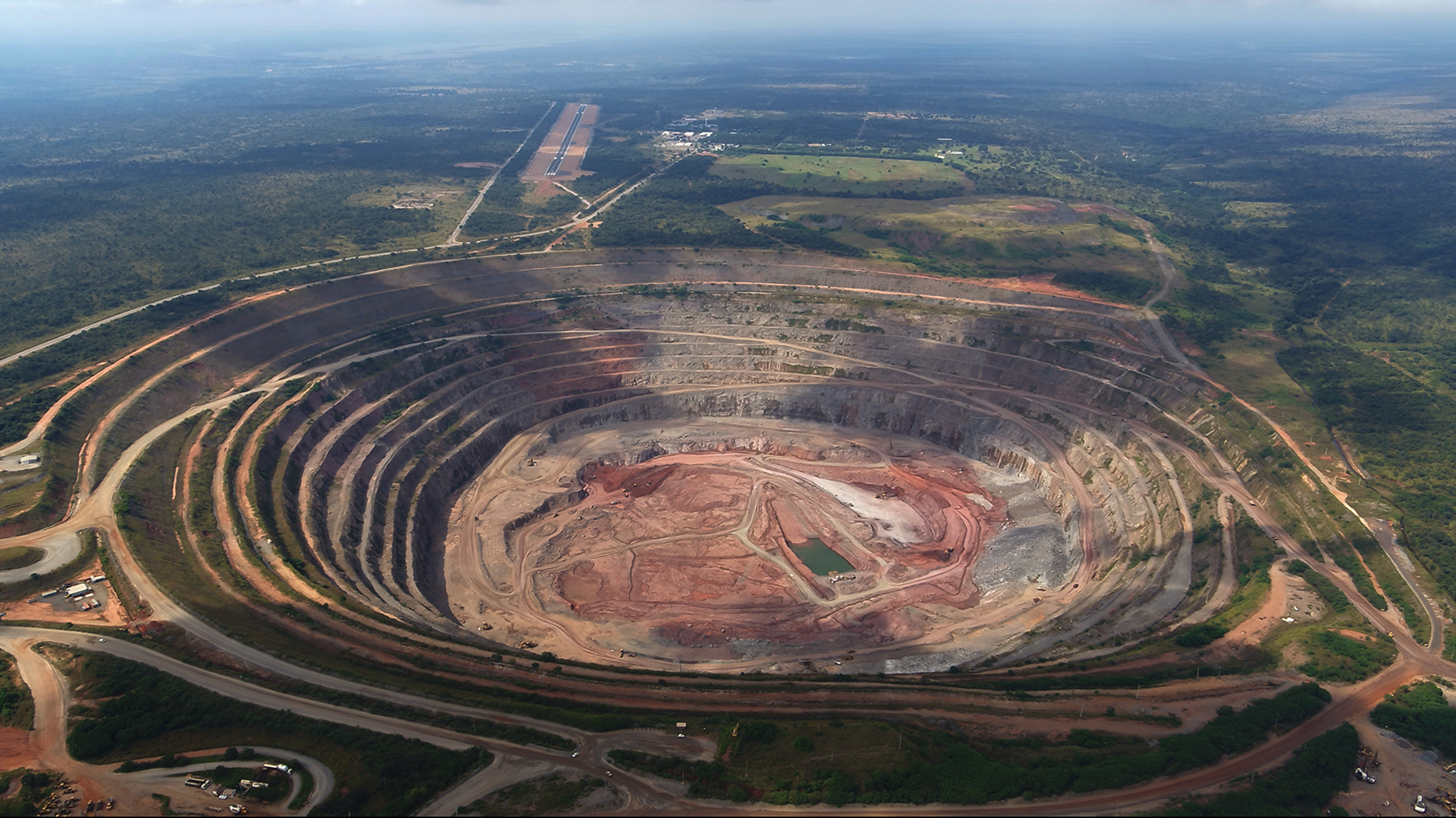
An aerial view of the Luele diamond mine in Angola. The mine opened in 2023 and has the potential to be bigger than the country’s largest diamond mine, Catoca, Escrivão said.
MG: You mentioned the country’s two big diamond mines earlier. Can you talk a little bit more about those?
EE: Luele (formerly known as Luaxe) was launched around two years ago.
It was the largest discovery we were able to make in the last 30 years since we discovered Catoca.
And I’m pretty sure that even when it comes to worldwide [diamond exploration], there is no such discovery during these years.
In terms of operations, Luele is producing really close to what Catoca is producing right now.
Catoca is our biggest, but Luele has the potential to be three times bigger than Catoca. For sure, we are still balancing the production according to the market situation as well.
The fun fact about Luele is that although it was launched only two years ago, the impact they have been able to make in the community is already huge. In two years, they built around 300 houses, for 300 families.
Each family is around five to six people, and they were able to give them land so they can develop agriculture. They were able to give them electricity and water.
As I told you, when we go to a certain area, there usually are communities surrounding that area, and there are certain people as well that, when they notice that there is a mine, they get closer to the mine.
Some of them are working for us, so we are employing surrounding communities. Even the construction we are doing with local people, employing local youth. So that’s Luele.
Then we have Catoca that has been in operation for over 30 years now.
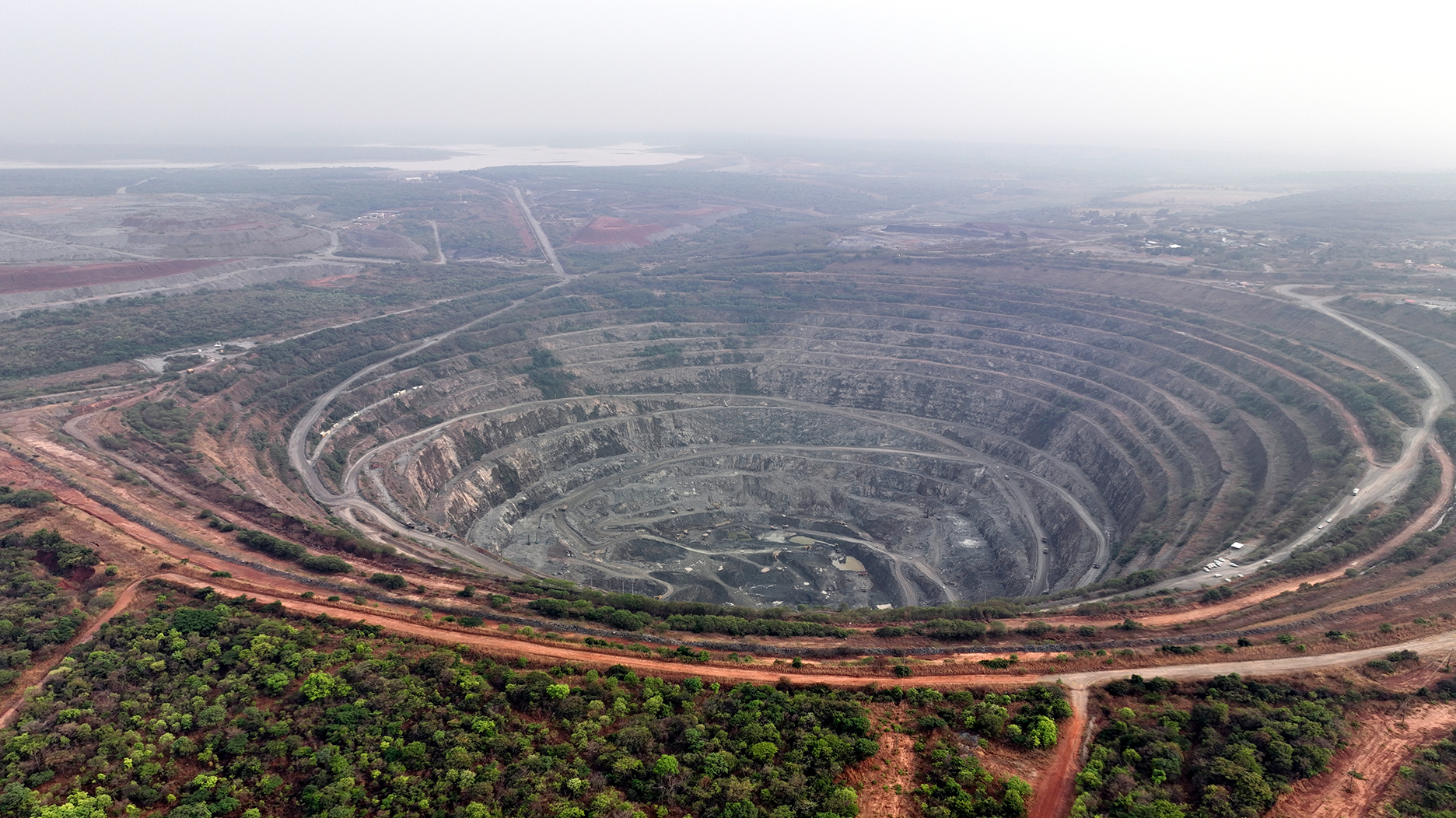
An aerial view of Angola’s largest diamond mine, Catoca, which opened in the late ‘90s
MG: And this is your biggest mine?
GG: Yes. It’s a kimberlite mine. It has a very stable production. We have about eight to 10 years to go in terms of reserves that we have now.
We are still doing studies and there is huge potential for us to go underground. Sometimes people think that Catoca is about to end, but no.
I would say Catoca is the biggest employer when it comes to the diamond industry [in Angola] and the biggest contributor in terms of revenue.
MG: Can you talk a little bit about the quality of diamonds coming out of these mines?
EE: I would say that with diamonds in Angola, they are split, right? We have both very high-quality diamonds when it comes mainly from alluvial productions, and there is a kimberlite that is very important that is called Kaixepa with prices over $1,000 per carat rough.
When it comes to Luele, although they have very good special stones as well, the average price is below $80 now. That’s because of this situation [with natural diamond prices falling].
We were able to sell [diamonds from] Catoca for almost $200 per carat. They are very good diamonds, [the mine] has a lot of gem quality diamonds in it as well. They are still being used for jewelry.
For instance, we have Brilliant Earth here [at the JCK Las Vegas show] today, and their main source of diamonds are basically Catoca and Luele when it comes to Angola. Around 30 percent of their diamonds are coming from Angola, and it’s a very big retailer here in the U.S.A.
MG: So, you’re here in Las Vegas talking about Angola’s diamond potential, but it’s a difficult time for natural diamonds.
How are you looking at the challenges—the challenges of lab-grown diamonds, the challenges of consumers in the United States; some have less discretionary income and there’s more competition. So, why did you come here this year?
EE: That’s a very interesting question. The point here is that although there are challenges that we are going through, we believe that’s the perfect time to find opportunities and to grow, right?
That’s what we have been doing during the last years, and that’s what brought us here to JCK: to find opportunities to grow, to find partnerships with retailers in order for us to be able to capture more value throughout the value chain.
When we look at local beneficiation, we do understand that we are coming from a perspective that it’s not important anymore just to have resources but to create the capability to transform it into prosperity.
And we cannot do it alone. We are counting on our partners; we are counting on the U.S. companies and worldwide companies to work with us so we can be able to create that value.
For sure our expertise is related to mining, but as we are moving throughout the value chain, I think JCK is a perfect spot, so we can meet polishers, so we can meet retailers, so we can understand and learn from each other and explore different possibilities to cooperate.
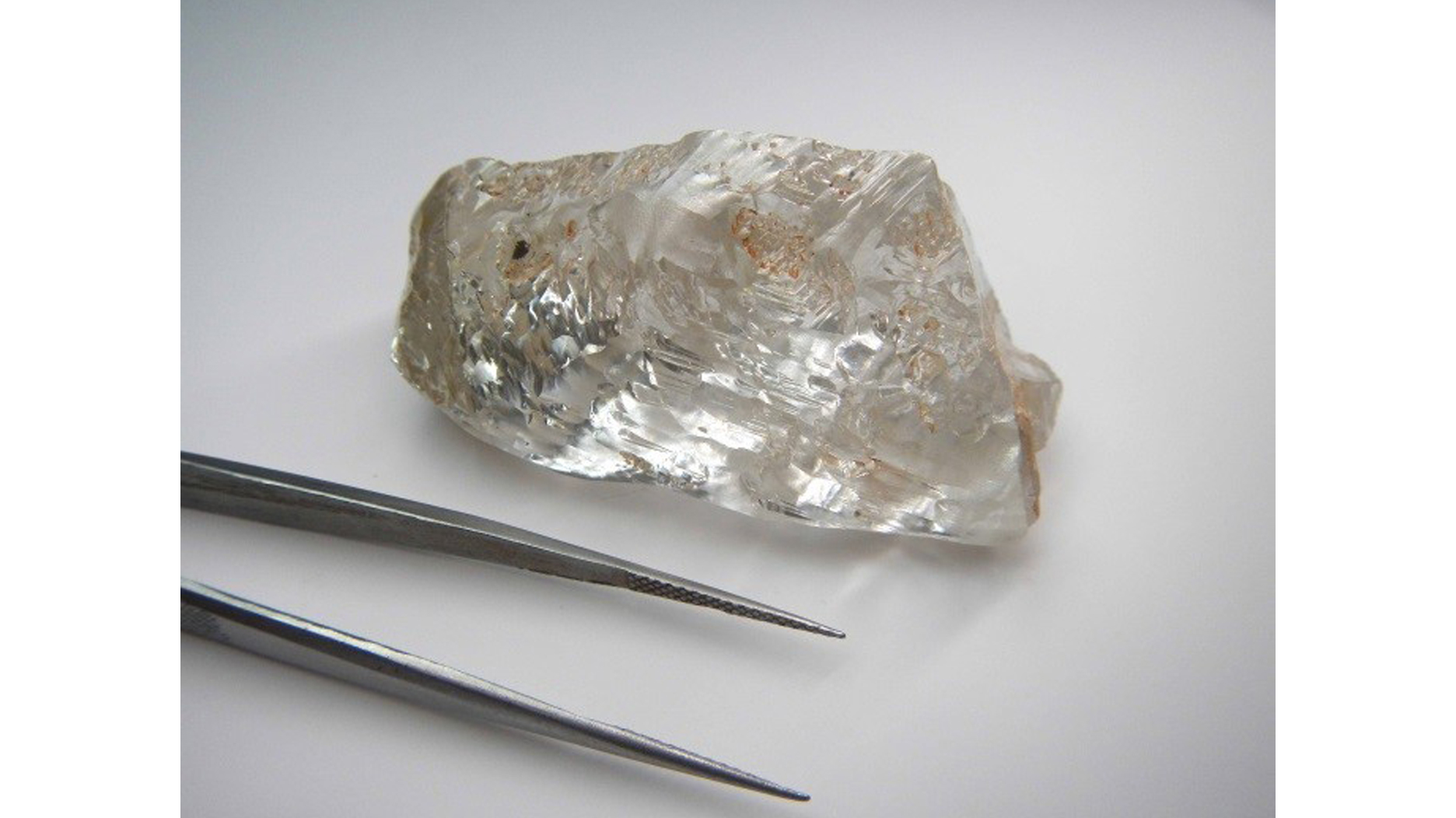
This 404-carat diamond, recovered from the Lulo mine in 2016, is still the largest diamond ever found in Angola. Sold the same year it was unearthed, the stone went for $16 million, or nearly $40,000 per carat.
MG: Are you also meeting with designers?
EE: Not yet. For sure, we have been having very preliminary talks because we are about to launch our gold refinery, and the next step will be indeed investing in jewelry.
For that, we need for sure to talk to the designers so we can train our people; that I think is very important. Everything we do, we look at our people and how we can teach local people different skills.
That’s one thing that is mandatory according to our law; any investment that we do has to be a kind of local content.
I remember that, not here in JCK but in India, we had a lot of conversations about that. We have a lot of pre-agreements for companies to go to Angola and to train locals so we can be able to create jewelry inside the country.
I want to say one more thing about your previous question related to the challenges of the market.
We are really confident. We are expecting the market to recover, and that’s why in a situation where most of the companies are disinvesting, we keep investing a lot of money in diamond exploration because we believe, and we are working very hard alongside with our partners to make it a reality. And we are pretty sure we will be able to do that.
You know, we usually say what moves us is that we cannot fail, right? A lot of people depend on that. If we fail, I don’t know what will happen, right? The consequences would be tremendous.
And that’s one thing that we are trying to tell the retailers as well here in the U.S.
When you are buying a natural rough diamond or polished diamond, you are helping the community over there.
“For sure, 2 percent of our GDP will not sort out all the problems of the country, but everything good that you see in the mining areas, it’s coming from diamonds.” – Elton Escrivão, Endiama
MG: Right, you’re helping a whole country.
EE: Yes. You are buying a diamond with impact that we are calling “community diamonds.”
We look at Angolan diamonds, and we understand that they are community diamonds. They are naturally impactful, right? If you go there, certain people will say, ‘OK, but this road here is not good.’ And what we say is, ‘OK, look at the good road, that’s because of diamonds.’
For sure, 2 percent of our GDP will not sort out all the problems of the country, but everything good that you see in the mining areas, it’s coming from diamonds. There is no doubt about that.
MG: I know Angola has been mentioned in the conversations about who will buy De Beers. What can you tell us about Angola’s involvement in trying to buy a piece of De Beers?
EE: That’s a topic that I cannot comment on because it’s still ongoing.
MG: OK, last question. You’ve been to Las Vegas before. What do you think of it?
EE: It’s the greatest jewelry event in the world. It’s always a pleasure to be here, not only because of the show, but because of the environment of the city. It’s a very beautiful city, a very welcoming city.
For sure we are willing to, you know, to make it more regularly, something constant to come here. We are already seeing the results.
I would say as well that, for sure, the industry can count on us. We are not going to give up on natural diamonds. You can trust that if you have your diamonds, natural diamonds, just keep them, because the prices are going to increase very soon. We will make sure it happens.
Editors' Picks
Sponsored by

More on Editors
The Latest

CrimeOct 22, 2026
Jeweler Shot and Killed in His Suburban Cincinnati Store Tara Sinchuri was the owner of Everest Jewels in Fairfield, Ohio, and a father of three. He was found dead in his store on Tuesday.

MajorsOct 22, 2026
Neiman Marcus Has Gifts for the Jewelry Lover Who Has EverythingBespoke experiences from Buccellati and Verdura are on the retailer’s 2026 “Fantasy Gifts” list.


Events & AwardsOct 22, 2026
JIS Fall 2026 Reports Record-Breaking Attendance The number of participants at the fall show was up 12 percent.

Brought to you by
A Diamond Is Forever Launches 2026 Holiday Campaign Championing Natural DiamondsA Diamond Is Forever's holiday campaign reimagines natural diamond icons for a new generation celebrating individuality.


CollectionsOct 22, 2026
Billie Eilish, Finneas Co-Design Collection for John HardyThe Academy and Grammy award-winning siblings have collaborated with John Hardy on a new jewelry line inspired by their personal style.

Weekly QuizOct 22, 2026
This Week’s QuizTest your jewelry news knowledge by answering these questions.


PodcastsOct 21, 2026
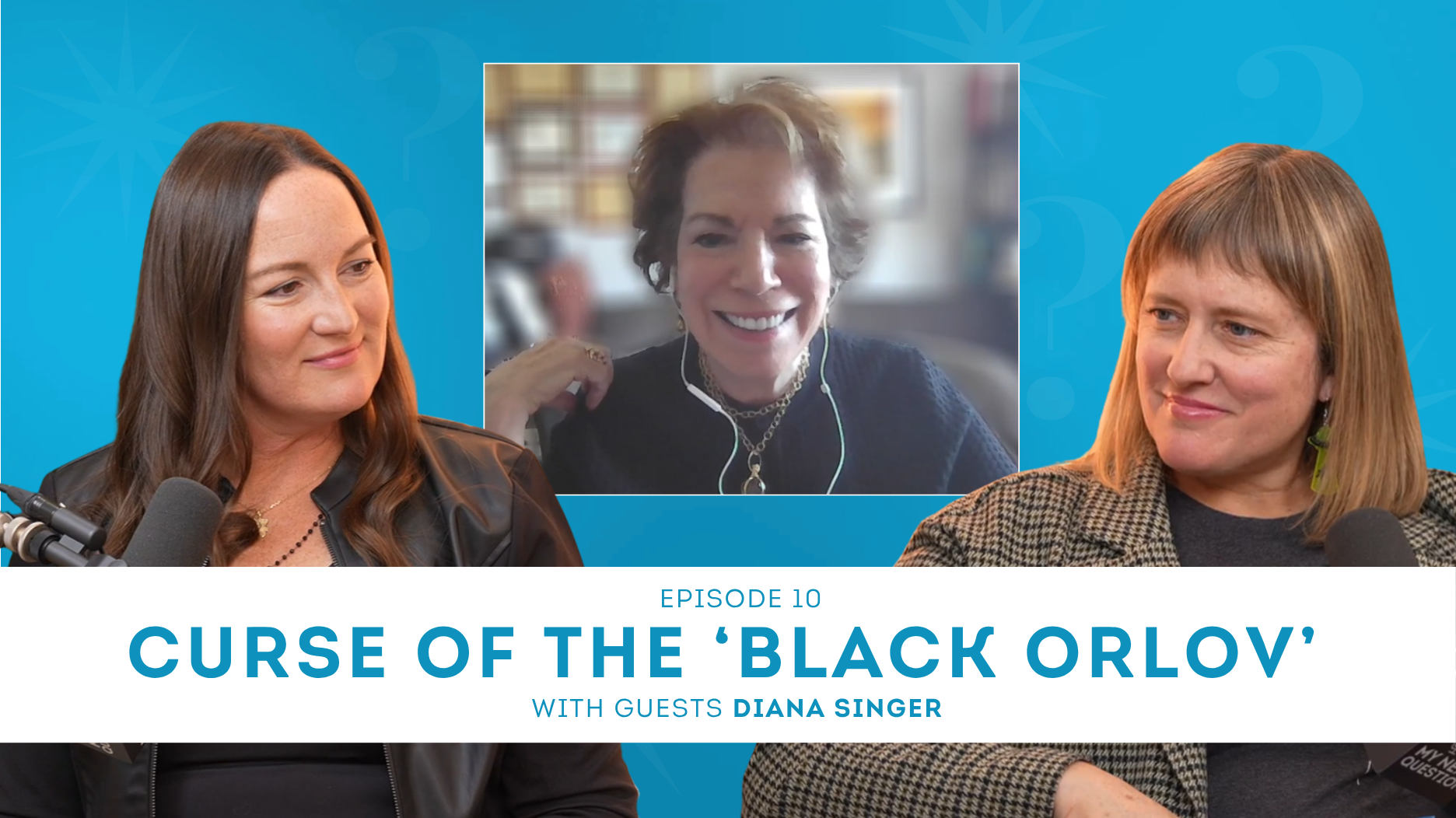
Episode 10: This Episode Is Haunted Diana Singer shared the stories of two “cursed” diamonds on this month’s podcast, which was inexplicably riddled with technical issues.

IndependentsOct 21, 2026
Gardner-Collier Jewelry to Close After 9 Decades in BusinessThe family-owned jeweler has three locations across Missouri and Iowa.
Brought to you by
Open an Account, Get $50 Off Your First Order. No Code Needed.Built on Relationships. Refined by Craft.

SourcingOct 21, 2026
Venetia Mines Final Carats Ahead of 2-Year ShutdownThe De Beers-owned diamond mine in South Africa is being put on ice as part of a round of previously announced cost-cutting measures.

CollectionsOct 21, 2026
Helzberg, Nordstrom Carrying New Jewelry Collection From Off-WhiteThe collection centers designs with clean geometric lines, chunky sculptural pieces, and recognizable details from the luxury fashion brand.
SourcingOct 21, 2026
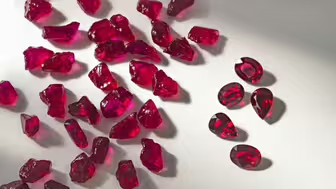
Gemfields’ Mixed-Quality Ruby Auction Earns $52MThe miner said it saw particularly strong prices for larger, fine-quality rubies at the sale.

CrimeOct 20, 2026
Security Guard Charged With Murder in Shooting at Texas MallThe guard opened fire on a man who was smashing a jewelry display case at La Gran Plaza in Fort Worth last week, police said.
IndependentsOct 20, 2026
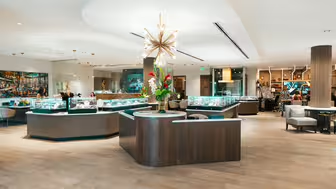
David Gardner’s Jewelers Unveils Newly Expanded, Revamped ShowroomThe Texas jeweler added 2,000 square feet to its reimagined showroom, complete with a new design studio and an event space.

SourcingOct 20, 2026
The $50M Victoria’s Secret ‘Fantasy Bra’ By The NumbersJacob & Co.'s diamond masterpiece is the most expensive Fantasy Bra ever worn on the Victoria’s Secret Fashion Show runway.

CollectionsOct 20, 2026
Mignon Faget’s Collection Chooses Handmade Over AIThe “Atelier” collection was inspired by the tools, rituals, and objects in an artist’s studio as a quiet rebuttal to an automated world.
MajorsOct 19, 2026
The Knot to Acquire Rival Wedding Planning Platform ZolaThe pending acquisition is an “exciting opportunity” for wedding vendors to grow their business, said The Knot Worldwide’s CEO.

SourcingOct 19, 2026
Jewelry Design Competition Show Airs in Thailand"The Secret Gems" features eight Thai jewelry brands paired with a team of young craftspeople who create jewelry together to win challenges.

CollectionsOct 19, 2026
John Hardy Enters the Medallion Chat With Talisman Collection The brand’s “Modern Talisman” capsule collection introduces pendants inspired by the mythology, natural world, and spiritual ethos of Bali.
IndependentsOct 19, 2026
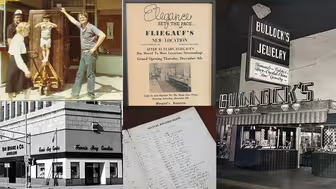
The Stories of 5 Jewelers Celebrating Their Centennials in 2026Independent jewelers from New Mexico to New Jersey answer the question: What has kept your store in business for 100 years?

SurveysOct 16, 2026
How Inflation, Gas Prices Will Affect Holiday Sales The NRF is expecting holiday sales to increase this year, but consumers and retailers alike are facing Grinch-like headwinds.
CollectionsOct 16, 2026
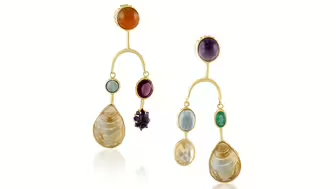
Christina Puchi’s Earrings Hold the UniverseOur Piece of the Week gathers the planets, represented by a variety of colored gemstones, in a pair of 14-karat yellow gold earrings.
IndependentsOct 16, 2026
Reeds Jewelers Expands, Relocates FlagshipThe New York-based jeweler is moving its Amherst flagship store to a larger location in nearby Snyder.

MajorsOct 16, 2026
Katy Chen Appointed Executive Vice President of Graff USA Chen, who worked at Cartier and Tiffany & Co., will lead retail sales and operations for the luxury jeweler’s 11 U.S. stores.
IndependentsOct 15, 2026
Retailer Hall of Fame 2026: Amy and Elise Greenberg For 40 years, sisters Amy and Elise Greenberg have helmed their 126-year-old family business, leading with appreciation and integrity.
ColumnistsOct 15, 2026
Peter Smith: What Is the Culture REP?It’s a term Smith coined and felt compelled to share following a bad experience with an aborted flight and an unfeeling flight attendant.

WatchesOct 15, 2026
Stephanie Gottlieb’s New Movado Watches Are Made for Your Wrist StackMovado teamed up with the New York-based fine jewelry designer on a new collection of Movado Museum Velura watches.
SourcingOct 15, 2026
Signet Jewelers, Richemont May Join Bidder for De Beers, Report SaysThe two companies are reportedly in talks to join the Global Diamond Consortium, led by former De Beers CEO Gareth Penny, as per Bloomberg.