








SurveysSep 26, 2025
Online Shopping, Influencers to Drive Holiday Spending, Mastercard SaysSurveysOct 01, 2025
Consumer Confidence Hits 5-Month Low in September
Respondents were concerned about job availability and rising prices.


The Conference Board’s monthly consumer confidence index fell by about four points to 94.2 in September.
New York—U.S. consumer confidence fell again in September, dropping to its lowest level since April.
The Conference Board’s monthly consumer confidence index fell to 94.2 from an upwardly revised 97.8 in August.
Notably, consumer sentiment about the present situation registered its largest drop in a year, according to Stephanie Guichard, senior economist, global indicators, at The Conference Board.
The Present Situation Index, which measures consumers’ current view of business and labor market conditions, fell to 125.4 from an upwardly revised 132.4 in August.
“Consumers’ assessment of business conditions was much less positive than in recent months, while their appraisal of current job availability fell for the ninth straight month to reach a new multiyear low. This is consistent with the decline in job openings,” she said.
The Expectations Index, which measures consumers’ outlook on income, business, and labor market conditions in the near future, fell to 73.4 from a downwardly revised 74.7 in August.
It marks the eighth consecutive month that expectations remained below the threshold of 80, a level which typically signals a recession ahead, according to The Conference Board.
“Consumers were a bit more pessimistic about future job availability and future business conditions but optimism about future income increased, mitigating the overall decline in the Expectations Index,” said Guichard.
Confidence rose for consumers under 35 years old but declined for consumers over the age of 35.
By income group, confidence was mixed, said The Conference board, with no clear pattern.
Confidence stayed above its April low for all income groups, except for households making between $25,000 to $35,000 and those making more than $200,000.
By political party, confidence improved slightly for Democrats and Republicans, but “dropped substantially” for Independents.
Related stories will be right here …
The Conference Board’s monthly consumer confidence index fell to 94.2 from an upwardly revised 97.8 in August.
Notably, consumer sentiment about the present situation registered its largest drop in a year, according to Stephanie Guichard, senior economist, global indicators, at The Conference Board.
The Present Situation Index, which measures consumers’ current view of business and labor market conditions, fell to 125.4 from an upwardly revised 132.4 in August.
“Consumers’ assessment of business conditions was much less positive than in recent months, while their appraisal of current job availability fell for the ninth straight month to reach a new multiyear low. This is consistent with the decline in job openings,” she said.
The Expectations Index, which measures consumers’ outlook on income, business, and labor market conditions in the near future, fell to 73.4 from a downwardly revised 74.7 in August.
It marks the eighth consecutive month that expectations remained below the threshold of 80, a level which typically signals a recession ahead, according to The Conference Board.
“Consumers were a bit more pessimistic about future job availability and future business conditions but optimism about future income increased, mitigating the overall decline in the Expectations Index,” said Guichard.
Confidence rose for consumers under 35 years old but declined for consumers over the age of 35.
By income group, confidence was mixed, said The Conference board, with no clear pattern.
Confidence stayed above its April low for all income groups, except for households making between $25,000 to $35,000 and those making more than $200,000.
By political party, confidence improved slightly for Democrats and Republicans, but “dropped substantially” for Independents.
Looking at the write-in responses, references to prices and inflation rose in September, “regaining its top position as the main topic influencing consumers’ views of the economy,” said Guichard.
References to tariffs declined but were still high and tied to concerns about higher prices.
Consumers’ average 12-month inflation expectations declined slightly to 5.8 percent from 6.1 percent in August.
“This is still notably above 5 percent, the level at the end of 2024,” added Guichard.
Write-in mentions of jobs and employment rose to a level not seen since August 2024, with the comments skewing negative, particularly regarding the current situation.
Consumers’ view of stock prices improved slightly in September, with fewer respondents expecting to see stock prices decrease over the next 12 months.
The share of respondents expecting to see stock prices rise has been flat since July.
Fewer consumers expected to see interest rates rise, while more expected them to decline.
Consumers’ views of their family’s current and future financial situation weakened in September.
Their view of the current situation for this metric recorded the largest one-month drop since The Conference Board began collecting this data in July 2022.
The share of consumers who said that a recession is “very likely” over the next 12 months rose slightly in September to the highest level since May.
Notably, more respondents thought the economy was already in recession.
Plans to purchase cars, both new and used, declined in September. However, plans to buy homes hit a four-month high.
Purchasing plans for big-ticket items recorded little change, but there was variation across appliances.
Plans to buy TVs and dryers saw the largest increase in September, while refrigerators posted the largest decline.
Plans to buy electronics were mostly up, with smartphones leading the way. Notably, Apple debuted its new iPhone 17 on Sept. 9.
Notably, intentions to buy services were down, with declines seen across most categories but especially travel-related services.
Vacation planning fell to its lowest level since April, with fewer plans to travel abroad driving the decline.
Editors' Picks
Sponsored by


More on Surveys




The Latest

CrimeOct 20, 2026
Security Guard Charged With Murder in Shooting at Texas MallThe guard opened fire on a man who was smashing a jewelry display case at La Gran Plaza in Fort Worth last week, police said.


IndependentsOct 20, 2026
David Gardner’s Jewelers Unveils Newly Expanded, Revamped ShowroomThe Texas jeweler added 2,000 square feet to its reimagined showroom, complete with a new design studio and an event space.

SourcingOct 20, 2026
The $50M Victoria’s Secret ‘Fantasy Bra’ By The NumbersJacob & Co.'s diamond masterpiece is the most expensive Fantasy Bra ever worn on the Victoria’s Secret Fashion Show runway.


Brought to you by
Open an Account, Get $50 Off Your First Order. No Code Needed.Built on Relationships. Refined by Craft.


CollectionsOct 20, 2026
Mignon Faget’s Collection Chooses Handmade Over AIThe “Atelier” collection was inspired by the tools, rituals, and objects in an artist’s studio as a quiet rebuttal to an automated world.

Weekly QuizOct 15, 2026
This Week’s QuizTest your jewelry news knowledge by answering these questions.

MajorsOct 19, 2026
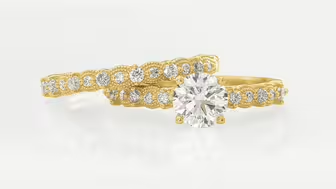
The Knot to Acquire Rival Wedding Planning Platform ZolaThe pending acquisition is an “exciting opportunity” for wedding vendors to grow their business, said The Knot Worldwide’s CEO.

SourcingOct 19, 2026
Jewelry Design Competition Show Airs in Thailand"The Secret Gems" features eight Thai jewelry brands paired with a team of young craftspeople who create jewelry together to win challenges.

Brought to you by
Meet Gemology’s Next Generation Microscope: GIA® Gemolite® NXT Professional EditionExperience gemstones with greater precision and comfort than ever before.


CollectionsOct 19, 2026
John Hardy Enters the Medallion Chat With Talisman Collection The brand’s “Modern Talisman” capsule collection introduces pendants inspired by the mythology, natural world, and spiritual ethos of Bali.

IndependentsOct 19, 2026
The Stories of 5 Jewelers Celebrating Their Centennials in 2026Independent jewelers from New Mexico to New Jersey answer the question: What has kept your store in business for 100 years?

CollectionsOct 16, 2026
Christina Puchi’s Earrings Hold the UniverseOur Piece of the Week gathers the planets, represented by a variety of colored gemstones, in a pair of 14-karat yellow gold earrings.
IndependentsOct 16, 2026
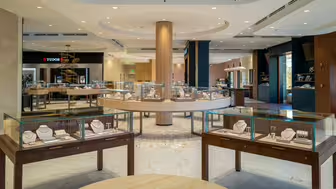
Reeds Jewelers Expands, Relocates FlagshipThe New York-based jeweler is moving its Amherst flagship store to a larger location in nearby Snyder.

MajorsOct 16, 2026
Katy Chen Appointed Executive Vice President of Graff USA Chen, who worked at Cartier and Tiffany & Co., will lead retail sales and operations for the luxury jeweler’s 11 U.S. stores.

IndependentsOct 15, 2026
Retailer Hall of Fame 2026: Amy and Elise Greenberg For 40 years, sisters Amy and Elise Greenberg have helmed their 126-year-old family business, leading with appreciation and integrity.

ColumnistsOct 15, 2026
Peter Smith: What Is the Culture REP?It’s a term Smith coined and felt compelled to share following a bad experience with an aborted flight and an unfeeling flight attendant.


WatchesOct 15, 2026
Stephanie Gottlieb’s New Movado Watches Are Made for Your Wrist StackMovado teamed up with the New York-based fine jewelry designer on a new collection of Movado Museum Velura watches.

SourcingOct 15, 2026
Signet Jewelers, Richemont May Join Bidder for De Beers, Report SaysThe two companies are reportedly in talks to join the Global Diamond Consortium, led by former De Beers CEO Gareth Penny, as per Bloomberg.
CollectionsOct 15, 2026
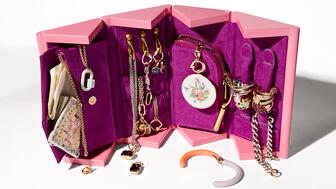
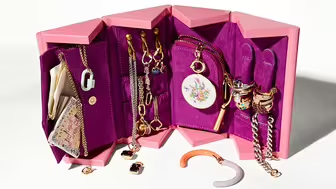
Wolf x Marla Aaron's New Jewelry Box Is for Some (Not All) of Your ThingsThe “Some of the Things” box follows the two larger “Everything” box designs with the look and function of antique sewing and toolboxes.

IndependentsOct 14, 2026
Retailer Hall of Fame 2026: Coleman and Mitchell ClarkFourth-generation jewelers Coleman and Mitchell Clark exemplify the best qualities of their predecessors: humility, modesty, and confidence.

SourcingOct 14, 2026
Manuel Marcial de Gomar, ‘The Emerald Whisperer,’ Dies at 90The gem hunter, whose 70-year career was defined by adventure and exploration, is remembered for his steadfast faith and sense of wonder.

FinancialsOct 14, 2026
LVMH’s Jewelry Brands Turn in ‘Very Good’ Performance in Q3 Tiffany & Co. continued its full-scale store renovation project while Bulgari’s high jewelry collection generated “record-breaking revenue.”

Events & AwardsOct 14, 2026
Chicago Responsible Jewelry Conference Releases 2026 ProgramThis year’s sessions feature leading voices from human rights, legal, and conservation organizations.

MajorsOct 13, 2026
David Webb Owner Purchases Lugano JewelryThe high-end jewelry retailer was sold to private investment firm Middle West Partners and a group of longtime clients.

Lab-GrownOct 13, 2026
Stephanie Gottlieb Takes Lab-Grown Diamond Collection WholesaleThe jewelry designer has partnered with Sofer Jewelry to distribute her 85-piece lab-grown diamond collection.

IndependentsOct 13, 2026
Retailer Hall of Fame 2026: Sean DunnDunn, this year’s Single-Store Independent inductee, is passionate about innovation and telling the story of natural diamonds.

AuctionsOct 13, 2026
Christie's Geneva To Auction 'Bulgari Pink' DiamondThe 24-carat fancy intense pink diamond ring could fetch up to $18 million at the November sale.

IndependentsOct 13, 2026
Greenwich St. Jewelers’ New Candle Smells Like HomeThe “Island Jewel” candle honors New York City and Puerto Rico and raises money for the island’s water relief efforts.