







EditorsOct 24, 2024
From a Witch to Wednesday: The Best Jewelry to Wear With Your Halloween CostumeEditorsOct 29, 2025
Why Creepy, Crawly Bugs Inspire Beautiful Jewelry
For her annual Halloween story, Senior Editor Lenore Fedow explores the symbolism behind spiders, beetles, and other eerie insects.


This Halloween, Senior Editor Lenore Fedow curated a selection of bug jewelry and delved into the symbolism behind the insects that have been immortalized in jewelry.
Halloween is nearly upon us again, and so is my annual spooky story.
Some people lean into the warmth and coziness of the season, with its crisp leaves and pumpkin spice lattes, while others are drawn to the spooky side’s ghost stories and horror movies.
I fall somewhere in between, as an avid watcher of ghost-hunting shows who also loves curling up with a warm apple cider.
For this year’s story, we’re going to lean into the eerie side of Halloween with a look at some creepy, crawly bug jewels.
In the spirit of ghost stories, we’re also going to learn more about the symbolism behind some of these creatures so often seen in jewelry.
Cicadas
Some people lean into the warmth and coziness of the season, with its crisp leaves and pumpkin spice lattes, while others are drawn to the spooky side’s ghost stories and horror movies.
I fall somewhere in between, as an avid watcher of ghost-hunting shows who also loves curling up with a warm apple cider.
For this year’s story, we’re going to lean into the eerie side of Halloween with a look at some creepy, crawly bug jewels.
In the spirit of ghost stories, we’re also going to learn more about the symbolism behind some of these creatures so often seen in jewelry.
Cicadas
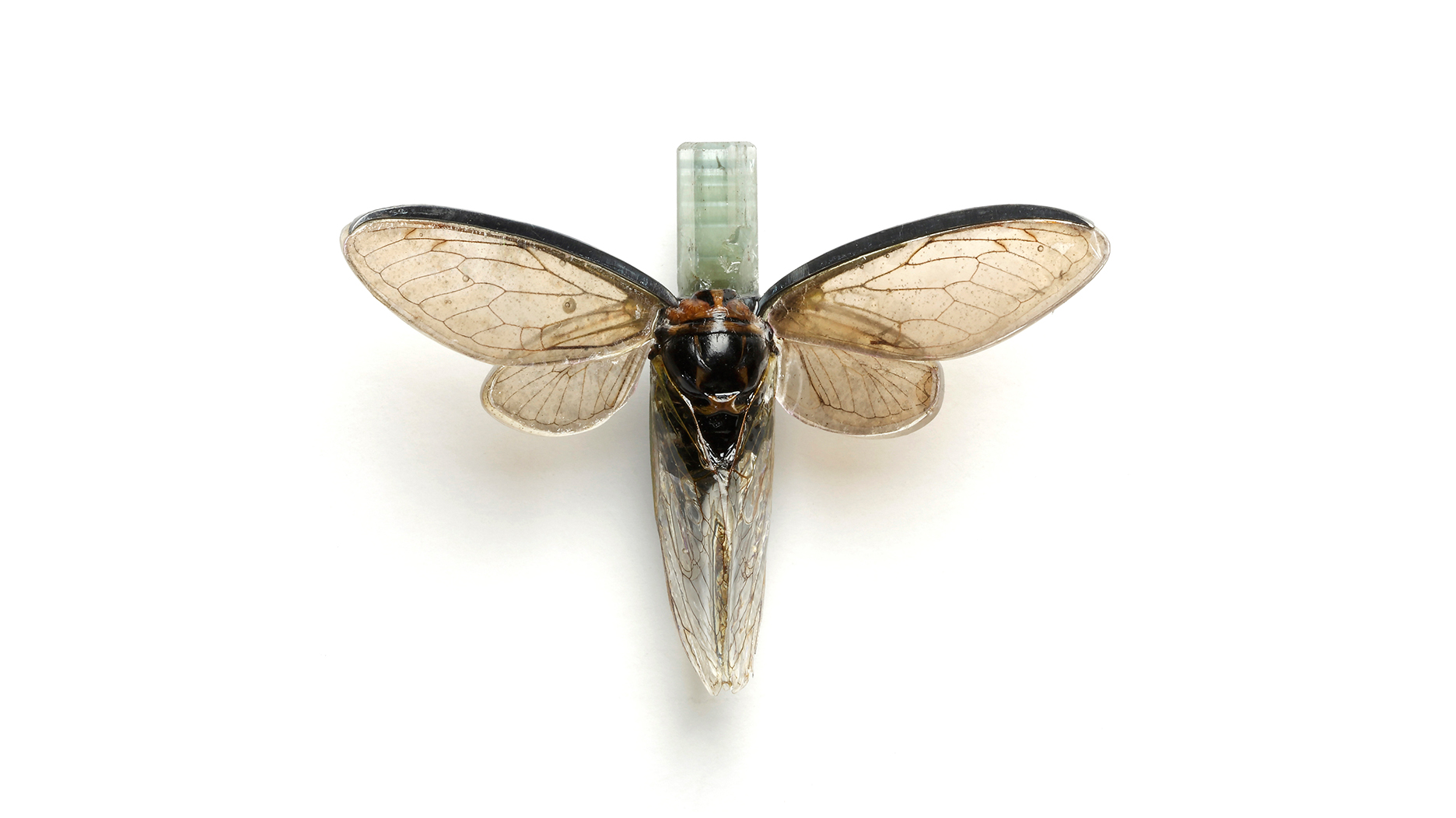
The “Wings” brooch by Alex Lozier Jewelry in oxidized sterling silver and resin, featuring a cicada with microscope slides and sheets of carved mica backing its wings, with aquamarine. (This is a real insect.)
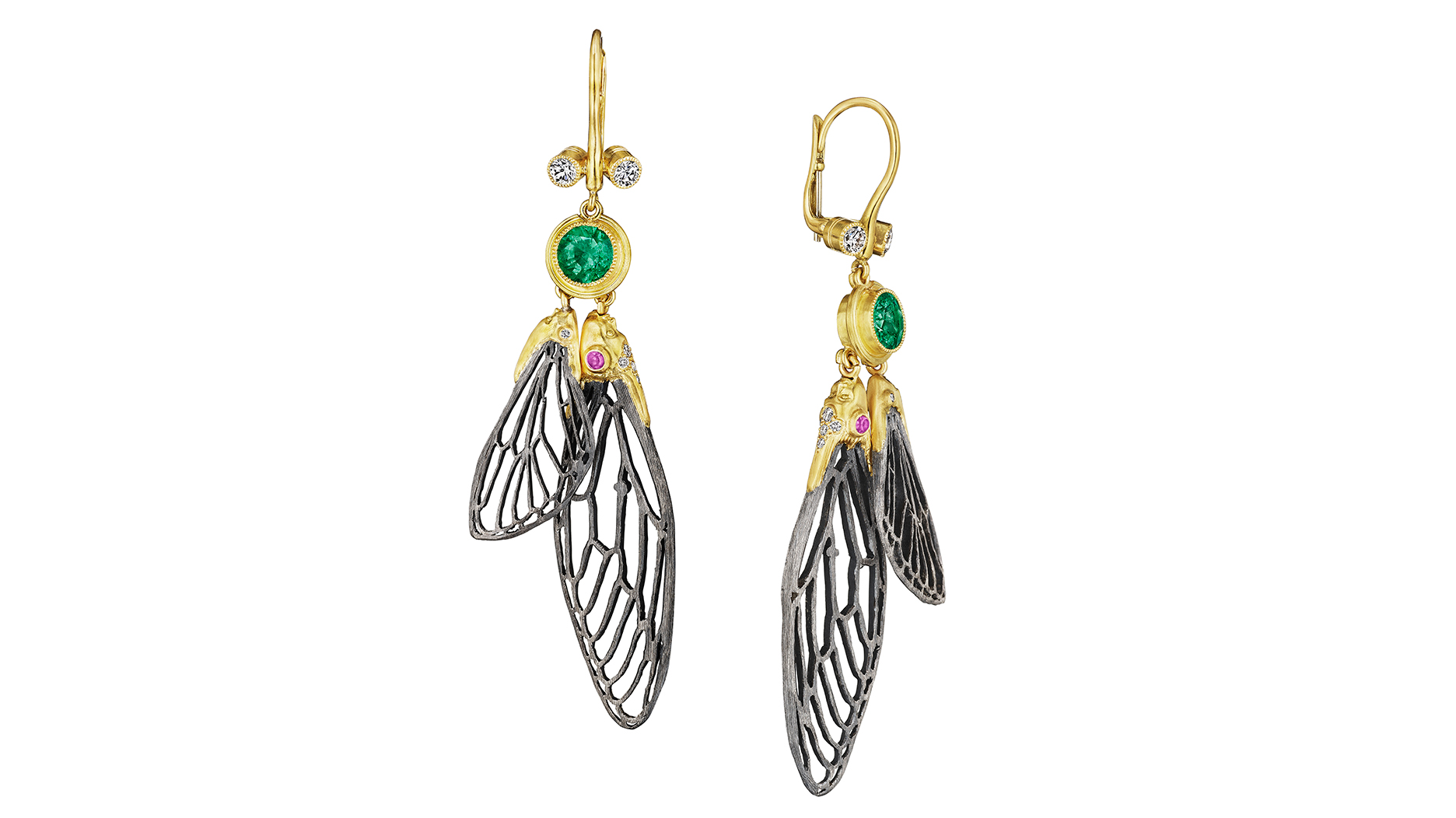
“Cicada Nymph” earrings by Anthony Lent in 18-karat yellow gold and sterling silver with diamonds, rubies, and emeralds ($16,330)
Let’s kick it off with cicadas.
I mean no disrespect to the noble cicada, but those gorgeous wings are its only saving grace. Talk about a creepy bug!
Nevertheless, these guys have a long history as a symbol of rebirth.
There are actually lots of cicadas, as I have learned, but in North America, we’re most familiar with “periodical cicadas,” the ones that burrow themselves underground and emerge in hoards either annually or every 13-17 years, depending on the type of cicada.
Cicadas shed their skins, leaving the empty shells behind and re-emerging with those lovely wings.
The earliest documented examples of cicadas as a symbol of rebirth are stone carvings from China, created around 1500 B.C.E., according to an article by the Smithsonian’s Folklore magazine.
Due to their connection with rebirth, those burying a loved one would place cicadas carved out of jade on the deceased’s tongue, hoping to grant them immortality in their next life.
Flies
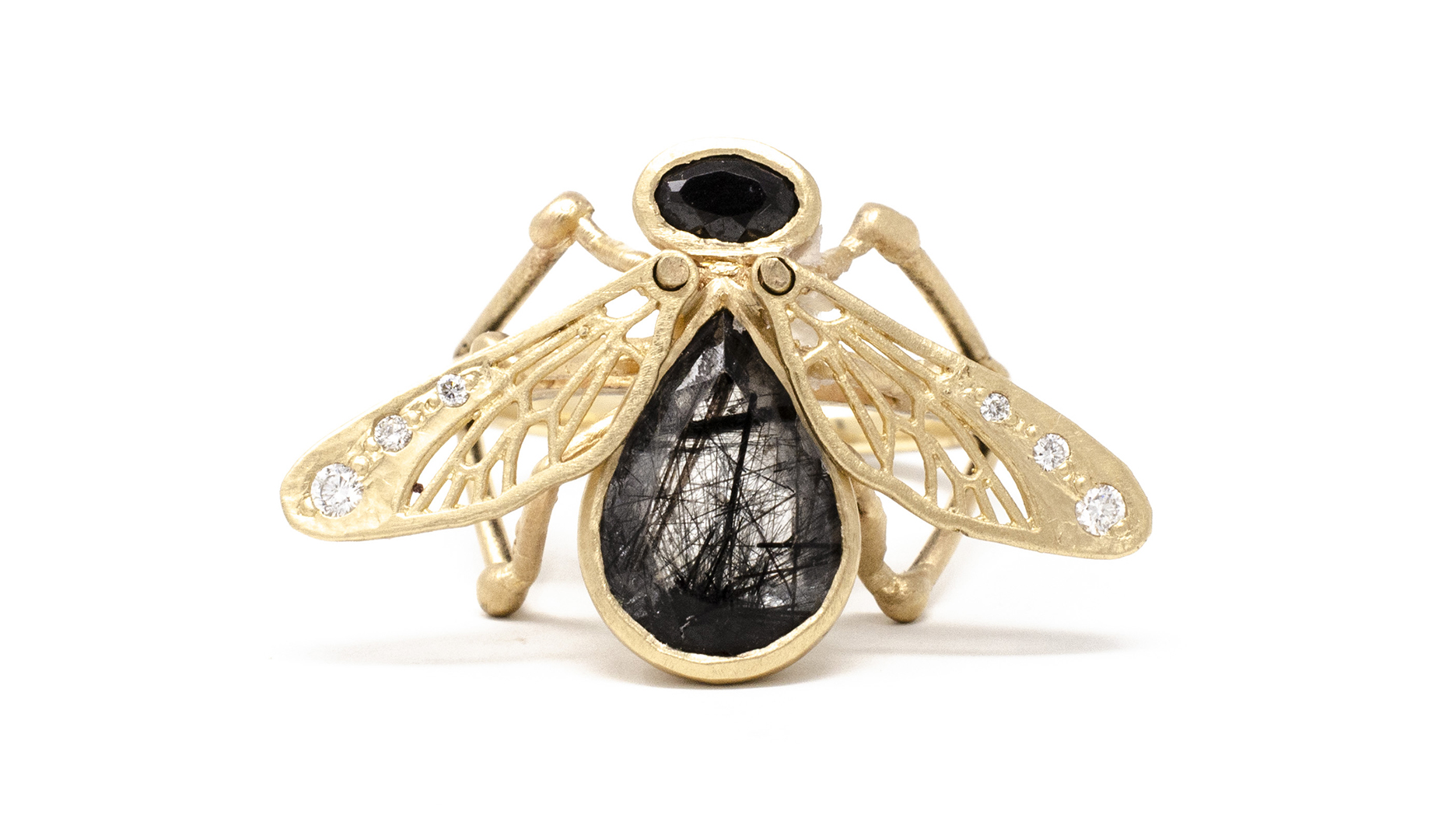
An 18-karat yellow gold fly ring by Jennifer Dawes Design with movable wings, set with a 2-carat rutilated quartz with black sapphire and diamonds ($4,250)
While cicadas seem to have a mostly positive connotation, history has not been kind to the humble fly.
In Western Art, dating back to medieval times, a fly was symbolic of death, according to ArtNet, and its inclusion in a portrait often indicated a moral failing of some kind, like corruption or deceit.
Flies had a strong connection with the devil, as well as the demon Beelzebub, who is also known as “Lord of the Flies.”
And once we figured out that flies can carry and spread diseases, well, there was almost no hope for the little guy.
Yet, there is an affection for the fly, immortalized in jewelry again and again.
The “why” is complex but author Steven Connor makes an interesting case in his book, “Fly,” which explores the insect’s cultural significance and was reviewed here by Andreas Keller.
A fly lives a carefree life and “takes its pleasure promiscuously, restlessly, [unswervingly,] unashamedly,” writes Connor.
They’ve got a two-track mind. If it’s not food or reproduction, count the fly out.
“Each fly is king of his own country. He knows no laws or conventions … He has no work to do—no tyrannical instinct to obey … what freedom is like his?” asks Connor.
Perhaps those who turn their nose up at the fly are just jealous of its carefree, hedonistic nature.
Beetles
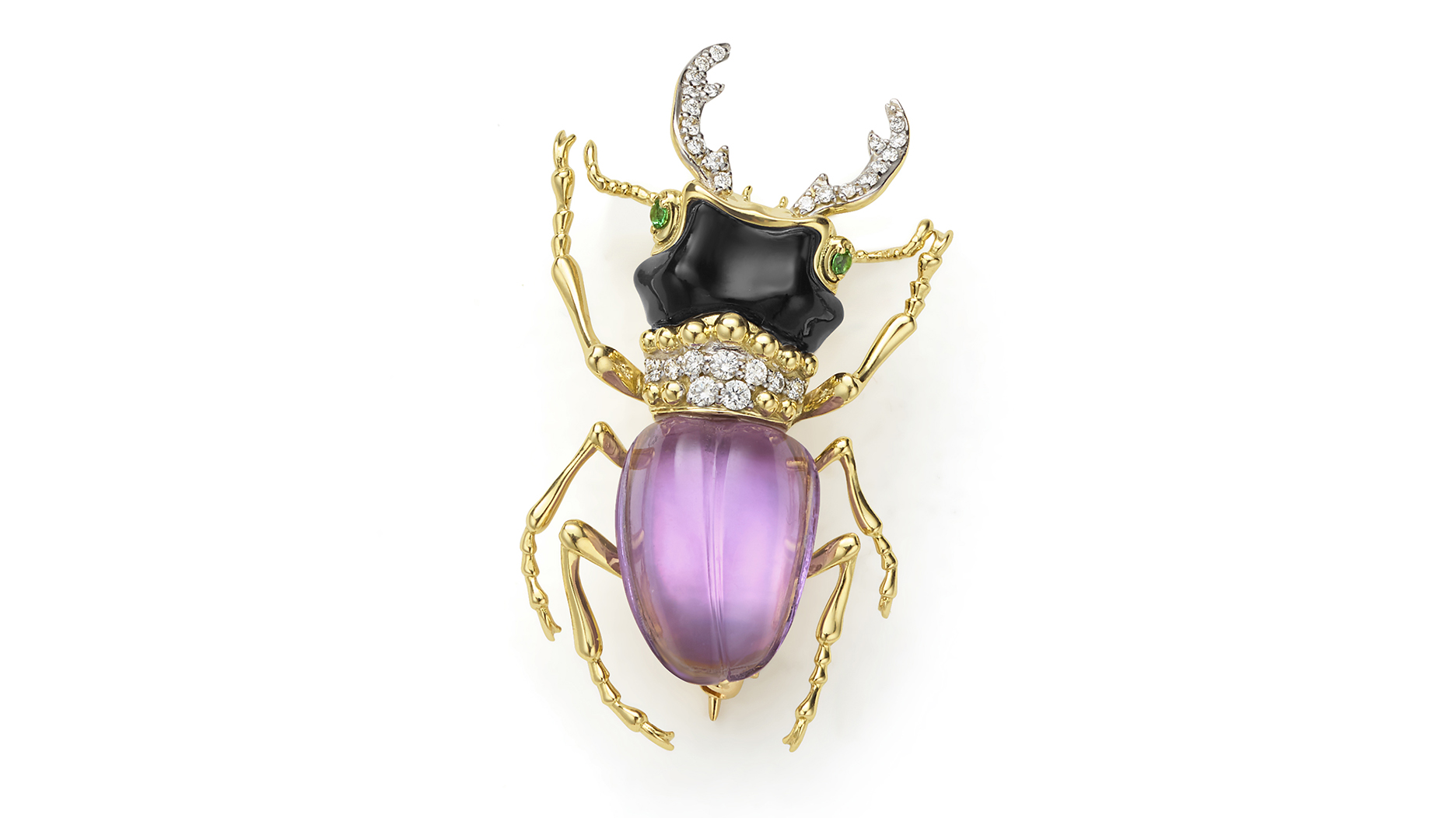
Lagos “Rare Wonders” beetle pin with an onyx face, cabochon amethyst body, and tsavorite garnet eyes with diamonds ($6,500)
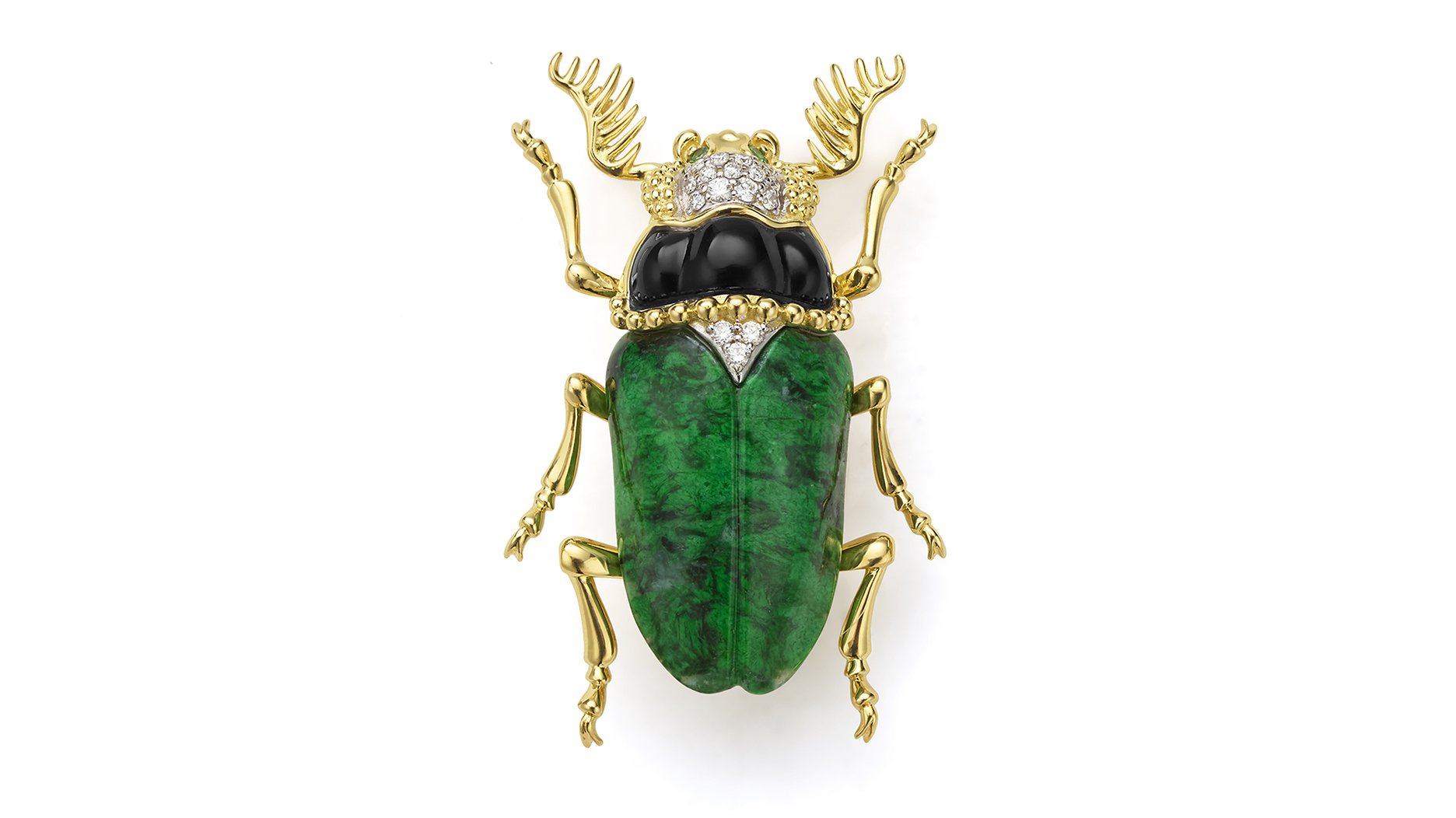
Lagos “Rare Wonders” beetle pin with an onyx face, “Maw-Sit-Sit” jade body, and tsavorite garnet eyes with diamonds ($7,000)
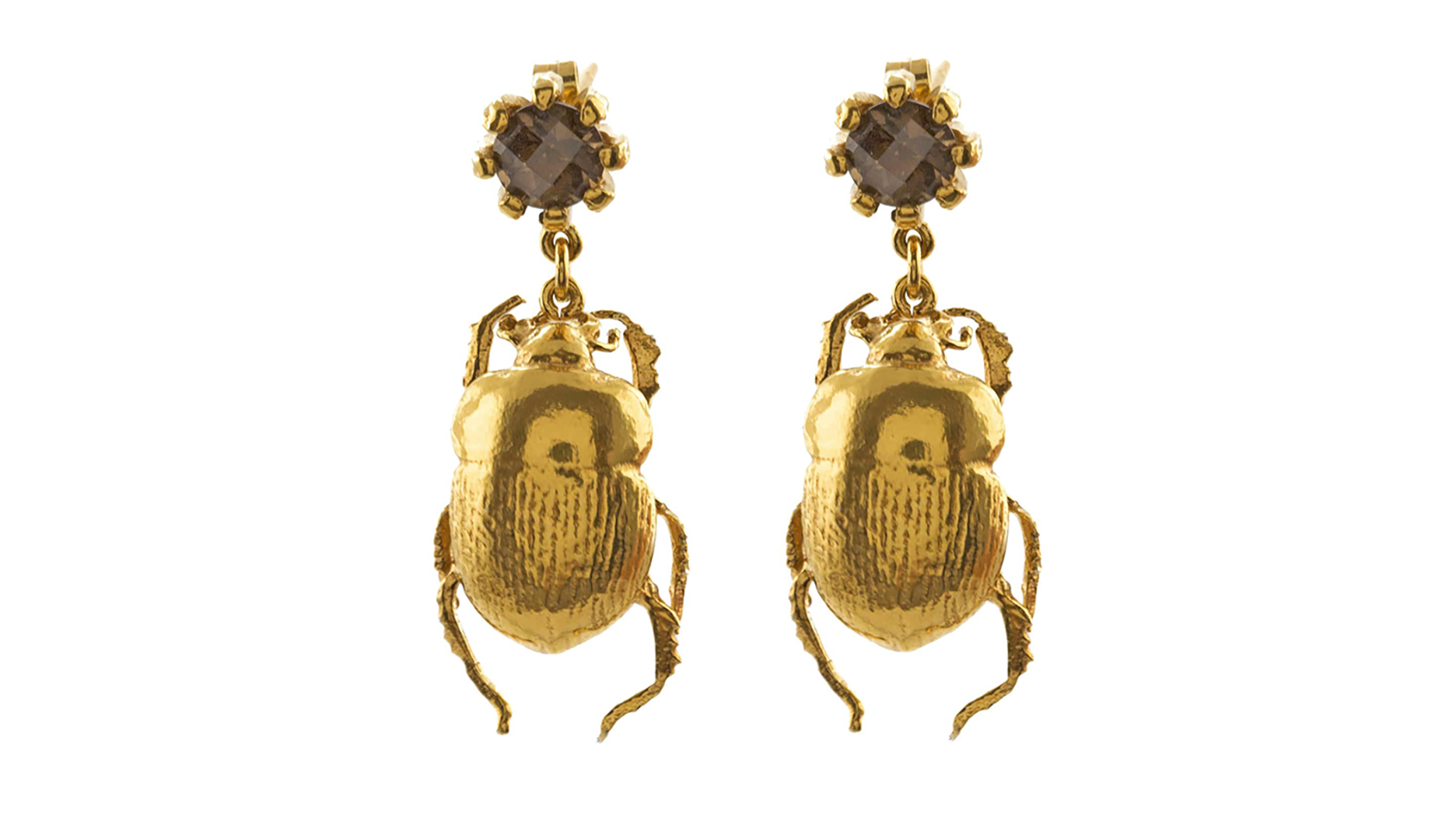
A pair of Dor Beetle earrings in sterling silver plated with 22-karat Fairmined gold set with smoky quartz ($325) by Alex Monroe Jewelry
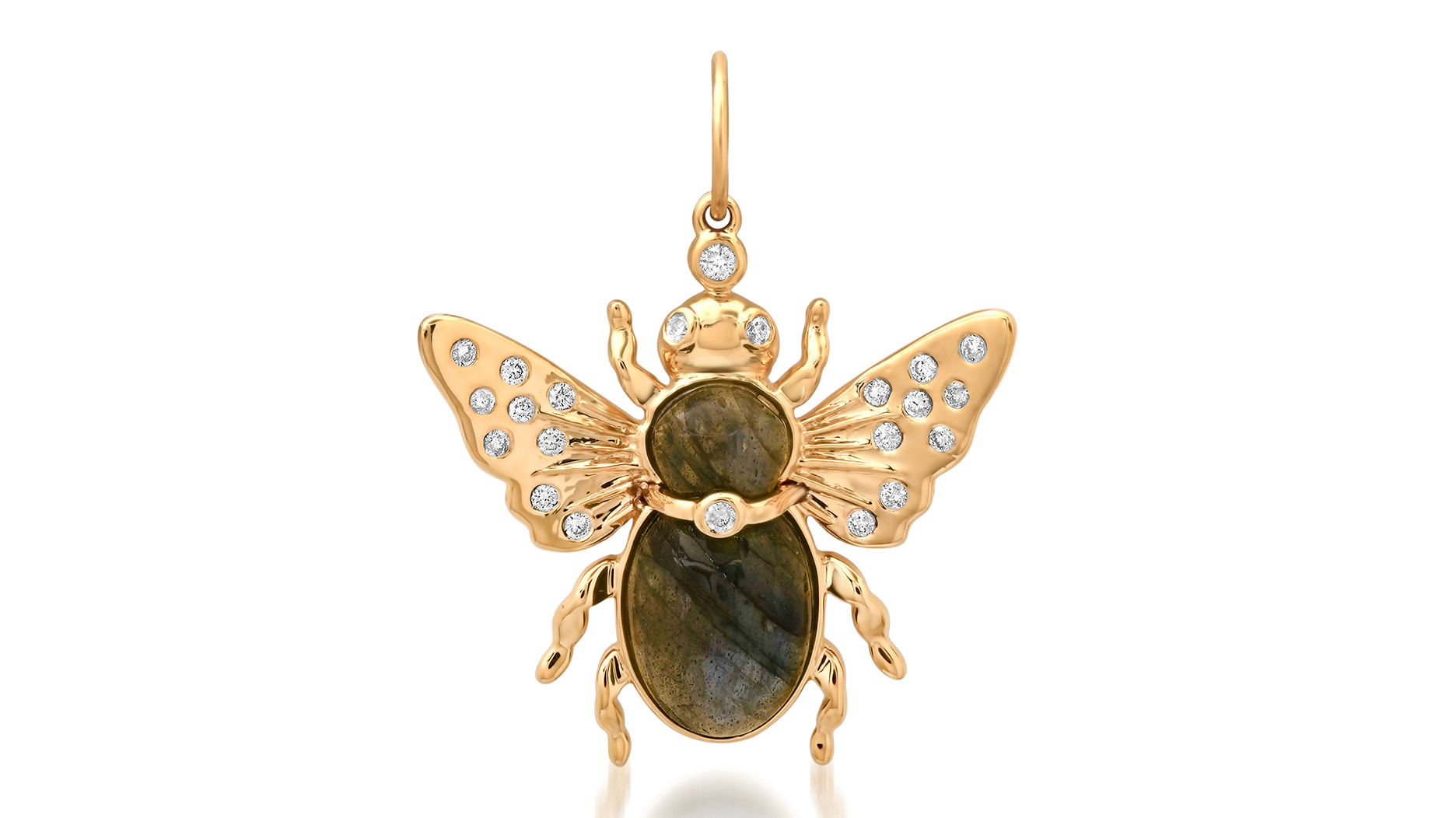
The “Take Flight” june bug labradorite and diamond charm in 14-karat yellow gold ($1,600) by Ashleigh Bergman
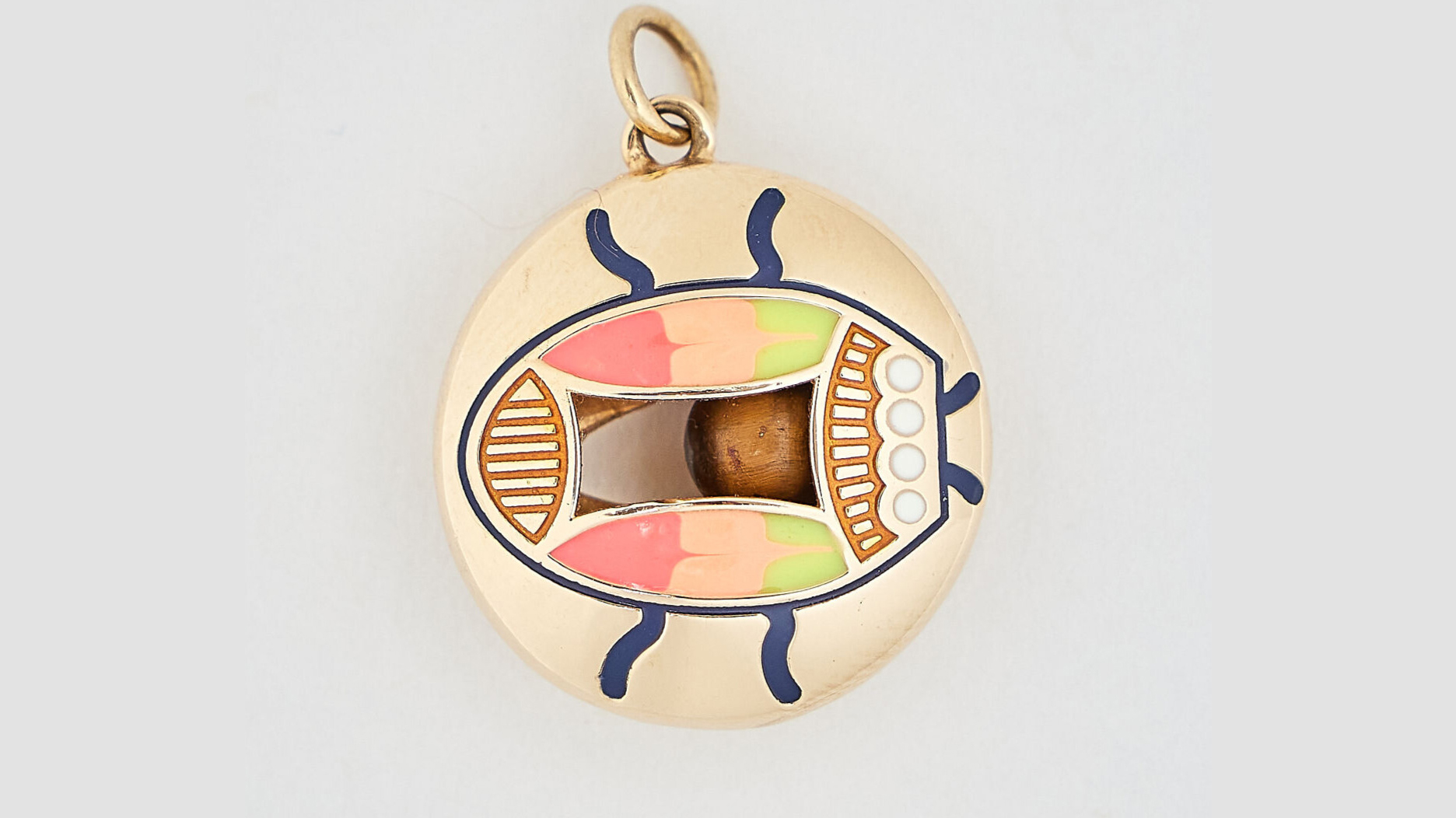
Elaine Chong Designs 14-karat yellow gold “Moving Eye” pendant with an enamel scarab ($4,650). The “moving eye” is tiger’s eye.
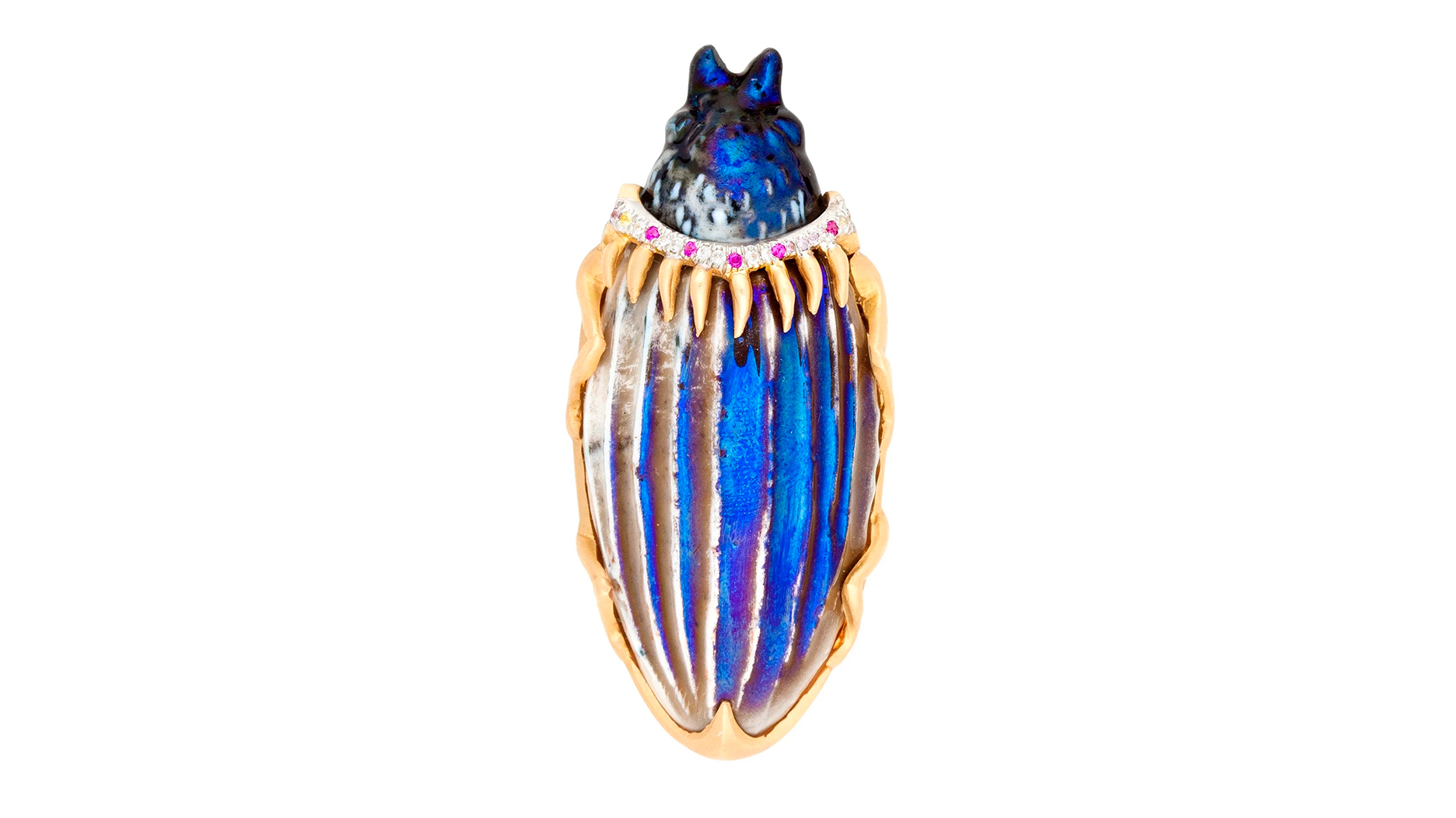
Guita M iridescent porcelain scarab pin with a collar of diamonds and rubies ($2,800)
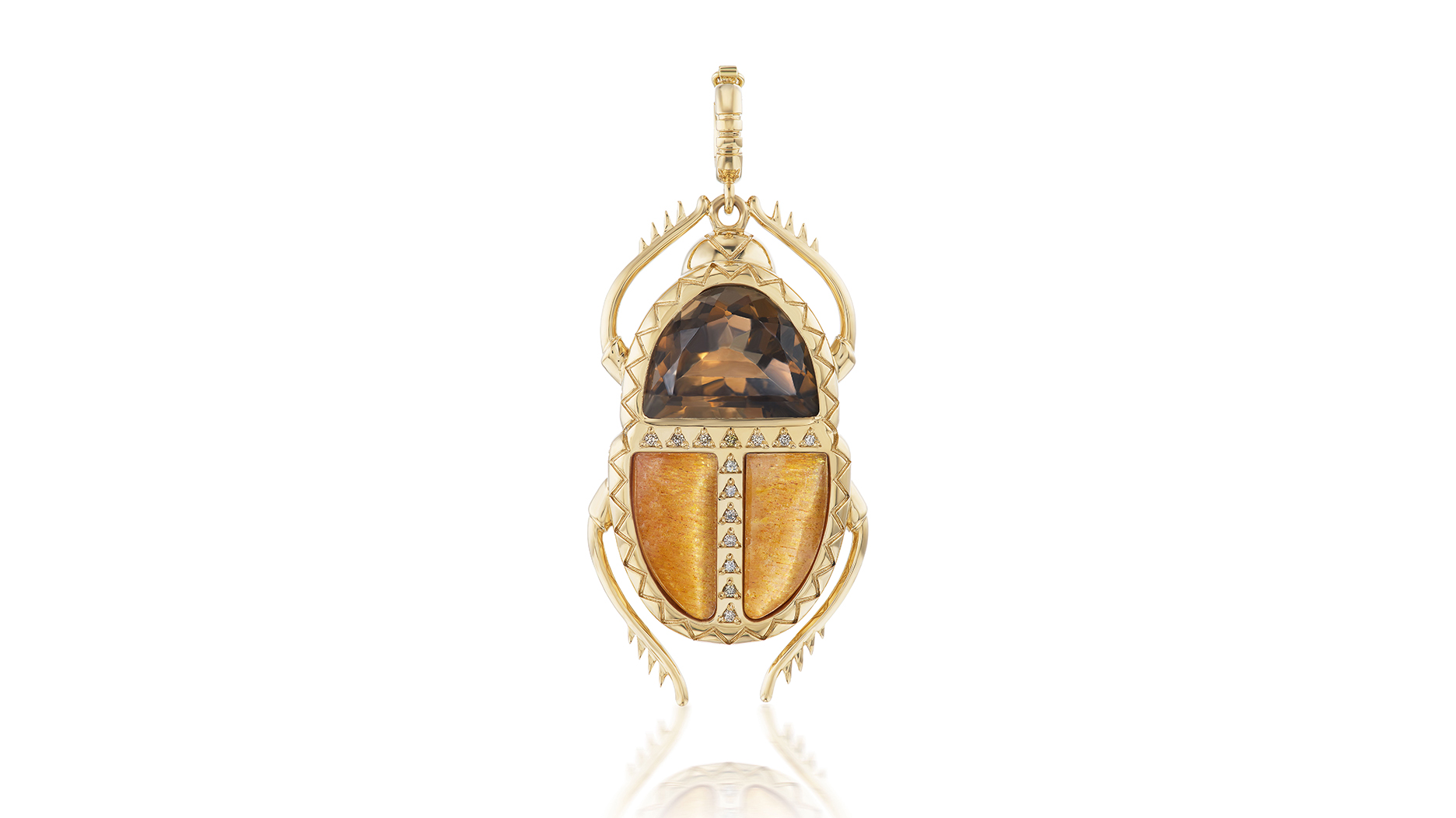
Harwell Godfrey scarab pendant in 18-karat yellow gold with smoky topaz, brown moonstone, and champagne diamonds ($11,995)

Porter Lyons stag beetle necklace in 14-karat yellow gold with diamonds, emerald, and tourmaline (price available upon request)
Scarabs are a popular jewelry motif dating back to ancient Egypt, which is interesting considering many are a type of dung beetle.
While all dung beetles are in the scarab family, not all scarabs are dung beetles, according to The Natural History Museum in London.
Certain dung beetles roll animal excrement up into balls and then lay their eggs inside of it.
To the ancient Egyptians, this reminded them of Khepri, the god of the morning sun, who rolled the sun into the sky at daybreak, according to the museum.
The scarab hieroglyph has various meanings, referring to the ideas of existence, manifestation, development, and growth, as per Encyclopedia Britannica, making it a favorite for amulets throughout Egyptian history. In hieroglyphics, Khepri’s name is written with a scarab.
Scarabs are not the only beetles that have made their way into the jewelry world. You’ll find stag beetles, Dor beetles, june bugs, and other types of beetles in our slideshow above.
In Roman and Central European folklore, stag beetles were believed to have magical protection powers, according to a Vault article.
You can find stag beetles in religious paintings from the 14th and 15th centuries. Its mandibles look like deer antlers, and the deer was thought to be a holy animal, and so the stag beetle was sometimes used to represent Jesus.
They also use those big mandibles as weapons, with males battling each other for the attention of the lady stag beetles.
So, whether you’re looking for a symbol of rebirth or a little extra protection, beetle jewelry is the way to go.
Spiders

A Lord Jewelry spider necklace in 18-karat yellow gold with diamonds and rubies (price available upon request)
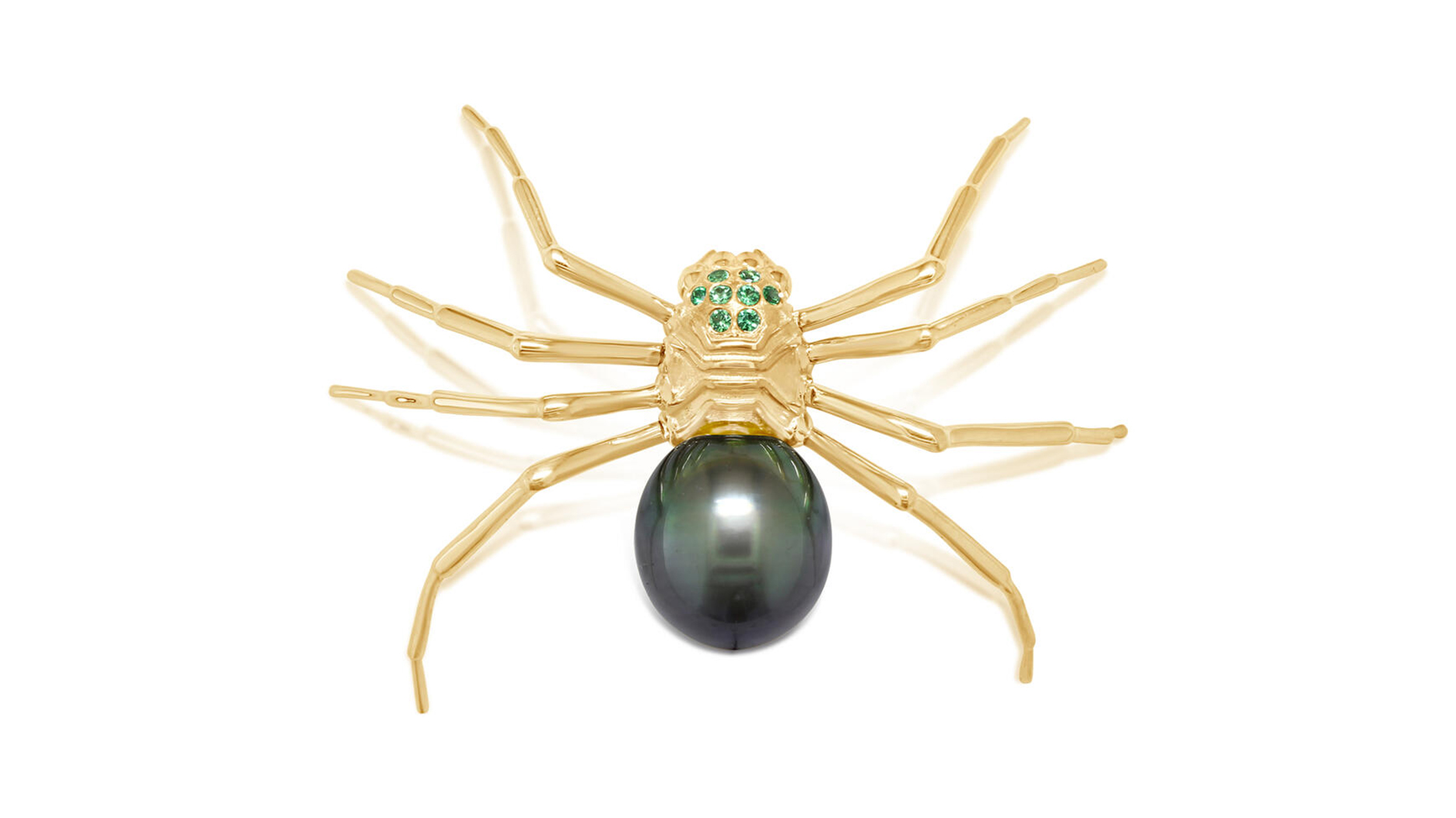
A 14-karat yellow gold Tahitian pearl spider brooch accented with tsavorite garnets ($3,395) by Parlé Gems
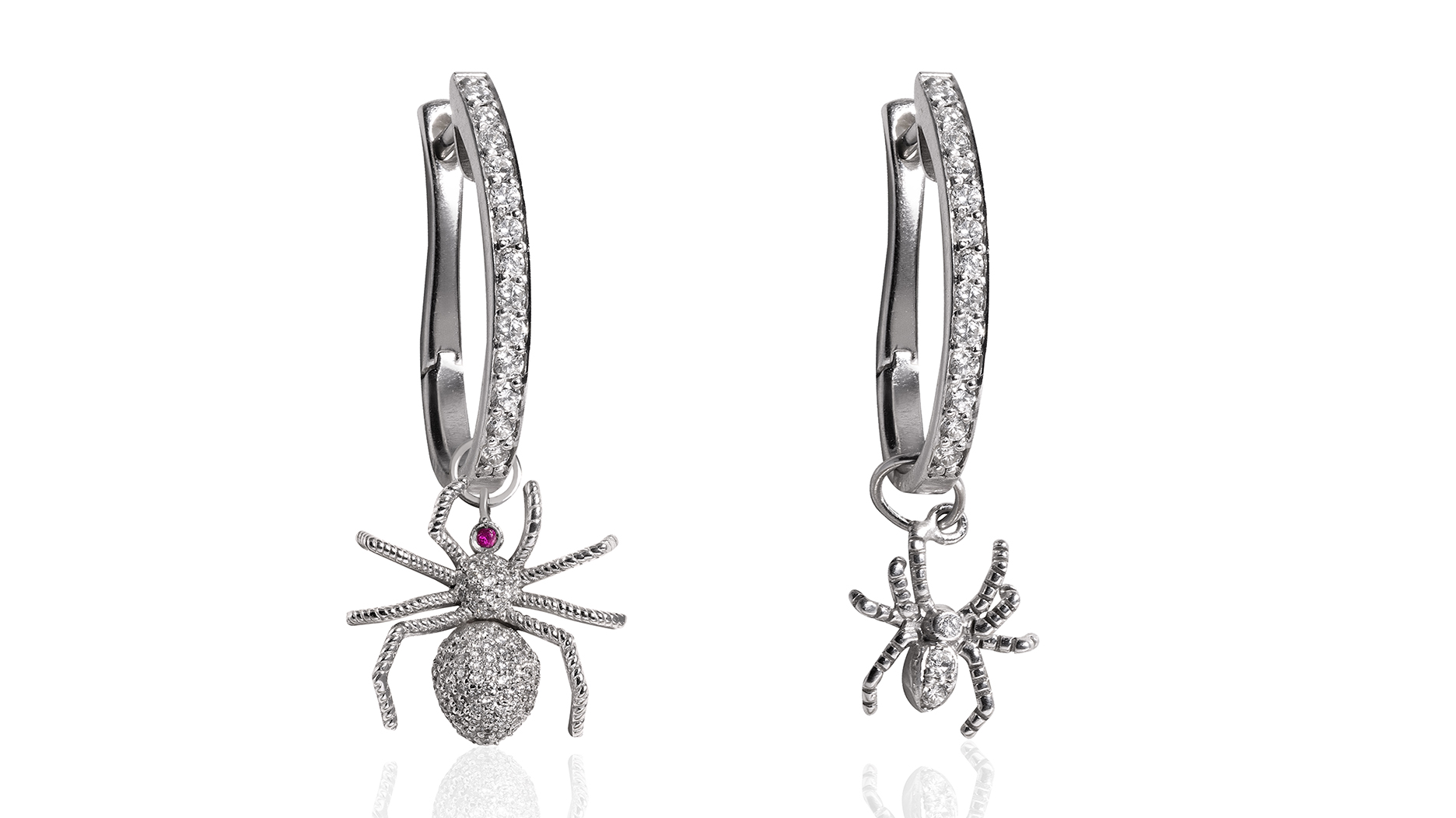
Cédille mismatched “Spider” earrings in 18-karat white gold with diamonds and rubies (price available upon request)
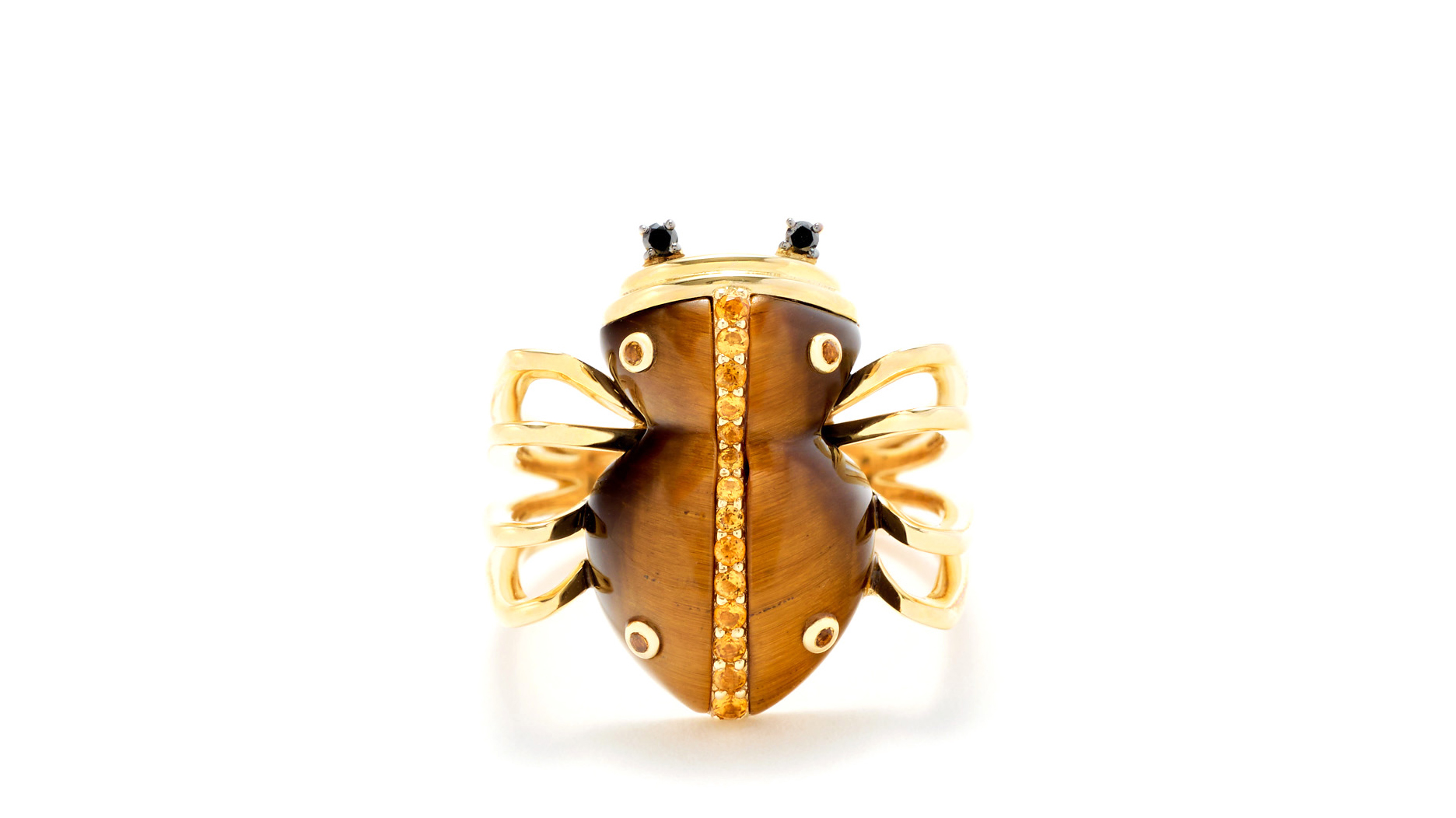
Yvonne Léon spider ring in 9-karat yellow gold with citrine, tiger’s eye, and black diamonds ($3,710)
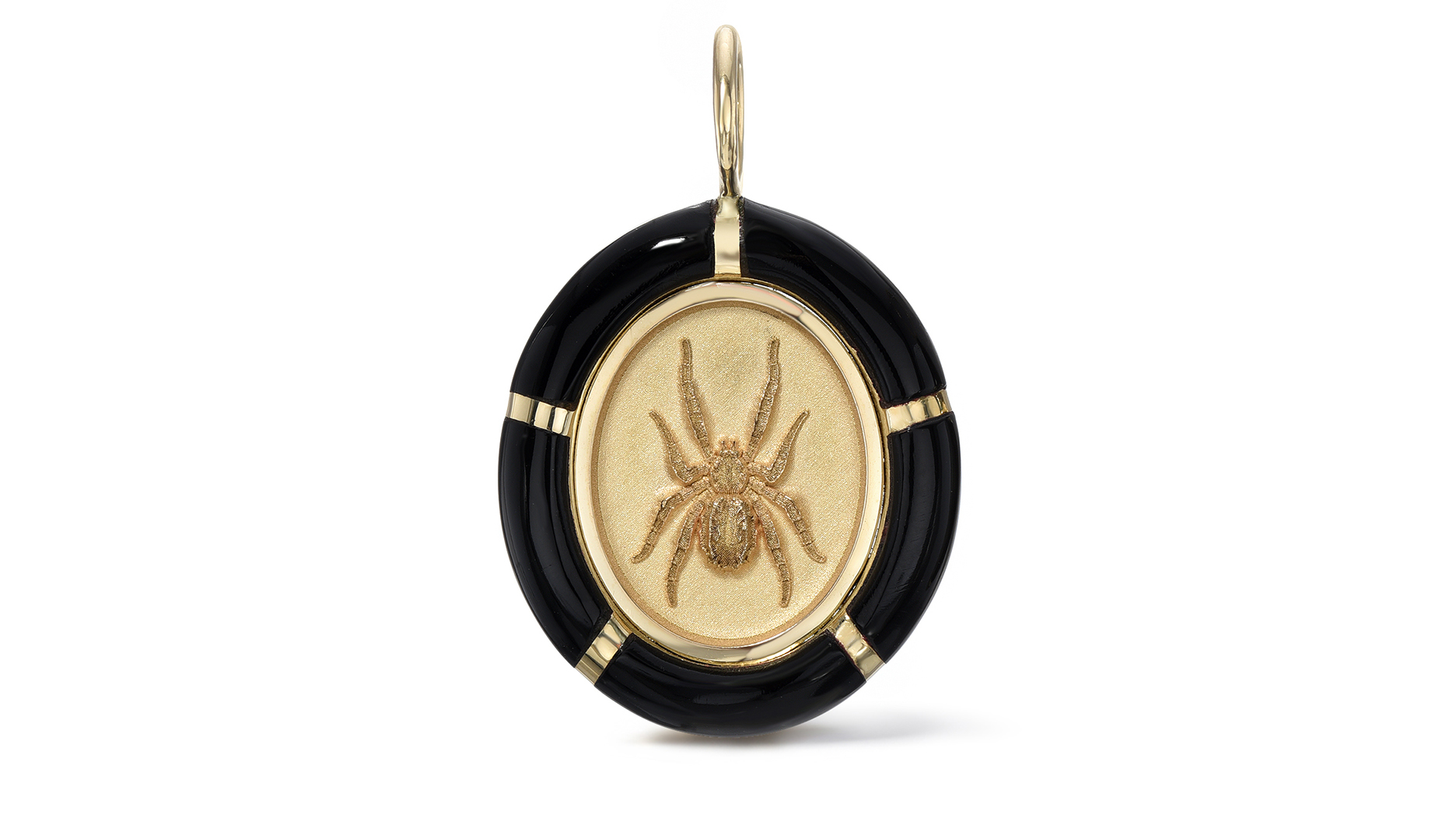
A Retrouvaí spider charm in 14-karat yellow gold with an onyx frame ($3,650)
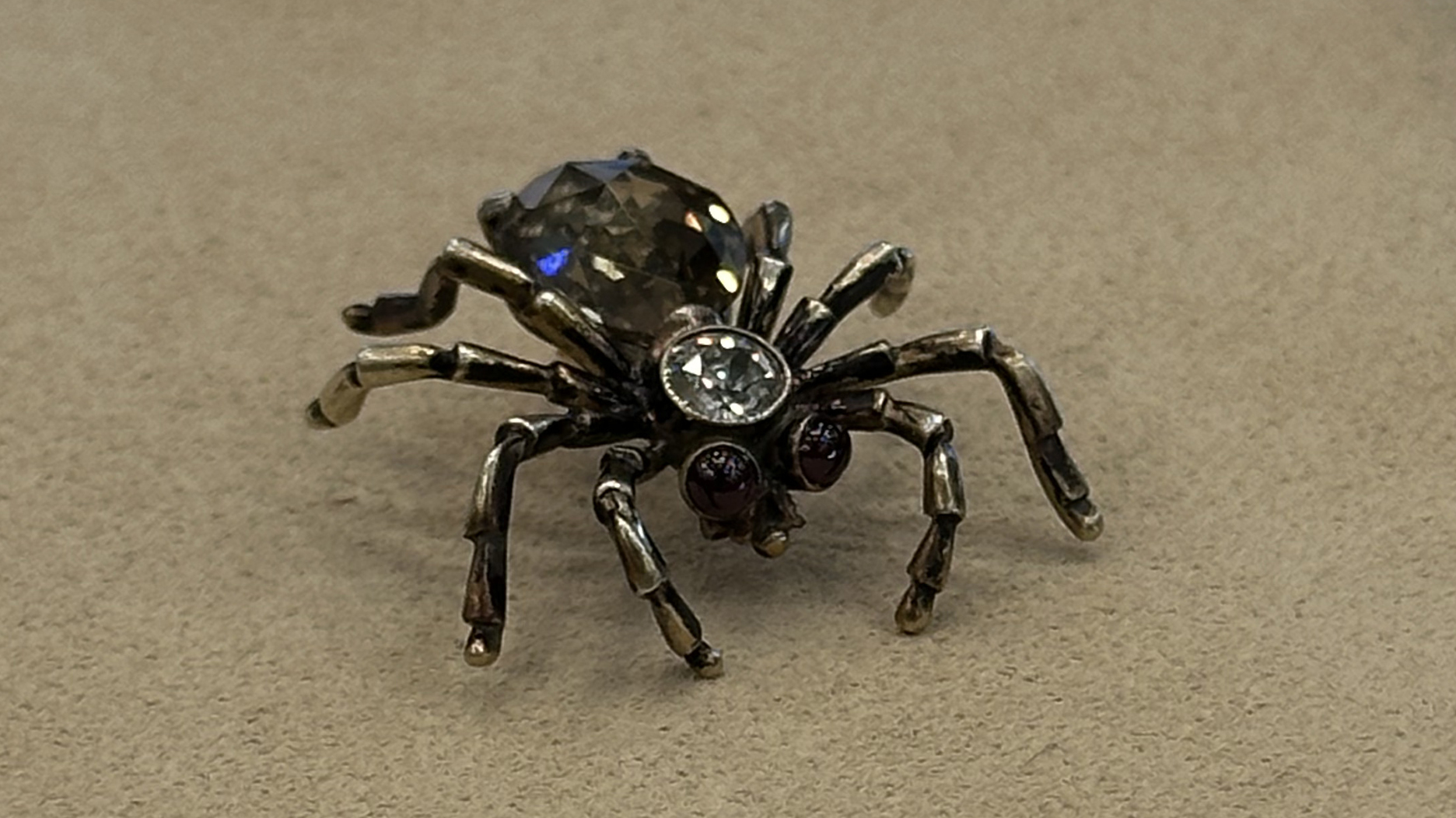
A Victorian era spider pin set with a 5-carat rose-cut brown diamond, circa 1880 ($27,000), shared by Shreve, Crump, & Low
I’m a superstitious person and I’ve heard it’s bad luck to kill a spider. When I see one indoors, I fearfully scoop them onto a paper plate and shoo them outside.
Arachnophobia is common, with those spindly legs striking fear in the hearts of many, but I’m not the only one who also has reverence for the eight-legged arachnids.
These creepy crawlers have found their way into jewelry boxes all over the world.
Spiders hold an interesting place in folklore, admired for their patience and creativity while also being seen as a symbol of danger.
They’re often portrayed as tricksters, like in the story of Anansi the Spider, a tale inspired by Ashanti folklore, or in the 1828 poem “The Spider and the Fly” by Mary Howitt.
I find that poem especially haunting as the spider lures the poor fly into its web. It’s meant as a cautionary tale, warning readers to be wary of idle flattery.
Still, other stories from Native American folklore depict Spider Woman as the weaver of the universe.
Navajo weavers would often leave a pathway out of their woven pattern, known as a “spirit-line,” to pay tribute to Spider Woman and prevent their creative energy from getting trapped.
Spider jewelry is a solid pick for those looking to channel creativity and patience.
The Other Guys
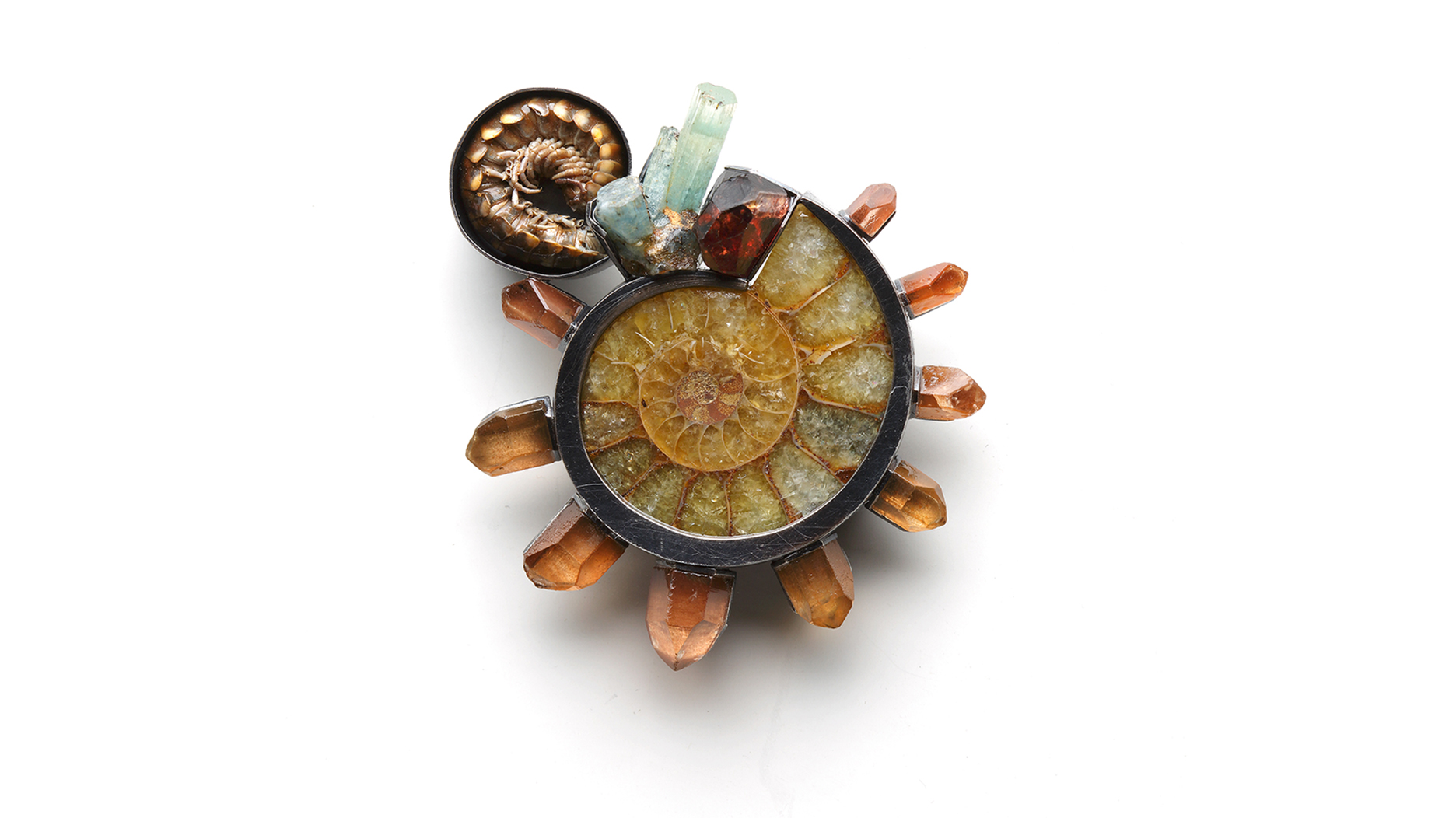
The “Radialities” brooch by Alex Lozier Jewelry in oxidized sterling silver and resin, featuring a centipede (upper left, another actual bug) and ammonite, surrounded by aquamarine, zircon, and tangerine quartz crystals.
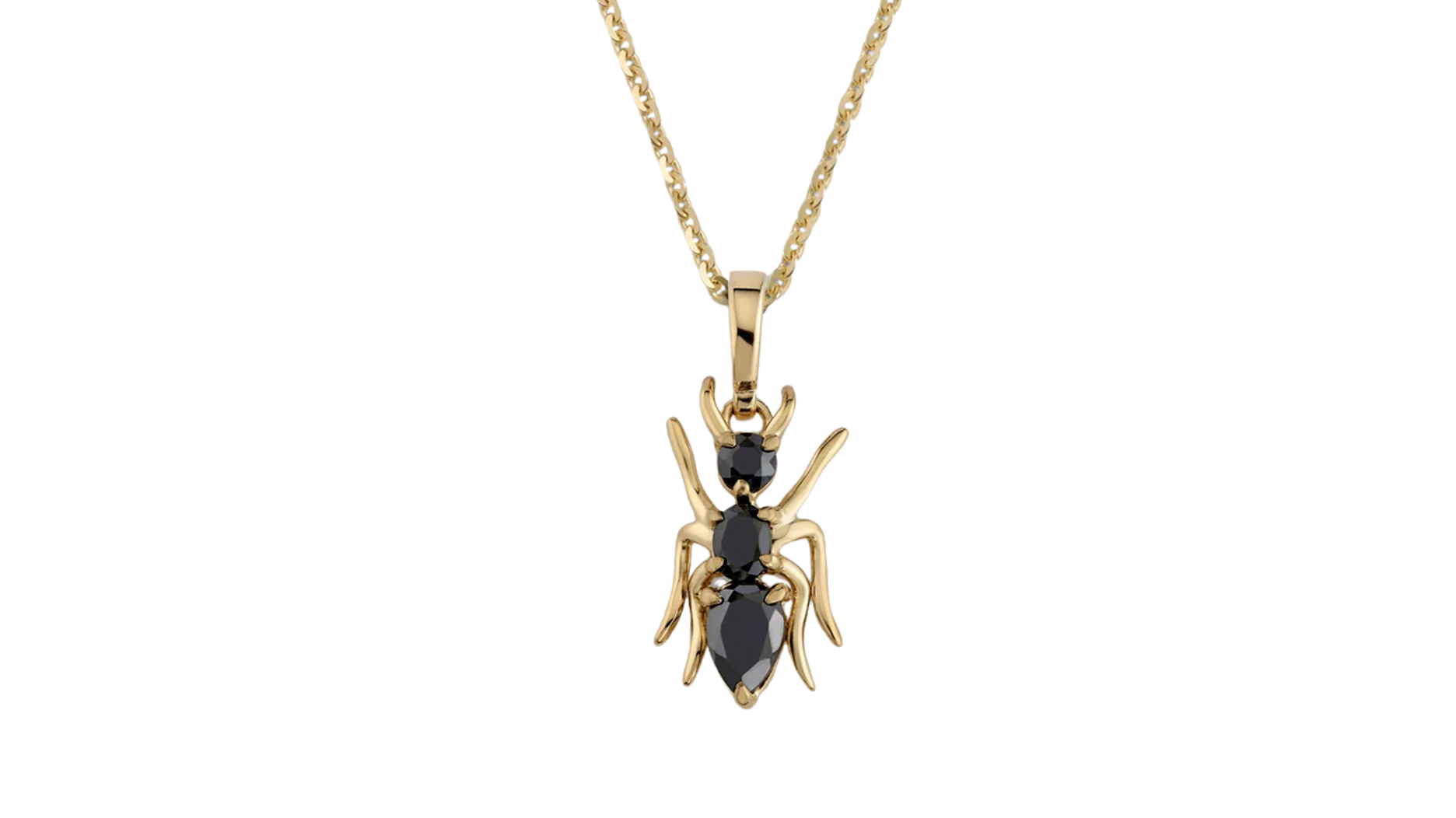
A 14-karat yellow gold vermeil and hematite ant amulet on an oval cable chain ($165) by Awe Inspired
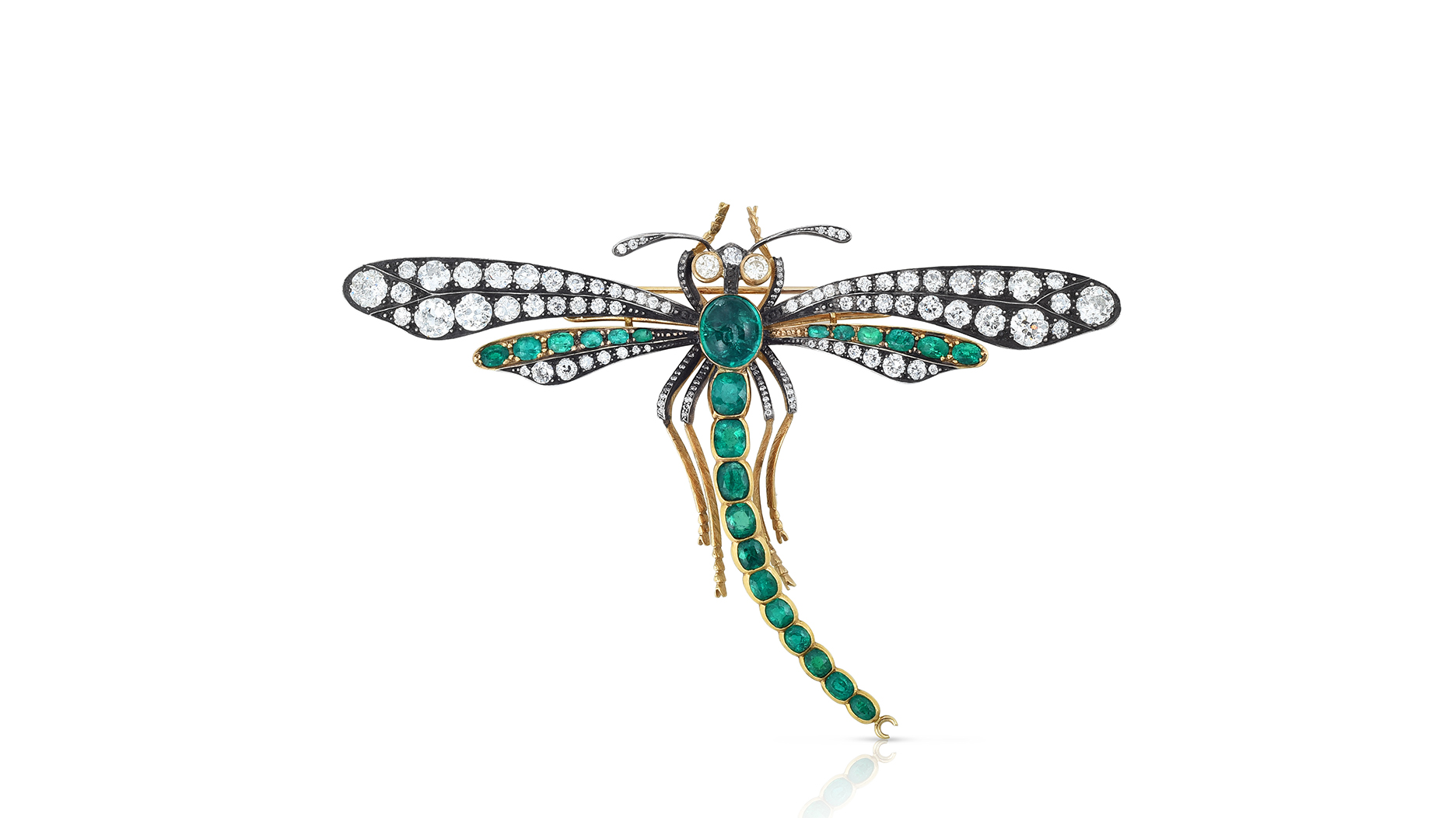
A dragonfly brooch in 18-karat gold with emeralds and diamonds by jewelry brand Cicada ($50,900)

A pair of Susan Gordon bee studs in 22-karat yellow gold and diamonds ($10,600)
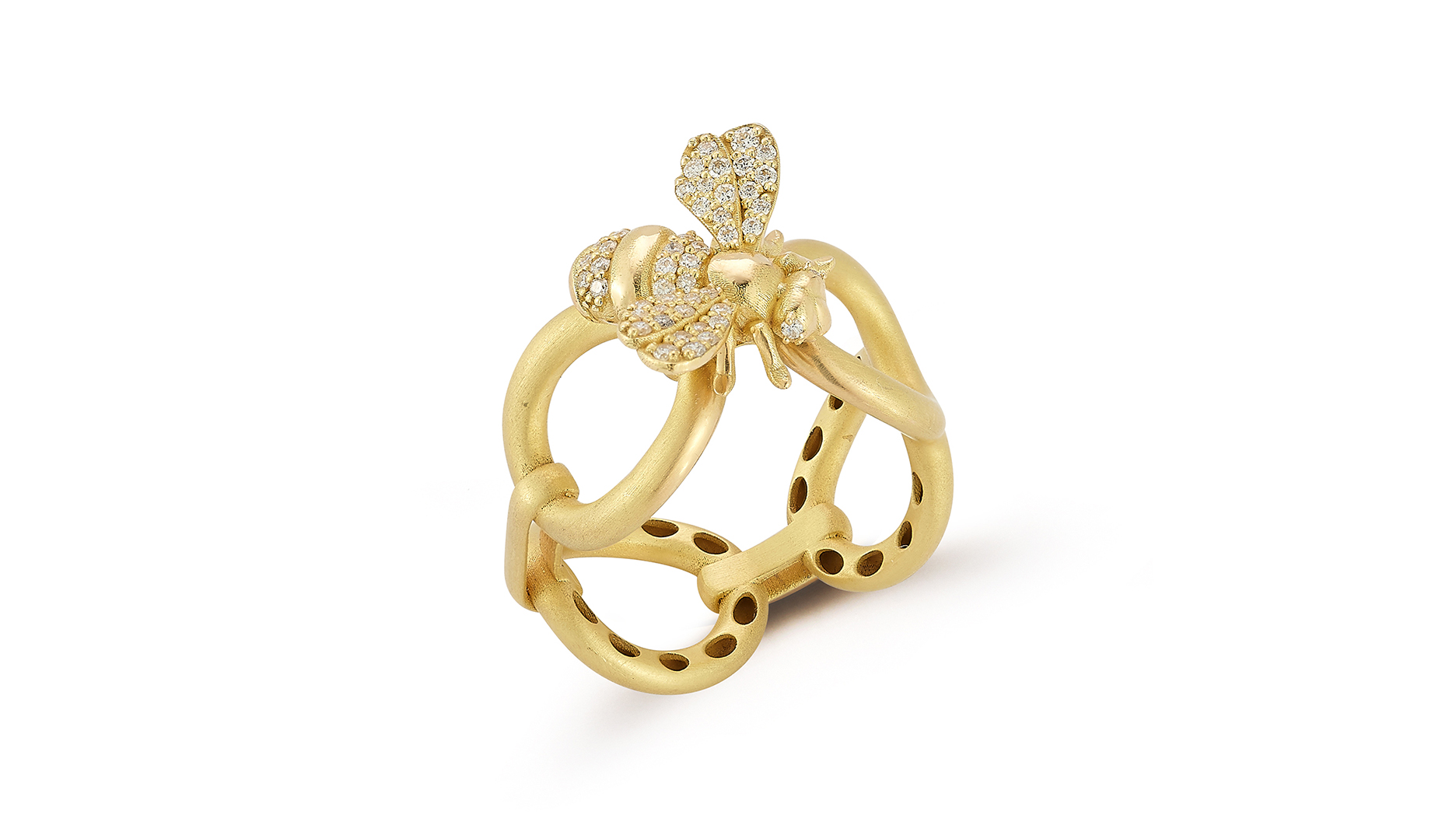
Tanya Farah “Queen Bee” oval link ring in 18-karat yellow gold with diamonds ($5,900)
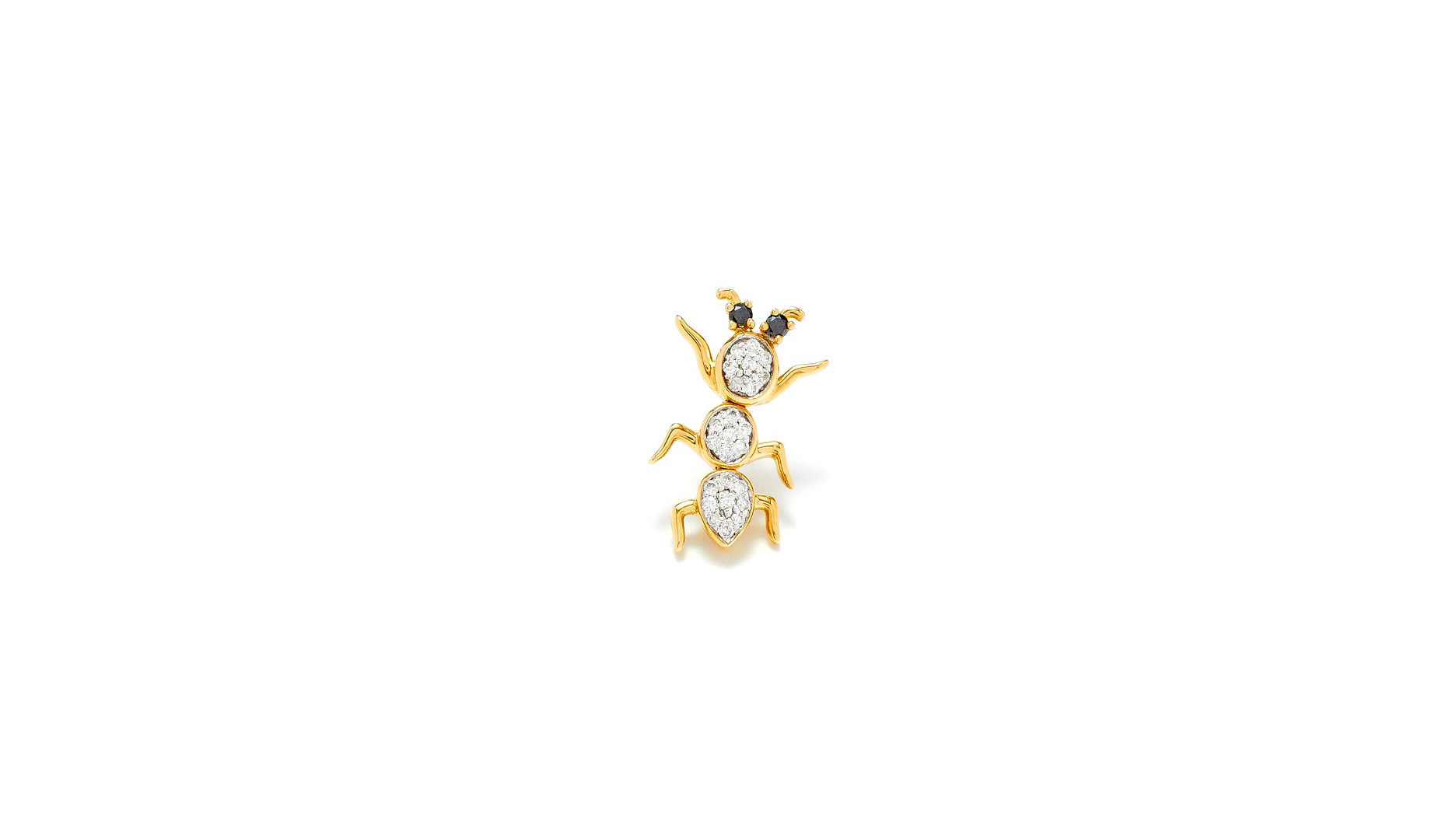
Yvonne Léon ant earring in 9-karat yellow gold with gray and black diamonds ($1,070 per earring)
There’s a wide variety of bugs represented in the above slideshow, including bees, ants, centipedes, and dragonflies, so I’ll end with a quick rundown of their symbolism.
Bees have long been symbols of royalty, from ancient Egypt to Napoleon’s empire in France.
Chaumet, founded by Marie-Étienne Nitot, who was Napoleon’s official jeweler, still creates bee jewelry.
Conversely, bees are also connected to the working class, embodying grit and determination, as well as serving as protectors of the hive.
Similarly, ants are symbolic of hard work and collaboration, working together as a group to prove there’s strength in numbers.
Like the scarab, dragonflies are a symbol of rebirth as well as personal growth, undergoing a metamorphosis from egg to nymph to adult. Centipedes go through a similar metamorphosis.
While many of these bugs might creep us out at first glance, I can understand why they’ve been immortalized in jewelry after looking into their backgrounds. I admire their resilience and their ability to adapt and transform.
You may not want to encounter these bugs outdoors or in your kitchen, but you should save a spot for them in your jewelry box.
If you enjoyed this Halloween story, you can read my others about haunted and creepy jewelry, jewels to pair with your Halloween costume, cursed jewels and gemstones, and why opals allegedly are bad luck.
Happy Halloween everyone!
Editors' Picks
Sponsored by


More on Editors

The Latest

CrimeOct 22, 2026
Jeweler Shot and Killed in His Suburban Cincinnati Store Tara Sinchuri was the owner of Everest Jewels in Fairfield, Ohio, and a father of three. He was found dead in his store on Tuesday.


MajorsOct 22, 2026
Neiman Marcus Has Gifts for the Jewelry Lover Who Has EverythingBespoke experiences from Buccellati and Verdura are on the retailer’s 2026 “Fantasy Gifts” list.

Events & AwardsOct 22, 2026
JIS Fall 2026 Reports Record-Breaking Attendance The number of participants at the fall show was up 12 percent.


Brought to you by
A Diamond Is Forever Launches 2026 Holiday Campaign Championing Natural DiamondsA Diamond Is Forever's holiday campaign reimagines natural diamond icons for a new generation celebrating individuality.


CollectionsOct 22, 2026
Billie Eilish, Finneas Co-Design Collection for John HardyThe Academy and Grammy award-winning siblings have collaborated with John Hardy on a new jewelry line inspired by their personal style.

Weekly QuizOct 22, 2026
This Week’s QuizTest your jewelry news knowledge by answering these questions.


PodcastsOct 21, 2026
Episode 10: This Episode Is Haunted Diana Singer shared the stories of two “cursed” diamonds on this month’s podcast, which was inexplicably riddled with technical issues.


IndependentsOct 21, 2026
Gardner-Collier Jewelry to Close After 9 Decades in BusinessThe family-owned jeweler has three locations across Missouri and Iowa.

Brought to you by
Open an Account, Get $50 Off Your First Order. No Code Needed.Built on Relationships. Refined by Craft.


SourcingOct 21, 2026
Venetia Mines Final Carats Ahead of 2-Year ShutdownThe De Beers-owned diamond mine in South Africa is being put on ice as part of a round of previously announced cost-cutting measures.

CollectionsOct 21, 2026
Helzberg, Nordstrom Carrying New Jewelry Collection From Off-WhiteThe collection centers designs with clean geometric lines, chunky sculptural pieces, and recognizable details from the luxury fashion brand.
SourcingOct 21, 2026
Gemfields’ Mixed-Quality Ruby Auction Earns $52MThe miner said it saw particularly strong prices for larger, fine-quality rubies at the sale.

CrimeOct 20, 2026
Security Guard Charged With Murder in Shooting at Texas MallThe guard opened fire on a man who was smashing a jewelry display case at La Gran Plaza in Fort Worth last week, police said.

IndependentsOct 20, 2026
David Gardner’s Jewelers Unveils Newly Expanded, Revamped ShowroomThe Texas jeweler added 2,000 square feet to its reimagined showroom, complete with a new design studio and an event space.

SourcingOct 20, 2026
The $50M Victoria’s Secret ‘Fantasy Bra’ By The NumbersJacob & Co.'s diamond masterpiece is the most expensive Fantasy Bra ever worn on the Victoria’s Secret Fashion Show runway.

CollectionsOct 20, 2026
Mignon Faget’s Collection Chooses Handmade Over AIThe “Atelier” collection was inspired by the tools, rituals, and objects in an artist’s studio as a quiet rebuttal to an automated world.
MajorsOct 19, 2026
The Knot to Acquire Rival Wedding Planning Platform ZolaThe pending acquisition is an “exciting opportunity” for wedding vendors to grow their business, said The Knot Worldwide’s CEO.

SourcingOct 19, 2026
Jewelry Design Competition Show Airs in Thailand"The Secret Gems" features eight Thai jewelry brands paired with a team of young craftspeople who create jewelry together to win challenges.

CollectionsOct 19, 2026
John Hardy Enters the Medallion Chat With Talisman Collection The brand’s “Modern Talisman” capsule collection introduces pendants inspired by the mythology, natural world, and spiritual ethos of Bali.

IndependentsOct 19, 2026
The Stories of 5 Jewelers Celebrating Their Centennials in 2026Independent jewelers from New Mexico to New Jersey answer the question: What has kept your store in business for 100 years?

SurveysOct 16, 2026
How Inflation, Gas Prices Will Affect Holiday Sales The NRF is expecting holiday sales to increase this year, but consumers and retailers alike are facing Grinch-like headwinds.
CollectionsOct 16, 2026
Christina Puchi’s Earrings Hold the UniverseOur Piece of the Week gathers the planets, represented by a variety of colored gemstones, in a pair of 14-karat yellow gold earrings.
IndependentsOct 16, 2026
Reeds Jewelers Expands, Relocates FlagshipThe New York-based jeweler is moving its Amherst flagship store to a larger location in nearby Snyder.

MajorsOct 16, 2026
Katy Chen Appointed Executive Vice President of Graff USA Chen, who worked at Cartier and Tiffany & Co., will lead retail sales and operations for the luxury jeweler’s 11 U.S. stores.

IndependentsOct 15, 2026
Retailer Hall of Fame 2026: Amy and Elise Greenberg For 40 years, sisters Amy and Elise Greenberg have helmed their 126-year-old family business, leading with appreciation and integrity.

ColumnistsOct 15, 2026
Peter Smith: What Is the Culture REP?It’s a term Smith coined and felt compelled to share following a bad experience with an aborted flight and an unfeeling flight attendant.

WatchesOct 15, 2026
Stephanie Gottlieb’s New Movado Watches Are Made for Your Wrist StackMovado teamed up with the New York-based fine jewelry designer on a new collection of Movado Museum Velura watches.
SourcingOct 15, 2026
Signet Jewelers, Richemont May Join Bidder for De Beers, Report SaysThe two companies are reportedly in talks to join the Global Diamond Consortium, led by former De Beers CEO Gareth Penny, as per Bloomberg.