



President Trump said he has reached a trade deal with India, which, when made official, will bring relief to the country’s diamond industry.
50 Jewelers/50 States: Alabama
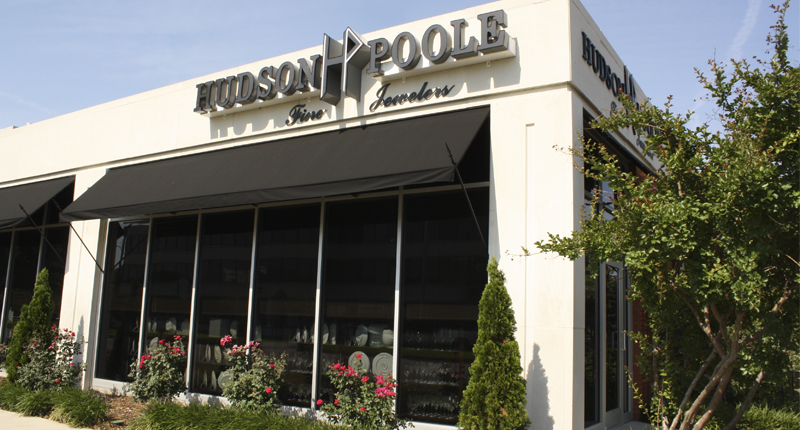
In a new series, National Jeweler is taking the pulse of the nation’s independent jewelers state by state, starting with Hudson-Poole Fine Jewelers in Tuscaloosa.

New generations of shoppers have different attitudes and values, and the jewelry industry, which deals in product that’s best seen in person, must learn to communicate digitally.
The editorial team at National Jeweler wondered how these macro-trends have affected jewelers in disparate parts of the country.
Are the challenges affecting the retail jeweler in Florida as much of a concern to the jeweler in California, and does a store in Alaska rely on the same top-selling styles and brands as a store in Arkansas?
In a bid to answer these questions, National Jeweler decided to poll one jeweler in each of the 50 states.
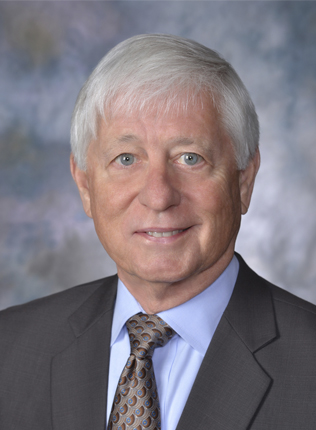
We started with Hudson-Poole Fine Jewelers in Tuscaloosa, Alabama, a college town where owner Gene Poole constantly adapts to millennial behaviors yet preserves his core service values.
National Jeweler: What’s the biggest challenge your store is facing?
Gene Poole: I think it’s twofold. I think one, the internet is a tremendous competitor, and I think having the right sales people is another big problem.
In our particular area, we’re in a little bubble; we’ve been at about 4.5 percent unemployment for the last 15 years. We’re very fortunate that we’re basically fully employed. In other words, if you want a job in Tuscaloosa, Alabama, you should be able to get a job.
So, therefore, the pool of workers is not tremendous and, being a smaller retailer jeweler, we require employees to work on Saturdays and a lot of people are not liking to work on Saturdays.
Millennials are a different breed. The millennial workforce is really cool but I think it’s a different group than past generations.
A big problem for my fellow independent jewelers today is a succession plan. I am very, very fortunate to have my son and daughter-in-law in the business with me. Also, my wife is three-quarters of my brain, and I could never have had a successful business without her. She is also the best jewelry buyer in the country.
NJ: What’s the top-selling item or brand at your store?
GP: Our top-selling item is going to be bridal engagement rings, diamond engagement rings and wedding bands. Martin Flyer and Gabriel & Co. are two of our best-selling brands.
NJ: Describe your regional customer.
GP: We’re in a college town. The University of Alabama is located here. We get students from all over the United States. So our bridal market is primarily that market, not just the regular Tuscaloosa population.
We serve basically west Alabama and east Mississippi. We have Birmingham to the east of us so there are people in that area who don’t need to come this way, but we have a tremendous area in west Alabama that covers about six or eight counties that we serve, as well as eastern Mississippi.
NJ: What’s the most popular style of engagement ring with your clientele now?
GP: I guess I got to say it’s still the halo, but I am seeing a little pushback from that since it has been so popular. We’ve actually sold a couple of solitaires--basic four-prong, Tiffany-style solitaires--and I’m also seeing a great trend of yellow gold. It’s been years since we’ve sold yellow metal for bridal, but we’re seeing a little of that. (There is a) very, very slight trend toward rose gold. Mainly, if there’s anything other than white, it’s going to be yellow.
NJ: What about diamond shapes?
GP: Right now, we’re mainly selling round brilliant but I see a little popularity in oval and maybe a smidgen going back toward marquise … I haven’t seen the marquise in 15 years, but I’m seeing a little bit of interest in marquise now.
GP: HudsonPoole.com is our website. We’re not selling a tremendous amount online but we do sell online, especially in the holiday season. We carry some collegiate merchandise for the University of Alabama, so alumni across the United States will order that online. When they google “Alabama jewelry,” we come up pretty high.
I’m really amazed at the number of my longtime customers who will do their research online and then come in to buy. The other day I had a gentleman who had an anniversary and came in and showed us a picture of a tanzanite and diamond ring that we had online and said, “That’s what I want,” and we took it out of the case, wrapped it and handed it to him.
I see a huge amount of the millennial population come in and pull up a picture on their iPhone and say, “This is what she wants.” It makes my job a lot easier in that respect, that you can pull something out of the case, even if it’s not that particular brand the customer shows you, and you can compete.
My real agitation with the internet is sales tax. I can compete with diamond prices and I can compete with mounting prices, but I can’t compete with sales tax and I had a long discussion about this with the mayor of Tuscaloosa. They’re losing money on sales tax because so many people are shopping online, not just jewelry but apparel and housewares and everything.
Most cities in the South depend on sales tax as opposed to any other type of tax for road and bridges and infrastructure. I just saw Amazon came out and said they’re going to start collecting state sales tax. That’s fine, but it doesn’t help cities and counties. If I have a young man going online, I’m 9 percent non-competitive right off the bat because we have a 9 percent sales tax. Nine percent on a diamond engagement ring is enough to make you think, “‘Well, hell, I think I’ll buy it online,’ and I don’t like that.”
At some point, we have to level the playing field and Congress needs to get on board and the state governments need to get on board because it’s hurting the brick-and-mortar retailers of all types and it’s hurting the states, the cities and the counties for their infrastructure needs and education needs. It’s just crazy.
NJ: Of the social media accounts you’re using, which is the most important to Hudson-Poole?
GP: Instagram is really, really good for us. We have a lot of followers, and again I get people who will tell their husbands or significant others that they like a particular piece that we posted. We try to stay real fresh and real current on that. We do Facebook and it’s OK, but I think Instagram is better right now for us.
NJ: What’s the best piece of advice you’d offer to other independent jewelry stores?
GP: This is not anything new, but you still have to get customers into the store. I think online media is the way to do it. I spend money on Facebook and Instagram and advertise there. I also advertise on radio, TV, billboards, newspaper, direct mail, everything, but I do think that online is really significant. And I’m putting more and more dollars there.
But that’s basically getting the purchase on your website or getting them into the store. When they come into the store, you have to make sure your customer service is superior to anyone else’s.
So we try to make sure that we’ve read all of the articles and done all of the training and studying to make sure that our customer has a really good experience when they walk in the door at Hudson- Poole Jewelers.
They’re greeted within five seconds. They’re offered Coca-Cola, Diet Coke, Sprite, water. We do everything we can do to put them at ease and relax. We try to just talk and show jewelry; there’s no pressure. And it basically seems to work really good for us.
NJ: What’s a fun fact about you we can share with our readers?
GP: I’ve had three lives. I’m a retired military colonel, U.S. Army Special Forces. I still play oldies rock ‘n’ roll music--the drums--and I love the jewelry industry.
The Latest

The designer’s latest collection takes inspiration from her classic designs, reimagining the motifs in new forms.

The watchmaker moved its U.S. headquarters to a space it said fosters creativity and forward-thinking solutions in Jersey City, New Jersey.

Launched in 2023, the program will help the passing of knowledge between generations and alleviate the shortage of bench jewelers.

The company also announced a new partnership with GemGuide and the pending launch of an education-focused membership program.


IGI is buying the colored gemstone grading laboratory through IGI USA, and AGL will continue to operate as its own brand.

The Texas jeweler said its team is “incredibly resilient” and thanked its community for showing support.

Criminals are using cell jammers to disable alarms, but new technology like JamAlert™ can stop them.

From cool-toned metal to ring stacks, Associate Editor Natalie Francisco highlights the jewelry trends she spotted at the Grammy Awards.

The medals feature a split-texture design highlighting the fact that the 2026 Olympics are taking place in two different cities.

The “Khol” ring, our Piece of the Week, transforms the traditional Indian Khol drum into playful jewelry through hand-carved lapis.

The catalog includes more than 100 styles of stock, pre-printed, and custom tags and labels, as well as bar code technology products.

The chocolatier is bringing back its chocolate-inspired locket, offering sets of two to celebrate “perfect pairs.”

The top lot of the year was a 1930s Cartier tiara owned by Nancy, Viscountess Astor, which sold for $1.2 million in London last summer.

Any gemstones on Stuller.com that were sourced by an AGTA vendor member will now bear the association’s logo.

The Swiss watchmaker has brought its latest immersive boutique to Atlanta, a city it described as “an epicenter of music and storytelling.”

The new addition will feature finished jewelry created using “consciously sourced” gemstones.

In his new column, Smith advises playing to your successor's strengths and resisting the urge to become a backseat driver.

The new store in Aspen, Colorado, takes inspiration from a stately library for its intimate yet elevated interior design.

The brands’ high jewelry collections performed especially well last year despite a challenging environment.

The collection marks the first time GemFair’s artisanal diamonds will be brought directly to consumers.

The initial charts are for blue, teal, and green material, each grouped into three charts categorized as good, fine, and extra fine.

The new tool can assign the appropriate associate based on the client or appointment type and automate personalized text message follow-ups.

Buyers are expected to gravitate toward gemstones that have a little something special, just like last year.

Endiama and Sodiam will contribute money to the marketing of natural diamonds as new members of the Natural Diamond Council.

The retailer operates more than 450 boutiques across 45 states, according to its website.

The new members’ skills span communications, business development, advocacy, and industry leadership.