From offering immersive micro-experiences to fostering safe and comfortable spaces, retailers across industries must keep getting creative to remain relevant to consumers.
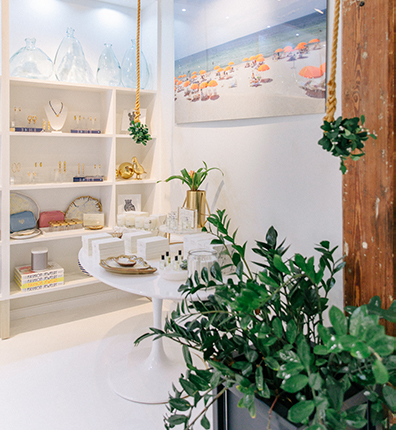
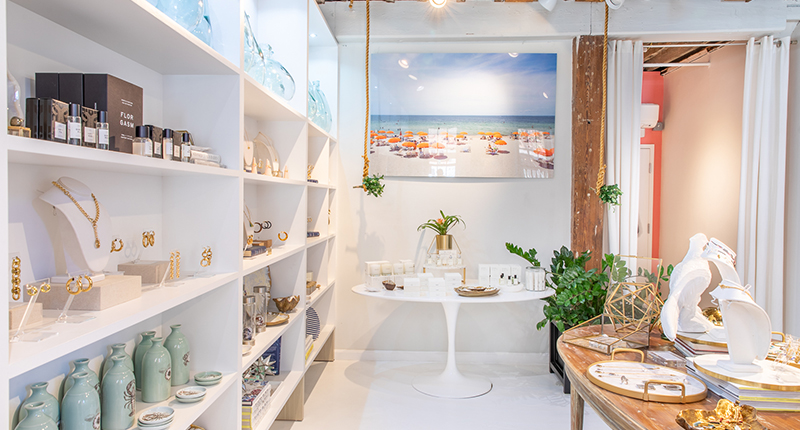
The interior of M. Flynn, the Boston jewelry store run by sisters Megan and Moria Flynn. The homey space embodies one of five retail trends on the rise.
At this very moment, there are more avenues for buying jewelry than ever before.
From local family-owned jewelers, retail jewelry chains, and big-box stores to direct-to-consumer brands, vintage jewelry purveyors, and Etsy sellers, countless options exist for finding that special something.
Click here to read the full story in the Market Issue.
In a sea of sellers, how does any one retailer stand out?
What’s the retail equivalent of standing on a chair, flailing your arms about and shouting, “Me! Over here!”?
In search of answers, National Jeweler spent two days at the National Retail Federation’s annual convention held in New York, an event known as “Retail’s Big Show.”
We also consulted jewelers and dedicated jewelry industry experts to pinpoint the most buzzed-about trends in retail.
1. The Micro-Experience The role of the store has shifted from a place to buy things to a place to experience something.
The overall experience in a store is an amalgamation of numerous factors, from lighting and design to displays and décor to music and scent.
A micro-experience narrows the focus, zeroing in on one small action that communicates the feel of the brand to the customer in a big way.
French beauty brand L’Occitane en Provence, for example, used virtual reality technology to take customers on a hot-air balloon ride at its New York City flagship in August 2018.
While customers see themselves sailing through the clear, blue skies over the south of France—the gorgeous region the brand is built around—an employee provides a hand massage using the L’Occitane’s signature products.
Micro-experiences like the one offered by L’Occitane were one of many topics covered at the National Retail Federation’s annual convention, held in January before COVID-19 forced the cancellation of large-scale events across the country.
Robyn Novak, vice president and managing creative director of architectural and design firm FRCH Nelson, highlighted L’Occitane’s VR trip as an example of exactly what a micro-experience should be while moderating a panel called “Delivering Micro-Experiences for Major In-Store Impact.”
Novak had a list of characteristics retailers should check off before introducing micro-experiences in their stores. They should be:
Small-scale and physical, something customers have to come into stores, visit brand websites or attend events to encounter;
Authentic and ownable, acting as an extension of the brand itself;
Valuable in augmenting the core transaction and overall experience, not just existing for the sake of having a micro-experience; and
Manageable for the retailer, while still being scalable.
Novak’s fellow panelists, Sarah Hoffman, chief marketing officer at Drybar, and Barbara Carlson, senior director of global creative services at American Girl, also shared how their brands approach micro-experiences.
Hoffman said: “We try to deliver on our brand promise of bringing happiness and confidence to women everywhere and deepening that emotional connection with her.”
For Drybar, a chain of hair salons focused solely on blowouts (professional blow-drying sessions), micro-experiences manifest via exclusive partnerships, such as in-salon ads featuring the cast of “Like a Boss,” the 2020 comedy starring Tiffany Haddish, Rose Byrne and Salma Hayek; pop-up blow-drying lounges at the U.S. Open; and DIY content available online to style your hair at home.
“Our strategy, really, is to complement or recreate that amazing experience you get when you come to a Drybar—whether it’s getting ready for a big meeting or a special occasion – and bring that to her in all the parts of her life,” Hoffman said.
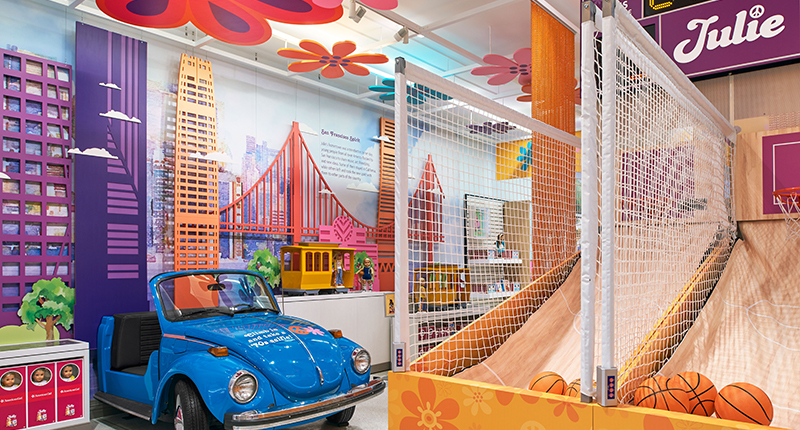
American Girl immerses customers with micro-experiences in its stores, like the ‘70s-themed “Julie’s World.”
For American Girl, the uber-popular Mattel-owned doll brand, its highlighted micro-experience was the blast-from-the-past, ‘70s-themed “Julie’s World,” an immersive experience opened in October 2019 at its New York City flagship.
“We need to make sure that we are being relevant and engaging to the girl and, of course, to our core narrative and storytelling,” Carlson said.
For the blissfully uninitiated, each American Girl doll has her own name and backstory. Julie Albright is the brand’s 1970s doll, complete with a flower in her hair and a penchant for speaking out for girls’ rights.
The space is meant to recreate Julie’s world, featuring a selfie-ready Volkswagen Beetle and beaded curtains galore.
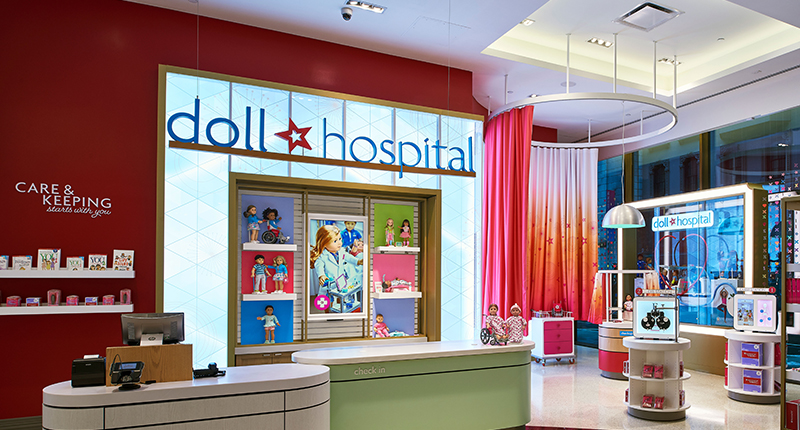
The American Girl Doll Hospital is a micro-experience perfect for patching up a well-loved friend.
The company’s flagships in New York and Chicago also have hair salons, with seats for girls and dolls alike, and a Doll Hospital to mend a well-loved companion.
2. Sustainability Sustainability just may be the retail buzzword of the decade.
While “eco-friendly” practices have been building as a trend for a while now, the call to action has grown louder in recent years.
Looking at retail in the wake of COVID-19, a report by Bain & Co. predicted consumers will not just be looking to purchase eco-friendly and ethically sourced products, but will be prioritizing these items.
Brands will want to be mindful of consumer concerns when thinking about end-to-end product life cycle, supply chain management, and how to dispose of unsold stock, said Bain.
The theme of how to be greener, cleaner and more sustainable permeated the Big Show in January.
At a panel on technology and sustainability, Shelley Bransten, corporate vice president of retail and consumer goods industries at Microsoft, said the fact her two children participated in the September 2019 climate demonstrations was a five-alarm wakeup call.
“The industry cares about it, our children care about it. Our future consumers really care about it,” she stressed.
The word “fad” tends to denote a craze that’s short-lived and driven by commerce, like Beanie Babies or mood rings, but treating sustainability as a passing fad could prove to be a mistake. It is far better described as a longer-term trend that has gained momentum slowly.
Pops of greenery add color at M. Flynn.
At another sustainability-focused panel, hosted by workplace equality organization The Female Quotient, female leaders spoke about how sustainability should be high on a company’s priority list.
Annie Agle of Cotopaxi, an outdoor goods company that prides itself on its sustainable products, didn’t mince words about the danger of dismissing the growing movement.
“You can no longer afford as a brand to not make this investment,” she said.
“Your employees will hold you accountable. You will lose talent. You will lose your women.”
While sustainability should be top of mind for jewelry retailers, it’s a practice you can ease into, as more sustainable jewelry suppliers come online.
A wise person once said: “Don’t let the perfect be the enemy of the good,” and this advice especially applies to the jewelry industry, where many suppliers aren’t yet fully up to speed.
Until you can get sustainable supply chain assurances from the majority of suppliers, there are other practices companies can deploy right away.
For example, jewelry brands or retailers can donate to an industry nonprofit that is working to empower small, artisanal miners in Africa, such as the Diamond Development Initiative or Gem Legacy.
Panelist Abigail Kammerzell of H&M advised retailers to be proactive and tell customers what they’re doing, “before they have to look for it themselves.”
For jewelers, the topic of sustainability is definitely an opportunity to bring up or share their knowledge with the customer.
“I personally like it when they ask,” says Isabelle Corvin, staff gemologist at Panowicz Jewelers in Olympia, Washington. “It gives us a chance to share that story and counteract the bad publicity and media that the jewelry industry unfortunately gets.”
The time of the passive consumer is over. Retailers should be prepared to answer questions about the origin of their products.
3. Personalization From grunge-chic (and not-so-chic) flannel in the ‘90s to the Von Dutch trucker caps of the 2000s, there was a time when fitting in was the epitome of cool.
With a few exceptions, that is no longer the case in clothes, caps or jewelry.
The Knot’s 2019 Jewelry & Engagement Study found that 45 percent of engagement rings included at least some custom details. Within that group, nearly one-third designed a ring from scratch.
Corvin estimates about one-quarter of Panowicz Jewelers’ business is custom orders, which she considers quite an uptick when considering how seldom custom orders came in just five years ago.
And the increase isn’t relegated to bridal jewelry. The independent jeweler receives just as many custom orders for other special occasions.
“We’re seeing people come in for custom birthday gifts or the repurposing of old jewelry they’ve inherited,” Corvin says.
“When we think of custom orders, we think of from scratch, but a lot of times people want to modify what they see. More and more people are coming in with a picture.”
To handle the custom order influx, Panowicz Jewelers has two full-time bench jewelers and one part-time apprentice, as well as an associate ready to sketch a piece from scratch.
Amid the pandemic, the jeweler has turned to its tech capabilities, especially texting and social media, to keep up with customer requests and to continue to build connections, albeit by digital means.
“We always had access to those tools but we’ve been really taking advantage of them now,” she says.
4. Health & Safety As retailers and consumers alike grapple with returning to physical stores in the wake of COVID-19, cleanliness and safety have become of paramount importance.
At the height of the pandemic, essential retailers like pharmacies and grocery stores were limiting the number of customers allowed inside at one time and putting marks six feet apart on the floor to encourage social distancing.
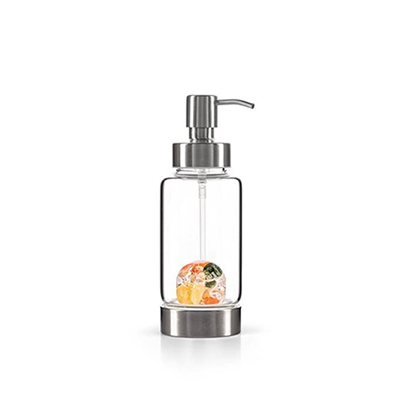
Need an on-brand way to dispense hand sanitizer in the store? In April, Gem-Water, the seller of the crystal-carrying water bottles, came out with The Happiness Dispenser, which holds 10 ounces of hand sanitizer, soap or lotion.
In the wake of the pandemic—and with a second wave of COVID-19 not out of the question—all retailers will need to demonstrate the steps they are taking to prioritize the health and safety of both customers and employees.
“We have a responsibility to psychologically communicate to customers that this is a safe place to be,” National Jeweler columnist Peter Smith said during a webinar on retail held in late April.
Shoppers may be on the fence about coming into a store, he said, and the measures retailers take—or do not take—will convince them one way or the other.
Customers will want to see masks, hand sanitizer and social distancing measures in place.
They’ll also want to know the jewelry they’re trying on is clean.
Sherry Smith, also a National Jeweler columnist and fellow guest on the April webinar, suggested wiping down jewelry right in front of customers before handing it to them, and then cleaning it again when they hand it back.
In a presentation during Jewelers of America’s second annual National Convention, taken online and held in May this year due to COVID-19, jewelers ran down the list of precautions they’re taking to keep customers safe.
Chad Berg, president of Lee Michaels Fine Jewelry, said the company has stations set up throughout its stores for cleaning jewelry.
“When someone walks in, we are taking everybody’s temperature,” said Berg, adding customers have complied with the request.
Lee Michaels stores also have a table of cleaning supplies set up in front, with masks, gloves and alcohol pads available.
All employees are wearing masks and there is a check-in sheet so employees can keep track of who comes into the store.
Another element customers may want to see is spaced-out seating areas, said Peter Smith, noting retailers with smaller spaces may need to get creative.
M. Flynn, a Boston jewelry store run by sisters Megan and Moria Flynn, is doing exactly that, drafting plans to rearrange its store set-up before welcoming back its customers.
Priorities for the new look include creating more space and private meeting areas as well as freshening up the store.
The sisters broke down the changes in an Instagram Live session broadcast in the spring, updating customers on the store’s reopening plans.
For the foreseeable future, customers may visit by appointment only in an effort to provide a comfortable atmosphere for shoppers.
“I think that we’re both really excited to actually be able to put a little bit more time in with our customers instead of having a lot of people in at once, so we can really focus on people when they are in here,” Moria said during the live stream.
Upon its reopening, Panowicz Jewelers adopted a similar appointment-only policy to limit store traffic and ensure staff has time to properly clean the space before welcoming in another customer.
“We’ve suspended while-you-wait watch batteries and jewelry cleanings, and instead require clients to leave their pieces for up to 72 hours to make sure we can take extra precautions,” Corvin said in May, though she acknowledged that could change as Washington state moves through the phases of reopening.
In line with state mandates, staff members are wearing masks and offering them and hand sanitizer to customers, and keeping the jewelry sanitized.
5. That Homey Feel Jewelry stores are meant to have a luxurious feel but an aspirational atmosphere can quickly become intimidating, even stuffy, if the balance isn’t just right.
“Luxury doesn’t mean it shouldn’t be welcoming and comfortable,” Shinola CEO Shannon Washburn said at a panel on brand experience at the NRF conference.
Washburn said positive feedback from guests about Shinola’s stores convinced the watch company that moving into hospitality would be a good idea. In January, Shinola opened its first boutique hotel in its hometown of Detroit.
Washburn framed the transition from retail to hospitality as a way to immerse customers in the brand.
Shying away from gimmicky, overt branding, the company opted for “subtle, nuanced brand influence,” including bathroom fixtures made to look like watch casebacks.
“It’s all about creating amazing, quality interactions at every touch point with your consumer,” she said.
Independent jewelers are getting in on the home vibe too, albeit on a smaller scale.
“Jewelry is tricky to make really comfortable,” says Corvin of Panowicz Jewelers. “Someone has to get stuff out for you from a locked case. We won’t ever be able to make it 100 percent homey.”
The jeweler believes it’s the little things that count when making a customer feel welcome.
Employees opt for a more business-casual dress code to tone down the intimidation factor, and ordinarily offers all guests complimentary beverages, though as of June that service is by request only in light of coronavirus-related safety concerns.
Sisters Megan and Moria Flynn strive to give their jewelry store, M. Flynn, that “welcome home” vibe.
M. Flynn’s location—a former piano factory that was converted into an artists’ studio—sets the tone for the jeweler, looking homey with its warm brick façade and array of fresh flowers.
With two sisters at the helm, the family feeling is baked into the store.
“For us, it’s worked to have a more laid-back atmosphere,” says Megan.
“We want people to feel like they can come visit the ring they’re coveting,” she says, noting that customers sometimes make smaller purchases as they save up for that dream piece.
The store’s Instagram is chock-full of photos of Charlie, a black-and-white dog who has made himself at home in the shop, napping under the showcases and rolling around on the rugs.
In the wake of the pandemic, the adorable pooch will still be frequenting the store, says Megan, though he’ll need some time to get used to people wearing masks, a sight that has spooked the store’s unofficial mascot.
A worry for Megan is that the store experience could get lost in this “overly planned situation that is our new reality,” though she acknowledges the by-appointment-only model will give them some control over the store environment and the experience presented to the customer.
Also uncertain is the future of the store’s events, like book club meetings, author talks and the seasonal build-your-own bouquet flower stations.
Events may be held in small groups or by appointment only, but the Flynn sisters are holding off on a final decision considering the fast-paced developments surrounding COVID-19.
“I always want to keep the store interesting and have people learning along with me about jewelry,” Megan says.
For the five trends above, all roads lead back to EXPERIENCE.
Customers want to walk into a fun, welcoming store where the jewelry on display is one element of a total experience that makes them want to return. And, in the wake of the coronavirus pandemic, they’ll also want to feel that they are walking into a safe, clean environment.
When the customer leaves, bag in hand or not, their memory of the experience will usually last longer than any one piece of jewelry they saw.
Peter Smith put it best in a retail-focused column published on NationalJeweler.com in mid-April.
If a business was struggling before COVID-19, its “shortcomings will be exacerbated and failure to reinvent your business immediately will likely hasten your decline,” he wrote.
If a store was doing well before the pandemic hit and it made it through, then the owner should double-down on what’s working.
While consumers returning to stores post-pandemic may have different priorities, the retailer’s ultimate goal remains the same—provide something memorable and unique that the store down the street, and the internet, cannot.
If a retailer can convince customers their needs and wants are understood and can be better met in this store than anywhere else—while also making them feel great about the experience—that’s half the battle won.