

CrimeOct 20, 2026
Security Guard Charged With Murder in Shooting at Texas MallThe guard opened fire on a man who was smashing a jewelry display case at La Gran Plaza in Fort Worth last week, police said.



Lower than it was a couple years ago, according to The Knot, De Beers and industry analyst Edahn Golan.


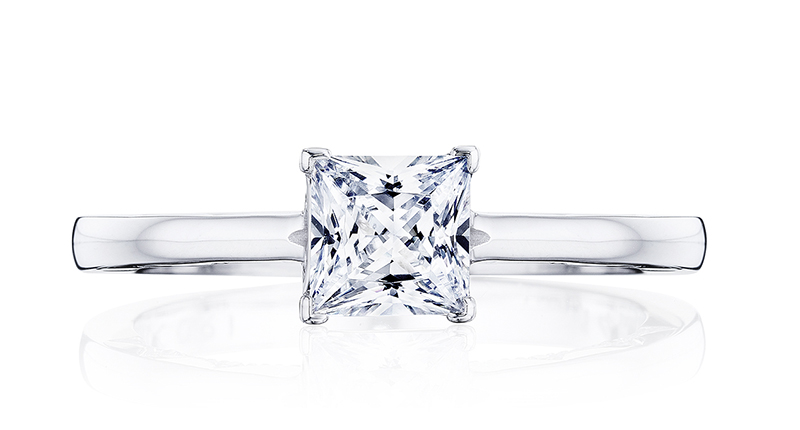
New York—Couples are spending about 7 to 9 percent less on their engagement rings than they did two years ago, data collected from multiple sources shows.
According to The Knot’s 2019 Jewelry & Engagement Study released last week, the national average spend on an engagement ring in the United States stands at $5,900.
By region, the average cost is: $7,500 in the Mid-Atlantic states; $6,900 in New England; $5,600 in the Southwest; $5,500 in the West; $5,400 in the Southeast; and $5,300 in the Midwest.
The figures released by The Knot in its report—which comes out every two years and is the company’s deep-dive into engagements and the jewelry that accompanies them—consistently come in above the averages documented by industry sources.
Analyst Edahn Golan said his data, which is collected from hundreds of stores across the United States that vary by geography, size, type and positioning, shows the average expenditure on diamond engagement rings today is about $3,200.
Golan’s figure is on par with that of De Beers Group, which has U.S. engagement ring expenditure averaging $3,400 in its latest Diamond Insight Report, released last week.
While The Knot’s number comes in above the figures provided by Golan and De Beers, all three data sets show spending on engagement rings going in the same direction: down.
The Knot’s $5,900 average is down 7 percent from $6,351 in 2017, the last time it conducted its jewelry and engagement study.
Golan’s $3,200 figure represents a nearly 9 percent decline from the $3,500 he said couples were spending just a couple years ago.
And De Beers’ average has dropped too, from $3,700 in 2013 to $3,400 in 2017.
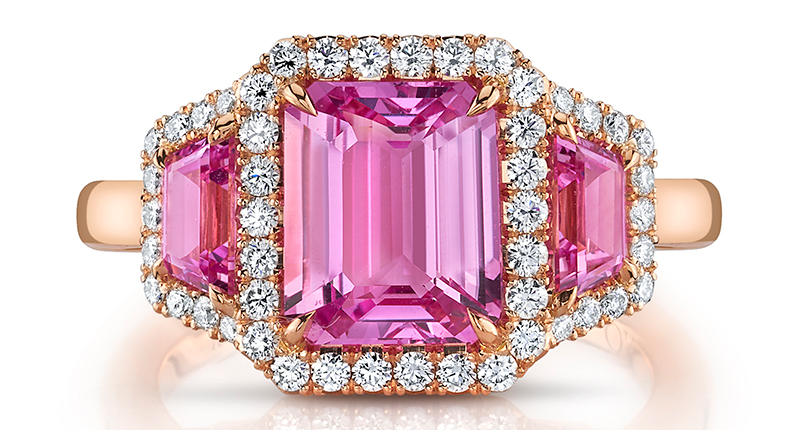
Golan said the primary driver behind the decline in engagement ring expenditure is the shift to smaller center stones, which is part of a wider change in taste and fashion. Many consumers today are opting for daintier styles in engagement rings (as well as in jewelry in general) even if cost is not an issue for them.
“This is the larger driver [of the trend],” he said. “Economic drivers are there too, but they are largely secondary.”
The Knot saw the same when conducting its jewelry study, with the size of the stone declining in importance when compared to the piece’s cost and overall quality.
Worldwide Senior Director of Insights Lauren Goodson said when The Knot asked couples which engagement ring features are most

RELATED CONTENT: Propose Too: A Platform That Wants Women to Pop the Question— Right after they get engaged, a whopping 92 percent of happy couples take to social media to share the news (and, presumably, the ring). Three-quarters of survey-takers said they call family and friends and 72 percent send them photos of the ring.

The guard opened fire on a man who was smashing a jewelry display case at La Gran Plaza in Fort Worth last week, police said.
The Texas jeweler added 2,000 square feet to its reimagined showroom, complete with a new design studio and an event space.
Jacob & Co.'s diamond masterpiece is the most expensive Fantasy Bra ever worn on the Victoria’s Secret Fashion Show runway.
Built on Relationships. Refined by Craft.


The “Atelier” collection was inspired by the tools, rituals, and objects in an artist’s studio as a quiet rebuttal to an automated world.

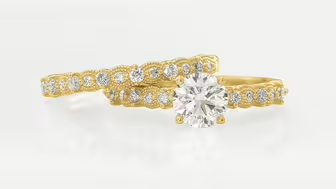
The pending acquisition is an “exciting opportunity” for wedding vendors to grow their business, said The Knot Worldwide’s CEO.

"The Secret Gems" features eight Thai jewelry brands paired with a team of young craftspeople who create jewelry together to win challenges.

Experience gemstones with greater precision and comfort than ever before.


The brand’s “Modern Talisman” capsule collection introduces pendants inspired by the mythology, natural world, and spiritual ethos of Bali.
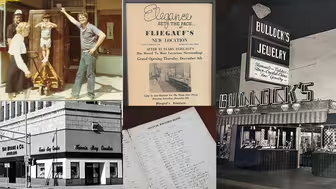
Independent jewelers from New Mexico to New Jersey answer the question: What has kept your store in business for 100 years?
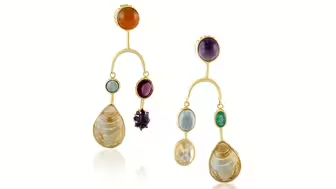
Our Piece of the Week gathers the planets, represented by a variety of colored gemstones, in a pair of 14-karat yellow gold earrings.
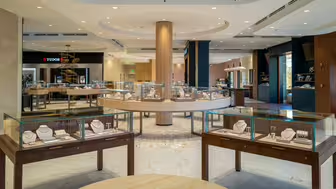
The New York-based jeweler is moving its Amherst flagship store to a larger location in nearby Snyder.

Chen, who worked at Cartier and Tiffany & Co., will lead retail sales and operations for the luxury jeweler’s 11 U.S. stores.
For 40 years, sisters Amy and Elise Greenberg have helmed their 126-year-old family business, leading with appreciation and integrity.
It’s a term Smith coined and felt compelled to share following a bad experience with an aborted flight and an unfeeling flight attendant.
Movado teamed up with the New York-based fine jewelry designer on a new collection of Movado Museum Velura watches.
The two companies are reportedly in talks to join the Global Diamond Consortium, led by former De Beers CEO Gareth Penny, as per Bloomberg.
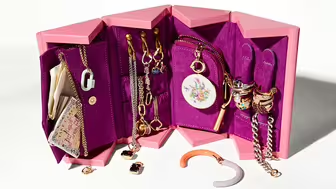
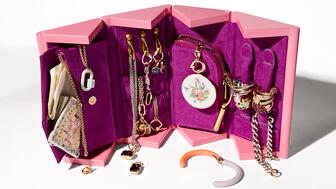
The “Some of the Things” box follows the two larger “Everything” box designs with the look and function of antique sewing and toolboxes.
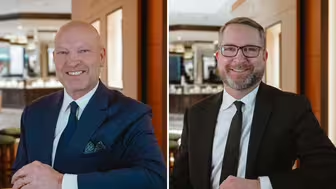
Fourth-generation jewelers Coleman and Mitchell Clark exemplify the best qualities of their predecessors: humility, modesty, and confidence.
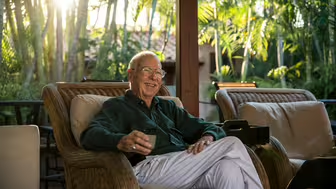
The gem hunter, whose 70-year career was defined by adventure and exploration, is remembered for his steadfast faith and sense of wonder.
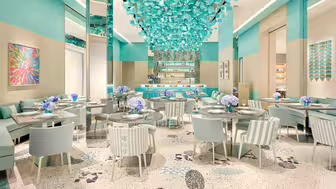
Tiffany & Co. continued its full-scale store renovation project while Bulgari’s high jewelry collection generated “record-breaking revenue.”
This year’s sessions feature leading voices from human rights, legal, and conservation organizations.

The high-end jewelry retailer was sold to private investment firm Middle West Partners and a group of longtime clients.
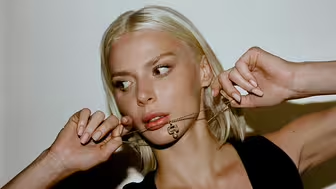
The jewelry designer has partnered with Sofer Jewelry to distribute her 85-piece lab-grown diamond collection.

Dunn, this year’s Single-Store Independent inductee, is passionate about innovation and telling the story of natural diamonds.

The 24-carat fancy intense pink diamond ring could fetch up to $18 million at the November sale.

The “Island Jewel” candle honors New York City and Puerto Rico and raises money for the island’s water relief efforts.



This site uses cookies to give you the best online experience. By continuing to use & browse this site, we assume you agree to our Privacy Policy