









TechnologyApr 24, 2026
TwentyFour’s Digital-Age Locket Is a Virtual VaultTechnologyMay 01, 2026
Gemist, Saban Onyx Partner on Retailer-Focused Customization Offering
Their partnership combines Gemist’s customization technology with Saban Onyx’s U.S.-based manufacturing capabilities.


Gemist and Saban Onyx have partnered on a new service they say is a “full-on, A-to-Z solution for any retailer that wants to sell custom.” Demos will be available at the Saban Onyx booth (#10065) at JCK Las Vegas.
Los Angeles—Jewelry technology platform Gemist has partnered with manufacturer Saban Onyx on a jewelry customization platform for retailers.
The platform combines Gemist’s propriety customer-facing jewelry customization experience, which is integrated into the retailer’s website, with Saban Onyx’s U.S.-based manufacturing capabilities.
“When it comes to custom, retailers can not only have these awesome user experiences—all the visuals are beautiful, the pricing is dynamic—but then they also can easily place an order with Saban Onyx, and they have a really fast turnaround time,” Gemist founder and CEO Madeline Fraser said in an interview with National Jeweler.
Saban Onyx, which has a factory in New York City with more than 80 employees, brings personalized service, including complimentary CAD designs and 360-degree videos, to every order.
There are no minimums, no additional fees for small or custom orders, and the turnaround time is approximately 14 business days.
“This partnership represents the future of fine jewelry retail, where technology and craftsmanship work hand in hand,” Saban Onyx President Meir Saban said in a press release announcing the partnership.
“Our team is built to deliver flexibility, quality, and speed. Combined with Gemist’s platform, we’re enabling retailers to offer a truly differentiated custom experience, without the traditional limitations.”
Gemist said the partnership allows retailers to offer fully customizable collections without holding inventory, while their customers can explore options and make decisions quicker, driving higher conversion rates and average order values.
“Customization is no longer optional, it’s expected. Yet many retailers are still relying on manual processes that cost time, margin, and ultimately, customers,” Fraser said in the release.
“Our platform solves that by enabling a fully digital, highly visual experience where consumers can design in real time, understand pricing instantly, and either purchase online or walk into a store nearly ready to purchase. We power the technology layer, while Saban Onyx brings exceptional craftsmanship as our first manufacturing partner.”
Related stories will be right here …
The platform combines Gemist’s propriety customer-facing jewelry customization experience, which is integrated into the retailer’s website, with Saban Onyx’s U.S.-based manufacturing capabilities.
“When it comes to custom, retailers can not only have these awesome user experiences—all the visuals are beautiful, the pricing is dynamic—but then they also can easily place an order with Saban Onyx, and they have a really fast turnaround time,” Gemist founder and CEO Madeline Fraser said in an interview with National Jeweler.
Saban Onyx, which has a factory in New York City with more than 80 employees, brings personalized service, including complimentary CAD designs and 360-degree videos, to every order.
There are no minimums, no additional fees for small or custom orders, and the turnaround time is approximately 14 business days.
“This partnership represents the future of fine jewelry retail, where technology and craftsmanship work hand in hand,” Saban Onyx President Meir Saban said in a press release announcing the partnership.
“Our team is built to deliver flexibility, quality, and speed. Combined with Gemist’s platform, we’re enabling retailers to offer a truly differentiated custom experience, without the traditional limitations.”
Gemist said the partnership allows retailers to offer fully customizable collections without holding inventory, while their customers can explore options and make decisions quicker, driving higher conversion rates and average order values.
“Customization is no longer optional, it’s expected. Yet many retailers are still relying on manual processes that cost time, margin, and ultimately, customers,” Fraser said in the release.
“Our platform solves that by enabling a fully digital, highly visual experience where consumers can design in real time, understand pricing instantly, and either purchase online or walk into a store nearly ready to purchase. We power the technology layer, while Saban Onyx brings exceptional craftsmanship as our first manufacturing partner.”
The partnership with Saban Onyx is an expansion of Gemist’s visualization and customization technology for designer brands, which the company introduced when it broke into the jewelry industry a few years ago.
“They [jewelry designers] were bringing us their designs,” Fraser explained in the interview. “It’s their inventory, their designs; they were giving us their CADs. We were building out the ‘Designer’ experience with their jewelry.”
Save for the occasional bespoke customer, custom work for most retailers lies in the arena of what Fraser described as “minor swaps,” like changing the metal or the center stone.
“The majority of their revenue and the majority of things they are CAD-ing all the time and tweaking are completely repeatable, because they are classic styles,” she said.
She realized the Gemist experience could be adapted for retailers, but she needed a partner on the manufacturing side to make the jewelry.
“We’re taking these features and putting white-label jewelry behind them,” she said.
The new platform retains the same look as the brand-focused tool but is built for classic styles.
It is launching with a focus on bridal, including engagement rings and eternity bands.
It includes the “Designer” experience, complete with real-time photorealistic 3D renders, 360-degree views and on-model visualization, as well as access to more than 2,000 customizable designs.
Retailers can curate the assortments, pricing, and diamond or gemstone feeds within the tool, Fraser said, creating white-label lines that reflect their store’s brand.
The platform is compatible with Shopify and other e-commerce platforms.
On the consumer side, customers have access to education at every step, and can save and share designs, order immediately or book an appointment to complete their purchase in-store, Fraser said.
Other features include the “Stack Studio,” which lets consumers see what their engagement ring will look like with different wedding bands, and the “Stone Marketplace,” which allows for live gemstone inventory integration with preferred stone vendors and/or existing retailer inventory.
Subscriptions to the platform start at $299 per month, depending on selected categories and features.
For both engagement rings and eternity brands, it is $449 per month.
Fraser said the platform is designed to expand beyond bridal, with additional categories, including fashion and stackable jewelry, planned for rollout with Saban Onyx and other manufacturing partners.
To explore Gemist’s platform or schedule a demo, visit the company’s website or contact hello@gemist.io.
To see the technology in person, visit Gemist at the Saban Onyx booth (#10065) at JCK Las Vegas, May 29 to June 1 at the Venetian Expo.
Appointments can be scheduled here.
Editors' Picks
Sponsored by


More on Technology


The Latest

SurveysOct 09, 2026
These Will Be the 10 Busiest Days for In-Store Shopping This Holiday SeasonStores should expect to see the most customers on Nov. 27, and Christmas week is expected to be hectic too, as Dec. 25 falls on a Friday.


CollectionsOct 09, 2026
Elisa Solomon Collabs With Serendipity 3 on ‘Frozen Hot Chocolate’ CharmThe charm, our Piece of the Week, features brown diamond frozen hot chocolate topped with white diamond whipped cream and a ruby straw.


AuctionsOct 09, 2026
8-Carat Blue Diamond Goes Unsold at UK Jewelry Auction The top lot of Elmwood’s recent fine jewelry sale in London was a 1.84-carat, D color Tiffany & Co. solitaire diamond ring.

Brought to you by
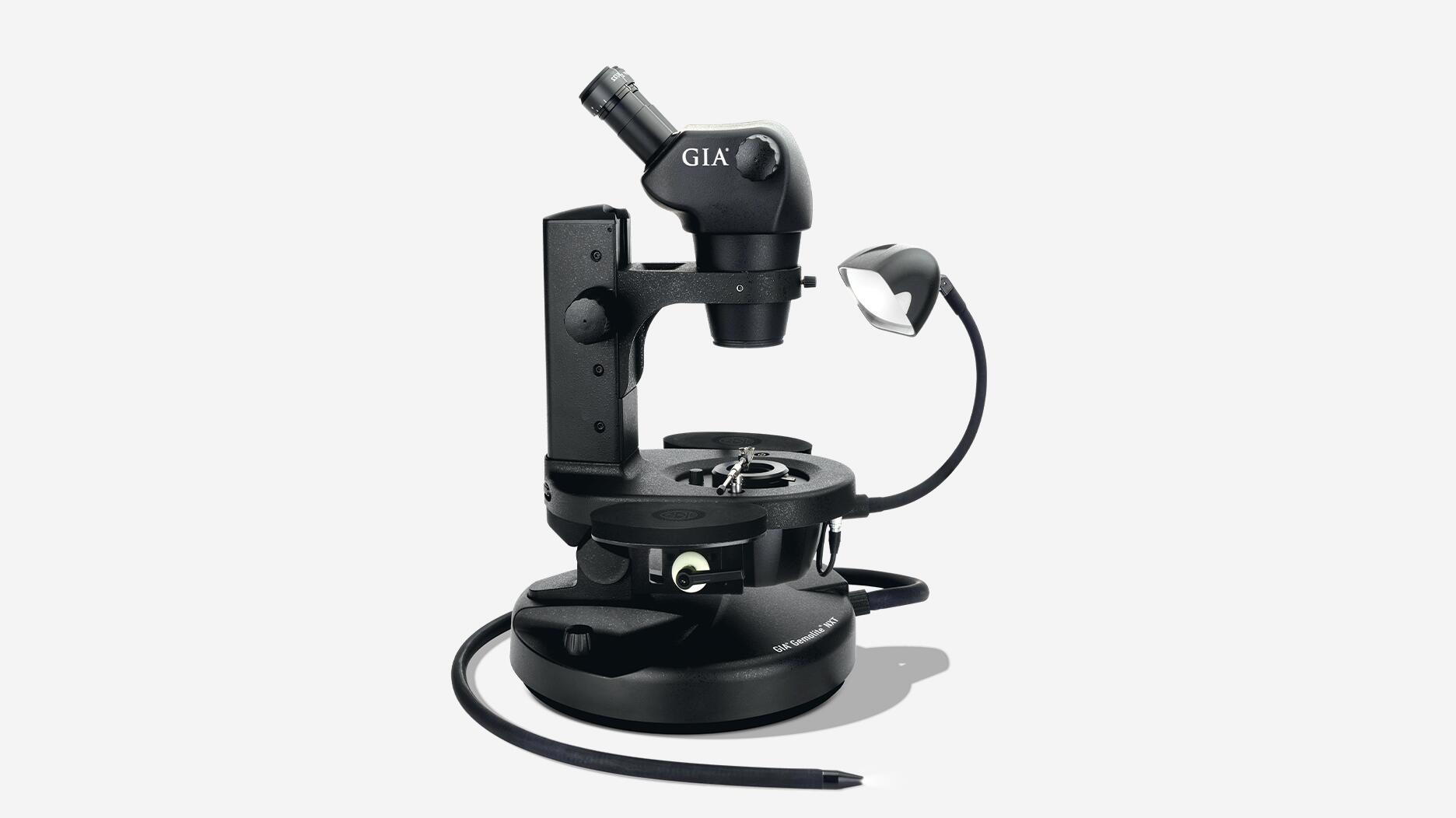
Meet Gemology’s Next Generation Microscope: GIA® Gemolite® NXT Professional EditionExperience gemstones with greater precision and comfort than ever before.


WatchesOct 09, 2026
Movado to Sell Majority Stake in Ebel for $66.5MThe watch company agreed to sell a 95 percent interest to a group comprised of F.P. Journe, Chanel, and Swiss watch exec Pierre Jacques.

Weekly QuizOct 08, 2026
This Week’s QuizTest your jewelry news knowledge by answering these questions.


Policies & IssuesOct 08, 2026
Third Wave of IEEPA Tariff Refunds Begins This round of tariff refunds is for importers that have sued over IEEPA tariffs in the Court of International Trade and won.

CollectionsOct 08, 2026
Brent Neale’s New Collection Goes ‘Back to Basics’It revisits the brand’s most requested silhouettes, from "Pillow"-set necklaces and bracelets to "Signature"-set rings and earrings.
Brought to you by
Your Piece Could Be the One Editors Talk AboutSubmit your pieces for a chance to win in this year's competition.


SourcingOct 08, 2026
Ethical Gem Fair Heads Back to BrooklynThe trade-only event includes buying opportunities as well as educational sessions on artisanal mining, the new Paraíba source, and more.

Events & AwardsOct 08, 2026
Pattons Fine Jewelry Sweeps Local Design ContestAra Chanakian, a jeweler at Pattons, took home top honors in every category at Jewelers of Louisiana’s annual jewelry design competition.

AuctionsOct 08, 2026
Reba McEntire’s Jewelry, Watches Head to Julien’s AuctionsThe live charity benefit sale in Nashville will also feature gowns, boots, and other memorabilia from the country music legend.


Supplier BulletinOct 08, 2026
Overnight Mountings’ Bridal Builder Helps Jewelers Turn Custom Design into a Hands-On Selling ExperienceSponsored by Overnight Mountings

Policies & IssuesOct 07, 2026
The Plumb Club Amplifies Its Voice as Geopolitical Pressures MountThe supplier organization recently joined JA and JVC to have more input on political issues affecting the jewelry industry.

CollectionsOct 07, 2026
Blue Nile, Royal Asscher Collection Highlights Natural Diamond BeautyBlue Nile, a Signet Jewelers-owned brand, is now Royal Asscher’s exclusive licensed retailer in North America.

CollectionsOct 07, 2026
4 Standout Pieces in Audemars Piguet’s First High Jewelry Collection “Royal Oak” pays homage to the brand’s most popular watch model using 18-karat gold as well as diamonds, emeralds, and sapphires.

MajorsOct 07, 2026
Empire Safe & Vault Promotes Juan Morales to CEOAs part of the transition, Joseph Nicosia has stepped into the role of COO.

SourcingOct 07, 2026
AGTA Extends Deadline for 2026 Spectrum Awards EntriesParticipants now have until Oct. 14 to complete their submissions.

CrimeOct 06, 2026
6 Charged in Connection to String of New Jersey Smash-and-GrabsThe alleged thieves used crow bars and sledgehammers to smash into jewelry stores across the state.

ColumnistsOct 06, 2026
Sherry Smith: Is the Consumer Really Trading Up?Ahead of the holidays, Smith urges jewelers to take a hard look at who’s buying jewelry, what they’re purchasing, and who’s stopped buying.


SourcingOct 06, 2026
DDG Taps Influencers for ‘My Diamond Does Good’ CampaignIn the new consumer-facing campaign, four fashion and lifestyle creators share the stories behind their natural diamond pieces.

MajorsOct 06, 2026
Frederick Goldman Names COO, CMOFGI President John Orrico is also leaving the company after more than 13 years.

Events & AwardsOct 06, 2026
JIS Fall Returns to MiamiThe 2026 edition will feature presentations on alternative materials and design trends, as well as pop-up activations on the show floor.

SourcingOct 05, 2026
De Beers to Take Full Ownership of Gahcho KuéIt is the last fully operational diamond mine in Canada following the recent closures of Ekati and Diavik.

AuctionsOct 05, 2026
The Star Cats of the Sandy Lerner AuctionThese jewels stood out at Bonhams’ sale of the cat-loving tech entrepreneur’s collection of objects depicting the feline form.

CollectionsOct 05, 2026
Sorellina Writes Another Love Letter for ‘Postscript’ CollectionThe fine jewelry brand has expanded the collection that debuted at Couture with four new designs based on its most popular styles.

SourcingOct 05, 2026
Bruce Bridges Joins CIBJO BoardThe AGTA president was elected for a two-year term on the board of directors.

SourcingOct 02, 2026
De Beers, National Geographic Society Renew Okavango Eternal Partnership The partnership, a pledge to protect Africa’s Okavango River Basin, has been extended for an additional five years.