







Policies & IssuesFeb 01, 2022
OSHA Withdraws ‘Vaccine or Testing’ MandatePolicies & IssuesFeb 02, 2022
Jewelers Using Payment Apps Should Know This New Tax Rule
For tax year 2022, the IRS has substantially lowered the threshold for receiving a 1099-K for business transactions made via payment apps.


A new tax reporting rule requires payment app providers to issue a 1099-K if business transactions total more than $600 per year.
New York—Jewelers, designers and service providers using payment apps like Venmo or PayPal should make note of a recent change to a tax reporting rule.
A new IRS tax reporting rule, effective as of Jan. 1, requires payment app providers to issue users and the IRS a form 1099-K if the user’s business transactions total more than $600 per year.
Previously, payment app providers would need to send a 1099-K only if a user had more than 200 business transactions in a year that totaled at least $20,000.
A business transaction means any payment, including tips, for goods and services.
The rule applies to purchases made via a payment app both in store and online, like through Instagram, eBay, Etsy, or any other selling platform.
The rule does not apply to personal transactions, like splitting dinner with a friend or sending birthday money.
App users won’t pay any additional taxes for purchasing goods or services.
Related stories will be right here …
A new IRS tax reporting rule, effective as of Jan. 1, requires payment app providers to issue users and the IRS a form 1099-K if the user’s business transactions total more than $600 per year.
Previously, payment app providers would need to send a 1099-K only if a user had more than 200 business transactions in a year that totaled at least $20,000.
A business transaction means any payment, including tips, for goods and services.
The rule applies to purchases made via a payment app both in store and online, like through Instagram, eBay, Etsy, or any other selling platform.
The rule does not apply to personal transactions, like splitting dinner with a friend or sending birthday money.
App users won’t pay any additional taxes for purchasing goods or services.
The change was signed into law last year as part of the American Rescue Plan, the $1.9 trillion stimulus bill passed, in part, to provide COVID-19 relief, but it also amended parts of the Internal Revenue Code.
The law will apply to tax year 2022, so those eligible for these 1099-Ks will receive them starting in 2023.
The reporting requirement is new, but the tax isn’t.
For this year, individuals are still required to report taxable income received through these platforms on their income tax return.
“Third-party information reporting has been shown to increase voluntary tax compliance and improve collections and assessments within [the] IRS,” said the agency in the FAQ section of its website about the change.
Payment providers like Cash App, PayPal, and Venmo have added updated guidance to their websites.

Payment app Venmo allows users to tag goods and services purchases in its app.

Venmo customers may receive an in-app notification or an email about confirming information for tax purposes.
For example, PayPal and its subsidiary Venmo offer an option for customers to tag their transactions as either a personal one or as a goods and services purchase.
Users are encouraged to select “goods and services” when they are sending someone money to purchase an item. Doing so also makes these transactions eligible for coverage under PayPal and Venmo’s purchase protection program.
In its FAQ section, Venmo noted that customers may receive an in-app notification or email asking them to confirm information they use when filing taxes, like a social security number and address.
Venmo noted that some amounts may be excluded from gross income, and therefore not subject to income tax, like if a user sells a personal item at a loss.
“We encourage customers to speak with a tax professional when reviewing their 1099-K forms to determine whether specific amounts are classified as taxable income,” said Venmo in a statement on its website.
Notably, payments for a good or service made via Zelle, which sends money between U.S. bank accounts, are not subject to this reporting rule.
Zelle would not need to provide a 1099-K because while it facilitates the sending of money between financial institutions, it doesn’t hold that money or participate in settling the funds.
The change to the reporting rule follows the announcement of a plan from the U.S. Treasury to close the “tax gap,” meaning the difference between what the government is owed and what it receives in taxes.
The American Families Plan Tax Compliance agenda, announced in May 2021, aims to raise an additional $700 billion over the next decade through new tax compliance measures.
“These unpaid taxes come at a cost to American households and compliant taxpayers as policymakers choose rising deficits, lower spending on necessary priorities, or further tax increases to compensate for the lost revenue,” said the department in its plan.
The treasury found the tax gap was nearly $600 billion in 2019.
“Working to close the tax gap reflects a commitment to ending our two-tiered tax system, one where most American workers pay their full obligations, but high earners who accrue income from opaque sources often do not,” said the treasury.
For more information about changes to tax reporting rules and the 1099-K form, visit the IRS website.
Users are encouraged to select “goods and services” when they are sending someone money to purchase an item. Doing so also makes these transactions eligible for coverage under PayPal and Venmo’s purchase protection program.
In its FAQ section, Venmo noted that customers may receive an in-app notification or email asking them to confirm information they use when filing taxes, like a social security number and address.
Venmo noted that some amounts may be excluded from gross income, and therefore not subject to income tax, like if a user sells a personal item at a loss.
“We encourage customers to speak with a tax professional when reviewing their 1099-K forms to determine whether specific amounts are classified as taxable income,” said Venmo in a statement on its website.
Notably, payments for a good or service made via Zelle, which sends money between U.S. bank accounts, are not subject to this reporting rule.
Zelle would not need to provide a 1099-K because while it facilitates the sending of money between financial institutions, it doesn’t hold that money or participate in settling the funds.
The change to the reporting rule follows the announcement of a plan from the U.S. Treasury to close the “tax gap,” meaning the difference between what the government is owed and what it receives in taxes.
The American Families Plan Tax Compliance agenda, announced in May 2021, aims to raise an additional $700 billion over the next decade through new tax compliance measures.
“These unpaid taxes come at a cost to American households and compliant taxpayers as policymakers choose rising deficits, lower spending on necessary priorities, or further tax increases to compensate for the lost revenue,” said the department in its plan.
The treasury found the tax gap was nearly $600 billion in 2019.
“Working to close the tax gap reflects a commitment to ending our two-tiered tax system, one where most American workers pay their full obligations, but high earners who accrue income from opaque sources often do not,” said the treasury.
For more information about changes to tax reporting rules and the 1099-K form, visit the IRS website.

More on Policies & Issues


The Latest

SourcingOct 27, 2026
De Beers Celebrates the Holidays With New ‘Desert Diamonds’ CampaignThe “Icons” holiday campaign spotlights four classic diamond jewelry styles reimagined in “Desert Diamond” tones.


IndependentsOct 27, 2026
Solomon Brothers Acquires Mervis Diamond ImportersSolomon Brothers, which has three stores in the Metro Atlanta area, said it may continue to acquire other independent jewelers.

IndependentsOct 27, 2026
Gabriel & Co. Supports Charity Partner DKMS With Gala, New JewelsThe fine jewelry brand raised $2.3 million at its annual gala that supports the nonprofit’s fight against blood cancer and blood disorders.

Brought to you by
A Diamond Is Forever Launches 2026 Holiday Campaign Championing Natural DiamondsA Diamond Is Forever's holiday campaign reimagines natural diamond icons for a new generation celebrating individuality.


Events & AwardsOct 27, 2026
JFC Announces 2027 ‘Facets’ HonoreesThe annual fundraising event is slated for June 6, 2027, at The Venetian Resort in Las Vegas.
Weekly QuizOct 22, 2026
This Week’s QuizTest your jewelry news knowledge by answering these questions.


CollectionsOct 26, 2026
Bliss Lau’s ‘Vantage’ Point Is the Hawaiian HorizonIn her “Vantage” collection, Lau explores heritage, identity, and inner strength through designs featuring blue-green Guatemalan jade.

MajorsOct 26, 2026
Tiffany & Co. Takes Consumers Behind the ScenesThe jeweler gave the public backstage tours of its flagship store and its design and innovation workshop as part of LVMH’s open house.


Brought to you by
Open an Account, Get $50 Off Your First Order. No Code Needed.Built on Relationships. Refined by Craft.


Events & AwardsOct 26, 2026
Support JFC’s ‘Monster Mash Challenge,’ If You DareVote for which jewelry professional should dress up as a monster to support Jewelers for Children’s annual Halloween fundraiser.

MajorsOct 23, 2026
PGI USA Set to Close at Year’s EndThe closure is part of a global restructuring that also includes PGI winding down its operations in Japan, South Korea, and Hong Kong.

SourcingOct 23, 2026
Rachel Chalchinsky’s ‘Survivor Tribute’ RingThe ring, our Piece of the Week, was designed by eight-year breast cancer survivor Rachel Chalchinsky of Color Source Gems.

TechnologyOct 23, 2026
JA Unveils New Website, LogoThe website offers enhanced member benefit access, industry directories, educational resources, a job board, and access to the MJSA Journal.


FinancialsOct 23, 2026
Kering’s Jewelry Sales Up Double Digits in Q3Boucheron and Pomellato had a strong third quarter, with Kering looking at jewelry as an increasingly important part of its portfolio.

CrimeOct 22, 2026
Jeweler Shot and Killed in His Suburban Cincinnati Store Tara Sinchuri was the owner of Everest Jewels in Fairfield, Ohio, and a father of three. He was found dead in his store on Tuesday.

MajorsOct 22, 2026
Neiman Marcus Has Gifts for the Jewelry Lover Who Has EverythingBespoke experiences from Buccellati and Verdura are on the retailer’s 2026 “Fantasy Gifts” list.

Events & AwardsOct 22, 2026
JIS Fall 2026 Reports Record-Breaking Attendance The number of participants at the fall show was up 12 percent.

CollectionsOct 22, 2026
Billie Eilish, Finneas Co-Design Collection for John HardyThe Academy and Grammy award-winning siblings have collaborated with John Hardy on a new jewelry line inspired by their personal style.


PodcastsOct 21, 2026
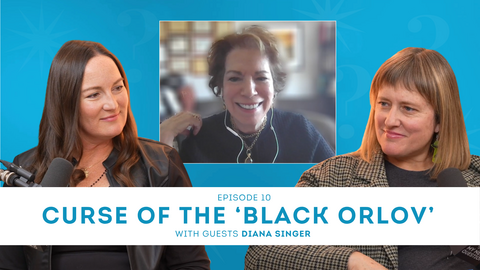
Episode 10: This Episode Is Haunted Diana Singer shared the stories of two “cursed” diamonds on this month’s podcast, which was inexplicably riddled with technical issues.


IndependentsOct 21, 2026
Gardner-Collier Jewelry to Close After 9 Decades in BusinessThe family-owned jeweler has three locations across Missouri and Iowa.

SourcingOct 21, 2026
Venetia Mines Final Carats Ahead of 2-Year ShutdownThe De Beers-owned diamond mine in South Africa is being put on ice as part of a round of previously announced cost-cutting measures.

CollectionsOct 21, 2026
Helzberg, Nordstrom Carrying New Jewelry Collection From Off-WhiteThe collection centers designs with clean geometric lines, chunky sculptural pieces, and recognizable details from the luxury fashion brand.

SourcingOct 21, 2026
Gemfields’ Mixed-Quality Ruby Auction Earns $52MThe miner said it saw particularly strong prices for larger, fine-quality rubies at the sale.

CrimeOct 20, 2026
Security Guard Charged With Murder in Shooting at Texas MallThe guard opened fire on a man who was smashing a jewelry display case at La Gran Plaza in Fort Worth last week, police said.

IndependentsOct 20, 2026
David Gardner’s Jewelers Unveils Newly Expanded, Revamped ShowroomThe Texas jeweler added 2,000 square feet to its reimagined showroom, complete with a new design studio and an event space.

SourcingOct 20, 2026
The $50M Victoria’s Secret ‘Fantasy Bra’ By The NumbersJacob & Co.'s diamond masterpiece is the most expensive Fantasy Bra ever worn on the Victoria’s Secret Fashion Show runway.

CollectionsOct 20, 2026
Mignon Faget’s Collection Chooses Handmade Over AIThe “Atelier” collection was inspired by the tools, rituals, and objects in an artist’s studio as a quiet rebuttal to an automated world.

MajorsOct 19, 2026
The Knot to Acquire Rival Wedding Planning Platform ZolaThe pending acquisition is an “exciting opportunity” for wedding vendors to grow their business, said The Knot Worldwide’s CEO.