





Events & AwardsAug 20, 2026
MJSA Education Foundation Names 5 Scholarship WinnersThe five students were awarded a total of $10,000 through the nonprofit’s 2026 “Future of Jewelry Making” scholarship.


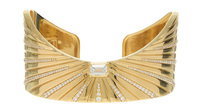


In this age of extremely casual dress, what the jewelry industry needs is for the big retailers to step up and create an advertising campaign showing people wearing their diamond jewelry with blue jeans, jeweler and columnist Jim Alperin writes.

The fact that the diamond business is going through a difficult period is no longer a surprise to any of us in the jewelry business. Prices have fallen, businesses are closing and others are just “getting by” instead of thriving.

Then, of course, there is the electronic revolution. A family of four would rather go out and buy a new big-screen TV for the entire family to enjoy or a new computer or “i-device” than buy Mom a ring that only she will wear, and the rest of the family only get to look at on her hand. It’s been said that today, jeweler’s biggest competition isn’t from other jewelers but from electronics.
But the one factor that I feel is taking more money out of our business than any other is not the economy or the electronic revolution, but the fact that our society has become extremely casual.
I can remember when I was young. I’m giving away my age here, but when my mother went downtown she wore white gloves. Today, of course, sweatsuits and athletic shoes can be seen in every office doorway during cigarette breaks.
You don’t need a diamond ring or sapphire pendant to have a cigarette with your work pals. It’s everywhere--you can wear blue jeans to almost any fine restaurant today and, frankly, while I’m writing this I’m wearing them. So where do we go from here to counter the trend?
The old saying goes, “If you can’t beat them, join them.” What we need to do as an industry is make people want to wear fine jewelry with casual clothes.
The days of dressing up are gone, and they took wearing fine jewelry with them. A number of years ago, when De Beers still was mostly in control of the diamond industry, we had N.W. Ayer and the Diamond Promotion

Today we don’t have them to spend the millions of dollars that they once did to promote diamonds, but we do have their replacements. Now they need to be convinced to begin an advertising campaign promoting diamonds as casual wear. And who are “they?” They are the people who turned brown diamonds into “chocolate” and made a once undesirable, off-color diamond suddenly something that women across the country wanted--the majors.
The major retailers need to run an advertising campaign with young, attractive people who are casually dressed while drinking coffee, hanging out or doing other activities that the younger crowd enjoys while wearing fine jewelry. Jewelry has to become casual in order to survive and flourish with the next generation.
Wearing jewelry should be an everyday thing, not reserved just for occasions like a wedding or the holidays. The small independents don’t have the budget to push the world in that direction but could ride on the coattails of the majors if they began the campaign.
We need to make jewelry more democratic, something that has been happening in our industry for hundreds of years.
Once, only royalty and nobles could wear precious stones but as the merchant class became wealthier, they too began to want to own jewelry. The electronic age simply has sped up this ongoing process of democratization. If we are to keep up we need to begin a strong, industry-wide advertising campaign for wearing fine jewelry as a casual, daily accessory that matches today’s casual lifestyle.
Retailer Jim Alperin owns James Alperin Jewelers in Pepper Pike, Ohio. He can be reached at alpjewel@aol.com.

The five students were awarded a total of $10,000 through the nonprofit’s 2026 “Future of Jewelry Making” scholarship.


The industry veterans join the podcast to discuss diamond marketing, the FTC Jewelry Guides, and lobbying for lower tariffs.


Murphy will retire at the end of the year and Alexander, currently the company’s president, will take over at the start of 2027.
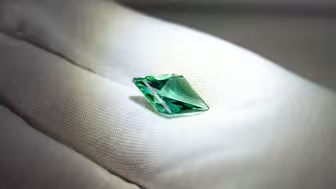
Submit your pieces for a chance to win in this year's competition.

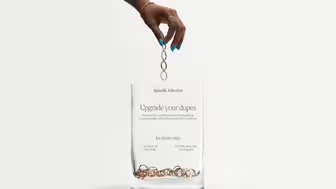

The jeweler is encouraging customers who own lookalike rings to come into the store and trade them for credit towards an authentic piece.

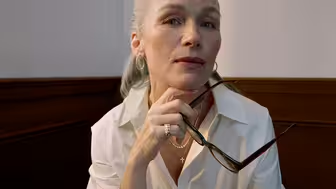
The new campaign, “You Are The Occasion,” discourages shoppers from saving their fine jewelry for special occasions only.

Mehta led India’s GJEPC through the 2008 financial crisis and was respected worldwide for his wisdom, integrity, and knowledge.

Retailers are seeking new ways to attract customers, increase traffic, and create revenue – Estate buying events are a popular solution.


One is the driver who allegedly crashed a car into a Sacramento jewelry store in April, striking a 71-year-old employee who later died.

In a new column, Peter Smith posits that people actually enjoy putting together IKEA furniture, and the same is true for engagement rings.

9lakha Jewelers in Iselin, New Jersey, was the target of a smash-and-grab robbery on Aug. 8.
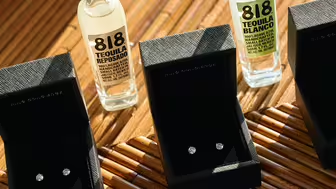
The jeweler has partnered with 818 Tequila to gift lab-grown diamond studs to a bride-to-be and their bridal party.
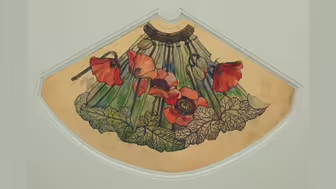
The exhibition will feature more than 100 drawings of stained-glass lampshades, windows, and more, many created by women and émigrés.
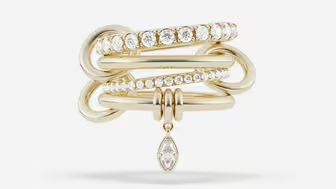
Marquise-cut diamonds in drop charms are the center of the new collection, reflecting the movement of a dancer in modular styles.

The inaugural Fort Lauderdale Jewelry, Antique, & Object Show will be held from Jan. 28 through Feb. 1, 2027.

The family-owned jeweler will open a new showroom in Bel Air, Maryland, this fall.

Amanda Ileana Hernandez is married to Carlos Hernandez, one of two men in prison for the 2024 murder of Michigan jeweler Hussein Murray.
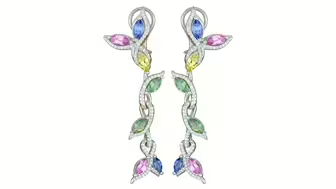
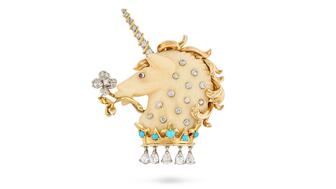
The reimagined jewel, our Piece of the Week, trades the diamonds in the original 1998 design for blue, pink, yellow, and green sapphires.
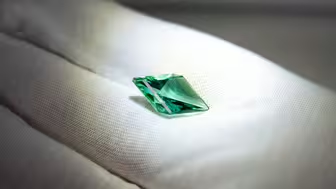
Sponsored by American Gem Trade Association
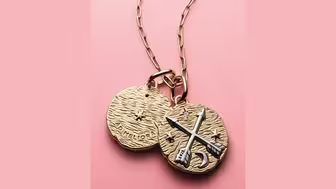
In the United States, second-quarter sales were flat amid soft consumer sentiment and lower in-store traffic.

The 22-karat gold egg, sold at Batemans Auctioneers in the U.K., was part of a 1980s treasure hunt ad campaign for Cadbury Creme Eggs.
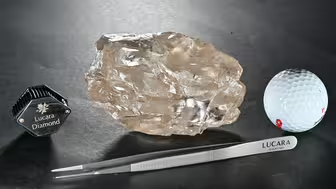
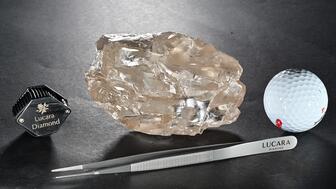
Lucara Diamond Corp., which recovered the “Motswedi” diamond from the Karowe mine, sold the stone for an undisclosed amount.

The expanded collections now feature hand-cut gemstones like topaz, tanzanite, chrysoprase, chalcedony, smoky quartz, and fire opal.

The lab-grown diamond jewelry brand’s newest boutique is in Westfield Valley Fair in Santa Clara, California.

The gemstone supplier and manufacturer acquired the remarkable 104-gram Zambian emerald at Gemfields’ auction in May.

Two suspects offered to trade the woman a “winning” lottery ticket for her jewelry.

Finsch has been in business rescue since May, and owner Petra Diamonds said it sees no viable path forward for the mine.



This site uses cookies to give you the best online experience. By continuing to use & browse this site, we assume you agree to our Privacy Policy