






PodcastsAug 20, 2026
Episode 8: Diamond Industry Update With David Bonaparte & Ronnie VanderLindenThe industry veterans join the podcast to discuss diamond marketing, the FTC Jewelry Guides, and lobbying for lower tariffs.





An article published in The Washington Post this week about how bars are dealing with the deluge of requests to charge patrons’ smartphones brings up the larger question of, when is it OK to say “no” to a customer?


On Tuesday, The Washington Post ran a story detailing how D.C.-area bars are dealing with the constant deluge of requests they get from customers to charge their smartphones.
The watering holes’ solutions ranged from installing more outlets and keeping a stock of left-behind chargers behind the bar for battery-challenged guests to making patrons who requested a plug-in wear a big striped top hat while their phones are charging. (Think The Cat in the Hat.)
Other bar owners are just refusing to do it because they, very understandably, don’t want to be responsible for replacing phones that get stolen or have liquor spilled on them. They also don’t want their bartenders to be distracted from their main job, the (very important) task of pouring drinks.
Now granted, a jewelry store is not the same as a bar. Though I could be wrong here, I can’t imagine that retailers get quite the same volume of requests to plug in their customers’ phones.
Still, the story does raise the interesting question of, how much consumers expect these days and how far should businesses, whether they be bars or jewelry stores, go in order to accommodate them and not lose a customer or a potential customer?
It is the very same question columnist Jim Alperin raised in his much-talked-about article we published earlier this week about not re-opening his store to replace a watch battery after-hours.
The Post’s story points out that the fact we live in a society where people can’t stand to be separated from the smartphones is nothing new.
What is changing are people’s expectations.
They assume that every place should be able to charge their smartphones anytime they need it; the article’s author even told of a friend who asked for, and received, a plug in from a CVS pharmacist.
When they don’t get what they want, consumers can be very impolite and will even take to review websites such as Yelp to blast a business for being rude, even though their request is beyond the scope of what the business is actually there to do and they themselves were not even polite in asking.
With that kind of power in consumers’ hands, is it ever OK to simply say “no” anymore? Where do you draw the line with customer requests?



The industry veterans join the podcast to discuss diamond marketing, the FTC Jewelry Guides, and lobbying for lower tariffs.
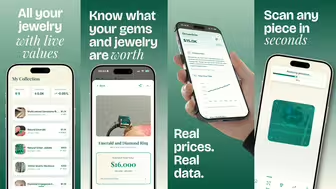
Founder Vik Westermann said the app is a “starting point” to inspire people to work with appraisers and gem labs, not replace them.
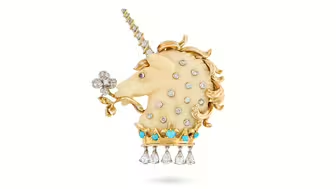
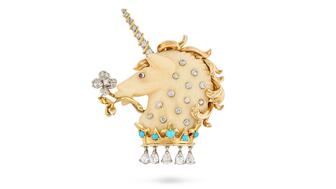
The Verdura brooch, which belonged to the late Virginia Fortune Ryan Ogilvy, was sold to a private collector in Asia.
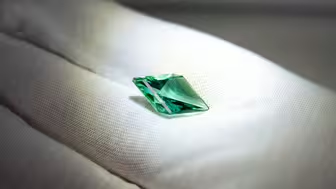
Submit your pieces for a chance to win in this year's competition.


The five students were awarded a total of $10,000 through the nonprofit’s 2026 “Future of Jewelry Making” scholarship.


Steven Lerche is now beginning his term as the youngest member to become president of The Plumb Club’s elected executive committee.

Murphy will retire at the end of the year and Alexander, currently the company’s president, will take over at the start of 2027.

Retailers are seeking new ways to attract customers, increase traffic, and create revenue – Estate buying events are a popular solution.



The jeweler is encouraging customers who own lookalike rings to come into the store and trade them for credit towards an authentic piece.
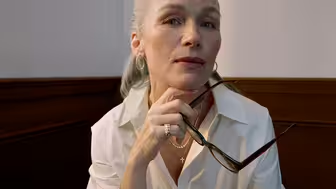
The new campaign, “You Are The Occasion,” discourages shoppers from saving their fine jewelry for special occasions only.

Mehta led India’s GJEPC through the 2008 financial crisis and was respected worldwide for his wisdom, integrity, and knowledge.

One is the driver who allegedly crashed a car into a Sacramento jewelry store in April, striking a 71-year-old employee who later died.

In a new column, Peter Smith posits that people actually enjoy putting together IKEA furniture, and the same is true for engagement rings.

9lakha Jewelers in Iselin, New Jersey, was the target of a smash-and-grab robbery on Aug. 8.
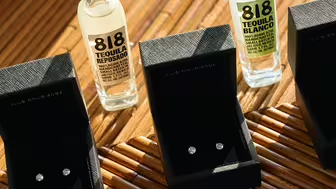
The jeweler has partnered with 818 Tequila to gift lab-grown diamond studs to a bride-to-be and their bridal party.

The exhibition will feature more than 100 drawings of stained-glass lampshades, windows, and more, many created by women and émigrés.
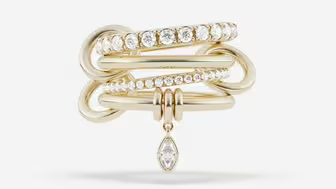
Marquise-cut diamonds in drop charms are the center of the new collection, reflecting the movement of a dancer in modular styles.

The inaugural Fort Lauderdale Jewelry, Antique, & Object Show will be held from Jan. 28 through Feb. 1, 2027.

The family-owned jeweler will open a new showroom in Bel Air, Maryland, this fall.

Amanda Ileana Hernandez is married to Carlos Hernandez, one of two men in prison for the 2024 murder of Michigan jeweler Hussein Murray.
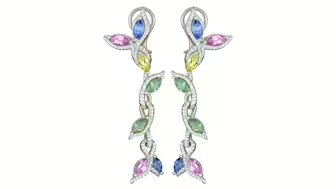
The reimagined jewel, our Piece of the Week, trades the diamonds in the original 1998 design for blue, pink, yellow, and green sapphires.
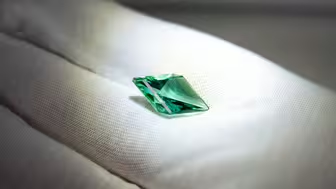
Sponsored by American Gem Trade Association
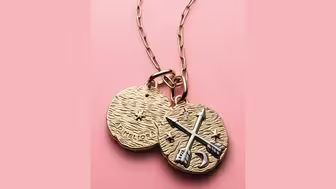
In the United States, second-quarter sales were flat amid soft consumer sentiment and lower in-store traffic.

The 22-karat gold egg, sold at Batemans Auctioneers in the U.K., was part of a 1980s treasure hunt ad campaign for Cadbury Creme Eggs.
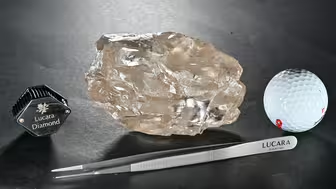
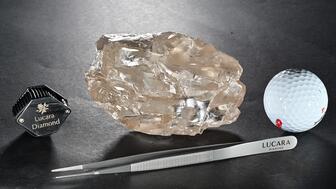
Lucara Diamond Corp., which recovered the “Motswedi” diamond from the Karowe mine, sold the stone for an undisclosed amount.

The expanded collections now feature hand-cut gemstones like topaz, tanzanite, chrysoprase, chalcedony, smoky quartz, and fire opal.

The lab-grown diamond jewelry brand’s newest boutique is in Westfield Valley Fair in Santa Clara, California.



This site uses cookies to give you the best online experience. By continuing to use & browse this site, we assume you agree to our Privacy Policy