






ColumnistsJul 14, 2026
Sherry Smith: What Today’s Jewelry Consumer Is Telling Us ColumnistsJul 21, 2026
Sherry Smith: Shattering the Illusion of the ‘Either/Or’ Diamond Market
Smith offers retailers guidance on creating an environment where natural and lab-grown diamonds can both thrive.


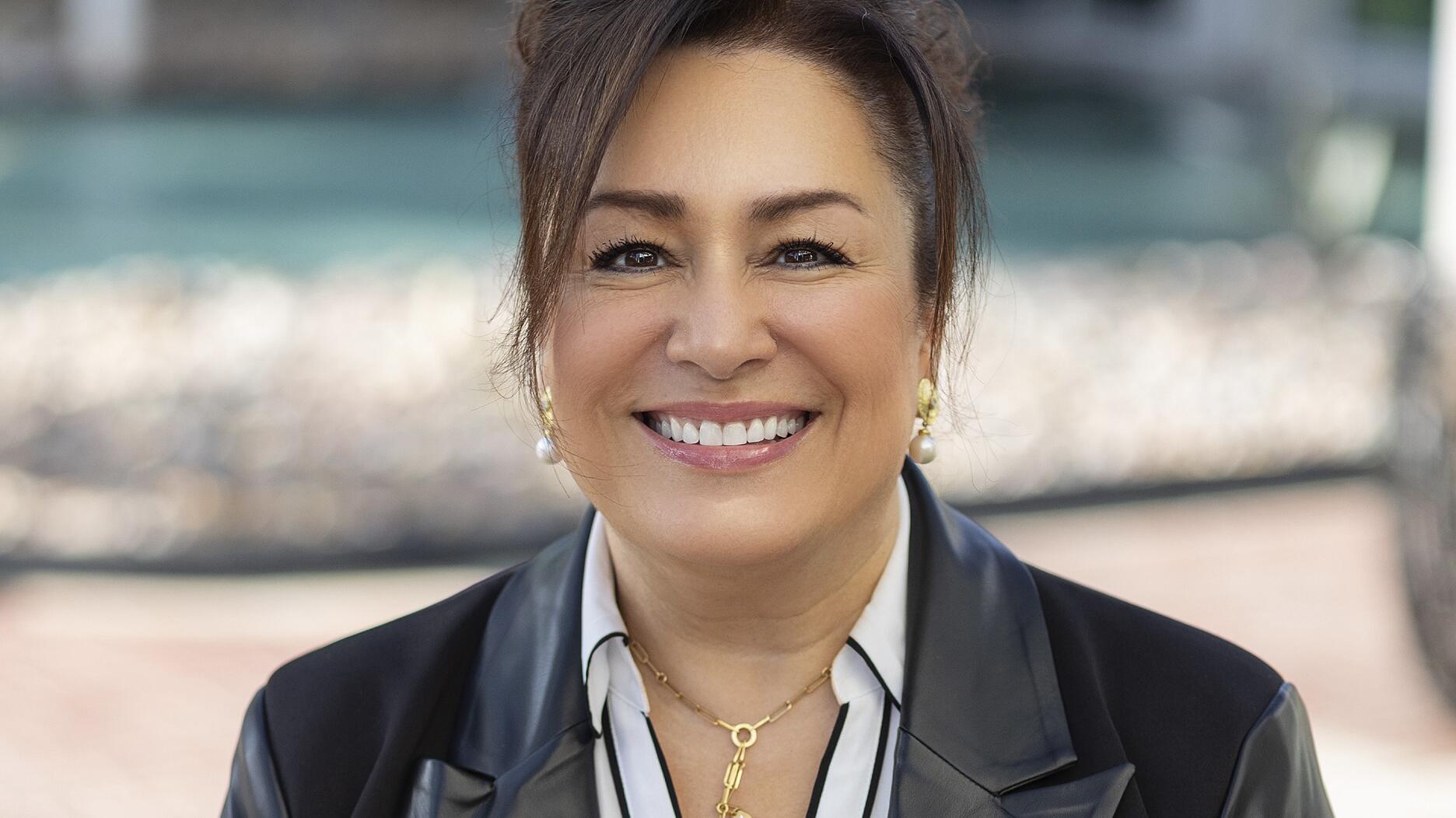
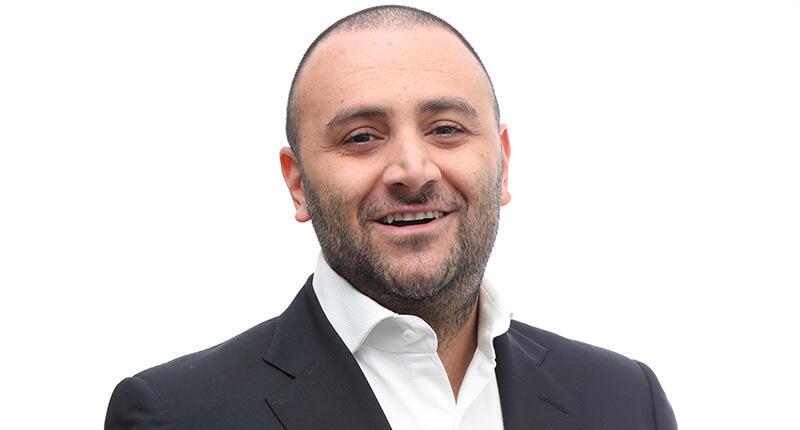
Sherry Smith is a principal partner at The Retail Smiths, a consultancy for retailers and vendors. She can be reached at sherrytrs@gmail.com.
For years, the jewelry industry has treated the lab-grown diamond disruption as a standard cyclical turf war. We built our defense around legacy messaging, convinced ourselves the trend would fade, and waited for consumers to return to the status quo.
That never happened. Instead, the market has divided into two distinct segments, each serving a different consumer need.
Independent jewelers need to stop treating lab-grown diamonds as a temporary disruption and start adapting to the reality of a permanently bifurcated market.
The conversation surrounding lab-grown diamonds has reached an exhausting stalemate.
On one side, traditionalists continue to rely on decades-old talking points, attempting to dismiss laboratory-created diamonds as somehow less legitimate.
On the other side, rapid consumer adoption has demonstrated that many consumers simply do not share the industry’s resistance.
By continuing to frame the conversation as a battle between right and wrong, retailers risk alienating the generations that will drive jewelry sales for decades to come: Generation Z and the emerging Generation Alpha.
We also must face an even more uncomfortable reality.
It’s not simply that our messaging hasn’t evolved. For much of the past decade, there has not been the kind of sustained consumer marketing that once created widespread desire for natural diamonds.
Previous generations grew up surrounded by iconic campaigns that made natural diamonds aspirational long before they ever walked into a jewelry store.
“A Diamond Is Forever,” and the expectation of spending two months’ salary on an engagement ring.
Those messages were part of popular culture.
Today’s engagement consumer didn’t grow up with any of that.
They entered adulthood during a period when the industry largely had stopped creating consumer desire for natural diamonds. So, they’re approaching the category with fresh eyes, and asking a very reasonable question: Why should I spend that much on a natural diamond?
During the JCK Las Vegas show this year, a respected industry colleague posed a question that has stayed with me: Did the natural diamond engagement ring industry lose an entire generation?
It’s a provocative question and one that’s worth asking, not because younger consumers reject natural diamonds, but because many were not given the same emotional reasons to desire them as previous generations, who were marketed to for decades.
Even more problematic is the industry’s long-standing tendency to position natural diamonds as financial investments. While there certainly are some exceptions, most consumers will never experience a financial return that resembles a traditional investment.
Consider a common retail scenario.
A client purchases a $20,000 natural diamond engagement ring. Five years later, due to a major life event such as divorce or financial hardship, they attempt to sell it.
The amount they are offered in the secondary market often is dramatically lower than what they originally paid. In that moment, the perception of the diamond as a financial asset quickly dissolves.
Today's consumer is informed, digitally connected, and has unprecedented access to information.
They understand markups. They research pricing. They compare options before ever walking into a store.
If retailers continue to promote natural diamonds using financial arguments that fail to align with reality, they risk damaging something far more valuable than a sale: consumer trust.
The Reality By the Numbers
To understand why the old playbook no longer works, we must examine the generations currently shaping the market.
Members of Gen Z, who range in age from 14 to 29, are entering their prime bridal years and rapidly expanding their purchasing power.
Unlike previous generations, many members of Gen Z came of age in a period of economic uncertainty, rising housing costs, student debt burdens, and growing concerns about job security in an AI-driven economy.
That never happened. Instead, the market has divided into two distinct segments, each serving a different consumer need.
Independent jewelers need to stop treating lab-grown diamonds as a temporary disruption and start adapting to the reality of a permanently bifurcated market.
The conversation surrounding lab-grown diamonds has reached an exhausting stalemate.
On one side, traditionalists continue to rely on decades-old talking points, attempting to dismiss laboratory-created diamonds as somehow less legitimate.
On the other side, rapid consumer adoption has demonstrated that many consumers simply do not share the industry’s resistance.
By continuing to frame the conversation as a battle between right and wrong, retailers risk alienating the generations that will drive jewelry sales for decades to come: Generation Z and the emerging Generation Alpha.
We also must face an even more uncomfortable reality.
It’s not simply that our messaging hasn’t evolved. For much of the past decade, there has not been the kind of sustained consumer marketing that once created widespread desire for natural diamonds.
Previous generations grew up surrounded by iconic campaigns that made natural diamonds aspirational long before they ever walked into a jewelry store.
“A Diamond Is Forever,” and the expectation of spending two months’ salary on an engagement ring.
Those messages were part of popular culture.
Today’s engagement consumer didn’t grow up with any of that.
They entered adulthood during a period when the industry largely had stopped creating consumer desire for natural diamonds. So, they’re approaching the category with fresh eyes, and asking a very reasonable question: Why should I spend that much on a natural diamond?
During the JCK Las Vegas show this year, a respected industry colleague posed a question that has stayed with me: Did the natural diamond engagement ring industry lose an entire generation?
It’s a provocative question and one that’s worth asking, not because younger consumers reject natural diamonds, but because many were not given the same emotional reasons to desire them as previous generations, who were marketed to for decades.
Even more problematic is the industry’s long-standing tendency to position natural diamonds as financial investments. While there certainly are some exceptions, most consumers will never experience a financial return that resembles a traditional investment.
Consider a common retail scenario.
A client purchases a $20,000 natural diamond engagement ring. Five years later, due to a major life event such as divorce or financial hardship, they attempt to sell it.
The amount they are offered in the secondary market often is dramatically lower than what they originally paid. In that moment, the perception of the diamond as a financial asset quickly dissolves.
Today's consumer is informed, digitally connected, and has unprecedented access to information.
They understand markups. They research pricing. They compare options before ever walking into a store.
If retailers continue to promote natural diamonds using financial arguments that fail to align with reality, they risk damaging something far more valuable than a sale: consumer trust.
The Reality By the Numbers
To understand why the old playbook no longer works, we must examine the generations currently shaping the market.
Members of Gen Z, who range in age from 14 to 29, are entering their prime bridal years and rapidly expanding their purchasing power.
Unlike previous generations, many members of Gen Z came of age in a period of economic uncertainty, rising housing costs, student debt burdens, and growing concerns about job security in an AI-driven economy.
“When a Gen Z couple walks into a jewelry store, they are often balancing the dream of a beautiful engagement ring against the realities of homeownership, inflation, and competing financial priorities.” – Sherry Smith, The Retail Smiths
According to The Knot’s 2026 “Real Weddings” study, 61 percent of engagement rings purchased by couples who married in 2025 featured a lab-grown center stone.
That growth has coincided with substantial price declines.
According to industry analyst Edahn Golan’s Q1 2026 Lab-Grown Wholesale Price List, wholesale lab-grown prices contracted an additional 14 percent to 15 percent year-over-year, pushing many products closer to production-cost levels.
Today, a premium 1-carat lab-grown diamond may retail between $800 and $1,200, while some direct-to-consumer providers offer entry-level options for only a few hundred dollars.
When a Gen Z couple walks into a jewelry store, they are often balancing the dream of a beautiful engagement ring against the realities of homeownership, inflation, and competing financial priorities.
If a sales associate attempts to convince them that a smaller natural diamond is somehow the smarter financial decision, many simply will choose another retailer.
This economic reality helps explain why lab-grown diamonds have captured significant unit share within the bridal category.
For retailers, however, the challenge extends beyond deciding whether to sell natural or lab-grown diamonds. The more pressing issue is maintaining profitability as lab-grown prices continue to decline. Inventory purchased six months ago may already be worth significantly less today.
Retailers must pay close attention to inventory turn, margin dollars, and pricing strategy rather than relying on the inventory models that worked in previous decades.
Reframing the Natural Diamond Story
Another conversation from JCK reinforced this point for me.
One of our clients attended nearly every natural diamond presentation during the show. Her takeaway was surprisingly simple: “I didn’t hear anything new.”
I couldn’t help but agree.
Much of the discussion continues to recycle the same messaging we’ve relied on for years. Yet we’re speaking to a generation that never heard the original campaign.
If we’re going to reconnect consumers with natural diamonds, we can’t simply repeat yesterday’s story. We need new messages that resonate with today’s engagement consumers while preserving what historically has made natural diamonds special.
Encouragingly, some parts of the industry are beginning to recognize that attacking technology is not a winning strategy.
A notable example is De Beers’ recent effort to differentiate natural diamonds through storytelling and rarity rather than direct comparison to lab-grown products.
“The industry is beginning to reposition characteristics once viewed as weaknesses into points of differentiation.” – Sherry Smith, The Retail Smiths
Rather than focusing exclusively on traditional colorless diamonds, the company has increasingly highlighted the uniqueness, individuality, and natural origin of diamonds with warmer color characteristics and distinctive features through its “Desert Diamonds” beacon program.
This represents the kind of strategic evolution the industry desperately needs.
Rather than competing on perfection, consistency, or technical specifications—areas in which laboratory production excels—the focus moves toward authenticity, rarity, and individuality.
That is a conversation many younger consumers may find far more compelling than traditional messaging built around obligation or financial value.
In many ways, the diamond industry is beginning to reposition characteristics once viewed as weaknesses into points of differentiation.
Predicting the Horizon: Enter Gen Alpha
If Gen Z disrupted the product mix, Gen Alpha may redefine the very concept of luxury.
Born between 2010 and 2024, Gen Alpha is the first truly digital-native generation; the eldest members of this generation are already old enough to drive.
Many have grown up purchasing digital assets, customizing virtual identities, and interacting seamlessly between physical and digital environments.
For this generation, technology is not separate from reality; it is part of reality.
As a result, a diamond created through advanced scientific processes is unlikely to be viewed as “fake.” Instead, it may be viewed as an impressive example of human innovation.
At the same time, widespread availability creates a new challenge: exclusivity.
As lab-grown diamonds become increasingly accessible, some consumers may begin to view them less as luxury goods and more as fashion products.
Industry data already suggests consumer demand can soften once sizes reach certain thresholds, as big diamonds become more attainable and therefore less exclusive.
This may ultimately reinforce the distinction between natural diamonds and lab-grown diamonds, with each serving a different consumer purpose.
Lab-grown diamonds may continue to dominate categories driven by value, size, and accessibility, while natural diamonds may strengthen their position as the luxury option within the category.
In a world increasingly filled with AI-generated content, synthetic materials, and digital experiences, there may be growing appreciation for products that are finite, naturally occurring, and impossible to replicate exactly.
Navigating the Dual-Mindset Counter
The retailers who thrive over the next decade will be those who learn to speak two entirely different emotional languages while remaining unbiased guides throughout the buying process.
1) The Lab-Grown Narrative: Utility & Modernity
This conversation focuses on visual impact, smart allocation of resources, customization, and technological innovation.
It acknowledges the realities of today's consumer while providing an accessible path to luxury and self-expression.
2) The Natural Diamond Narrative: Rarity & Heritage
This conversation focuses on scarcity, individuality, natural origin, and emotional significance. The diamond becomes a unique artifact of Earth’s history, something finite, unrepeatable, and deeply personal.
Retailers must stop viewing these narratives as competitors.
Lab-grown diamonds are a permanent fixture of the modern jewelry landscape. Natural diamonds remain a luxury product defined by scarcity and uniqueness.
Our role is not to decide which option holds greater value. Our role is to create a transparent, educational, and judgment-free environment in which consumers can determine that for themselves.
The future of fine jewelry retail belongs to the retailer who can serve as an agnostic guide.
Consumers are no longer asking us to define value for them; they are asking us to help them determine what value means to them.
The future of our industry isn’t about proving one category superior to the other. It’s about recognizing that consumers purchase for different reasons, celebrate different milestones, and define value in different ways.
Natural diamonds and lab-grown diamonds can both thrive when we stop asking consumers to choose our narrative and, instead, help them discover the one that best reflects their own.
Editors' Picks
Sponsored by

More on Columnists

The Latest

SurveysOct 09, 2026
These Will Be the 10 Busiest Days for In-Store Shopping This Holiday SeasonStores should expect to see the most customers on Nov. 27, and Christmas week is expected to be hectic too, as Dec. 25 falls on a Friday.


CollectionsOct 09, 2026
Elisa Solomon Collabs With Serendipity 3 on ‘Frozen Hot Chocolate’ CharmThe charm, our Piece of the Week, features brown diamond frozen hot chocolate topped with white diamond whipped cream and a ruby straw.


AuctionsOct 09, 2026
8-Carat Blue Diamond Goes Unsold at UK Jewelry Auction The top lot of Elmwood’s recent fine jewelry sale in London was a 1.84-carat, D color Tiffany & Co. solitaire diamond ring.


Brought to you by
Meet Gemology’s Next Generation Microscope: GIA® Gemolite® NXT Professional EditionExperience gemstones with greater precision and comfort than ever before.


WatchesOct 09, 2026
Movado to Sell Majority Stake in Ebel for $66.5MThe watch company agreed to sell a 95 percent interest to a group comprised of F.P. Journe, Chanel, and Swiss watch exec Pierre Jacques.

Weekly QuizOct 08, 2026
This Week’s QuizTest your jewelry news knowledge by answering these questions.


Policies & IssuesOct 08, 2026
Third Wave of IEEPA Tariff Refunds Begins This round of tariff refunds is for importers that have sued over IEEPA tariffs in the Court of International Trade and won.

CollectionsOct 08, 2026
Brent Neale’s New Collection Goes ‘Back to Basics’It revisits the brand’s most requested silhouettes, from "Pillow"-set necklaces and bracelets to "Signature"-set rings and earrings.
Brought to you by
Your Piece Could Be the One Editors Talk AboutSubmit your pieces for a chance to win in this year's competition.


SourcingOct 08, 2026
Ethical Gem Fair Heads Back to BrooklynThe trade-only event includes buying opportunities as well as educational sessions on artisanal mining, the new Paraíba source, and more.

Events & AwardsOct 08, 2026
Pattons Fine Jewelry Sweeps Local Design ContestAra Chanakian, a jeweler at Pattons, took home top honors in every category at Jewelers of Louisiana’s annual jewelry design competition.

AuctionsOct 08, 2026
Reba McEntire’s Jewelry, Watches Head to Julien’s AuctionsThe live charity benefit sale in Nashville will also feature gowns, boots, and other memorabilia from the country music legend.


Supplier BulletinOct 08, 2026
Overnight Mountings’ Bridal Builder Helps Jewelers Turn Custom Design into a Hands-On Selling ExperienceSponsored by Overnight Mountings

Policies & IssuesOct 07, 2026
The Plumb Club Amplifies Its Voice as Geopolitical Pressures MountThe supplier organization recently joined JA and JVC to have more input on political issues affecting the jewelry industry.

CollectionsOct 07, 2026
Blue Nile, Royal Asscher Collection Highlights Natural Diamond BeautyBlue Nile, a Signet Jewelers-owned brand, is now Royal Asscher’s exclusive licensed retailer in North America.

CollectionsOct 07, 2026
4 Standout Pieces in Audemars Piguet’s First High Jewelry Collection “Royal Oak” pays homage to the brand’s most popular watch model using 18-karat gold as well as diamonds, emeralds, and sapphires.

MajorsOct 07, 2026
Empire Safe & Vault Promotes Juan Morales to CEOAs part of the transition, Joseph Nicosia has stepped into the role of COO.

SourcingOct 07, 2026
AGTA Extends Deadline for 2026 Spectrum Awards EntriesParticipants now have until Oct. 14 to complete their submissions.

CrimeOct 06, 2026
6 Charged in Connection to String of New Jersey Smash-and-GrabsThe alleged thieves used crow bars and sledgehammers to smash into jewelry stores across the state.

SourcingOct 06, 2026
DDG Taps Influencers for ‘My Diamond Does Good’ CampaignIn the new consumer-facing campaign, four fashion and lifestyle creators share the stories behind their natural diamond pieces.

MajorsOct 06, 2026
Frederick Goldman Names COO, CMOFGI President John Orrico is also leaving the company after more than 13 years.

Events & AwardsOct 06, 2026
JIS Fall Returns to MiamiThe 2026 edition will feature presentations on alternative materials and design trends, as well as pop-up activations on the show floor.

SourcingOct 05, 2026
De Beers to Take Full Ownership of Gahcho KuéIt is the last fully operational diamond mine in Canada following the recent closures of Ekati and Diavik.

AuctionsOct 05, 2026
The Star Cats of the Sandy Lerner AuctionThese jewels stood out at Bonhams’ sale of the cat-loving tech entrepreneur’s collection of objects depicting the feline form.

CollectionsOct 05, 2026
Sorellina Writes Another Love Letter for ‘Postscript’ CollectionThe fine jewelry brand has expanded the collection that debuted at Couture with four new designs based on its most popular styles.

SourcingOct 05, 2026
Bruce Bridges Joins CIBJO BoardThe AGTA president was elected for a two-year term on the board of directors.

SourcingOct 02, 2026
De Beers, National Geographic Society Renew Okavango Eternal Partnership The partnership, a pledge to protect Africa’s Okavango River Basin, has been extended for an additional five years.

MajorsOct 02, 2026
Pandora Opens New $150M Manufacturing Facility in VietnamThe new facility, its first outside of Thailand, will boost its manufacturing capacity by 50 percent.