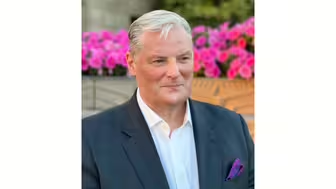
In an interview with National Jeweler, Citizen Watch America President Jeffrey Cohen talked about the 50th anniversary of the watchmaker’s Eco-Drive technology.
New York—Citizen Watch Co. celebrated the 50th anniversary of its Eco-Drive technology in style last week, inviting employees, press, and friends of the brand to the Solomon R. Guggenheim Museum in New York City.
The watchmaker created an exhibit showcasing the history of the proprietary technology, which converts light to power its watches.
At the event, attendees could also watch clips from Citizen’s new “Powered by Any Light” campaign, which highlights that any type of light, from sunlight to city lights, can power its watches.
The history of the Eco-Drive stretches back to the 1970s, when solar cells were the height of technology as well as a clean energy source.
Solar power became even more important following the 1973 oil crisis, explained Citizen, which made the public more aware of resource scarcity and the need for energy conservation.
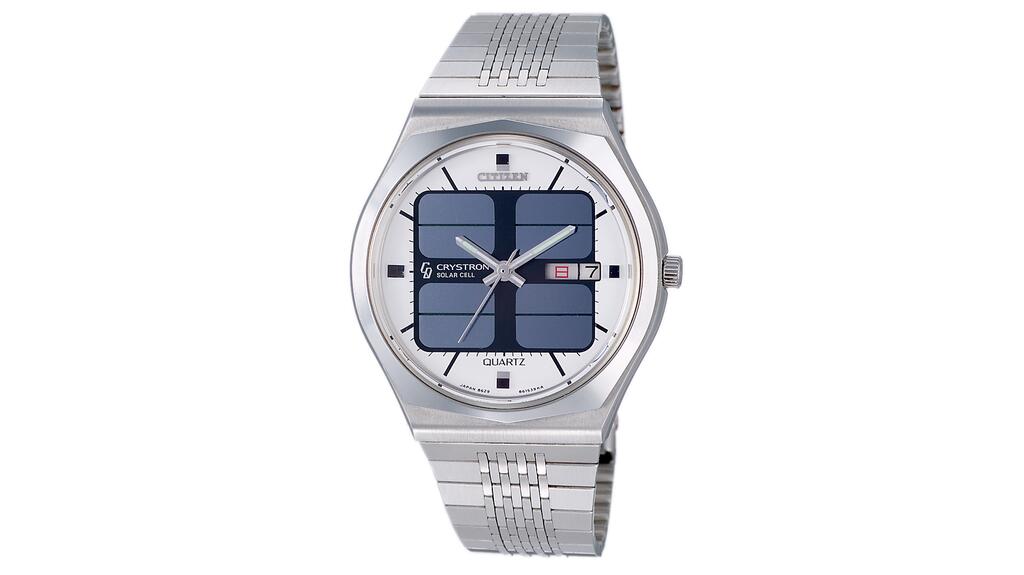
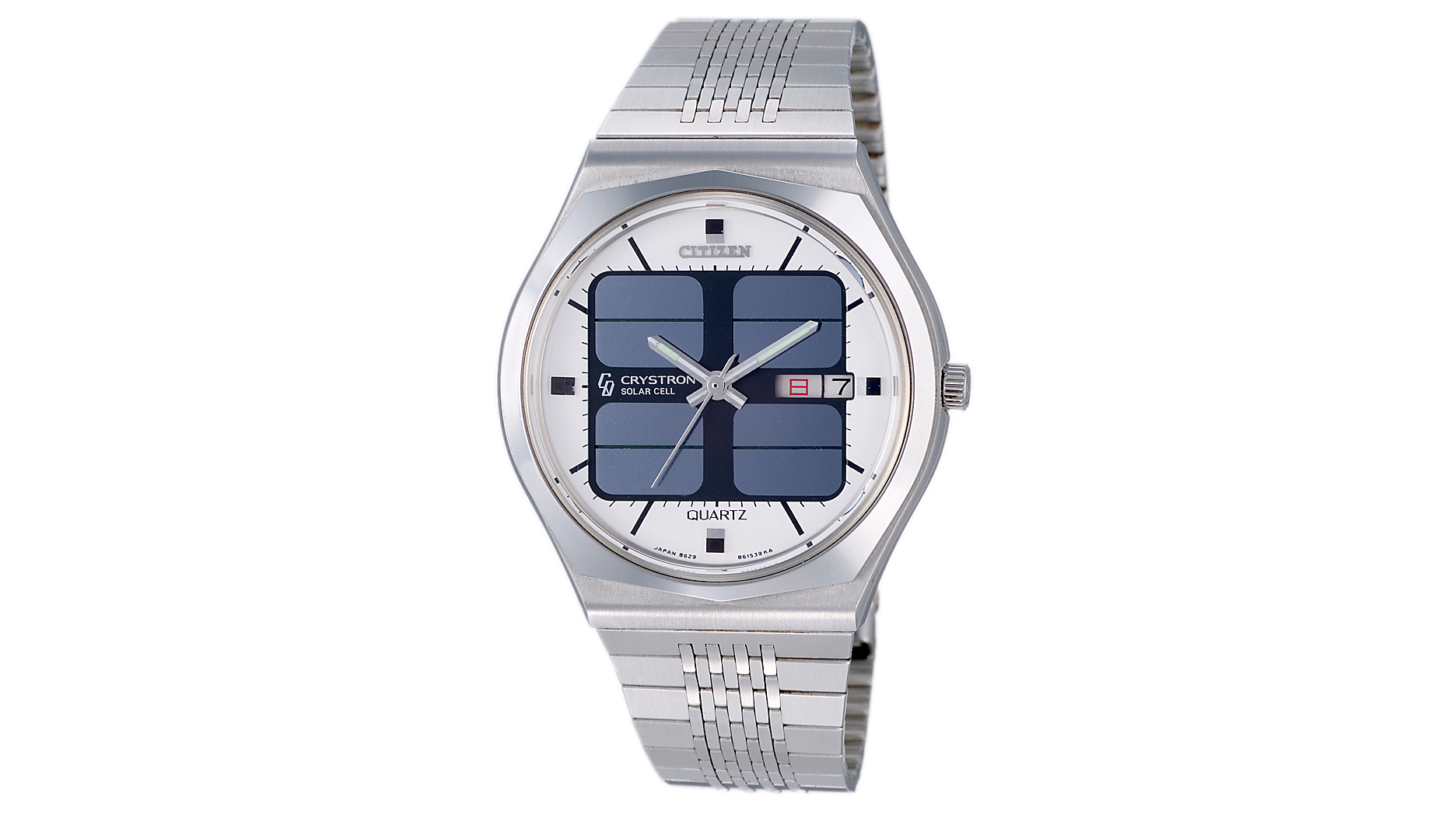
In 1976, Citizen debuted the Crystron Solar Cell, the world’s first analog watch powered by light rather than a traditional disposable battery.
At the time, around 80 percent of light needed to pass through the dial to power the movement.
Citizen introduced the first light-powered analog watch, the Crystron Solar Cell, in 1976.
The company has continued to improve the technology over the years, with current Eco-Drive models able to operate with less than 15 percent light transmission.
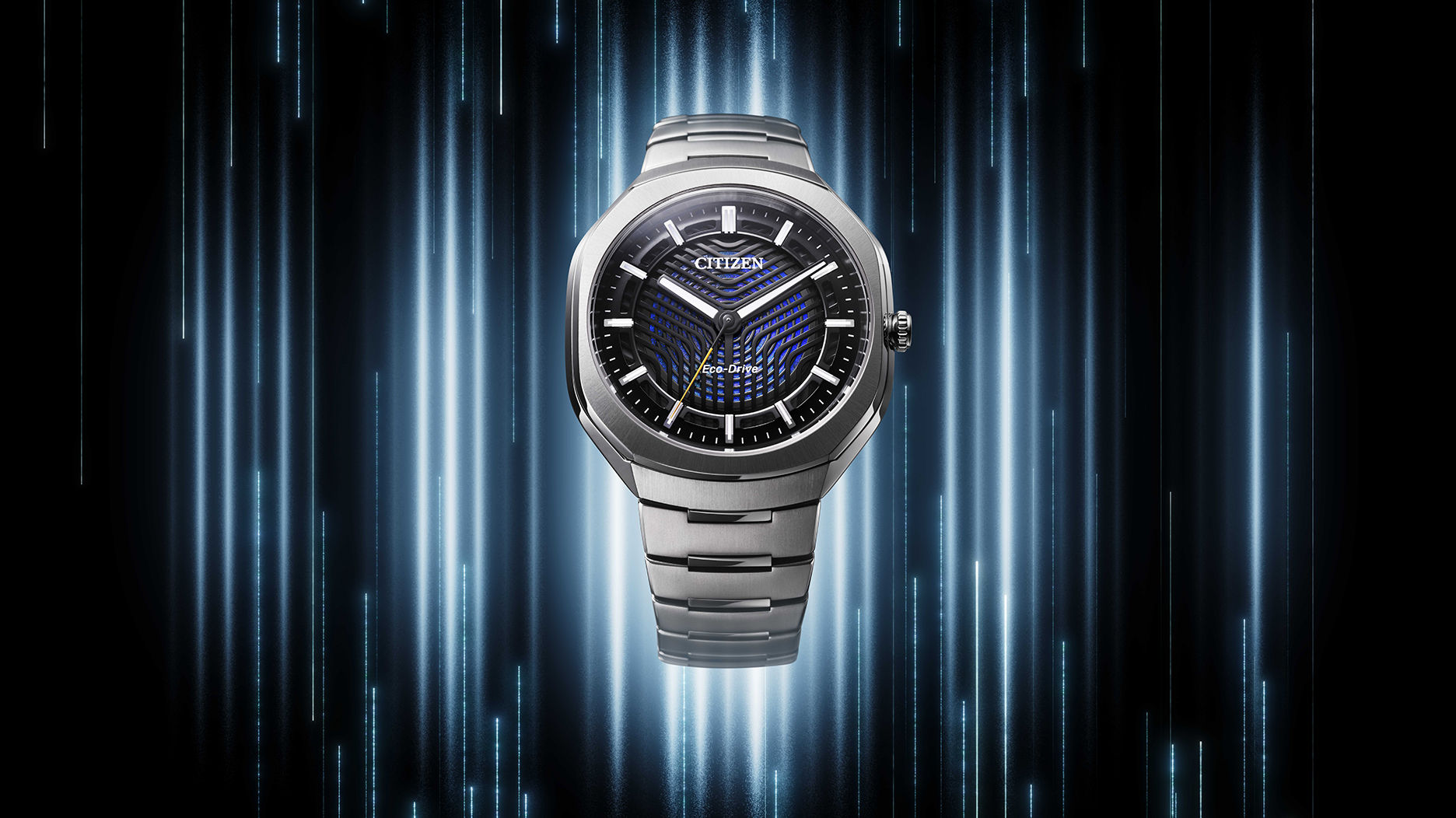
To celebrate the Eco-Drive’s anniversary, Citizen is also debuting two limited-edition Eco-Drive Photon timepieces. Set to debut in the fall, there will be 5,000 made for each edition.
The watches are made of lightweight, scratch-resistant “Super Titanium” with a rounded octagonal case and are powered by the new Eco-Drive Cal. E036 movement, which runs for 365 days on a single full charge.
One of the two limited-edition Eco-Drive Photon timepieces
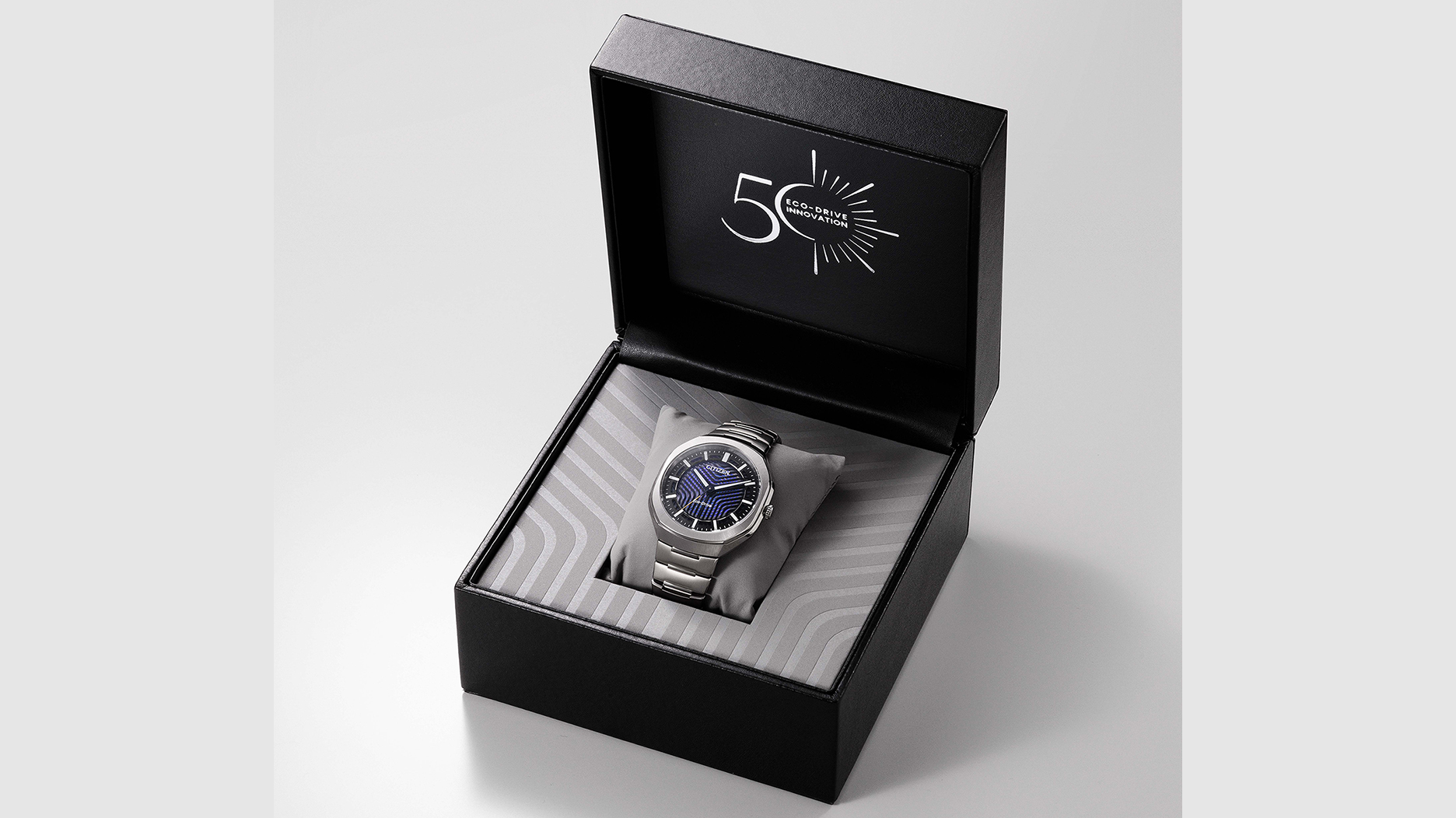
The watch is engraved with a 50th anniversary logo and an individual limited-edition number.
The limited-edition models include a silver-tone watch with a yellow second hand and a black-and-gold watch with a purple second hand.
Each watch is engraved with a 50th anniversary logo and an individual limited edition number, and housed in a commemorative box.
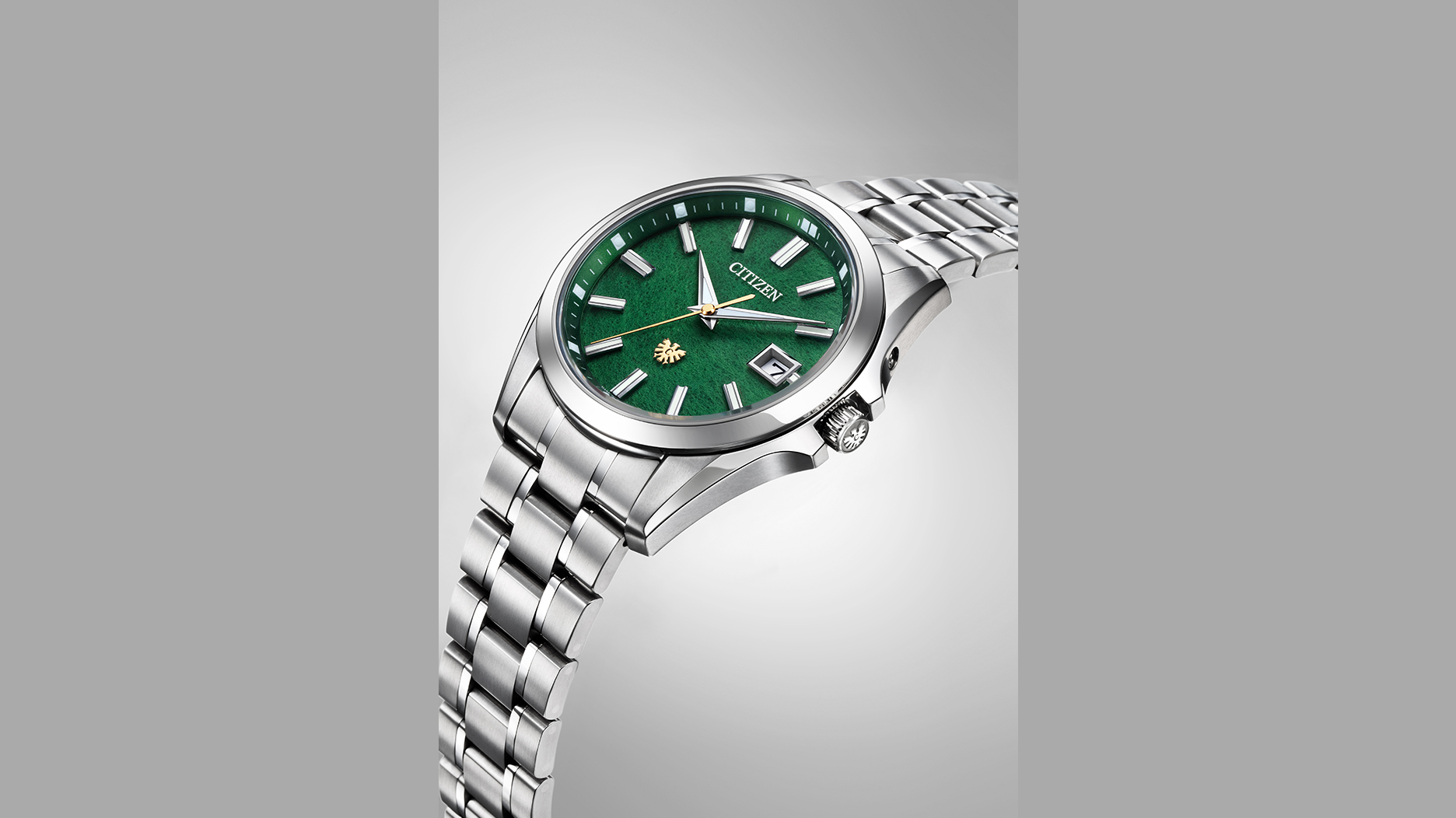
Also in celebration of the milestone, Citizen will launch another limited-edition watch, The Citizen 50 Years of Eco-Drive Innovation Anniversary Edition timepiece.
The Citizen 50 Years of Eco-Drive Innovation Anniversary Edition timepiece features a hand-dyed green dial.
The watch’s dial features Tosa washi paper that is hand-dyed by skilled artisans in chitose midori, a green color that symbolizes permanence. The dyes comes from ibuki kariyasu grass and indigo.
Set to debut in May, there will be 650 watches available.
Earlier this year, Citizen introduced two new Eco-Drive collections, the Fio and the Endeavor Chrono, with more newness to follow, including an upcoming collaboration with Vera Wang.
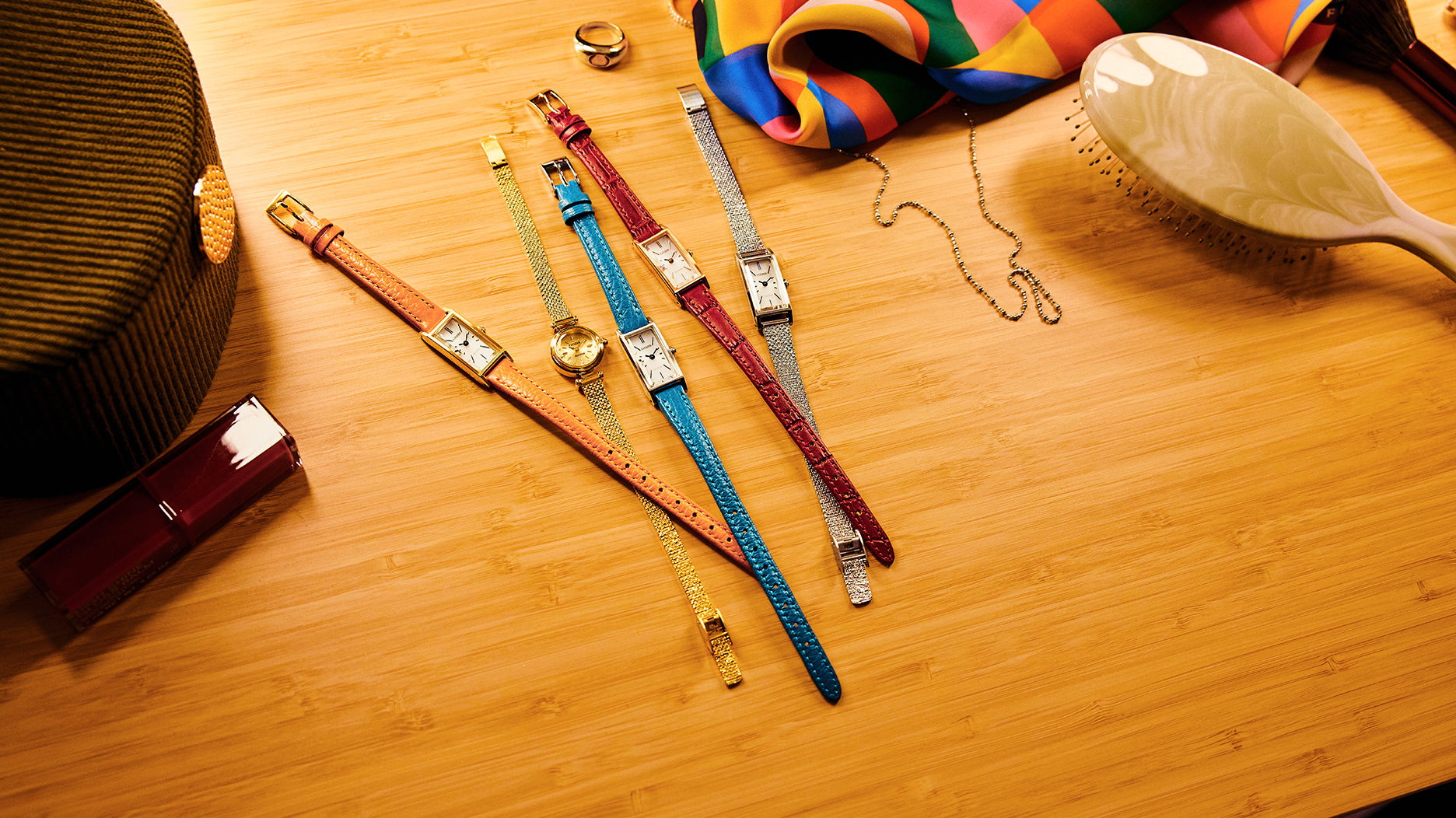
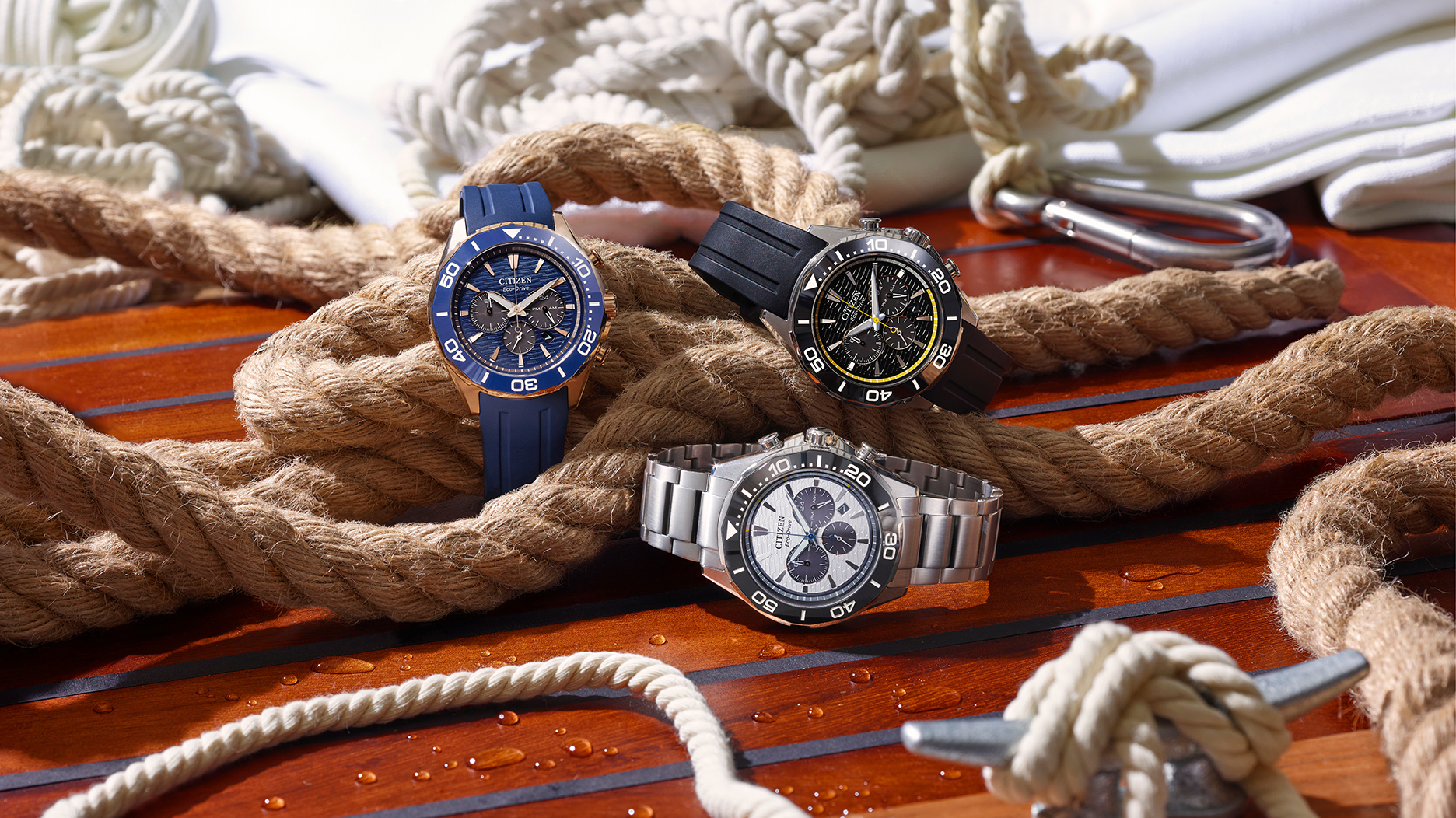
The Fio watches are small and designed for stacking, featuring the smallest Eco-Drive movement, while the Endeavor Chrono is a nautical-inspired Eco-Drive chronograph featuring Citizen’s first rotating ceramic bezel.
The Fio collection features petite, colorful timepieces, ideal for stacking, said Citizen.
A selection of Citizen “Endeavor Chrono” Eco-Drive watches
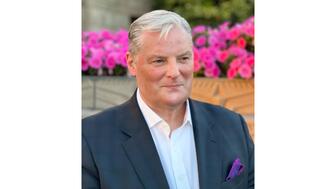
Just before the anniversary event at the Guggenheim, National Jeweler Senior Editor Lenore Fedow sat down with Citizen Watch America President Jeffrey Cohen to talk about Eco-Drive and what else the watchmaker has been up to this year.
This interview has been edited for length and clarity.
Lenore Fedow: Was Citizen the first to have this type of Eco-Drive technology?
Jeffrey Cohen: People think we’re the market leader, [but] we’re the market maker, so it’s a little bit different.
In the ‘70s, we started with solar watches. And then we’ve advanced in the last 50 years.
That’s why we’re here today. We’re at an inflection point to take the light-powered Eco-Drive technology to a totally different place.
LF: What spurred the invention of this technology?
JC: I think we were looking to do something different during the crisis that was going on in the ‘70s with energy and things like that. This was one of the paths we took, and we just continued to take it to the next level and that’s something that inspires us.
LF: I know Citizen has made improvements over the years to this technology. What were the early Eco-Drive watches like?
JC: It was a pleasure to have a watch that didn’t need a battery. It held a very nice charge, but nothing like today.
When this [new Super Titanium] watch is fully charged, a minimum of a year. Imagine charging a watch and it’s OK for a year. That’s pretty incredible.
So young people are saying, “I don’t want what mom wears or dad wears. I want a traditional watch.”
A lot of the young generation, like yourself, [are] aspiring towards the traditional watches. And they’re stacking them, so it’s great.
The technology is very advanced. Remember, we’re vertical so we make the machines. They make the movements, they make the watches, they do the assembly, everything. So you know you’re seeing [something] very progressive and a great value proposition on everything we bring to the marketplace.
This [new titanium] watch is $1,000 for a limited edition of 5,000 pieces, which is incredible.
LF: Citizen is hosting this big party here tonight. What will the consumer-facing celebrations be like for the anniversary?
JC: We have a new TV commercial, which we’re very excited about. It’s all about light power. It’s really geared towards the zillennials. It’s very exciting, so we’re watching that.
We have an update to our website, so we have a whole campaign that we’re introducing on light power and Eco-Drive.
LF: Let’s pivot to tariffs. I know Swiss watchmakers felt more of the impact there. How has the tariff situation affected Citizen?
(Citizen’s watches are made in Japan and the peak tariff on most Japanese imports, 27.5 percent, was not as high as the peak tariff on Swiss imports, 39 percent. The current tariff rate on all imports is 10 percent.)
JC: It actually was disruptive, but we work very closely with our retailers, I think more than most other companies. So, we took a lot of the burden on ourselves because we wanted to make sure we were priced appropriately in the marketplace and still have that value proposition.
But that’s all behind us now. [We] kind of figured it out and we’re moving in the right direction with everybody.
LF: A lot of economists are talking about the K-shaped economy. How does Citizen benefit from offering customers accessibly priced watches with a luxury feel?
JC: So, yes, everybody went up over $3,000, $5,000. It was a big white space, so we were in that space.
The market hasn’t really grown, but we’re getting a much bigger piece of the overall market. And we’re bringing great design/value propositions.
The younger generation, and even the older generation, they want value proposition. They want to feel like it’s authentic, and their money [is] very well spent. That’s we’re playing into, in a very good way.
We have a lot of watches that we’ll be introducing over time to celebrate the anniversary, and product placements, and new marketing events.