





IndependentsSep 04, 2026
Orloff Jewelers Will Soon Unveil a Bigger, Better LocationThe California jeweler is renovating its store in Fresno, with plans to show off the new space in December.





In two separate reports, economists from the National Retail Federation and the International Monetary Fund discussed consumer confidence and preventing future pandemics.


New York—The COVID-19 pandemic has taken a severe toll on the global economy as the crucial policies guarding public health impact economic activity.
The global economy is expected to contract by 3 percent in 2020, higher than during the 2008 financial crisis, according to “World Economic Outlook, April 2020: The Great Lockdown,” a recent report by the International Monetary Fund.
And the retail industry has “taken the brunt” of the pandemic’s financial impact as many stores remain closed, the National Retail Federation said in its monthly economic review.
We took a look through the two reports and compiled five important takeaways.
Given the unprecedented nature of the situation, no one can say what recovery will look like with any certainty.
There is “extreme uncertainty” around the global growth forecast, said the IMF, as analysts grapple with unpredictable factors.
The effect on the economy depends on several variables, including the course of the pandemic and the effectiveness of containment efforts.
Analysts also need to consider the extent of supply disruptions and the volatility of commodity prices, as well as changes in the behaviors and spending patterns of consumers.
The IMF made the projections for its report using metrics like real GDP growth, the consumer price index, current account balance, unemployment, per capita GDP growth and fiscal balance.
Looking at the IMF’s baseline scenario, which assumes the pandemic ends in the second half of 2020 and containment efforts are gradually eased, the global economy is projected to grow by nearly 6 percent in 2021.
Though a partial recovery is projected with above-trend growth rates in 2021, GDP is predicted to remain below the pre-virus level, said the IMF.
Turning to retail specifically, NRF Chief Economist Jack Kleinhenz said in his organization’s report: “While we cannot be certain how quickly retail will recover, it is important to remember that many retailers are doing well, particularly those that have remained open.”
He added that retailers that were strong before the pandemic should make it through, and said most weaker retailers “will likely reorganize and emerge right-sized rather than disappear.”
Support from lawmakers is crucial to avoiding worst-case scenarios.
Worse outcomes than those outlined above are possible, said the IMF, especially without support from policymakers.
RELATED CONTENT: House Democrats Propose $3T Coronavirus Relief Bill
With the economy shut down, it will up to the world’s lawmakers to make sure people’s needs are met and businesses are able to reopen.
“Because the economic fallout is acute in specific

The California jeweler is renovating its store in Fresno, with plans to show off the new space in December.

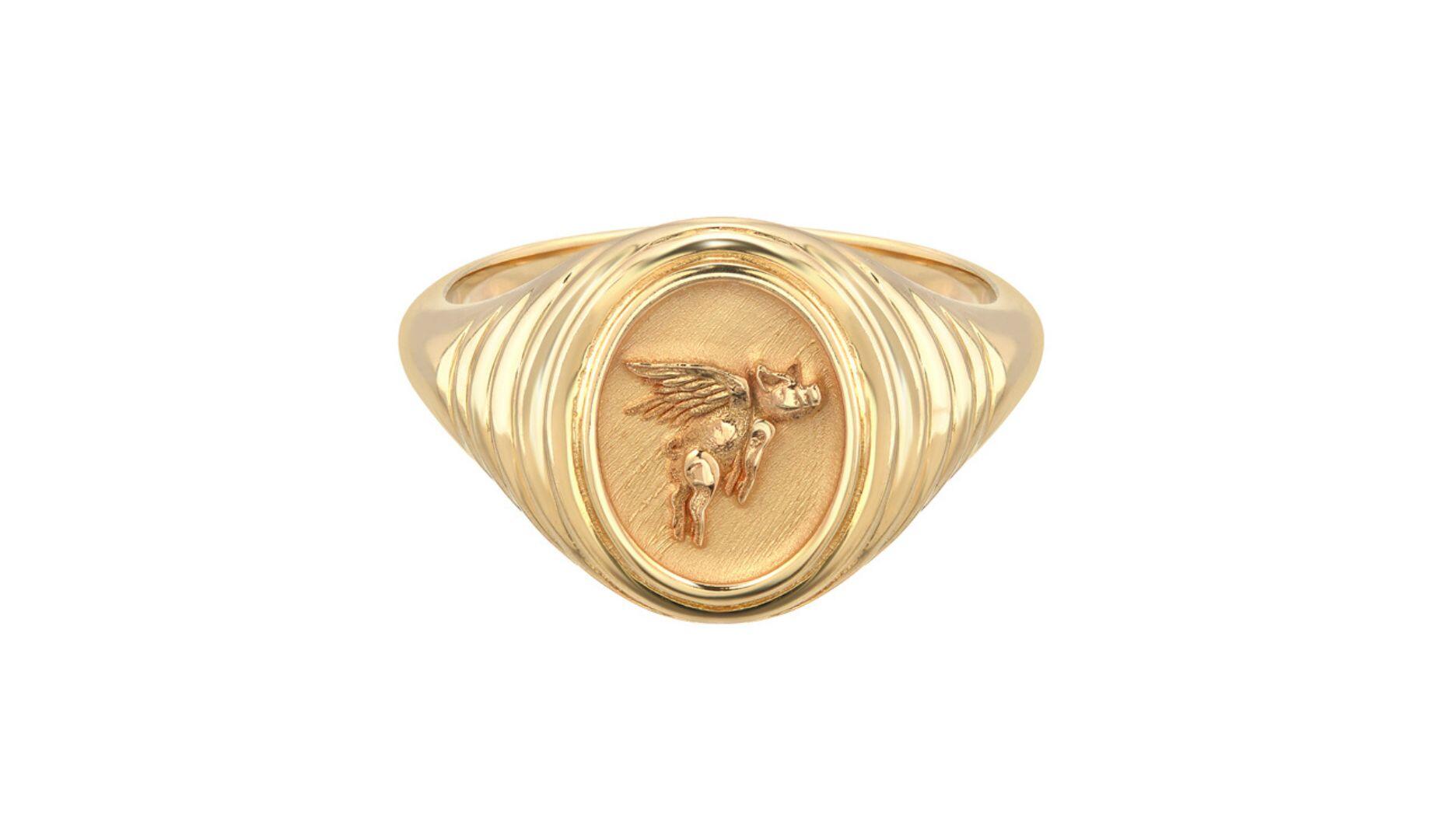
A lifelong practitioner of Pilates, Gabrielle looked to the springs’ tension and suspension when creating this ring, our Piece of the Week.

The deadline to apply is Nov. 13.

Submit your pieces for a chance to win in this year's competition.


The auction house has promoted Remi Guillemin, formerly its head of watches for the Americas and EMEA, to the role.


Zaven Ghanimian discussed the value of human craftsmanship and where the implementation of artificial intelligence does work.

Jewelers of America also revealed the recipients of the Seymour & Evelyn Holtzman Bench Scholarship and its own scholarship programs.

Retailers are seeking new ways to attract customers, increase traffic, and create revenue – Estate buying events are a popular solution.


The British actor, known for his roles in “Twilight” and “The Odyssey,” will star in a campaign for the Master Control Chronometre.

The “Confetti Disco,” “Champagne Cheers,” “Tuxedo,” and “Classic Punk” jewelry collections each capture a distinct spirit of celebration.

Nelson Holdo of Newport Beach pleaded guilty to multiple counts of felony grand theft and writing bad checks and was sentenced Monday.

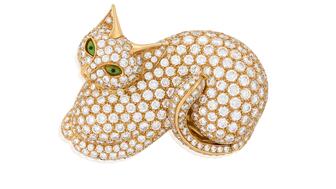
Cat ladies of the jewelry world, unite. Sandy Lerner’s “significant” collection of cat jewelry and other objects is going up for auction.

Arnaud Michon, the former Omega USA President, will now lead Messika’s Americas region during its international development.

The branding references the back-to-back jewelry shows that new parent company Forge will host in Miami's Coconut Grove this November.
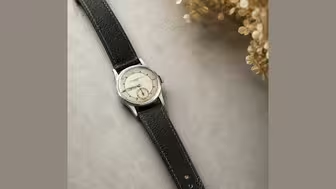
The stainless steel Patek Philippe “Calatrava” watch from the 1930s sold for nearly $80,000 at a recent Hansons Cornwall auction.

Engagement rings are important but don’t ignore the customers who are buying jewelry “just because,” Emmanuel Raheb writes.

Former Pomellato CEO Sabina Belli has been named president of Kering Italia amid a shakeup of Kering's new Jewelry division.
The veteran luxury packaging executive was appointed to help the company grow its North American business.


Once the property of an Egyptian queen, the necklace was part of a larger exhibition of VCA jewelry at the Museum of Applied Arts (MAK).

The labs’ separate investigations each determined that the East African country is producing copper-bearing tourmaline.

“Chicago Collects: Jewelry in Perspective” at the Oshkosh Public Museum will feature works by Fabergé, Lalique, and Louis Comfort Tiffany.

The “Worn Well” collection is Catbird's take on classic men's jewelry.

This Buddha Mama butterfly is our Piece of the Week honoring the legend, who embraced the beautiful insect as her symbol.

The former De Beers CEO, and perhaps its next owner, will be a featured speaker at the event, slated for Sept. 4-7 in Italy.
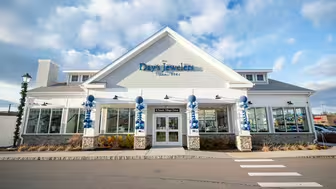
The employee-owned jeweler was named a “Best Place to Work” in Maine, New Hampshire, and for women.

The second iteration of the jewelry collection was inspired by the zodiac and the four elements: earth, water, air and fire.

General License 104B supersedes General License 104A, which was set to expire on Sept. 1.



This site uses cookies to give you the best online experience. By continuing to use & browse this site, we assume you agree to our Privacy Policy