




MajorsOct 23, 2026
PGI USA Set to Close at Year’s EndThe closure is part of a global restructuring that also includes PGI winding down its operations in Japan, South Korea, and Hong Kong.


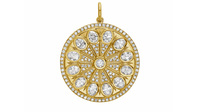
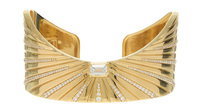




The American Gem Trade Association has made a few changes its code of ethics to stress the importance of a transparent supply chain and following international rules.

Dallas--The American Gem Trade Association has made a few revisions to its Code of Ethics and Fair Business Practices document that are designed mostly to emphasize the importance of transparent supply chains in the colored gemstone world.
AGTA CEO Doug Hucker told National Jeweler that while not many changes were made, the revisions to the new copy emphasize that members are not only giving correct information but also doing everything they can assure the stones have been sourced in legitimate fashion and to comply with U.S. and international laws.
In recent years, there’s been an increased focus on the supply chain in the jewelry industry--where materials are being produced, how they’re being produced, and if they are coming to market in a legitimate and transparent method, Hucker said.
Efforts include the Responsible Jewellery Council and the plans that are underway for the industry’s first summit dedicated entirely to responsible sourcing, which is slated to take place in New York next year.
There is also, of course, the Kimberley Process, which was created to stem the flow of “conflict” diamonds into the trade.
But unlike diamonds, which are a much more centralized marketing business and can lend themselves well to a monitoring program like the Kimberley Process, the colored gemstone market is very diverse and scattered across the world. So rather than an international agreement on trading between countries and corporations, the industry instead has governments around the world enforcing laws for the import and export of goods.
For this reason, the AGTA wanted to revise its code of ethics to remind members that they need to take steps to ensure the gemstones they are purchasing are not tainted in any way and to stress the fact that it’s the members’ responsibilities to behave according to federal guidelines, as well as the guidelines of the international countries in which they are doing business.
Additionally, Hucker said, they want to ensure members are doing everything they can to prevent any type of environmental degradation.
The AGTA clarified and magnified the responsibility of the members that are doing business in an international arena “to apply the same business ethics and professionalism everywhere that they do business,” Hucker said.
He added, “We amplified that part of it to say that we are part of a global community, and we have a global responsibility that extends beyond our borders to make sure
The code also addresses fair trade.
Since the jewelry industry doesn’t have well-defined protocols for exactly what fair trade is, the AGTA requires in its new code that gemstone merchants who want to present their materials as “fair trade” clearly define what protocols they are following to be able to say they are such, Hucker said.
Additionally, because it is such a comprehensive guide that is more than 30 years old, Hucker noted that there also was a need to go through and update it from a legal language standpoint for clear, precise vocabulary.
Since its inception in 1981, the Code of Ethics has governed the way that AGTA recommends its members do business, ranging from responsibilities as a seller of gemstones to disclose information appropriately about the gemstone, financial considerations, how to do appropriate professional business transactions, and more.
It includes recommendations for retailers, dealers, designers, and appraisers, and has to be signed annually by all members. The newest edition can be found online at AGTA.org.

The closure is part of a global restructuring that also includes PGI winding down its operations in Japan, South Korea, and Hong Kong.

The ring, our Piece of the Week, was designed by eight-year breast cancer survivor Rachel Chalchinsky of Color Source Gems.

The website offers enhanced member benefit access, industry directories, educational resources, a job board, and access to the MJSA Journal.

A Diamond Is Forever's holiday campaign reimagines natural diamond icons for a new generation celebrating individuality.


Boucheron and Pomellato had a strong third quarter, with Kering looking at jewelry as an increasingly important part of its portfolio.


Tara Sinchuri was the owner of Everest Jewels in Fairfield, Ohio, and a father of three. He was found dead in his store on Tuesday.

Bespoke experiences from Buccellati and Verdura are on the retailer’s 2026 “Fantasy Gifts” list.

Built on Relationships. Refined by Craft.


The number of participants at the fall show was up 12 percent.

The Academy and Grammy award-winning siblings have collaborated with John Hardy on a new jewelry line inspired by their personal style.


Diana Singer shared the stories of two “cursed” diamonds on this month’s podcast, which was inexplicably riddled with technical issues.

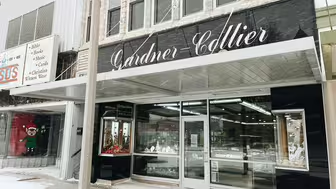
The family-owned jeweler has three locations across Missouri and Iowa.

The De Beers-owned diamond mine in South Africa is being put on ice as part of a round of previously announced cost-cutting measures.

The collection centers designs with clean geometric lines, chunky sculptural pieces, and recognizable details from the luxury fashion brand.
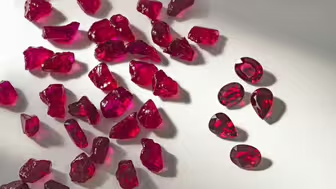
The miner said it saw particularly strong prices for larger, fine-quality rubies at the sale.

The guard opened fire on a man who was smashing a jewelry display case at La Gran Plaza in Fort Worth last week, police said.

The Texas jeweler added 2,000 square feet to its reimagined showroom, complete with a new design studio and an event space.

Jacob & Co.'s diamond masterpiece is the most expensive Fantasy Bra ever worn on the Victoria’s Secret Fashion Show runway.

The “Atelier” collection was inspired by the tools, rituals, and objects in an artist’s studio as a quiet rebuttal to an automated world.
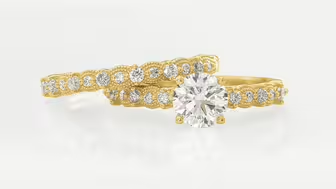
The pending acquisition is an “exciting opportunity” for wedding vendors to grow their business, said The Knot Worldwide’s CEO.

"The Secret Gems" features eight Thai jewelry brands paired with a team of young craftspeople who create jewelry together to win challenges.

The brand’s “Modern Talisman” capsule collection introduces pendants inspired by the mythology, natural world, and spiritual ethos of Bali.

Independent jewelers from New Mexico to New Jersey answer the question: What has kept your store in business for 100 years?

The NRF is expecting holiday sales to increase this year, but consumers and retailers alike are facing Grinch-like headwinds.

Our Piece of the Week gathers the planets, represented by a variety of colored gemstones, in a pair of 14-karat yellow gold earrings.

The New York-based jeweler is moving its Amherst flagship store to a larger location in nearby Snyder.

Chen, who worked at Cartier and Tiffany & Co., will lead retail sales and operations for the luxury jeweler’s 11 U.S. stores.



This site uses cookies to give you the best online experience. By continuing to use & browse this site, we assume you agree to our Privacy Policy