



CollectionsOct 26, 2026
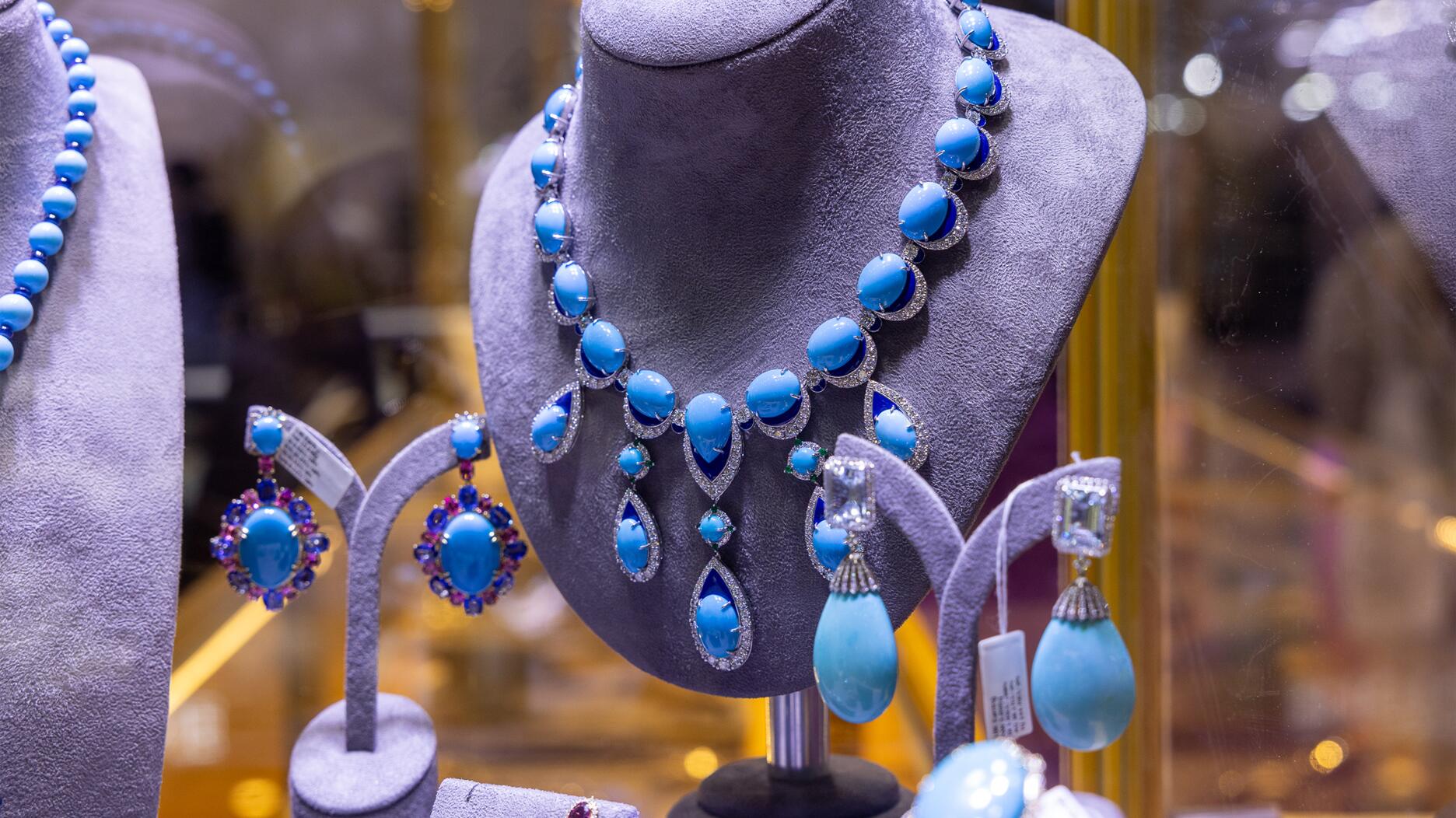
Bliss Lau’s ‘Vantage’ Point Is the Hawaiian HorizonIn her “Vantage” collection, Lau explores heritage, identity, and inner strength through designs featuring blue-green Guatemalan jade.





Live from Conclave, millennial marketing expert Jeff Fromm sets out the new rules for retailers to follow in the digital age.


Los Angeles--Retailers have heard a thing or two about selling according to generation demographics.
They’ve heard about “midults.” They’ve heard about Generation Z. And they’ve probably heard enough about millennials to write a book about them.
But Jeff Fromm, president of consumer trends consultancy Futurecast, is the man who actually has written books on the topic: he’s the co-author of “Marketing to Millennials” and “Millennials with Kids.”
At the American Gem Society’s Conclave education conference, going on now in Los Angeles, Fromm laid out new sales rules for retailers to follow that were far from the typically espoused millennial marketing wisdom.
These rules also apply to an ever-evolving baby boomer customer and beyond.
Here are some of the highlights.
The New ABCs of Sales
Retail jewelers have probably been taught to “always be closing,” but today, Fromm explained, they need to “always be collaborating.”
“It means you’re going to have to be more useful and less pushy,” Fromm said.
Millennial consumers are inherently wary of a sales pitch. They’re digitally savvy and tuned in. They’re “prosumers” rather than consumers, exposed to and capable of processing large amounts of information.
So if a salesperson acts in the role of a trusted advisor, imparting their specific jewelry expertise and making suggestions, rather than someone making a sale, they can create a loyal relationship.
This can be achieved by foregoing rote sales questions like “What is your budget?” and instead, making suggestions and learning about the customer’s needs.
Today’s shoppers already know how to compare prices and work within their own budgets. Retailers should focus on collaborating with their clients and becoming a trusted source of knowledge.
Put the Millennial Focus on Employees
Traditionally in sales, the customer always comes first. But Fromm suggested that to understand a millennial customer, store owners should pay attention to their millennial employees.
“Many of them, in addition to compensation, not in lieu (of), want to work for a brand where their values align with the brand’s values,” he said.
This speaks to the importance of passion in the work place. Millennials want to work with companies they believe in, whether that’s due to an enthusiasm for the product being sold, an emphasis on work/life balance or even the way a company gives back.
The important thing is to understand what your millennial employee wants and what they value, thereby helping stores understand how to connect with their consumer cohort.
“You

In her “Vantage” collection, Lau explores heritage, identity, and inner strength through designs featuring blue-green Guatemalan jade.

The jeweler gave the public backstage tours of its flagship store and its design and innovation workshop as part of LVMH’s open house.

The closure is part of a global restructuring that also includes PGI winding down its operations in Japan, South Korea, and Hong Kong.
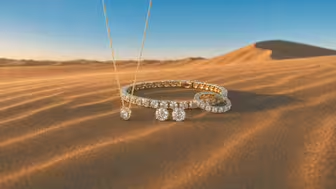
A Diamond Is Forever's holiday campaign reimagines natural diamond icons for a new generation celebrating individuality.


The ring, our Piece of the Week, was designed by eight-year breast cancer survivor Rachel Chalchinsky of Color Source Gems.


The website offers enhanced member benefit access, industry directories, educational resources, a job board, and access to the MJSA Journal.

Boucheron and Pomellato had a strong third quarter, with Kering looking at jewelry as an increasingly important part of its portfolio.

Built on Relationships. Refined by Craft.


Tara Sinchuri was the owner of Everest Jewels in Fairfield, Ohio, and a father of three. He was found dead in his store on Tuesday.

Bespoke experiences from Buccellati and Verdura are on the retailer’s 2026 “Fantasy Gifts” list.

The Academy and Grammy award-winning siblings have collaborated with John Hardy on a new jewelry line inspired by their personal style.


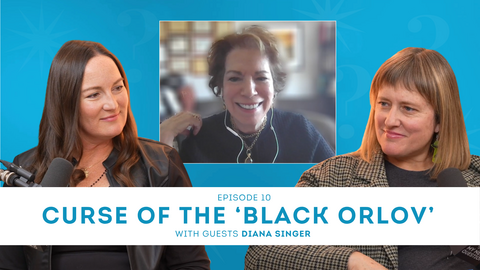
Diana Singer shared the stories of two “cursed” diamonds on this month’s podcast, which was inexplicably riddled with technical issues.

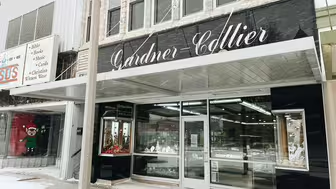
The family-owned jeweler has three locations across Missouri and Iowa.

The De Beers-owned diamond mine in South Africa is being put on ice as part of a round of previously announced cost-cutting measures.

The collection centers designs with clean geometric lines, chunky sculptural pieces, and recognizable details from the luxury fashion brand.
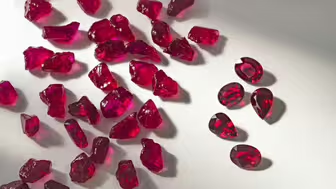
The miner said it saw particularly strong prices for larger, fine-quality rubies at the sale.

The guard opened fire on a man who was smashing a jewelry display case at La Gran Plaza in Fort Worth last week, police said.
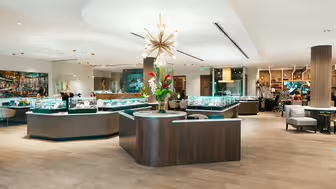
The Texas jeweler added 2,000 square feet to its reimagined showroom, complete with a new design studio and an event space.

Jacob & Co.'s diamond masterpiece is the most expensive Fantasy Bra ever worn on the Victoria’s Secret Fashion Show runway.

The “Atelier” collection was inspired by the tools, rituals, and objects in an artist’s studio as a quiet rebuttal to an automated world.
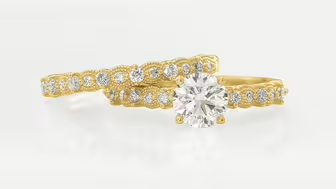
The pending acquisition is an “exciting opportunity” for wedding vendors to grow their business, said The Knot Worldwide’s CEO.

"The Secret Gems" features eight Thai jewelry brands paired with a team of young craftspeople who create jewelry together to win challenges.

The brand’s “Modern Talisman” capsule collection introduces pendants inspired by the mythology, natural world, and spiritual ethos of Bali.
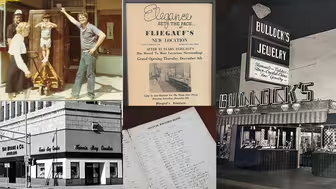
Independent jewelers from New Mexico to New Jersey answer the question: What has kept your store in business for 100 years?

The NRF is expecting holiday sales to increase this year, but consumers and retailers alike are facing Grinch-like headwinds.
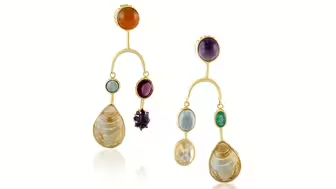
Our Piece of the Week gathers the planets, represented by a variety of colored gemstones, in a pair of 14-karat yellow gold earrings.
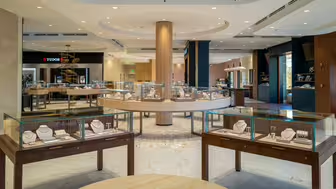
The New York-based jeweler is moving its Amherst flagship store to a larger location in nearby Snyder.



This site uses cookies to give you the best online experience. By continuing to use & browse this site, we assume you agree to our Privacy Policy