







SurveysJan 09, 2026
U.S. Holiday Retail Sales Up 4%, Visa, Mastercard SaySurveysJan 28, 2026
Consumer Confidence Falls Below Pandemic Lows in January
The index fell to its lowest level since May 2014 amid concerns about the present and the future.


The Conference Board’s monthly consumer confidence index fell to 84.5 in January, its lowest level since 2014.
New York—U.S. consumer confidence in January fell to its lowest level since May 2014, surpassing even the lows of the COVID-19 pandemic.
The Conference Board’s monthly Consumer Confidence Index fell to 84.5 in January from an upwardly revised 94.2 in December.
The five-point revision in December reversed the initially reported decline for the month.
“Confidence collapsed in January, as consumer concerns about both the present situation and expectations for the future deepened,” said Dana M. Peterson, chief economist at The Conference Board.
“All five components of the index deteriorated, driving the overall index to its lowest level since May 2014 (82.2)—surpassing its COVID-19 pandemic depths.”
The Conference Board’s Present Situation Index, which measures consumers’ current view of business and labor market conditions, fell to 113.7 in January from 123.6 in December.
The labor market differential—the share of consumers saying jobs are “plentiful” minus the share saying jobs are “hard to get”—continued to fall.
The Expectations Index, which measures consumers’ outlook on income, business, and labor market conditions in the near future, fell to 65.1 in January from 74.6 in December.
It marks the twelfth consecutive month that expectations remained below the threshold of 80, a level which typically signals a recession is ahead, according to The Conference Board.
Expectations for business and labor market conditions six months from now continued to fall while the outlook for household incomes was also more pessimistic.
Related stories will be right here …
The Conference Board’s monthly Consumer Confidence Index fell to 84.5 in January from an upwardly revised 94.2 in December.
The five-point revision in December reversed the initially reported decline for the month.
“Confidence collapsed in January, as consumer concerns about both the present situation and expectations for the future deepened,” said Dana M. Peterson, chief economist at The Conference Board.
“All five components of the index deteriorated, driving the overall index to its lowest level since May 2014 (82.2)—surpassing its COVID-19 pandemic depths.”
The Conference Board’s Present Situation Index, which measures consumers’ current view of business and labor market conditions, fell to 113.7 in January from 123.6 in December.
The labor market differential—the share of consumers saying jobs are “plentiful” minus the share saying jobs are “hard to get”—continued to fall.
The Expectations Index, which measures consumers’ outlook on income, business, and labor market conditions in the near future, fell to 65.1 in January from 74.6 in December.
It marks the twelfth consecutive month that expectations remained below the threshold of 80, a level which typically signals a recession is ahead, according to The Conference Board.
Expectations for business and labor market conditions six months from now continued to fall while the outlook for household incomes was also more pessimistic.
By demographic, confidence on a six-month moving average basis fell for all age groups in January.
However, consumers under 35 continued to be more confident than consumers age 35 and older, with Gen Z the most optimistic of those surveyed.
By income, confidence on a six-month moving average basis was down for all groups, with those earning less than $15,000 still the least optimistic.
By political affiliation, confidence was down for everyone, with Independents seeing the biggest decline.
“Consumers’ write-in responses on factors affecting the economy continued to skew towards pessimism,” said Peterson.
“References to prices and inflation, oil and gas prices, and food and grocery prices remained elevated. Mentions of tariffs and trade, politics, and the labor market also rose in January, and references to health/insurance and war edged higher.”
The survey also asked consumers about their interest rate expectations.
Fewer respondents said they expect interest rates to be net higher 12 months from now. This follows the Federal Reserve’s decision to cut monetary policy rates in December.
The balance of consumers’ expectations for stock prices 12 months from now—higher minus lower—retreated after an uptick.
When asked about their view of their family’s current financial situation, the responses improved slightly in January.
However, their expectations for their family’s future financial situation were more pessimistic.
As for a recession, more people said a recession in the next 12 months is “very likely” and more people said the United States is “already in one.” These measures are not included in calculating the Consumer Confidence Index.
Looking at plans for big-ticket purchases, consumers seemed more cautious over the next six months, The Conference Board said, with fewer people saying “yes” to a big purchase and more saying “no” and “maybe.”
Overall buying plans for automobiles were flat in January. Plans to buy news cars continued to fall on a six-month moving average basis, while plans to buy used cars rose.
Plans to buy a home continued to slip, as did plans to buy refrigerators, dishwashers, furniture, and TVs.
Plans to buy electronics fell in all categories except smartphones.
Used cars, furniture, TVs, and smartphones remained the most popular within their categories for future purchases.
Plans to spend on services were weaker in January.
“Consumer spending trends in 2025 moved towards cheap thrills and necessary services, and away from expensive and highly discretionary activities. These behaviors spilled over into the new year,” said The Conference Board.
In January, the top categories for planned services spending were restaurants, bars, and take-out.
Respondents also said they intended to spend more on hotels or motels for personal travel, motor vehicle services, household maintenance, and airfare or trains for personal travel.
“The increased intentions to spend more on travel-related services in the first half of 2026 was surprising, given the plunge in vacation plans, especially for domestic travel, also recorded in the survey,” said The Conference Board.
The Consumer Confidence survey results for February are scheduled to be released on Feb. 24.


More on Surveys




The Latest
CollectionsOct 16, 2026
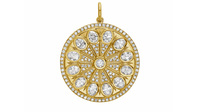
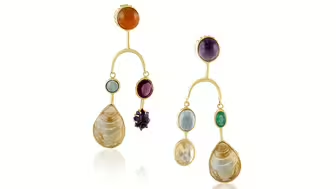
Christina Puchi’s Earrings Hold the UniverseOur Piece of the Week gathers the planets, represented by a variety of colored gemstones, in a pair of 14-karat yellow gold earrings.


IndependentsOct 16, 2026
Reeds Jewelers Expands, Relocates FlagshipThe New York-based jeweler is moving its Amherst flagship store to a larger location in nearby Snyder.


MajorsOct 16, 2026
Katy Chen Appointed Executive Vice President of Graff USA Chen, who worked at Cartier and Tiffany & Co., will lead retail sales and operations for the luxury jeweler’s 11 U.S. stores.


Brought to you by
Meet Gemology’s Next Generation Microscope: GIA® Gemolite® NXT Professional EditionExperience gemstones with greater precision and comfort than ever before.


IndependentsOct 15, 2026
Retailer Hall of Fame 2026: Amy and Elise Greenberg For 40 years, sisters Amy and Elise Greenberg have helmed their 126-year-old family business, leading with appreciation and integrity.
Weekly QuizOct 15, 2026
This Week’s QuizTest your jewelry news knowledge by answering these questions.

ColumnistsOct 15, 2026
Peter Smith: What Is the Culture REP?It’s a term Smith coined and felt compelled to share following a bad experience with an aborted flight and an unfeeling flight attendant.

WatchesOct 15, 2026
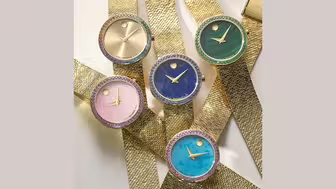
Stephanie Gottlieb’s New Movado Watches Are Made for Your Wrist StackMovado teamed up with the New York-based fine jewelry designer on a new collection of Movado Museum Velura watches.

Brought to you by
Your Piece Could Be the One Editors Talk AboutSubmit your pieces for a chance to win in this year's competition.


SourcingOct 15, 2026
Signet Jewelers, Richemont May Join Bidder for De Beers, Report SaysThe two companies are reportedly in talks to join the Global Diamond Consortium, led by former De Beers CEO Gareth Penny, as per Bloomberg.
CollectionsOct 15, 2026
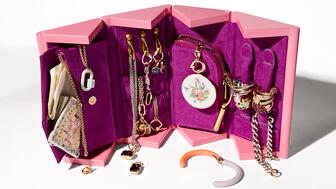
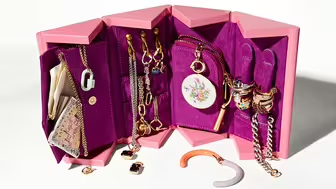
Wolf x Marla Aaron's New Jewelry Box Is for Some (Not All) of Your ThingsThe “Some of the Things” box follows the two larger “Everything” box designs with the look and function of antique sewing and toolboxes.

IndependentsOct 14, 2026
Retailer Hall of Fame 2026: Coleman and Mitchell ClarkFourth-generation jewelers Coleman and Mitchell Clark exemplify the best qualities of their predecessors: humility, modesty, and confidence.

SourcingOct 14, 2026
Manuel Marcial de Gomar, ‘The Emerald Whisperer,’ Dies at 90The gem hunter, whose 70-year career was defined by adventure and exploration, is remembered for his steadfast faith and sense of wonder.

FinancialsOct 14, 2026
LVMH’s Jewelry Brands Turn in ‘Very Good’ Performance in Q3 Tiffany & Co. continued its full-scale store renovation project while Bulgari’s high jewelry collection generated “record-breaking revenue.”

Events & AwardsOct 14, 2026
Chicago Responsible Jewelry Conference Releases 2026 ProgramThis year’s sessions feature leading voices from human rights, legal, and conservation organizations.

MajorsOct 13, 2026
David Webb Owner Purchases Lugano JewelryThe high-end jewelry retailer was sold to private investment firm Middle West Partners and a group of longtime clients.

Lab-GrownOct 13, 2026
Stephanie Gottlieb Takes Lab-Grown Diamond Collection WholesaleThe jewelry designer has partnered with Sofer Jewelry to distribute her 85-piece lab-grown diamond collection.

IndependentsOct 13, 2026
Retailer Hall of Fame 2026: Sean DunnDunn, this year’s Single-Store Independent inductee, is passionate about innovation and telling the story of natural diamonds.

AuctionsOct 13, 2026
Christie's Geneva To Auction 'Bulgari Pink' DiamondThe 24-carat fancy intense pink diamond ring could fetch up to $18 million at the November sale.

IndependentsOct 13, 2026
Greenwich St. Jewelers’ New Candle Smells Like HomeThe “Island Jewel” candle honors New York City and Puerto Rico and raises money for the island’s water relief efforts.
TechnologyOct 13, 2026
GemFind Is a New JA Member Benefit Partner The partnership will give JA members access to preferred pricing, exclusive benefits, technology solutions, education, and resources.

CollectionsOct 09, 2026
Elisa Solomon Collabs With Serendipity 3 on ‘Frozen Hot Chocolate’ CharmThe charm, our Piece of the Week, features brown diamond frozen hot chocolate topped with white diamond whipped cream and a ruby straw.

AuctionsOct 09, 2026
8-Carat Blue Diamond Goes Unsold at UK Jewelry Auction The top lot of Elmwood’s recent fine jewelry sale in London was a 1.84-carat, D color Tiffany & Co. solitaire diamond ring.

WatchesOct 09, 2026
Movado to Sell Majority Stake in Ebel for $66.5MThe watch company agreed to sell a 95 percent interest to a group comprised of F.P. Journe, Chanel, and Swiss watch exec Pierre Jacques.

Policies & IssuesOct 08, 2026
Third Wave of IEEPA Tariff Refunds Begins This round of tariff refunds is for importers that have sued over IEEPA tariffs in the Court of International Trade and won.

CollectionsOct 08, 2026
Brent Neale’s New Collection Goes ‘Back to Basics’It revisits the brand’s most requested silhouettes, from "Pillow"-set necklaces and bracelets to "Signature"-set rings and earrings.

SourcingOct 08, 2026
Ethical Gem Fair Heads Back to BrooklynThe trade-only event includes buying opportunities as well as educational sessions on artisanal mining, the new Paraíba source, and more.

Events & AwardsOct 08, 2026
Pattons Fine Jewelry Sweeps Local Design ContestAra Chanakian, a jeweler at Pattons, took home top honors in every category at Jewelers of Louisiana’s annual jewelry design competition.