






CrimeNov 20, 2024
Sotheby’s to Pay $6.25M Settlement to NY State for Alleged Tax FraudMajorsNov 21, 2024
Harris Jewelry Ordered to Reopen Claims Portal for Refund Requests
A federal court found that the jewelry store chain violated terms of the settlement reached after it was accused of defrauding customers.


A federal court has ordered Harris Jewelry to restore its website to accept refund requests from the customers it is accused of defrauding. Claims made by eligible customers will be processed now through Dec. 21.
New York—Harris Jewelry, the now-closed retailer that reached a settlement in 2022 after it was accused of cheating customers, has been ordered by a federal court to restore its website and reopen its claims process to allow customers to submit refund requests.
Founded in 1955 by U.S. Marine and World War II veteran Jerome L. Harris, Harris Jewelry had stores on and near military bases nationwide, meaning many of its customers were active duty servicemembers.
In July 2022, the Federal Trade Commission and a group of 18 states led by the New York Attorney General’s Office took legal action against the retailer, accusing it of cheating its customers through illegal financing and sales practices.
The complaint claimed that the New York-based jeweler took advantage of its customers by telling them that financing jewelry through the company would boost their credit scores, which was not true in most cases; telling customers they had to purchase the store’s Lifetime Jewelry and Watch Protection Plan in order to finance their purchase, which was not the case; and routinely adding protection plans costing between $40 and $350 to customers’ bills without disclosure.
These alleged actions violated several financial consumer protection laws, including the Military Lending Act.
Earlier this week, the court found Harris Jewelry violated the settlement by prematurely shutting down the claims portal, according to an FTC press release.
The new claims process will be open for 33 days, from Nov. 18 through Dec. 21.
The court’s action is meant to provide consumers “fair and sufficient time” to file claims for refunds.
Harris Jewelry also will have to renotify customers about the option to request a refund, the FTC said.
Related stories will be right here …
Founded in 1955 by U.S. Marine and World War II veteran Jerome L. Harris, Harris Jewelry had stores on and near military bases nationwide, meaning many of its customers were active duty servicemembers.
In July 2022, the Federal Trade Commission and a group of 18 states led by the New York Attorney General’s Office took legal action against the retailer, accusing it of cheating its customers through illegal financing and sales practices.
The complaint claimed that the New York-based jeweler took advantage of its customers by telling them that financing jewelry through the company would boost their credit scores, which was not true in most cases; telling customers they had to purchase the store’s Lifetime Jewelry and Watch Protection Plan in order to finance their purchase, which was not the case; and routinely adding protection plans costing between $40 and $350 to customers’ bills without disclosure.
These alleged actions violated several financial consumer protection laws, including the Military Lending Act.
Earlier this week, the court found Harris Jewelry violated the settlement by prematurely shutting down the claims portal, according to an FTC press release.
The new claims process will be open for 33 days, from Nov. 18 through Dec. 21.
The court’s action is meant to provide consumers “fair and sufficient time” to file claims for refunds.
Harris Jewelry also will have to renotify customers about the option to request a refund, the FTC said.
The FTC is encouraging consumers who purchased items from Harris Jewelry and paid for a protection plan and have yet to file a claim, or who have filed a claim but have not yet heard back, to request a refund via the Harris Jewelry website as soon as possible.
Harris Jewelry neither admitted nor denied the allegations but did agree under the settlement to issue refunds, which could total $10.9 million, to more than 46,000 customers who unknowingly paid for a warranty for their jewelry.
In addition to providing these refunds, the jeweler was ordered by the FTC to stop collecting millions of dollars in debt, issue refunds for overpayments, and assist with the deletion of any negative credit entries pertaining to debt in consumers’ credit reporting files.
As part of the settlement, the jeweler also had to entirely shut down its business.
It closed all 18 of its stores in the spring of 2021 and said it was moving its business online, citing declining sales due to the COVID-19 pandemic.
Editors' Picks
Sponsored by


More on Majors


The Latest
SurveysAug 26, 2026
5 Jewelry Insights From The RealReal’s Resale ReportThe report delves into trending styles, the most popular jewelry brands by city, and why Belle Époque jewelry could be the next big thing.
SourcingAug 26, 2026
AGTA Now Requiring Members to Call Lab-Grown Gems ‘Synthetic’The association added the requirement to its revised "Code of Ethics" and released the 17th edition of its “Gemstone Information Manual.”


SurveysAug 26, 2026
Consumer Confidence Dips in August Amid Anticipatory Anxieties Respondents were concerned about the future of the labor market and their income as well as the rising prices of gas and groceries.
Brought to you by
Your Piece Could Be the One Editors Talk AboutSubmit your pieces for a chance to win in this year's competition.


TrendsAug 26, 2026
Boucheron’s New Campaign Celebrates Its ‘Question Mark’ NecklacesThe campaign highlights the asymmetrical high jewelry necklace style that the jeweler first created in 1879.

Weekly QuizAug 20, 2026
This Week’s QuizTest your jewelry news knowledge by answering these questions.

Events & AwardsAug 26, 2026
Harry Winston Exhibition to Open in ShanghaiIt will explore the life of “The King of Diamonds” and showcase more than 165 creations from the brand.

CrimeAug 25, 2026
Florida Woman Scammed Out of $1.5M in Jewelry, Precious MetalsTwo suspects have been arrested in connection with the complex phone scam.

Brought to you by
Why More Jewelry Retailers Are Hosting Turnkey Estate Buying EventsRetailers are seeking new ways to attract customers, increase traffic, and create revenue – Estate buying events are a popular solution.


ColumnistsAug 25, 2026
Proof Before Purchase: The Gen Z Way to BuyIn her first column for National Jeweler, Jennifer Shaheen asks jewelers if they know how to connect with the next generation of consumers.


Events & AwardsAug 25, 2026
SSEF Opens 2026 Applications for Gemology Education ScholarshipsThe annual awards cover tuition for an on-site educational course at the Swiss lab, as well as flights and lodging.
TrendsAug 25, 2026
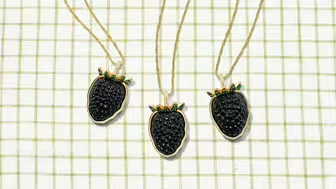
Brent Neale Celebrates Blackberry Farm’s Anniversary With JewelryThe jeweler partnered with the Tennessee resort to honor its 50th anniversary with limited-edition blackberry pendants and earrings.

EditorsAug 24, 2026
Q&A: Reeds Jewelers VP Genna Zimmer on 80 Years in BusinessThe third-generation jeweler shared how the North Carolina retailer is celebrating this milestone and the love story that started it all.
Events & AwardsAug 24, 2026
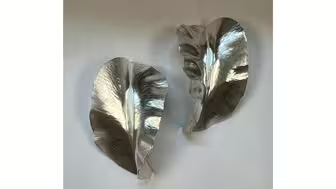
Rio Grande, MetalWerx Host Argentium Silver WorkshopThe class, led by renowned metalsmith Cynthia Eid, highlighted Argentium silver as an alternative to gold amid high prices.

Events & AwardsAug 24, 2026
JIS Miami Opens Fall 2026 RegistrationThe show is slated for Oct. 16-19 at the Miami Beach Convention Center.

CollectionsAug 24, 2026
Francesca Villa Honors Napoleon, His Empresses In New CapsuleThe “Empresses” capsule uses 19th-century medals depicting Napoleon, Joséphine, and Marie-Louise across five one-of-a-kind pieces.

SurveysAug 21, 2026
These Are 2026’s Hottest Retailers, Says NRFThe retailers at the top of the list offer affordable products and fun, discovery-fueled experiences.

WatchesAug 21, 2026
Bremont Names Former Vacheron Constantin Exec CMODaniel Bing was formerly the marketing director for the Americas at Vacheron Constantin.
CollectionsAug 21, 2026
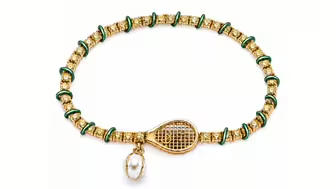
Bijules, Kamyen Serve Up ‘Topspin’ Tennis Bracelet Ahead of US OpenIn our Piece of the Week, the designers reimagine the tennis bracelet with green enamel wrapped around a strand of “Desert Diamonds.”

PodcastsAug 20, 2026
Episode 8: Diamond Industry Update With David Bonaparte & Ronnie VanderLindenThe industry veterans join the podcast to discuss diamond marketing, the FTC Jewelry Guides, and lobbying for lower tariffs.

TechnologyAug 20, 2026
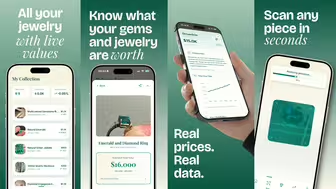
A New AI-Powered Gemstone Identification App Is HereFounder Vik Westermann said the app is a “starting point” to inspire people to work with appraisers and gem labs, not replace them.
AuctionsAug 20, 2026
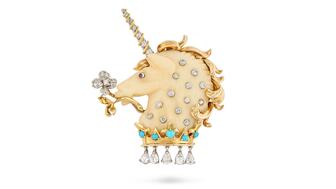
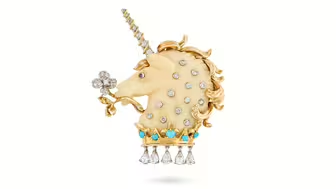
Storied Unicorn Brooch Up for Auction Gallops to New Home The Verdura brooch, which belonged to the late Virginia Fortune Ryan Ogilvy, was sold to a private collector in Asia.

Events & AwardsAug 20, 2026
MJSA Education Foundation Names 5 Scholarship WinnersThe five students were awarded a total of $10,000 through the nonprofit’s 2026 “Future of Jewelry Making” scholarship.

Policies & IssuesAug 19, 2026
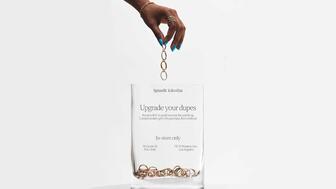
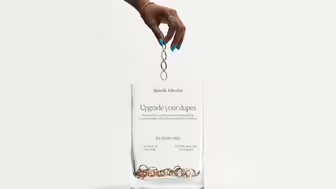
Spinelli Kilcollin Embraces Dupes With Trade-In ProgramThe jeweler is encouraging customers who own lookalike rings to come into the store and trade them for credit towards an authentic piece.
MajorsAug 19, 2026
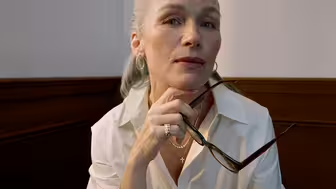
Zales Wants You to Wear Fine Jewelry Every DayThe new campaign, “You Are The Occasion,” discourages shoppers from saving their fine jewelry for special occasions only.

SourcingAug 19, 2026
Vasant Mehta, a Dedicated Diamond Industry Leader, Dies at 81Mehta led India’s GJEPC through the 2008 financial crisis and was respected worldwide for his wisdom, integrity, and knowledge.


CrimeAug 18, 2026
2 California Men Arrested in Fatal Vehicle Smash RobberyOne is the driver who allegedly crashed a car into a Sacramento jewelry store in April, striking a 71-year-old employee who later died.

ColumnistsAug 18, 2026
Peter Smith: The IKEA Effect and Bridal Branding In a new column, Peter Smith posits that people actually enjoy putting together IKEA furniture, and the same is true for engagement rings.