



CollectionsOct 26, 2026
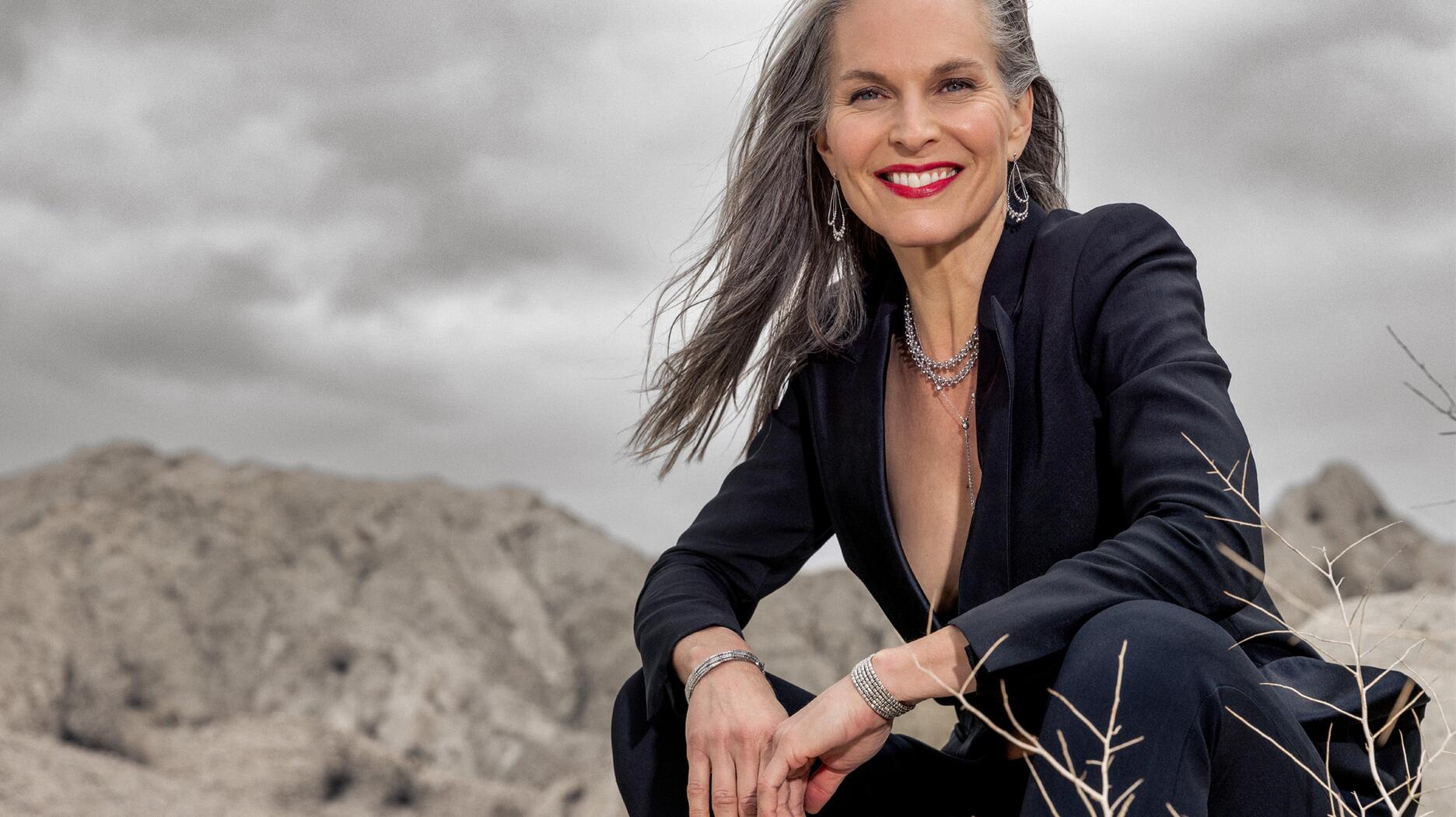
Bliss Lau’s ‘Vantage’ Point Is the Hawaiian HorizonIn her “Vantage” collection, Lau explores heritage, identity, and inner strength through designs featuring blue-green Guatemalan jade.





Primary lender Wells Fargo submitted a $16 million credit bid for all the Texas-based retailer’s assets, but some vendors want their consigned goods exempt from the deal.

Wilmington, Del.—Samuels Jewelers, an Austin, Texas-based retailer dating back to 1891, will shutter all its stores by Monday.
The retailer, which filed Chapter 11 in August, had hoped to sell its assets as a going concern, but a credit bid from Wells Fargo, the company’s primary lender, sent dreams of a sale up in smoke.
The $16 million credit bid covers all the company’s assets, including its intellectual property and websites.
As of Jan. 22, the company owed Wells Fargo $51.5 million under its revolving loan obligations, as per court documents.
Samuels Jewelers is not unfamiliar with bankruptcy court, having filed for Chapter 11 twice under its former name Barry’s and again as Samuels Jewelers in 2003.
Indian company Gitanjali Gems Ltd. bought the chain in 2006—later also acquiring Rogers Ltd. and then merging the two companies—and looked to vertically integrate the retailer by supplying the stores with jewelry crafted at its plants in India.
But the company struggled in the face of increasing competition from online and discount retailers, and then was ultimately felled earlier this year when news broke of a $2 billion bank scandal allegedly involving Gitanjali Chairman Mehul Choksi, a scandal that resulted in the chain losing its source of funding and product.
Punjab National Bank, a state-run Indian bank, told Indian authorities on Jan. 29, 2018 that Choksi was part of what the bank called one of the largest bank frauds in Indian history.
Court documents allege that Choksi, his nephew Nirav Modi, a jeweler and diamond merchant in his own right, and Samuels Chief Financial Officer Sunil Varma fraudulently borrowed approximately $2 billion from banks via letters of undertaking and foreign letters of credit.
“The alleged fraud consisted of obtaining bank loans by manufacturing sham transactions to ‘import’ jewelry into India using a web of secretly controlled shell entities,” court documents state.
Choksi and his nephew have denied the charges and reportedly left India before authorities could file charges against them.
An interesting note from the lengthy court documents filed in the Samuels bankruptcy case includes an email from Samuels CEO Farhad Wadia to Sunil Varma on May 10, 2017, entitled “Serious Issues at Samuels” along with 15 attachments describing “egregious issues” at the retailer.
The email detailed a number of concerns, including royalty payments of $5.4 million Wadia thought to be fraudulent from a Middle Eastern “paper company” and information about “circular transactions” that were inflating sales number to

In her “Vantage” collection, Lau explores heritage, identity, and inner strength through designs featuring blue-green Guatemalan jade.

Vote for which jewelry professional should dress up as a monster to support Jewelers for Children’s annual Halloween fundraiser.

The ring, our Piece of the Week, was designed by eight-year breast cancer survivor Rachel Chalchinsky of Color Source Gems.
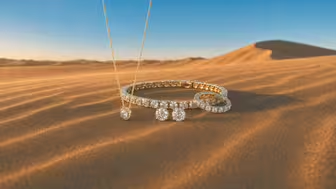
A Diamond Is Forever's holiday campaign reimagines natural diamond icons for a new generation celebrating individuality.


The website offers enhanced member benefit access, industry directories, educational resources, a job board, and access to the MJSA Journal.


Boucheron and Pomellato had a strong third quarter, with Kering looking at jewelry as an increasingly important part of its portfolio.

Tara Sinchuri was the owner of Everest Jewels in Fairfield, Ohio, and a father of three. He was found dead in his store on Tuesday.

Built on Relationships. Refined by Craft.


Bespoke experiences from Buccellati and Verdura are on the retailer’s 2026 “Fantasy Gifts” list.

The number of participants at the fall show was up 12 percent.

The Academy and Grammy award-winning siblings have collaborated with John Hardy on a new jewelry line inspired by their personal style.
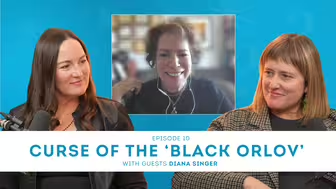

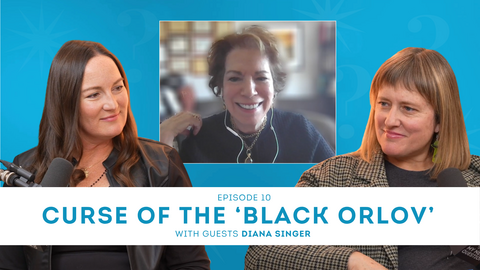
Diana Singer shared the stories of two “cursed” diamonds on this month’s podcast, which was inexplicably riddled with technical issues.

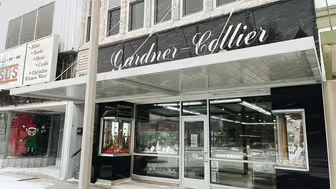
The family-owned jeweler has three locations across Missouri and Iowa.

The De Beers-owned diamond mine in South Africa is being put on ice as part of a round of previously announced cost-cutting measures.

The collection centers designs with clean geometric lines, chunky sculptural pieces, and recognizable details from the luxury fashion brand.
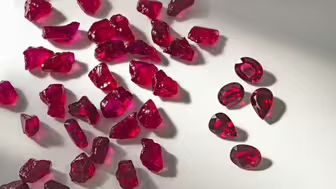
The miner said it saw particularly strong prices for larger, fine-quality rubies at the sale.

The guard opened fire on a man who was smashing a jewelry display case at La Gran Plaza in Fort Worth last week, police said.
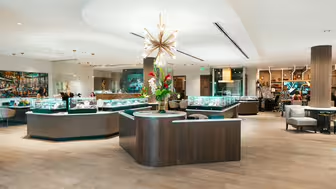
The Texas jeweler added 2,000 square feet to its reimagined showroom, complete with a new design studio and an event space.
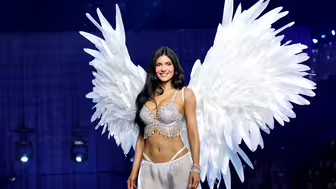
Jacob & Co.'s diamond masterpiece is the most expensive Fantasy Bra ever worn on the Victoria’s Secret Fashion Show runway.

The “Atelier” collection was inspired by the tools, rituals, and objects in an artist’s studio as a quiet rebuttal to an automated world.
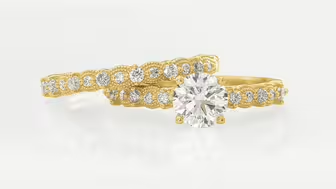
The pending acquisition is an “exciting opportunity” for wedding vendors to grow their business, said The Knot Worldwide’s CEO.

"The Secret Gems" features eight Thai jewelry brands paired with a team of young craftspeople who create jewelry together to win challenges.

The brand’s “Modern Talisman” capsule collection introduces pendants inspired by the mythology, natural world, and spiritual ethos of Bali.
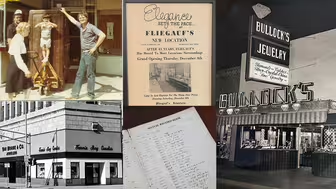
Independent jewelers from New Mexico to New Jersey answer the question: What has kept your store in business for 100 years?
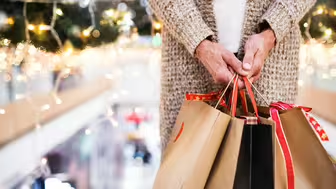
The NRF is expecting holiday sales to increase this year, but consumers and retailers alike are facing Grinch-like headwinds.
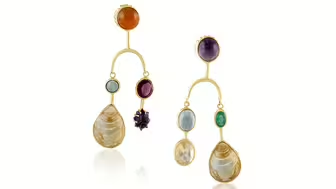
Our Piece of the Week gathers the planets, represented by a variety of colored gemstones, in a pair of 14-karat yellow gold earrings.
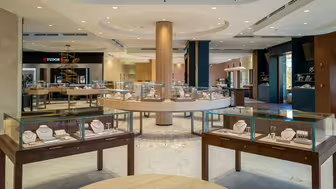
The New York-based jeweler is moving its Amherst flagship store to a larger location in nearby Snyder.



This site uses cookies to give you the best online experience. By continuing to use & browse this site, we assume you agree to our Privacy Policy