





SourcingOct 05, 2026
De Beers to Take Full Ownership of Gahcho KuéIt is the last fully operational diamond mine in Canada following the recent closures of Ekati and Diavik.





Senior Editor Brecken Branstrator details 5 interesting facts about the gemstone that is cut from the fossilized shells of a prehistoric creature.


There’s a gemstone that’s garnering more attention that could speak to those who not only like gemstones with provenance but also with a pretty cool back story.
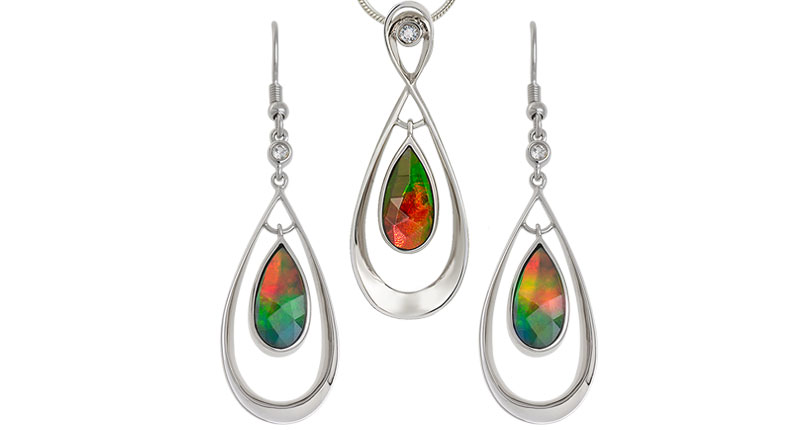
Ammolite, the iridescent gemstone that’s actually cut from the fossilized shells of a prehistoric creature, comes from only one source only.
The gems have a truly fascinating story; here are five things you should know about them.
1. Nomenclature is key. There’s a difference in the names when it comes to gem versus fossil.
According to the GIA’s Gems & Gemology, ammonites were squid-like creatures with sharp, beak-like jaws, a spiral shell and tentacles. They went extinct about 66 million years ago.
Ammolite, meanwhile, is the trade name for the iridescent, nacreous layer of the shell of fossilized ammonite. Commercial quantities of gem-quality ammolite are only known to come very a few specific types of ammonite shells, the G&G article said.
The GIA said that a number of things must happen for ammonite to become an ammolite gem. It has to be buried quickly, deprived of oxygen, protected from heat and excessive weight, and not be scavenged.



It is the last fully operational diamond mine in Canada following the recent closures of Ekati and Diavik.

These jewels stood out at Bonhams’ sale of the cat-loving tech entrepreneur’s collection of objects depicting the feline form.

The fine jewelry brand has expanded the collection that debuted at Couture with four new designs based on its most popular styles.

Experience gemstones with greater precision and comfort than ever before.


The AGTA president was elected for a two-year term on the board of directors.


The partnership, a pledge to protect Africa’s Okavango River Basin, has been extended for an additional five years.

The new facility, its first outside of Thailand, will boost its manufacturing capacity by 50 percent.
Submit your pieces for a chance to win in this year's competition.


The special-edition “Dream” pendant, our Piece of the Week, was created to mark Hearts On Fire’s 30-year milestone with 30 diamonds.

Dubai Jewelers in Springfield, Virginia, was once again the target of an armed robbery.

YouGov’s 2026 U.S. Most Recommended Brands report’s out, and a fast-fashion giant is sitting at No. 1 while Rolex is just shy of the top 5.

Proceeds from its jewelry raffle will benefit an organization working in India to combat silicosis, a lung disease affecting stone cutters.

The rings, crafted by Jason of Beverly Hills, celebrate the hockey team’s Stanley Cup win with design elements that honor its traditions.

This roundup of birthstone jewelry for October features vibrant tourmalines and opals with personality.

President Duma Boko spoke at back-to-back events in the city last week, touting Botswana’s stability and the diamond “bounceback.”

The catalog showcases 112 new, one-of-a-kind pieces amid highlights from the jeweler’s historic archive.

Its Montepuez Ruby Mining operation in Mozambique, which is not yielding enough high-quality rubies, has taken a $125 million hit.

Those surveyed were worried about the present and the future, with write-in responses mentioning high oil and gas prices.

The event will take place on the evening of Oct. 26 in New York City.

She is remembered for her joie de vivre, upbeat personality, genuine interest in other people, and love of the Alabama Crimson Tide.

Online bidding is open now for Julien’s sale of items owned by the “Walk On By” singer, whose final album comes out this fall.

The founder and executive chairman of Stuller Inc. is being honored for his impact on the jewelry industry at the 25th annual Gem Awards.

December is the most popular month to propose, and jewelers need to keep that in mind when planning their holiday marketing.

Cat ladies of the jewelry world, unite. Sandy Lerner’s collection of cat jewelry and other objects is going up for auction Wednesday.

“Vibrations” features several firsts for De Beers’ high jewelry, including the use of chalcedony and diamonds sourced from artisanal miners.

The “Bows” collection features three interpretations of the bow motif designed with Georgian and Victorian influences.

The American Gem Society recognized industry members, one Guild, and a law enforcement official for their contributions to jewelry.



This site uses cookies to give you the best online experience. By continuing to use & browse this site, we assume you agree to our Privacy Policy