






CrimeApr 17, 2026
FBI Issues Warning to Refineries, Retailers Due to High Price of GoldCrimeApr 22, 2026
New Mexico Couple Pleads Guilty to Selling Fake Native American Jewelry
The pair falsely claimed their jewelry was made by Navajo artists, but it was imported from Vietnam.


New Mexico jewelers Kiem Thanh Huynh and My Ngoc Truong pleaded guilty to smuggling and violating the federal Indian Arts and Crafts Act.
Asheville, N.C.—A couple from New Mexico has pleaded guilty to smuggling and selling fake Native American jewelry.
Kiem Thanh Huynh, 60, and My Ngoc Truong, 61, admitted to smuggling jewelry into the United States from Vietnam and selling it to consumers as authentic, Native American-made jewelry, according to a press release from the office of Russ Ferguson, U.S. attorney for the Western District of North Carolina.
The husband and wife appeared in court in Asheville, North Carolina, on Monday, pleading guilty to misrepresentation of Indian goods in an amount greater than $1,000, in violation of the federal Indian Arts and Crafts Act, and to smuggling.
The Indian Arts and Crafts Act is a truth-in-marketing law that seeks to prevent counterfeits from entering the American Indian and Alaska Native (Indian) art and crafts marketplace, said Meridith Stanton, director of the Indian Arts and Crafts Board of the U.S. Department of the Interior.
As per court documents and the plea hearing, Huynh and Truong co-owned MT Jewelry MFG. Inc. (MT Jewelry) in Albuquerque, New Mexico.
Marketed to wholesale customers, the business’ website claimed it specialized in “creating unique and handmade southwestern jewelry.”
The pair traveled to trade shows throughout the U.S., including in Western North Carolina, where they sold their merchandise as authentic Native American jewelry.
However, most of the jewelry they sold was not “Indian produced or the product of an Indian tribe,” said officials.
Related stories will be right here …
Kiem Thanh Huynh, 60, and My Ngoc Truong, 61, admitted to smuggling jewelry into the United States from Vietnam and selling it to consumers as authentic, Native American-made jewelry, according to a press release from the office of Russ Ferguson, U.S. attorney for the Western District of North Carolina.
The husband and wife appeared in court in Asheville, North Carolina, on Monday, pleading guilty to misrepresentation of Indian goods in an amount greater than $1,000, in violation of the federal Indian Arts and Crafts Act, and to smuggling.
The Indian Arts and Crafts Act is a truth-in-marketing law that seeks to prevent counterfeits from entering the American Indian and Alaska Native (Indian) art and crafts marketplace, said Meridith Stanton, director of the Indian Arts and Crafts Board of the U.S. Department of the Interior.
As per court documents and the plea hearing, Huynh and Truong co-owned MT Jewelry MFG. Inc. (MT Jewelry) in Albuquerque, New Mexico.
Marketed to wholesale customers, the business’ website claimed it specialized in “creating unique and handmade southwestern jewelry.”
The pair traveled to trade shows throughout the U.S., including in Western North Carolina, where they sold their merchandise as authentic Native American jewelry.
However, most of the jewelry they sold was not “Indian produced or the product of an Indian tribe,” said officials.
Between December 2023 and July 2024, officials intercepted six shipments from Vietnam that were headed to MT Jewelry.
They contained pendants, bracelets, and rings made in Vietnam to resemble Native American-style jewelry.
The jewelry featured gemstones as well as “fish or wildlife products,” and were marked with inscriptions or other hallmarks commonly used by Native artists to authenticate their work.
Huynh and Truong did not mark the items in a way that indicated they were imported, officials said.
When pleading guilty, the pair admitted that, on two occasions, they attended GLW Shows in Western North Carolina where they sold counterfeit Native American jewelry contained in shipments flagged by investigators.
At their shop in Albuquerque, the couple told customers their workers were Navajo and that the jewelry was made by Native American artists.
“Those who profit by passing off counterfeit goods as authentic Native American items are not just deceiving buyers, they are exploiting culture and taking income from Native American artists and their communities,” U.S. Attorney Ferguson said.
While the law protects consumers and the economic livelihoods of Native artists and artisans, Stanton added that it also helps to preserve the artists’ cultural heritage.
“Authentic Indian art and craftwork is a critically important tool for the passage of cultural traditions, traditional knowledge, and artistic skills from one generation to the next,” she said.
Huynh and Truong will remain free pending sentencing. They face a maximum sentence of up to five years in prison for violating the Indian Arts and Crafts Act and up to 20 years for the smuggling charge.
They have agreed to forfeit around $341,968, the proceeds of their sales of fake Native American jewelry.
In a recent similar case, a Florida man who passed off jewelry made overseas as authentic, handmade Native American works was fined $25,000 and sentenced to three years of probation.
Editors' Picks
Sponsored by


More on Crime



The Latest

IndependentsOct 20, 2026
David Gardner’s Jewelers Unveils Newly Expanded, Revamped ShowroomThe Texas jeweler added 2,000 square feet to its reimagined showroom, complete with a new design studio and an event space.

SourcingOct 20, 2026
The $50M Victoria’s Secret ‘Fantasy Bra’ By The NumbersJacob & Co.'s diamond masterpiece is the most expensive Fantasy Bra ever worn on the Victoria’s Secret Fashion Show runway.


CollectionsOct 20, 2026
Mignon Faget’s Collection Chooses Handmade Over AIThe “Atelier” collection was inspired by the tools, rituals, and objects in an artist’s studio as a quiet rebuttal to an automated world.


Brought to you by
Open an Account, Get $50 Off Your First Order. No Code Needed.Built on Relationships. Refined by Craft.

MajorsOct 19, 2026
The Knot to Acquire Rival Wedding Planning Platform ZolaThe pending acquisition is an “exciting opportunity” for wedding vendors to grow their business, said The Knot Worldwide’s CEO.
Weekly QuizOct 15, 2026
This Week’s QuizTest your jewelry news knowledge by answering these questions.


SourcingOct 19, 2026
Jewelry Design Competition Show Airs in Thailand"The Secret Gems" features eight Thai jewelry brands paired with a team of young craftspeople who create jewelry together to win challenges.

CollectionsOct 19, 2026
John Hardy Enters the Medallion Chat With Talisman Collection The brand’s “Modern Talisman” capsule collection introduces pendants inspired by the mythology, natural world, and spiritual ethos of Bali.

Brought to you by
Meet Gemology’s Next Generation Microscope: GIA® Gemolite® NXT Professional EditionExperience gemstones with greater precision and comfort than ever before.

IndependentsOct 19, 2026
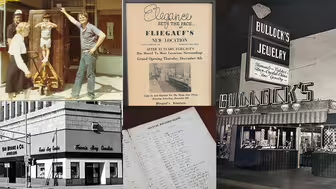
The Stories of 5 Jewelers Celebrating Their Centennials in 2026Independent jewelers from New Mexico to New Jersey answer the question: What has kept your store in business for 100 years?


SurveysOct 16, 2026
How Inflation, Gas Prices Will Affect Holiday Sales The NRF is expecting holiday sales to increase this year, but consumers and retailers alike are facing Grinch-like headwinds.
CollectionsOct 16, 2026
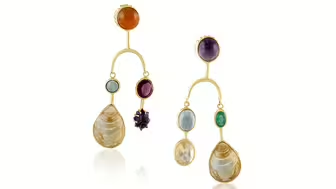
Christina Puchi’s Earrings Hold the UniverseOur Piece of the Week gathers the planets, represented by a variety of colored gemstones, in a pair of 14-karat yellow gold earrings.
IndependentsOct 16, 2026
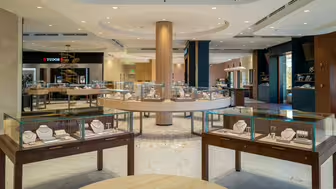
Reeds Jewelers Expands, Relocates FlagshipThe New York-based jeweler is moving its Amherst flagship store to a larger location in nearby Snyder.

MajorsOct 16, 2026
Katy Chen Appointed Executive Vice President of Graff USA Chen, who worked at Cartier and Tiffany & Co., will lead retail sales and operations for the luxury jeweler’s 11 U.S. stores.

IndependentsOct 15, 2026
Retailer Hall of Fame 2026: Amy and Elise Greenberg For 40 years, sisters Amy and Elise Greenberg have helmed their 126-year-old family business, leading with appreciation and integrity.

ColumnistsOct 15, 2026
Peter Smith: What Is the Culture REP?It’s a term Smith coined and felt compelled to share following a bad experience with an aborted flight and an unfeeling flight attendant.

WatchesOct 15, 2026
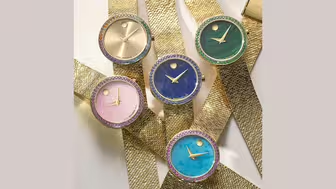
Stephanie Gottlieb’s New Movado Watches Are Made for Your Wrist StackMovado teamed up with the New York-based fine jewelry designer on a new collection of Movado Museum Velura watches.
SourcingOct 15, 2026
Signet Jewelers, Richemont May Join Bidder for De Beers, Report SaysThe two companies are reportedly in talks to join the Global Diamond Consortium, led by former De Beers CEO Gareth Penny, as per Bloomberg.
CollectionsOct 15, 2026
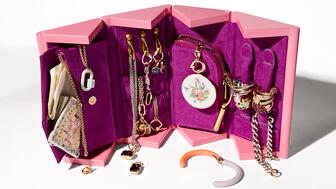
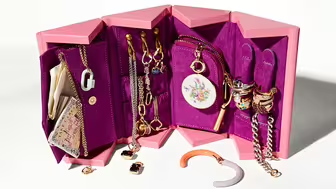
Wolf x Marla Aaron's New Jewelry Box Is for Some (Not All) of Your ThingsThe “Some of the Things” box follows the two larger “Everything” box designs with the look and function of antique sewing and toolboxes.

IndependentsOct 14, 2026
Retailer Hall of Fame 2026: Coleman and Mitchell ClarkFourth-generation jewelers Coleman and Mitchell Clark exemplify the best qualities of their predecessors: humility, modesty, and confidence.

SourcingOct 14, 2026
Manuel Marcial de Gomar, ‘The Emerald Whisperer,’ Dies at 90The gem hunter, whose 70-year career was defined by adventure and exploration, is remembered for his steadfast faith and sense of wonder.

FinancialsOct 14, 2026
LVMH’s Jewelry Brands Turn in ‘Very Good’ Performance in Q3 Tiffany & Co. continued its full-scale store renovation project while Bulgari’s high jewelry collection generated “record-breaking revenue.”

Events & AwardsOct 14, 2026
Chicago Responsible Jewelry Conference Releases 2026 ProgramThis year’s sessions feature leading voices from human rights, legal, and conservation organizations.

MajorsOct 13, 2026
David Webb Owner Purchases Lugano JewelryThe high-end jewelry retailer was sold to private investment firm Middle West Partners and a group of longtime clients.

Lab-GrownOct 13, 2026
Stephanie Gottlieb Takes Lab-Grown Diamond Collection WholesaleThe jewelry designer has partnered with Sofer Jewelry to distribute her 85-piece lab-grown diamond collection.

IndependentsOct 13, 2026
Retailer Hall of Fame 2026: Sean DunnDunn, this year’s Single-Store Independent inductee, is passionate about innovation and telling the story of natural diamonds.

AuctionsOct 13, 2026
Christie's Geneva To Auction 'Bulgari Pink' DiamondThe 24-carat fancy intense pink diamond ring could fetch up to $18 million at the November sale.

IndependentsOct 13, 2026
Greenwich St. Jewelers’ New Candle Smells Like HomeThe “Island Jewel” candle honors New York City and Puerto Rico and raises money for the island’s water relief efforts.