





FinancialsAug 25, 2023
Movado Lowers Guidance Amid Q2 Sales Struggles FinancialsAug 31, 2023
Signet’s Q2 Same-Store Sales Fall 12%
Macroeconomic pressures like inflation and a decline in the number of people popping the question took a toll on the jeweler.


A pear-shaped diamond bypass ring in 14-karat white gold from Signet Jewelers banner Zales. Signet Jewelers reported its second-quarter results Thursday morning, recording a decline in sales brought on in part by the fact that fewer consumers are getting engaged.
Akron, Ohio—Signet Jewelers Ltd. reported declining sales in the second quarter as issues like inflation and rising interest rates weighed on consumers and the number of engagements declined.
The jewelry giant, which is the parent company of several large jewelry store chains including Zales, Jared, and Kay Jewelers, noted a “challenging” macroeconomic environment but is not altering its sales forecast for the year.
“In the second quarter, we exceeded our revenue and bottom-line commitments and we remain confident in our full-year guidance,” Signet Jewelers CEO Virginia C. Drosos said on the company’s earnings call Thursday morning.
From a bridal recovery to holiday offerings, here are five things to know about its recent earnings report.
Second-quarter same-store sales were down significantly.
For the quarter ending July 29, Signet’s sales totaled $1.61 billion, down 8 percent year-over-year, but above its prior guidance of $1.53 billion to $1.58 billion.
Same-store sales fell 12 percent.
In the first half of the year, sales have totaled $3.28 billion, down 9 percent year-over-year.
Same-store sales in the first half were down 13 percent.
“We delivered these results in a challenging macro environment, which affects our midmarket customers disproportionately,” said Drosos.
In North America, Signet’s banners include Zales and Kay Jewelers as well as Peoples in Canada.
Signet’s second-quarter sales in the region totaled $1.5 billion, down 7 percent year-over-year.
Same-store sales were down 12 percent.
The company noted that its average transaction value (ATV) was up 4 percent in the quarter, driven by Blue Nile, though there were fewer transactions.
Signet’s international banners include Ernest Jones and H. Samuels.
International sales totaled $102 million, down 9 percent year-over-year. Same-store sales were down 8 percent in the quarter.
Its international banners also noted a rise in ATV, 3 percent, and a lower number of transactions.
A bridal recovery is on the horizon, Signet says.
Bridal sales have been waning in recent quarters but that could be about to change, Signet said.
The COVID-19 pandemic disrupted the dating world. Signet’s data shows engagements typically occur within three years of a couple dating, so recovery is expected to begin later in fiscal 2024 with a more robust rebound expected in fiscal 2025.
Signet estimated there were around 2.8 million engagements per year pre-pandemic, set to bottom out this year at 2.1 million to 2.2 million, about 25 percent fewer.
“As engagements begin their recovery later this year, we’re positioning ourselves to capture a multi-year tailwind,” said Drosos.
She noted bridal purchases tend to be a customer’s first major jewelry purchase, marking their entry point into the fine jewelry world, which usually leads to future purchases.
Drosos estimated there is a $600 million revenue growth opportunity for Signet in the bridal market.
Related stories will be right here …
The jewelry giant, which is the parent company of several large jewelry store chains including Zales, Jared, and Kay Jewelers, noted a “challenging” macroeconomic environment but is not altering its sales forecast for the year.
“In the second quarter, we exceeded our revenue and bottom-line commitments and we remain confident in our full-year guidance,” Signet Jewelers CEO Virginia C. Drosos said on the company’s earnings call Thursday morning.
From a bridal recovery to holiday offerings, here are five things to know about its recent earnings report.
Second-quarter same-store sales were down significantly.
For the quarter ending July 29, Signet’s sales totaled $1.61 billion, down 8 percent year-over-year, but above its prior guidance of $1.53 billion to $1.58 billion.
Same-store sales fell 12 percent.
In the first half of the year, sales have totaled $3.28 billion, down 9 percent year-over-year.
Same-store sales in the first half were down 13 percent.
“We delivered these results in a challenging macro environment, which affects our midmarket customers disproportionately,” said Drosos.
In North America, Signet’s banners include Zales and Kay Jewelers as well as Peoples in Canada.
Signet’s second-quarter sales in the region totaled $1.5 billion, down 7 percent year-over-year.
Same-store sales were down 12 percent.
The company noted that its average transaction value (ATV) was up 4 percent in the quarter, driven by Blue Nile, though there were fewer transactions.
Signet’s international banners include Ernest Jones and H. Samuels.
International sales totaled $102 million, down 9 percent year-over-year. Same-store sales were down 8 percent in the quarter.
Its international banners also noted a rise in ATV, 3 percent, and a lower number of transactions.
A bridal recovery is on the horizon, Signet says.
Bridal sales have been waning in recent quarters but that could be about to change, Signet said.
The COVID-19 pandemic disrupted the dating world. Signet’s data shows engagements typically occur within three years of a couple dating, so recovery is expected to begin later in fiscal 2024 with a more robust rebound expected in fiscal 2025.
Signet estimated there were around 2.8 million engagements per year pre-pandemic, set to bottom out this year at 2.1 million to 2.2 million, about 25 percent fewer.
“As engagements begin their recovery later this year, we’re positioning ourselves to capture a multi-year tailwind,” said Drosos.
She noted bridal purchases tend to be a customer’s first major jewelry purchase, marking their entry point into the fine jewelry world, which usually leads to future purchases.
Drosos estimated there is a $600 million revenue growth opportunity for Signet in the bridal market.
For fashion jewelry, shoppers are going back to basics.
Drosos noted that while overall fashion (non-bridal) jewelry sales improved “modestly,” it saw a “robust” performance in the category for pieces priced below $1,000.
At Kay, its basics assortment, which includes hoops and other classic gold and diamond styles, performed well as shoppers opted for versatile, everyday pieces.
Kay, Zales and Jared saw comparable sales growth at the highest price points in the fashion assortments. “Our data on independent jewelers shows declines in this segment, reflecting our share gains in the quarter,” she said.
As Signet preps for the holiday season, Drosos shared what its banners will be stocking.
Kay is bolstering its yellow gold offerings. Yellow gold jewelry, “continues to trend well and is multi-culturally appealing,” said Drosos.
The banner will also be adding gift box assortments under $500.
For bridal, Kay will introduce rings with larger center stones and new collections from Neil Lane and Monique Lhuillier.
At Zales, new styles will be added to its “Vera Wang Love” bridal collection, as well as new fine jewelry options, like hoops and diamond fashion jewelry.
At Jared, 30 percent of its bridal jewelry is now yellow gold, said Drosos. The banner also will stock “gender-inclusive” commitment rings.
In addition, the banner will introduce a personalized charm collection with an entry-level price point.
Drosos also touched on Signet’s lab-grown diamond business, noting the man-made stones make up less than 20 percent of its diamond inventory.
Its lab-grown diamond jewelry offerings have both a higher margin and a higher ATV than natural diamonds, she said.
Its services segment continues to grow.
Signet has been focused on growing its services revenue in recent quarters.
The segment outperformed merchandise again this quarter, Drosos noted, with revenue increasing 4 percent.
Growth drivers included its extended service agreements, customization, repairs, and piercings.
Drosos said the company is increasing the number of locations that offer piercing and permanent jewelry services.
In July, Signet Jewelers announced it had acquired the assets of the Service Jewelry Repair National Repair Center, or SJR, allowing it to bring more repairs in-house.
The jeweler has plans for the recently closed Blue Nile fulfillment center in Seattle, which it will transition into a central repair center that will service all Signet’s banners.
“The capabilities that SJR and the Blue Nile center bring will complement the capabilities of our existing team of 1,800 jewelers and further positions Signet as the most prominent service provider in the industry today,” Chief Financial, Strategy and Services Officer Joan Hilson said in an interview with National Jeweler last month.
Signet’s services include Rocksbox, the jewelry subscription business it acquired in 2021, as well as appraisals at select Kay Jewelers stores; a new insurance program at Jared, Kay and Zales; and the continued rollout of its Vault Rewards customer loyalty program.
Signet stands firm on its forecast.
For fiscal 2024, Signet reiterated its guidance for sales of $7.1 billion-$7.3 billion.
For the third quarter, the company is expecting sales of $1.36 billion-$1.41 billion.
“We continue to anticipate a cautious consumer driven by macro pressure, reflected in traffic decreases. We will continue to use strategic levels of promotion to encourage traffic and conversion,” Hilson said.
Signet said total sales for the entire U.S. fine jewelry industry are expected to be down more than its previous forecast of a mid-single-digit decline.
The decline is likely to be “driven by the impacts of macroeconomic factors on consumer spending and continued shift of consumer discretionary spend,” the company said.
As part of its cost-cutting efforts, the retailer, which operates more than 2,700 stores, announced last quarter that it is set to close 150 stores over the next 12 months, zeroing in on those that have not met productivity goals.
It will open 30 to 35 stores, said Hilson, mainly Kay, Jared, and Diamonds Direct locations, which operate bigger stores with higher ATVs, equating to roughly the same amount of retail square footage for the company as a whole.


More on Financials

The Latest

CollectionsOct 26, 2026
Bliss Lau’s ‘Vantage’ Point Is the Hawaiian HorizonIn her “Vantage” collection, Lau explores heritage, identity, and inner strength through designs featuring blue-green Guatemalan jade.


MajorsOct 26, 2026
Tiffany & Co. Takes Consumers Behind the ScenesThe jeweler gave the public backstage tours of its flagship store and its design and innovation workshop as part of LVMH’s open house.


Events & AwardsOct 26, 2026
Support JFC’s ‘Monster Mash Challenge,’ If You DareVote for which jewelry professional should dress up as a monster to support Jewelers for Children’s annual Halloween fundraiser.

Brought to you by
A Diamond Is Forever Launches 2026 Holiday Campaign Championing Natural DiamondsA Diamond Is Forever's holiday campaign reimagines natural diamond icons for a new generation celebrating individuality.


MajorsOct 23, 2026
PGI USA Set to Close at Year’s EndThe closure is part of a global restructuring that also includes PGI winding down its operations in Japan, South Korea, and Hong Kong.
Weekly QuizOct 22, 2026
This Week’s QuizTest your jewelry news knowledge by answering these questions.

SourcingOct 23, 2026
Rachel Chalchinsky’s ‘Survivor Tribute’ RingThe ring, our Piece of the Week, was designed by eight-year breast cancer survivor Rachel Chalchinsky of Color Source Gems.

TechnologyOct 23, 2026
JA Unveils New Website, LogoThe website offers enhanced member benefit access, industry directories, educational resources, a job board, and access to the MJSA Journal.


Brought to you by
Open an Account, Get $50 Off Your First Order. No Code Needed.Built on Relationships. Refined by Craft.


CrimeOct 22, 2026
Jeweler Shot and Killed in His Suburban Cincinnati Store Tara Sinchuri was the owner of Everest Jewels in Fairfield, Ohio, and a father of three. He was found dead in his store on Tuesday.

MajorsOct 22, 2026
Neiman Marcus Has Gifts for the Jewelry Lover Who Has EverythingBespoke experiences from Buccellati and Verdura are on the retailer’s 2026 “Fantasy Gifts” list.

Events & AwardsOct 22, 2026
JIS Fall 2026 Reports Record-Breaking Attendance The number of participants at the fall show was up 12 percent.

CollectionsOct 22, 2026
Billie Eilish, Finneas Co-Design Collection for John HardyThe Academy and Grammy award-winning siblings have collaborated with John Hardy on a new jewelry line inspired by their personal style.

PodcastsOct 21, 2026
Episode 10: This Episode Is Haunted Diana Singer shared the stories of two “cursed” diamonds on this month’s podcast, which was inexplicably riddled with technical issues.

IndependentsOct 21, 2026
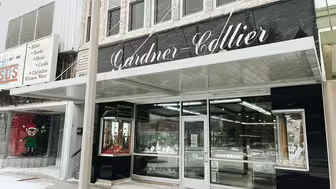
Gardner-Collier Jewelry to Close After 9 Decades in BusinessThe family-owned jeweler has three locations across Missouri and Iowa.

SourcingOct 21, 2026
Venetia Mines Final Carats Ahead of 2-Year ShutdownThe De Beers-owned diamond mine in South Africa is being put on ice as part of a round of previously announced cost-cutting measures.

CollectionsOct 21, 2026
Helzberg, Nordstrom Carrying New Jewelry Collection From Off-WhiteThe collection centers designs with clean geometric lines, chunky sculptural pieces, and recognizable details from the luxury fashion brand.
SourcingOct 21, 2026
Gemfields’ Mixed-Quality Ruby Auction Earns $52MThe miner said it saw particularly strong prices for larger, fine-quality rubies at the sale.

CrimeOct 20, 2026
Security Guard Charged With Murder in Shooting at Texas MallThe guard opened fire on a man who was smashing a jewelry display case at La Gran Plaza in Fort Worth last week, police said.
IndependentsOct 20, 2026
David Gardner’s Jewelers Unveils Newly Expanded, Revamped ShowroomThe Texas jeweler added 2,000 square feet to its reimagined showroom, complete with a new design studio and an event space.
SourcingOct 20, 2026
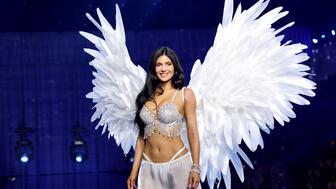
The $50M Victoria’s Secret ‘Fantasy Bra’ By The NumbersJacob & Co.'s diamond masterpiece is the most expensive Fantasy Bra ever worn on the Victoria’s Secret Fashion Show runway.

CollectionsOct 20, 2026
Mignon Faget’s Collection Chooses Handmade Over AIThe “Atelier” collection was inspired by the tools, rituals, and objects in an artist’s studio as a quiet rebuttal to an automated world.
MajorsOct 19, 2026
The Knot to Acquire Rival Wedding Planning Platform ZolaThe pending acquisition is an “exciting opportunity” for wedding vendors to grow their business, said The Knot Worldwide’s CEO.

SourcingOct 19, 2026
Jewelry Design Competition Show Airs in Thailand"The Secret Gems" features eight Thai jewelry brands paired with a team of young craftspeople who create jewelry together to win challenges.

CollectionsOct 19, 2026
John Hardy Enters the Medallion Chat With Talisman Collection The brand’s “Modern Talisman” capsule collection introduces pendants inspired by the mythology, natural world, and spiritual ethos of Bali.
IndependentsOct 19, 2026
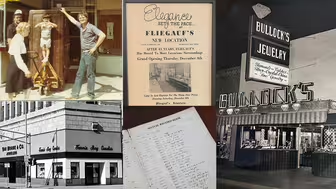
The Stories of 5 Jewelers Celebrating Their Centennials in 2026Independent jewelers from New Mexico to New Jersey answer the question: What has kept your store in business for 100 years?
SurveysOct 16, 2026
How Inflation, Gas Prices Will Affect Holiday Sales The NRF is expecting holiday sales to increase this year, but consumers and retailers alike are facing Grinch-like headwinds.
CollectionsOct 16, 2026
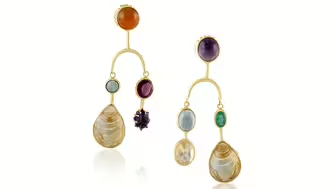
Christina Puchi’s Earrings Hold the UniverseOur Piece of the Week gathers the planets, represented by a variety of colored gemstones, in a pair of 14-karat yellow gold earrings.