
CrimeOct 22, 2026
Jeweler Shot and Killed in His Suburban Cincinnati Store Tara Sinchuri was the owner of Everest Jewels in Fairfield, Ohio, and a father of three. He was found dead in his store on Tuesday.





The company is implementing a policy shift that will allow sightholders to refer to its rough stones as “DTC diamonds.”


In the first week of the new year, Diamonds.net published a story on an issue that deserves at least some attention from the trade.
The online news portal for the Rapaport Group reported that De Beers Group has relaxed its rules on buyers identifying its goods as “De Beers” diamonds further down the supply pipeline, bringing back an old moniker for this new practice.
After being pushed by customers and sightholders to align with supply and demand—that is, the growing demand for source information and the fact that they can already point to their supply of Russian diamonds and say, “these are from Alrosa”—De Beers is now going to allow customers and sightholders to identify diamonds purchased from De Beers as “DTC diamonds,” David Prager, the company’s executive vice president of corporate affairs, confirmed in an interview Friday.
As I’m sure many are aware, the DTC, or Diamond Trading Co., was the name formerly used for De Beers’ sales and marketing arm. The DTC was established in 1934 but the name was retired, so to speak, a few years ago when De Beers Group began renaming everything “De Beers.” The DTC became De Beers Global Sightholder Sales, in the same fashion that Diamdel became De Beers Auction Sales.
The new rule will take effect in either the second sight of the year in February or the third sight in March and will be accompanied by a new website (DTC.com) that will contain information and statistics about De Beers’ mines.
What this means for jewelers at the other end of the supply chain: “When this goes live, a retailer will be able to say, ‘These diamonds come from DTC, they come from Canada, Botswana, South Africa or Namibia,’” Prager said.
They also are free to then explain to customers that the DTC is part of De Beers.
What sightholders and jewelers won’t be able to do, however, is use the name “De Beers” in any marketing collateral.
The company is reserving the use of its legacy name and for good reason.
First, to allow the trade and retailers to market “De Beers diamonds” unchecked through retail outlets would mean the company would have no control over distribution and, as Prager noted, “I think any brand in the world would tell you that’s not a good idea.” (More on De Beers’ expansion from a diamond mining company to a full-fledged brand is below.)


Tara Sinchuri was the owner of Everest Jewels in Fairfield, Ohio, and a father of three. He was found dead in his store on Tuesday.

Bespoke experiences from Buccellati and Verdura are on the retailer’s 2026 “Fantasy Gifts” list.

The number of participants at the fall show was up 12 percent.
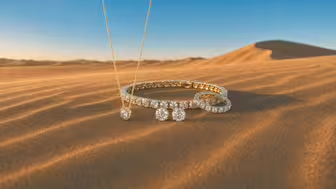
A Diamond Is Forever's holiday campaign reimagines natural diamond icons for a new generation celebrating individuality.


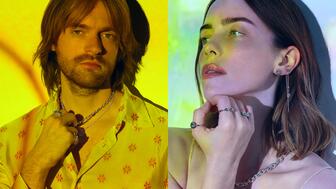
The Academy and Grammy award-winning siblings have collaborated with John Hardy on a new jewelry line inspired by their personal style.

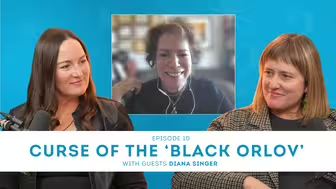

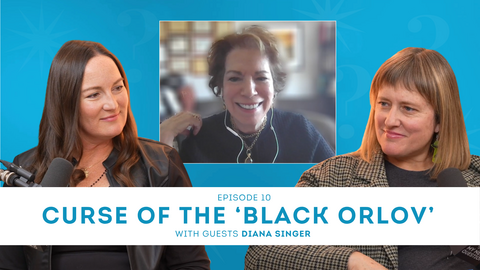
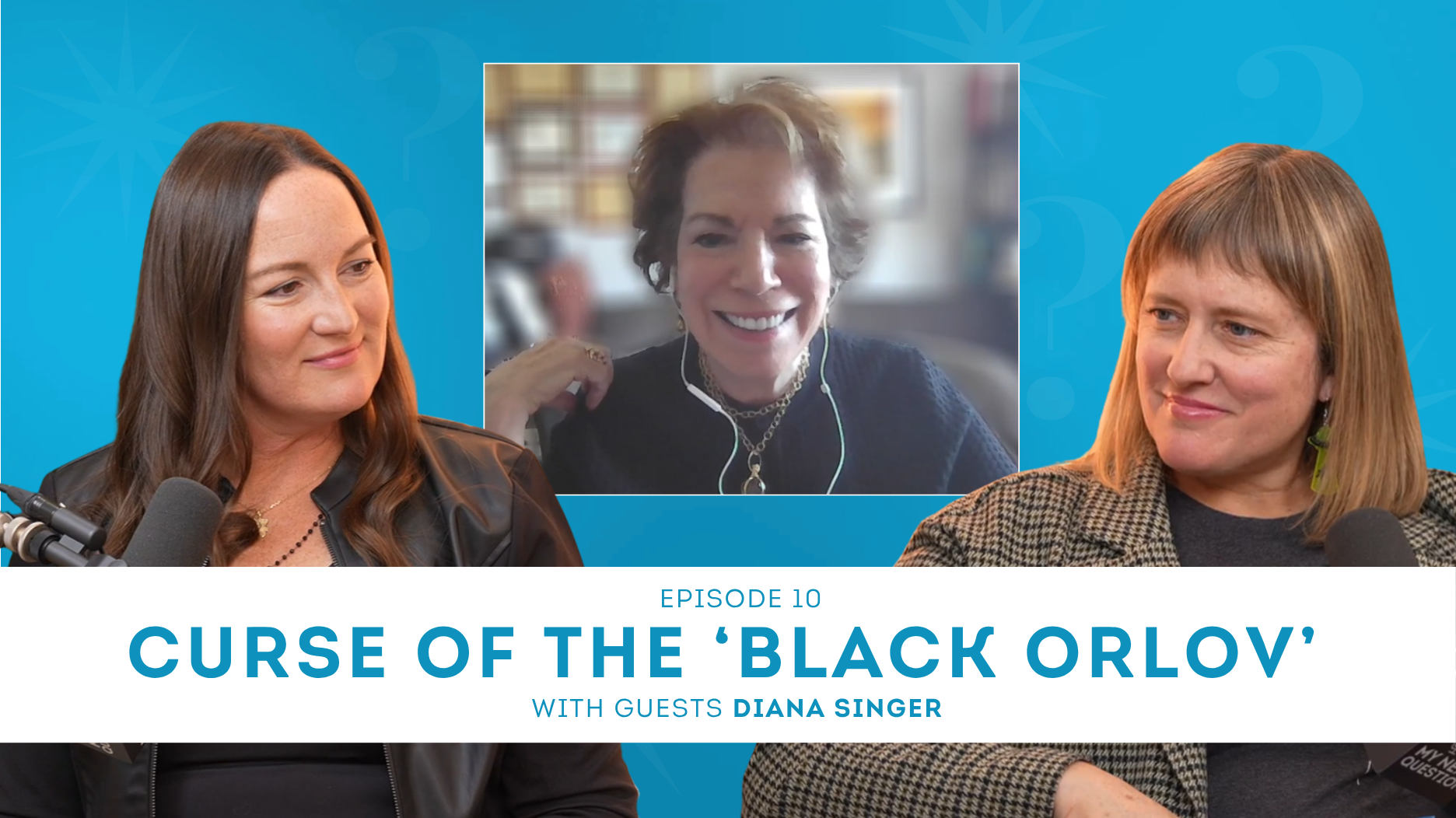
Diana Singer shared the stories of two “cursed” diamonds on this month’s podcast, which was inexplicably riddled with technical issues.

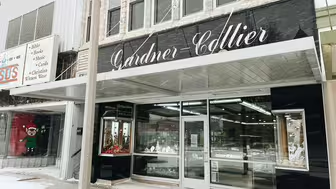
The family-owned jeweler has three locations across Missouri and Iowa.

Built on Relationships. Refined by Craft.


The De Beers-owned diamond mine in South Africa is being put on ice as part of a round of previously announced cost-cutting measures.

The collection centers designs with clean geometric lines, chunky sculptural pieces, and recognizable details from the luxury fashion brand.
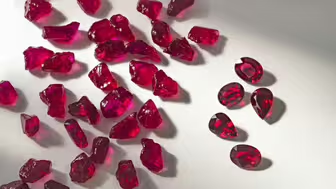
The miner said it saw particularly strong prices for larger, fine-quality rubies at the sale.

The guard opened fire on a man who was smashing a jewelry display case at La Gran Plaza in Fort Worth last week, police said.
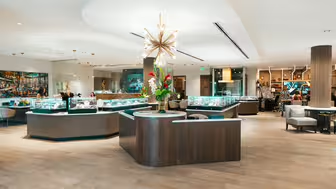
The Texas jeweler added 2,000 square feet to its reimagined showroom, complete with a new design studio and an event space.
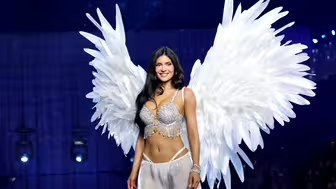
Jacob & Co.'s diamond masterpiece is the most expensive Fantasy Bra ever worn on the Victoria’s Secret Fashion Show runway.

The “Atelier” collection was inspired by the tools, rituals, and objects in an artist’s studio as a quiet rebuttal to an automated world.
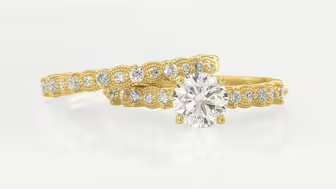
The pending acquisition is an “exciting opportunity” for wedding vendors to grow their business, said The Knot Worldwide’s CEO.

"The Secret Gems" features eight Thai jewelry brands paired with a team of young craftspeople who create jewelry together to win challenges.

The brand’s “Modern Talisman” capsule collection introduces pendants inspired by the mythology, natural world, and spiritual ethos of Bali.
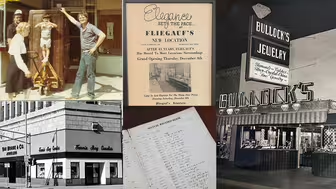
Independent jewelers from New Mexico to New Jersey answer the question: What has kept your store in business for 100 years?

The NRF is expecting holiday sales to increase this year, but consumers and retailers alike are facing Grinch-like headwinds.
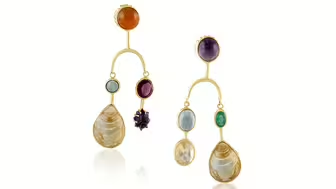
Our Piece of the Week gathers the planets, represented by a variety of colored gemstones, in a pair of 14-karat yellow gold earrings.
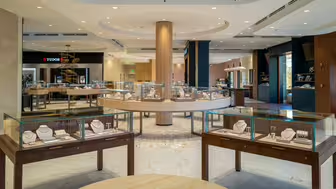
The New York-based jeweler is moving its Amherst flagship store to a larger location in nearby Snyder.

Chen, who worked at Cartier and Tiffany & Co., will lead retail sales and operations for the luxury jeweler’s 11 U.S. stores.
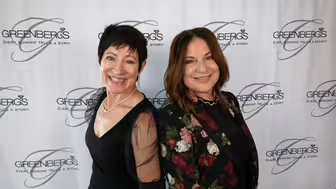
For 40 years, sisters Amy and Elise Greenberg have helmed their 126-year-old family business, leading with appreciation and integrity.

It’s a term Smith coined and felt compelled to share following a bad experience with an aborted flight and an unfeeling flight attendant.
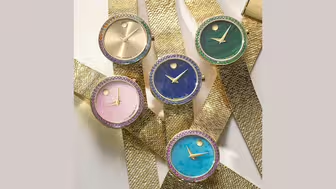
Movado teamed up with the New York-based fine jewelry designer on a new collection of Movado Museum Velura watches.
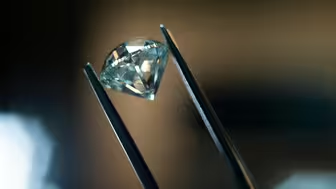
The two companies are reportedly in talks to join the Global Diamond Consortium, led by former De Beers CEO Gareth Penny, as per Bloomberg.



This site uses cookies to give you the best online experience. By continuing to use & browse this site, we assume you agree to our Privacy Policy