



Sponsored by RapNet
Innovation Nation: The Secrets of Survival Today
This feature from National Jeweler’s Retailer Hall of Fame issue provides a glimpse into the practices of retailers who are succeeding.

Looking at the mixed-used courtyard and gathering-place-cum-store, he thought, “Urban Outfitters is serious about understanding digital natives--this new store really is just space,” recalls the executive vice president of WD Partners, a firm comprising strategists, designers, and architects who focus on the in-store experience.
At Space24Twenty, a food-truck-filled courtyard greets guests, who can sit in front of a fire pit, sip a beer, surf the web for free, or listen to bands playing on a nearby stage. If visitors do feel like shopping, they can peruse a selection of jeans that isn’t too far away from the social scene.
“Urban Outfitters understands that this is what lifestyle retailing is about,” says Peterson. “And if this is what retail is coming to, then it’s a completely different thing that jewelers need to talk about and understand.”
For sure, the landscape of commerce is changing at an astounding pace.
Many stores struggle for relevance in an omnichannel environment that rewards those with curated collections, compelling narratives, and clever brand-focused touches like custom scents.
Those unable to differentiate and innovate become irrelevant and, in many cases, are forced to close their doors.
Last year more than 1,000 jewelry-specific retailers in the United States and Canada shuttered, according to data from the Jewelers Board of Trade, reinforcing the fact that sales success is a familiar and ongoing struggle.
The answer? An open mind, forward thinking, and taking direction from prosperous peers are all part of it. Also on that menu: a slice of humble pie.
When asked what it takes to be a successful merchant today, National Jeweler 2017 Hall of Fame inductee Jean-Christophe Bédos, the president and CEO of Birks Group, told National Jeweler during his interview for this issue: “Those who are successful today are humble about the fact that they might not have all the answers. Recipes of the past might not work anymore.”
Sales Success Stories
Winning retail formulas are as varied as the personal tastes of shoppers, though all require a leap of faith.
For National Jeweler columnist Peter Smith, the biggest change he urges retailers to make may challenge one of their most cherished beliefs: that they should hire graduate gemologists as salespersons.
“How many of you have at least one graduate gemologist on staff?” he recollects.
One hundred hands went up.
“Leave those hands up if at least one of those GGs is a Hearts On Fire sales champion,” he instructed.
Zero hands remained in the air.
Intrigued, he asked his afternoon audience the same question and got exactly the same numbers--no champions among 100 GGs. (Champion status is earned by selling a minimum of 100 units of Hearts On Fire jewelry or $350,000 in total HOF retail dollars.)
“With 300 unique stores represented across the two sessions, and about 60 champions company-wide that year, about one in five of the raised hands should have been left up to indicate that a GG was also a champion,” says Smith. “The fact that there wasn’t showed that an inverse relationship between experience and pedigree and ability to sell could exist. I know a few GGs who are also great salespeople, but they are very much the exception.”
“You never know what’s going to snowball when people hear about it.” — Cathy Calhoun, Calhoun Jewelers
Winning retail formulas also include unforgettable experiences.
These are a specialty for Cathy Calhoun of Calhoun Jewelers. Her most high-profile and in-demand event is her annual Oscars Party, held at the historical Colonial Theatre near her Royersford, Pennsylvania store.
“People come in [to the store] and ask to be put on the mailing list just to get a special invite,” Calhoun explains to National Jeweler. For the 2017 party, the store’s 13th annual celebration, 650 customers attended and many were turned away.
The party kicked off around 7 p.m. so guests could watch the televised pre-show red carpet interviews. During commercials, partygoers enjoyed meatballs, a self-service sandwich station, and an open bar. Invitees also played Hollywood trivia games complete with prizes ($3,000 worth of Stroili jewelry at the 2017 event) while a live band performed.
While no jewelry is sold at the party, sales do occur after the event. For example, some of the cupcakes on the dessert table featured baked-in gemstones like amethyst and citrine to help to drive customers back to the store for custom-made pieces.
In the two weeks following the 2017 party, one attendee stopped into the store to discuss an engagement ring redesign. And a friend of another guest ordered a 2.01-carat Asscher-cut Crisscut diamond ring from Christopher Designs, which Calhoun chalked up to a “six-degrees-of-separation” sale.
“I got a call from a friend in California who didn’t come to the party, but told his cousin about it,” says Calhoun. “Then the cousin, who also didn’t attend the party, ordered a ring from me simply because he heard that I threw this party. You never know what’s going to snowball when people hear about it.”
Beyond social experiences, other merchants achieve success through moves that are non-traditional for jewelry-only stores.
Specialty retailer Jamie, in Nashville, Tennessee, does well by selling fine jewelry, couture clothing, and manicures, all under one roof. The single-store operation functions as a lifestyle shop that puts together complete wardrobes for clients--oftentimes, specific ones.
When store manager Hud Hudson purchased a Vera Wang dress three months ago, he had a certain local celebrity in mind. He texted her a photo of the dress along with a pair of $5,500 diamond drop earrings from Laurie Kaiser. The woman bought both. “She told me they were perfect for an upcoming occasion,” he recollects.
Stay Nimble
Another key to success is to be fast and flexible, an advantage independent retailers have over major chains.
When operations are large, change doesn’t happen quickly (think of super-size Signet Jewelers, with more than 3,000 stores in the United States, United Kingdom, and Canada). Smaller outfits, however, have an edge because there are fewer levels of bureaucracy to navigate.
“The bigger you are, the harder it is to turn around,” notes WD Partners’ Peterson.
Tara Silberberg of The Clay Pot in Manhattan and Brooklyn knows the value of elasticity firsthand.
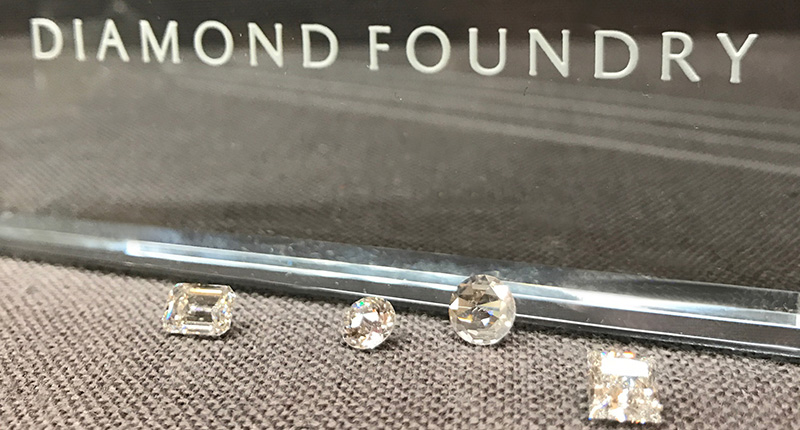
Last spring, she brought in lab-grown diamonds from the Diamond Foundry at the request of young shoppers in the market for non-mined gems.
More recently, she helped a couple solve a different engagement ring dilemma.
At the beginning of February, two women shopping for Hercules knot rings to symbolize their commitment to each other wandered into Silberberg’s Brooklyn store.
The couple asked a staffer for the style, but were bluntly told the store didn’t stock it. Within earshot, Silberberg quickly intervened to salvage the sale, and ultimately, tapped an existing vendor to make the rings.
“I contacted a jeweler with whom I had previously worked on a custom job, and we turned that ‘no’ into a $7,000 yes,” she says.
QUICK TIPS
Here are 5 takeaways from the jewelers and experts interviewed for this story.
1. Understand what “lifestyle retailing” is all about. Visit and learn from innovative retailers outside the traditional jewelry industry. Look at, for example, Urban Outfitters’ Space24Twenty in Austin, Texas, or Jamie in Nashville, Tennessee.
2. Challenge assumptions. Do the staff members with the most gemological knowledge and level of education always make the best salespeople? The answer is no; the two aren’t always linked.
3. Host outstanding events. Pennsylvania jeweler Cathy Calhoun rents out a local, historic theater every year for an Oscars party complete with live entertainment, food and drinks, Hollywood trivia and cupcakes with baked-in gemstones.
4. Be nimble and quick. New York retailer Tara Silberberg overheard a conversation in her store in which a salesperson was, essentially, telling two customers no. She intervened to save the sale and then tapped a jeweler with whom she’d just worked to custom-make what the customers wanted.
5. Stay humble. It’s 2017, and a lot has changed. It’s OK for even the longest-tenured retailers to admit that they don’t have all the answers, especially when it comes to social media or selling online.
The Latest

Investment firm Enhanced Retail Funding, a division of Gordon Brothers, was the successful bidder.

It explores the history of the iconic tagline and the company’s strategy to redefine the role of diamonds in society.

Criminals are using cell jammers to disable alarms, but new technology like JamAlert™ can stop them.

Retail veteran Sindhu Culas has stepped into the role.


Taylor Burgess, who has been at Stuller since 2013, was promoted to the newly created role.

Was 2025 a good year for jewelers? Did lab-grown diamonds outsell natural? Find out on the first episode of the “My Next Question” podcast.

How Jewelers of America’s 20 Under 40 are leading to ensure a brighter future for the jewelry industry.

Whether you recognize their jewels or are just discovering them now, these designers’ talent and vision make them ones to watch this year.

Buyers are expected to gravitate toward gemstones that have a little something special, just like last year.

Plus, JSA’s Scott Guginsky discusses the need for jewelers to take more precautions as the gold price continues to climb.

“Vimini” is the first chapter of the “Bulgari Eternal” collection that merges archival pieces with modern creations.

The third edition will be held in Half Moon Bay, California, in April.

The grant is in its first year and was created to recognize an exceptional fine jewelry designer whose star is on the rise.

Data built on trust, not tracking, will be key to success going forward, as the era of “borrowed attention” ends, Emmanuel Raheb writes.

Heath Yarges brings two decades of experience to the role.

Pete’s boundless curiosity extended beyond diamond cut and he was always eager to share his knowledge with others, no matter the topic.

Cartier, Van Cleef & Arpels, Buccellati, and Vhernier had another successful holiday season, Richemont reported this week.

Our Piece of the Week is Lagos’ “Bee” brooch that was seen on the red carpet for the first time on Sunday.

Trevor Jonathan Wright led a crew in a string of armed robberies targeting South Asian-owned jewelry stores on the East Coast.

The program recognizes rising professionals in the jewelry industry.

A new lifestyle section and a watch showcase have been added to this year’s event.

Avocados From Mexico is celebrating those who love to double-dip in game day guacamole with a 14-karat yellow gold tortilla chip necklace.

Petra Diamonds unearthed the 41.82-carat, Type IIb blue diamond at the Cullinan Mine.

The brand is trading its colorful fabric cords for Italian leather in its “Lasso” baby locket bracelets.

National Jeweler and Jewelers of America’s popular webinar series is evolving in 2026.

The department store chain owes millions to creditors like David Yurman, Roberto Coin, Kering, and LVMH.