






Policies & IssuesAug 02, 2024
Single Mine Origin Gold Now Being Distributed in the USPolicies & IssuesAug 08, 2024
‘Salmon Gold’ Surfaces Again, This Time at Mejuri
The jewelry retailer has partnered with Resolve, an organization that combines re-mining with fish habitat restoration.


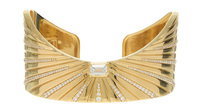
A pair of 14-karat gold hoops by Mejuri, available in four sizes and crafted with “Salmon Gold.” The retailer is partnering with Resolve, an organization that supports biodiversity and habitat rehabilitation of sites where mining once took place.
New York—Mejuri has released a collection of hoop earrings crafted from “Salmon Gold,” a metal that derives its name not from its color but from the potential it has to positively impact fish and other wildlife.
The direct-to-consumer jewelry brand has an ongoing partnership with Resolve, a Washington, D.C.-based non-governmental organization (NGO).
Resolve’s “Regeneration” initiative works to mitigate the environmental damage caused by mining by supporting biodiversity and habitat rehabilitation of former mine sites.
It targets areas affected by tailings—residue from old placer gold mining sites—left in the streams or on the banks, which can prevent fish like salmon and grayling from migrating and spawning.
Salmon Gold is gold sourced from the mines associated with Regeneration, allowing each batch to be fully traceable from its origins.
The gold is extracted from the abandoned mine sites in North America and refined by Swiss company MKS PAMP, Mejuri said in its recent sustainability report.
MKS PAMP has a process that allows the gold to be individually batch refined to maintain traceability while ensuring its purity.
The gold is formed into small grains to prepare it for the casting process, said Mejuri, and the gold grain is then sent to its manufacturing partners in Thailand, where the jewelry is created.
“Salmon Gold was born from the idea that when a mine closes, it doesn’t have to be the end of the story,” Stephen D’Esposito, president and CEO at Regeneration and Resolve, said in a post on the company’s website.
“We shouldn’t let mine waste go to waste—we should treat it as an opportunity.”
During the gold rush of the late 1800s, the river valleys throughout Alaska and Canada’s Yukon Territory and British Columbia were filled with tens of thousands of prospectors, explained Regeneration.
They pumped soil from the creeks and riverbeds as they searched for gold, leaving rock and sediment waste, also known as tailings, in the stream beds and riverbanks, which disrupted the ecosystems as well as Indigenous ways of life.
The region is still home to gold mining operations, as well as salmon, grayling, and other fish that have had their migration patterns and spawning practices disturbed.
“I thought if you could get the gold out of the old piles of mining waste, you could use the money to restore the rivers, streams, and habitat, so that the salmon or grayling could swim up and spawn again,” said D’Esposito.
“It could be a win, win, win: Gold buyers could get more responsibly sourced gold; salmon habitat could be restored; and modern placer miners could feel better about their business.”
In addition to Mejuri, other well-known companies have signed onto Resolve’s Regeneration initiative.
In 2019, Tiffany & Co. added Salmon Gold into its larger supply of raw gold, though the company didn’t create a special collection or marketing campaign around its use.
Resolve, the NGO, works with the Tiffany & Co. Foundation on a restoration project in Sierra Leone.
Apple uses minerals from the Regeneration project to meet its sustainability goals, and Rio Tinto is a mining partner that provides access to sites, expertise, and other support.
Mejuri has invested $1.5 million in Regeneration. This funding has supported restoration and responsible mining projects at Uhler and Resurrection creeks in Alaska and Sulphur Creek in Yukon, Canada.
This resulted in 1,150 linear meters of stream restoration and enhancements and 20 acres of restored upland habitat. At Resurrection Creek, the U.S. Forest Service restored 300 meters of stream, said Mejuri.
Multiple spawning fish species, including pink salmon, chinook, chum, and coho, made their way up these creeks where it was previously “very low quality” fish habitat.
The direct-to-consumer jewelry brand has an ongoing partnership with Resolve, a Washington, D.C.-based non-governmental organization (NGO).
Resolve’s “Regeneration” initiative works to mitigate the environmental damage caused by mining by supporting biodiversity and habitat rehabilitation of former mine sites.
It targets areas affected by tailings—residue from old placer gold mining sites—left in the streams or on the banks, which can prevent fish like salmon and grayling from migrating and spawning.
Salmon Gold is gold sourced from the mines associated with Regeneration, allowing each batch to be fully traceable from its origins.
The gold is extracted from the abandoned mine sites in North America and refined by Swiss company MKS PAMP, Mejuri said in its recent sustainability report.
MKS PAMP has a process that allows the gold to be individually batch refined to maintain traceability while ensuring its purity.
The gold is formed into small grains to prepare it for the casting process, said Mejuri, and the gold grain is then sent to its manufacturing partners in Thailand, where the jewelry is created.
“Salmon Gold was born from the idea that when a mine closes, it doesn’t have to be the end of the story,” Stephen D’Esposito, president and CEO at Regeneration and Resolve, said in a post on the company’s website.
“We shouldn’t let mine waste go to waste—we should treat it as an opportunity.”
During the gold rush of the late 1800s, the river valleys throughout Alaska and Canada’s Yukon Territory and British Columbia were filled with tens of thousands of prospectors, explained Regeneration.
They pumped soil from the creeks and riverbeds as they searched for gold, leaving rock and sediment waste, also known as tailings, in the stream beds and riverbanks, which disrupted the ecosystems as well as Indigenous ways of life.
The region is still home to gold mining operations, as well as salmon, grayling, and other fish that have had their migration patterns and spawning practices disturbed.
“I thought if you could get the gold out of the old piles of mining waste, you could use the money to restore the rivers, streams, and habitat, so that the salmon or grayling could swim up and spawn again,” said D’Esposito.
“It could be a win, win, win: Gold buyers could get more responsibly sourced gold; salmon habitat could be restored; and modern placer miners could feel better about their business.”
In addition to Mejuri, other well-known companies have signed onto Resolve’s Regeneration initiative.
In 2019, Tiffany & Co. added Salmon Gold into its larger supply of raw gold, though the company didn’t create a special collection or marketing campaign around its use.
Resolve, the NGO, works with the Tiffany & Co. Foundation on a restoration project in Sierra Leone.
Apple uses minerals from the Regeneration project to meet its sustainability goals, and Rio Tinto is a mining partner that provides access to sites, expertise, and other support.
Mejuri has invested $1.5 million in Regeneration. This funding has supported restoration and responsible mining projects at Uhler and Resurrection creeks in Alaska and Sulphur Creek in Yukon, Canada.
This resulted in 1,150 linear meters of stream restoration and enhancements and 20 acres of restored upland habitat. At Resurrection Creek, the U.S. Forest Service restored 300 meters of stream, said Mejuri.
Multiple spawning fish species, including pink salmon, chinook, chum, and coho, made their way up these creeks where it was previously “very low quality” fish habitat.
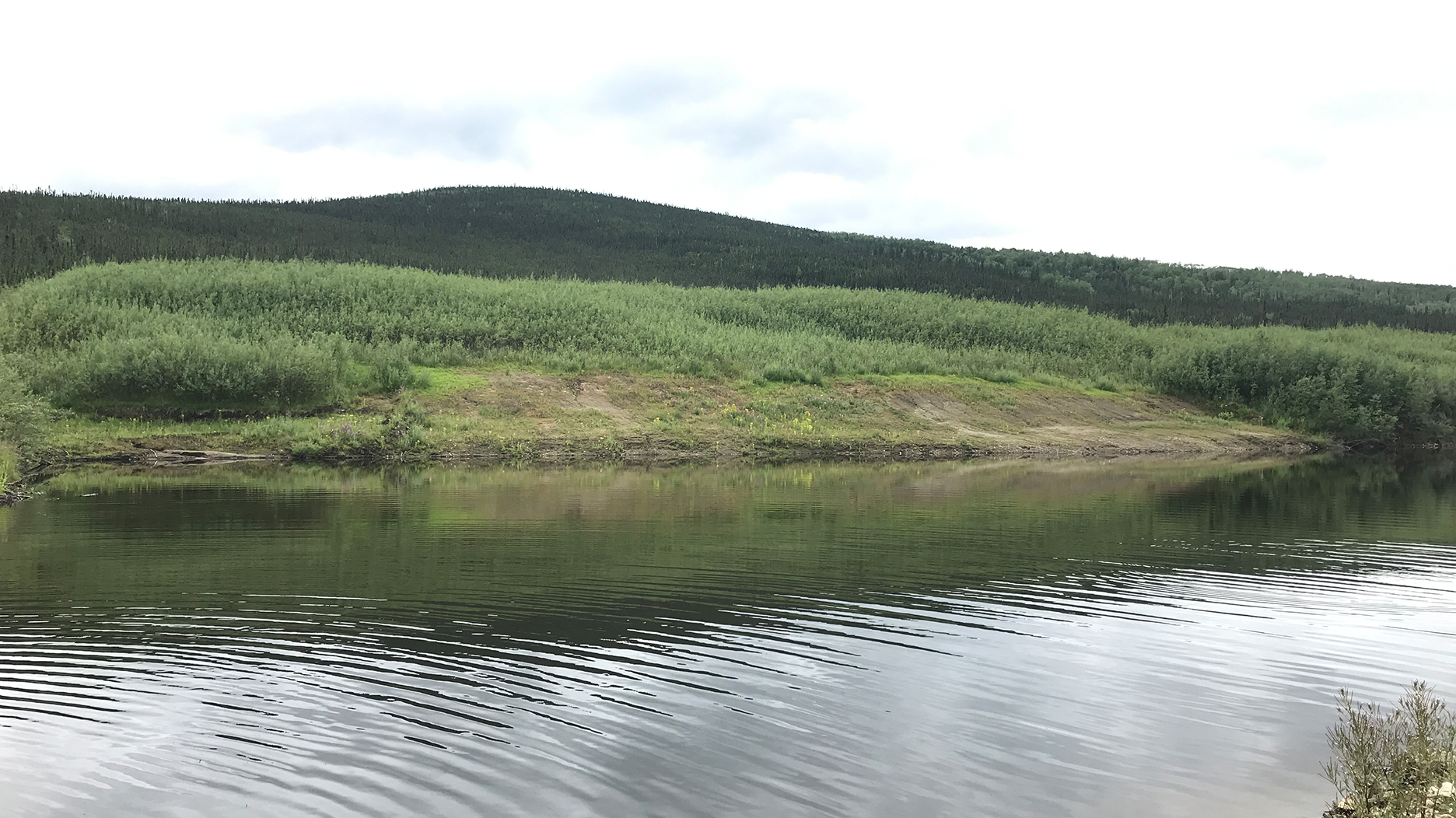
The west bank of Van Bibber Lake revegetation, located in Indiana. Mejuri’s partnership with Regeneration helps to support biodiversity and rehabilitation of waterways around old mining sites. (Photo Credit: George Vopelki)
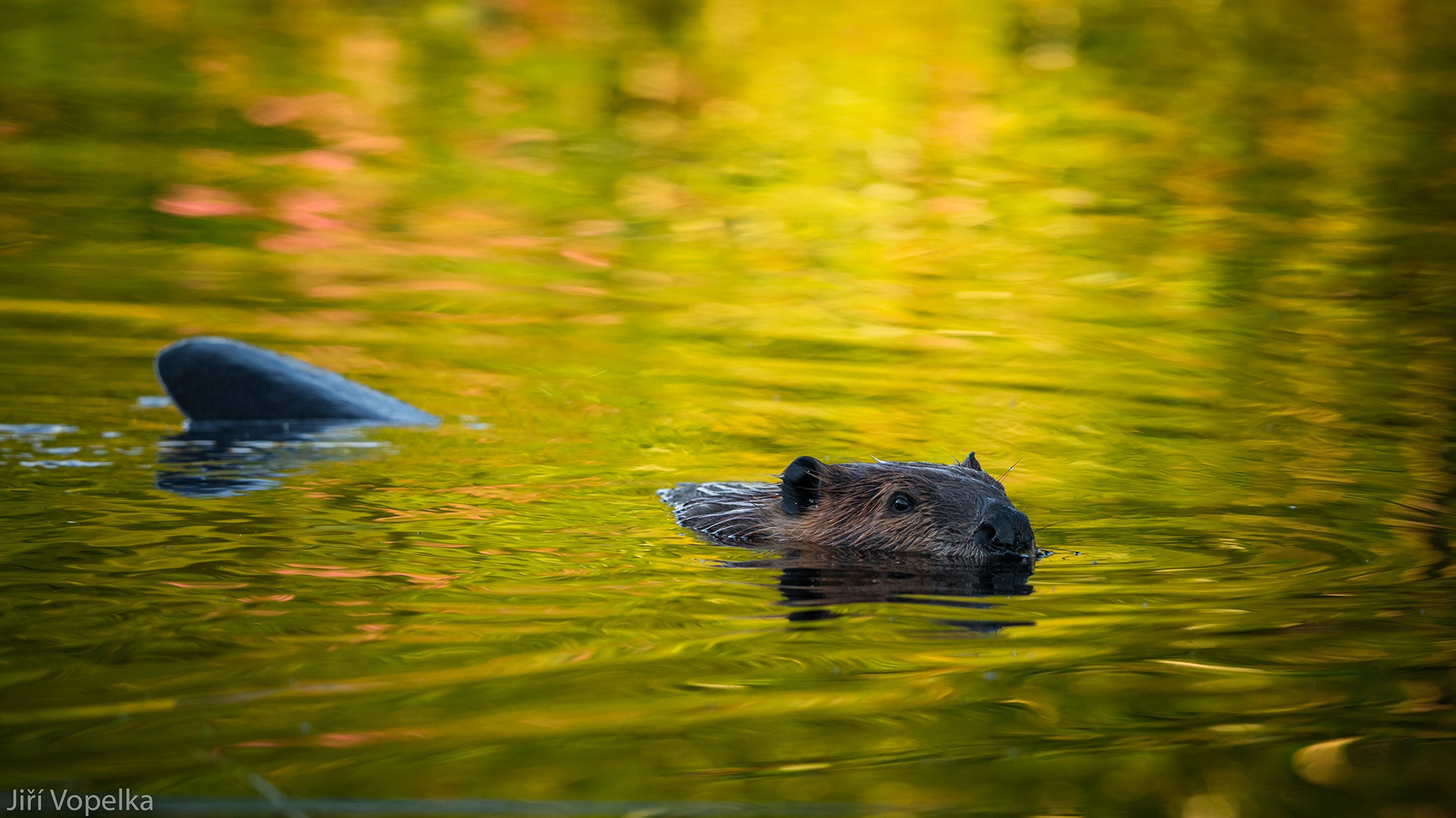
A beaver swimming in Colorado’s Lily Lake. The Regeneration initiative supports the habitats of salmon and other wildlife. (Photo Credit: George Vopelki)
“I’ve worked on these Klondike creeks for 35 years digging for gold and it feels so good to be rebuilding them back to nature after so many years without proper habitat,” said Darwin Van Bibber, a heavy equipment operator and restoration specialist, quoted in Mejuri’s sustainability report.
“As a First Nation elder, I enjoy catching grayling and, one day, hunting moose along these newly restored habitats we are creating here.”
The Uhler, Resurrection and Sulphur creeks have additional restoration and rehabilitation planned for this year, said Mejuri, with additional legacy and abandoned mines joining as partners or coming online.
Mejuri said as the opportunity to use Salmon Gold increases, the proportion of recycled content in its jewelry may decrease over time
“Decreasing our use of recycled gold through the increase of Salmon Gold will enable us to achieve higher levels of traceability over time while also contributing to habitat restoration along the way, aiding in our 2030 traceability and climate-positive goals,” said Mejuri.
The company also noted that the term “recycled gold” currently lacks a clear definition and isn’t subject to the same due diligence by the U.S. Securities and Exchange Commission as other materials.
“This ultimately slows down progress in achieving a better understanding of its composition, origins, and impact,” said Mejuri.
The Salmon Gold from Uhler Creek and Sulphur Creek is what Mejuri used to create the recent collection, announced in June.
The limited-edition collection features a textured, 14-karat yellow gold version of its “Bold” hoop, available in four sizes online and in its stores. The hoops range in price from $198 to $498.
The company said it’s the beginning of a series of annual capsule collections in 14-karat gold.
“Mejuri is contributing to the development of initiatives that promote habitat restoration and have integrated gold extracted from the re-mining of mine tailings into our jewelry product bringing regeneration gold directly to our customers,” said the company.
“It’s more than just a material. It symbolizes how luxury and sustainability can go hand-in-hand.”


More on Policies & Issues



The Latest
MajorsOct 19, 2026
The Knot to Acquire Rival Wedding Planning Platform ZolaThe pending acquisition is an “exciting opportunity” for wedding vendors to grow their business, said The Knot Worldwide’s CEO.

SourcingOct 19, 2026
Jewelry Design Competition Show Airs in Thailand"The Secret Gems" features eight Thai jewelry brands paired with a team of young craftspeople who create jewelry together to win challenges.


CollectionsOct 19, 2026
John Hardy Enters the Medallion Chat With Talisman Collection The brand’s “Modern Talisman” capsule collection introduces pendants inspired by the mythology, natural world, and spiritual ethos of Bali.


Brought to you by
Open an Account, Get $50 Off Your First Order. No Code Needed.Built on Relationships. Refined by Craft.


IndependentsOct 19, 2026
The Stories of 5 Jewelers Celebrating Their Centennials in 2026Independent jewelers from New Mexico to New Jersey answer the question: What has kept your store in business for 100 years?

Weekly QuizOct 15, 2026
This Week’s QuizTest your jewelry news knowledge by answering these questions.


SurveysOct 16, 2026
How Inflation, Gas Prices Will Affect Holiday Sales The NRF is expecting holiday sales to increase this year, but consumers and retailers alike are facing Grinch-like headwinds.

CollectionsOct 16, 2026
Christina Puchi’s Earrings Hold the UniverseOur Piece of the Week gathers the planets, represented by a variety of colored gemstones, in a pair of 14-karat yellow gold earrings.

Brought to you by
Meet Gemology’s Next Generation Microscope: GIA® Gemolite® NXT Professional EditionExperience gemstones with greater precision and comfort than ever before.

IndependentsOct 16, 2026
Reeds Jewelers Expands, Relocates FlagshipThe New York-based jeweler is moving its Amherst flagship store to a larger location in nearby Snyder.

MajorsOct 16, 2026
Katy Chen Appointed Executive Vice President of Graff USA Chen, who worked at Cartier and Tiffany & Co., will lead retail sales and operations for the luxury jeweler’s 11 U.S. stores.

IndependentsOct 15, 2026
Retailer Hall of Fame 2026: Amy and Elise Greenberg For 40 years, sisters Amy and Elise Greenberg have helmed their 126-year-old family business, leading with appreciation and integrity.

ColumnistsOct 15, 2026
Peter Smith: What Is the Culture REP?It’s a term Smith coined and felt compelled to share following a bad experience with an aborted flight and an unfeeling flight attendant.


WatchesOct 15, 2026
Stephanie Gottlieb’s New Movado Watches Are Made for Your Wrist StackMovado teamed up with the New York-based fine jewelry designer on a new collection of Movado Museum Velura watches.
SourcingOct 15, 2026
Signet Jewelers, Richemont May Join Bidder for De Beers, Report SaysThe two companies are reportedly in talks to join the Global Diamond Consortium, led by former De Beers CEO Gareth Penny, as per Bloomberg.
CollectionsOct 15, 2026
Wolf x Marla Aaron's New Jewelry Box Is for Some (Not All) of Your ThingsThe “Some of the Things” box follows the two larger “Everything” box designs with the look and function of antique sewing and toolboxes.

IndependentsOct 14, 2026
Retailer Hall of Fame 2026: Coleman and Mitchell ClarkFourth-generation jewelers Coleman and Mitchell Clark exemplify the best qualities of their predecessors: humility, modesty, and confidence.

SourcingOct 14, 2026
Manuel Marcial de Gomar, ‘The Emerald Whisperer,’ Dies at 90The gem hunter, whose 70-year career was defined by adventure and exploration, is remembered for his steadfast faith and sense of wonder.

FinancialsOct 14, 2026
LVMH’s Jewelry Brands Turn in ‘Very Good’ Performance in Q3 Tiffany & Co. continued its full-scale store renovation project while Bulgari’s high jewelry collection generated “record-breaking revenue.”

Events & AwardsOct 14, 2026
Chicago Responsible Jewelry Conference Releases 2026 ProgramThis year’s sessions feature leading voices from human rights, legal, and conservation organizations.

MajorsOct 13, 2026
David Webb Owner Purchases Lugano JewelryThe high-end jewelry retailer was sold to private investment firm Middle West Partners and a group of longtime clients.

Lab-GrownOct 13, 2026
Stephanie Gottlieb Takes Lab-Grown Diamond Collection WholesaleThe jewelry designer has partnered with Sofer Jewelry to distribute her 85-piece lab-grown diamond collection.

IndependentsOct 13, 2026
Retailer Hall of Fame 2026: Sean DunnDunn, this year’s Single-Store Independent inductee, is passionate about innovation and telling the story of natural diamonds.

AuctionsOct 13, 2026
Christie's Geneva To Auction 'Bulgari Pink' DiamondThe 24-carat fancy intense pink diamond ring could fetch up to $18 million at the November sale.

IndependentsOct 13, 2026
Greenwich St. Jewelers’ New Candle Smells Like HomeThe “Island Jewel” candle honors New York City and Puerto Rico and raises money for the island’s water relief efforts.
TechnologyOct 13, 2026
GemFind Is a New JA Member Benefit Partner The partnership will give JA members access to preferred pricing, exclusive benefits, technology solutions, education, and resources.

SurveysOct 09, 2026
These Will Be the 10 Busiest Days for In-Store Shopping This Holiday SeasonStores should expect to see the most customers on Nov. 27, and Christmas week is expected to be hectic too, as Dec. 25 falls on a Friday.

CollectionsOct 09, 2026
Elisa Solomon Collabs With Serendipity 3 on ‘Frozen Hot Chocolate’ CharmThe charm, our Piece of the Week, features brown diamond frozen hot chocolate topped with white diamond whipped cream and a ruby straw.