



This year, it’s what could happen outside of show hours that worries JSA Executive Vice President Scott Guginsky.
Is “The Show” Over? Is Retail Dead?
The state of retail is changing, but the traditional retail experience could still live on.

Brought To You By Merit Diamond
“It’s the end of the world as we know it,” a line that anyone born before 1990 probably knows all too well. This was a time when retail space was king, catalog shopping was the closest equivalent to today’s online shopping and industry conferences were critical to meeting new customers and expanding brand exposure.
Now more than ever, consumers have prioritized convenience. Our ability to live, work, play and shop without leaving home has never been so easy. We can’t keep turning a blind eye to the times as they are definitely "a changing."
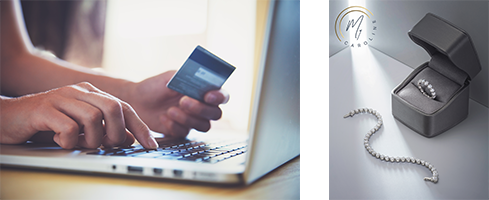
Remember when most of us raised an eyebrow at the launch of Bluenile.com? Who in their right mind would buy such a luxury item, one that a professional jeweler needs to examine without seeing and touching it first? How would the average consumer, who knows very little about gems, know how to go about buying a stone without help from a knowledgeable salesperson?
As online jewelry sales continue to rise and Amazon continues taking over the world, the future of traditional retail has been called into question. The COVID-19 pandemic has accelerated this line of questioning, as continuous lockdowns and genuine health rise has increased the average consumer’s reluctance to visit brick-and-mortar retail.
The truth of the matter is that while online shopping has undoubtedly changed the retail landscape, it has not and will never completely replace the traditional retail experience. One thing that companies like Apple have taught us over the years is that in order to survive and be more than “just another store,” brands need to sell a lifestyle and create a retail experience. Product quality is important, but at the end of the day, no matter how high tech or luxurious the design, a positive retail experience that is long lasting with the customer is achieved via service and trained sales professionals, aka people, the right people, and the personal experience is something that is much harder to replace via digital.
The longevity of the traditional retail experience is a factor of human psychology and the proof is in the pudding. When COVID restrictions began easing up, even with customers facing financial uncertainty, they flooded malls and stores seeking luxury products - not everyday necessities. Even Amazon is opening brick-and-mortar stores! The high you get from the online retail experience does not compare to the physical one. Getting to touch and feel and try on, speaking to a knowledgeable person who understands what you are looking for and knows their business, these things are priceless, especially when making an expensive purchase.
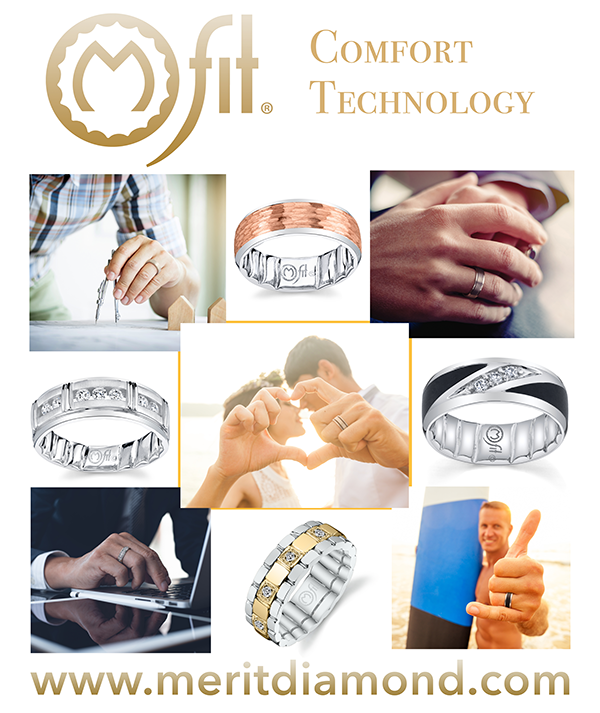
When Merit Diamond, a company that has been a leader in the jewelry industry for over four decades, decided to launch their latest brand, My Caroline, they wanted to create a full-dimensional brand. “We wanted the brand to really represent what we have been known for, innovative and beautiful jewelry that can be worn on the red carpet but that can also be worn comfortably in real life. ‘From your grandest day to your everyday.'
"And we wanted our entire brand to represent that, online and in retailers. We made sure to launch the brand online, but for us the true experience can only be achieved in-store and in-person, when you not only see the pieces, but try them on and see how comfortable they feel, especially in comparison to others," says Scott Rosen of Merit Diamond Corporation.
When it comes to big and important purchases, people will almost always prefer to have a chance to ask questions, touch, feel, see and understand what it is that they are purchasing – in person. Until virtual reality becomes so advanced that you can actually visit a virtual store without leaving your home, there will still be a need for "live" retail.
Like in every business, things need to pivot and reinvent themselves with the times in order to be relevant – but that doesn’t mean it’s a death sentence, just a chance to get to work, be creative and adjust the formula. Once upon a time it may have been enough just to have a store with the right product and location or a booth at a convention; but now, as the average consumer’s attention span continues to diminish and they become harder to impress, getting a customer’s attention takes a lot more effort. Consumer interaction needs to be thoughtful and worthwhile.
At the end of the day, with all the changes and advances in this industry and stimuli-facing consumers, people are people. And sometimes to move forward, the key is to get back to the basics.
What do I want to feel when walking into a store and when arriving to a convention? Seen, taken care of, important. Maybe if we master these basic consumer needs, the rest will fall into place.
The Latest

High-end fashion houses know how to emotionally connect with customers online. Retail jewelers should take note, Emmanuel Raheb writes.

The designers are the third cohort of mentees from the show’s Belonging @ Couture mentorship program.

As gold prices rise, today’s retailers are looking for alternatives at prices that will appeal to wider audiences.

Buying discipline at trade shows starts with clarity about your inventory levels, Smith writes.


The trade show’s education series returns, with sessions on retail trends, AI, watches, marketing, corporate responsibility, and more.

The Curated Designer Project has expanded to highlight eight independent jewelry designers during CBG’s Las Vegas show.

With the trade and customer trust in mind, GIA® developed NextGem™ – on-demand training designed specifically for retail.

Bring a cool tone to your summer jewelry with these white metal pieces.

The deal closed this week, which means Instore will produce the JA NY show slated to take place this fall.

The company’s jewelry sales were up in Q4 and the fiscal year, with Richemont raising prices in part because of the cost of gold.

The “Bauble” capsule collection of colorful one-of-a-kinds includes our Piece of the Week, the “Bauble” earrings, featuring rose zircon.

The updated catalog has a newly dedicated section for gift wrapping.

Everett covers colored stones’ surging popularity, the mellow return of the “Mellon Blue,” and his “The Devil Wears Prada” doppelgänger.

The new award, created in partnership with Henne Jewelers, honors the late designer’s legacy through supporting jewelry education.

The addition of the diamond-producing countries as nation affiliated members broadens the federation’s global representation, WFDB said.

The NYPD is warning elderly New Yorkers to keep their jewelry hidden when walking outside to avoid being a target.

The sessions will run from Friday, May 29, to Sunday, May 31, with one being a live taping of an episode of Couture’s podcast.

Former Stephanie Gottlieb Fine Jewelry executive Morgan P. Richardson is joining the lab-grown diamond jewelry brand.

The $400 pocket watch is a blend of Audemars Piguet’s iconic eight-sided Royal Oak and Swatch’s unserious Pop watches from the ‘80s.

With gold prices on the rise, the “Modern Electrum” collection uses an alternative, non-tarnishing metal alloy composed of gold and silver.

Fruchtman Marketing has new owners, Erin Moyer-Carballea and Manuel Carballea, and will relocate to Miami.

In a column for the 2026 State of the Majors issue, Smith lists 10 time-tested principles about sales that still ring true.

In a column for the 2026 State of the Majors issue, Golan spells out how the growing economic divide in the U.S. is reshaping the market.

The “Limitless Expansion of Joy and Hope” collection evokes summer through colored gemstones and motifs of butterflies and florals.

The jewel, circa 1890, is from the late Victorian era and was owned by descendants of the last high king of Ireland.

This is what the nine recipients plan to do with the funds.