

Sourcing

Rocks On: Rubies and Name Recognition

SourcingMar 29, 2016

Rocks On: Rubies and Name Recognition

The future of the ruby market seems to lie with the stones originating from Africa, but will the trade ever hold them in the same high regard as it does the Burmese stones?

20160329_RocksOn-Ruby-Article.jpg
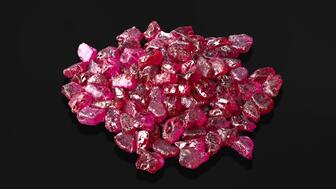
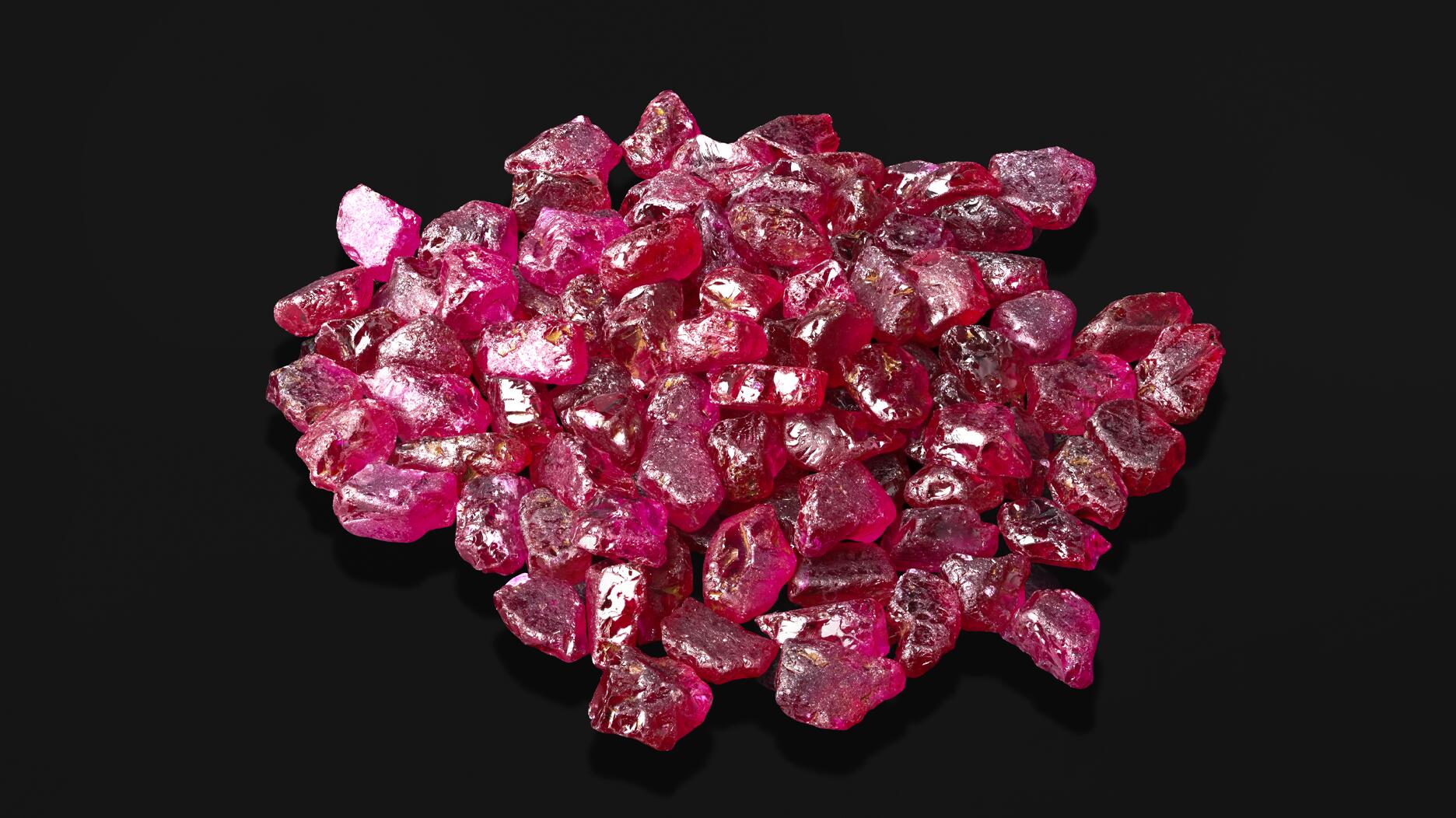
It appears the future of the ruby market will depend on the material coming out of Africa--how long it will last and how long it will take buyers to fully accept it. Mining giant Gemfields will play a huge part in this with their mine in Mozambique and marketing efforts.

New York--Rubies have long sat atop the gem world, serving as one of the most historically significant stones and commanding at times the highest per-carat price of any gem.

Burmese rubies, in particular, always have been regarded with a certain reverence, encapsulating the best the gemstone has to offer.

Yet in recent years the market has had to find a new direction in which to head, as the Burmese material remains banned for import into the United States due to government sanctions and the source itself dries up.

A few African sources, particularly in Mozambique and Madagascar, are offering the gemstone world new supplies that, a few experts say, are on par in terms of quality with the Burmese stones.

What remains to be seen, however, is how long these supplies will last and how long it will take for the market to fully accept them.

Supply
One of the major challenges for the supply side of rubies is the fact that the import of Burmese rubies remains banned in the U.S., cutting off supply to the American market.

Even if the ban wasn’t in place, the Burmese sources for the gemstone have been drying up, which means there isn’t much new material available on the market anyway, according to Benjamin Hakimi of gemstone supplier Colorline Inc.

However, material from Tanzania, Madagascar and especially Mozambique is reviving the ruby supply and can offer high-quality material comparable to that from Burma for a fraction of the price. Hakimi called these African rubies a “lifesaver” for manufacturers, as it is bringing ample affordable material to market.

According to gemstone dealer John Buechner, when Mozambican rubies that were comparable in color and clarity to the Burmese material came onto the market around 2008, they were selling for about one-sixth the price of Burmese rubies. Today, though, “that gap has narrowed and they are about half the price,” he said, though he noted that the stones still offer a great value.

Hakimi, meanwhile, said that he sees the African material at, on average, about 30 percent cheaper.

There’s also a major player involved in the ruby market now, which will have a lot of influence on where the market is headed.

Gemfields holds a 75 percent stake in the Montepuez mine in Mozambique. It received the license to mine the site in 2012 and held its first ruby auction in

2014. Since then, the colored gemstone miner has had a total of five auctions of rubies, with the latest in December reaching revenues of $28.8 million, or $317.92 per carat.

CEO Ian Harebottle told National Jeweler via email that the company has targeted production volumes in 2016 to be largely in line with what they achieved in 2015.

In the company’s financial year ended June 30, 2015, production at Montepuez totaled 8.4 million carats of ruby and corundum.

In the following six-month period to Dec. 31, the company said it mined 2.1 million carats of ruby and corundum with a focus on lower grade--meaning its output contains a smaller portion of valuable minerals--but significantly higher value alluvial ore resources. This resulted in a 341 percent increase in overall volume of higher quality rubies recovered.

According to Harebottle, Gemfields also is focused on the short-term goal of continuing to support the downstream market by absorbing the supply while also trying to stimulate increased global consumer demand, as they have done with Zambian emeralds.

The company said that it will continue to provide a base of support across the pipeline, including sales staff training, consumer education and various direct marketing campaigns.

Demand
As of late, there’s been a bit of a slowdown in buying in the Far East, both Hakimi and Harebottle said, with the latter adding that the decrease in demand from the Chinese market has been partially offset by the signs of recovery coming from America.

Even so, demand for rubies, while perhaps not at the level seen for sapphires, is still very high, especially for the higher quality, unheated material. And while U.S. customers might have a much harder time getting their hands on the Burmese material, overseas buyers still are asking for it.

Most buyers these days also are looking for “pigeon’s blood” rubies, especially in Hong Kong, Jeremy Hakimi of Colorline said. “They’re always looking for royal blue (sapphires) and pigeon’s blood (rubies). Maybe not as much here (in the U.S.), but that’s definitely what most people want.”

Buechner predicted that given the (so far) consistent supply of material on the market due to the more recent sources, along with consumers becoming much more educated about rubies and their rarity, demand for the gemstone in the U.S. will continue to rise and so will price.

And given rubies’ long history and staying power, it’s obvious that while demand might dwindle here and there based on certain economic factors, the stone is here to stay.

“The fact that rubies have such a broad-based appeal means that demand is not dependent on any single market, with considerable potential for growth when appropriately supported by improved availability, design, manufacture, distribution and promotions,” Harebottle said.

Pricing
Benjamin Hakimi said that with the introduction of the new material from Africa, he thought that prices for rubies might soften a bit, but they haven’t; prices have remained stable.

Gemfields also is seeing price and demand stability for the stone, as the market becomes more comfortable with the material that is being produced in its mine and seeing its high quality.

Harebottle told National Jeweler that this stability is further being supported by the company’s method of bringing rubies to market--a “highly transparent” auctioning platform where large amounts of high quality rough is offered on a consistent basis that in turn “results in improved economies of scale, broader-based distribution networks and considerably enhanced marketing potential.”

As a result, he said, the company has seen more high-end jewelry houses beginning to work with and promote Mozambican rubies, such as Cartier using a 15.29-carat Mozambican ruby at the center of its Reine Makéda necklace for the 27th Biennale des Antiquaires in Paris last year.

Hakimi too said that with the African material, it’s just a question of traction and how long it will take for the sources to really gain steam with buyers.

The country is putting out a lot of high quality, untreated material, so that’s not the issue, he said.

While there was a lot of buying at first, there’s been a bit of a slowdown since, especially in Hong Kong, which he thinks has to do with the geopolitical environment there. And, it “just doesn't yet have the name” that Burmese material does.

The lead-glass problem
A big issue that’s been plaguing the ruby market for a while now is lead glass-filled rubies. While these stones might have their place in the market, problems have been stemming from non-disclosure.

Since lead glass-filled rubies--which are different from treated rubies--are vulnerable to damage from something as simple as a common household cleaner, if a seller does not disclose the fact that the stone is a “composite” ruby and it later is ruined, that could “erode confidence in gemstones,” Benjamin Hakimi said.

Fortunately, he added, lead glass-filled rubies are fairly easy to identify ahead of time. (According to the Accredited Gemologists Association, one should look for a heavily crazed or fractured surface, flash effects or gas bubbles using a loupe or a microscope.)

Hakimi also noted that these issues surrounding lead glass-filled rubies are creating “headaches and costs” for Colorline because they now need to send “anything substantial” to a gem lab for certification.

Yet this increased need for ruby reports comes with a silver lining, of sorts.

A number of grading laboratories now are including color terminology on their gem reports, which could be good for jewelers because it could “help them quantify a sale,” Hakimi said. Of course, on the other hand, it could also hurt the sale if the report instead includes “vocabulary that’s not appealing” to a buyer who sees it.

“The bottom line is, you have to look at the (color of the) stone and see if you like it,” he said.

With the addition of color terminology to lab reports also comes the issue of consistency--for example, what one lab might consider a “pigeon’s blood” ruby could be different from what another lab might label as such. (This is an issue being addressed by a few labs, including the Gemmological Institute SSEF and Gübelin Gem Lab, which recently harmonized their standards for color and quality terms.)

Meanwhile, Gemfields’ Harebottle also noted another issue facing not only rubies but gemstones on a broader level.

For centuries, gemstones were regarded as one of the highest-valued possession one could have. Yet in recent years, due in large part to increased global communications and marketing, other luxury items--including shoes, handbags and perfumes--also have managed to enter this realm.

Harebottle said there has been more promotion behind such items, resulting in a decreasing market share for gemstones.

This is a large part of what Gemfields is trying to address with its efforts around the stones it mines, and Harebottle remains hopeful for the future.

“We have little doubt that what we have seen to date for emeralds, rubies and, in fact, all colored gemstones, is just the beginning,” he said.

Brecken Branstratoris the senior editor, gemstones at National Jeweler, covering sourcing, pricing and other developments in the colored stone sector.

The Latest

National Jeweler columnist Sherry Smith, partner at The Retail Smiths
ColumnistsApr 09, 2026
Jewelry Demand Isn’t Stronger, Prices Are Just Higher

Jewelers who misinterpret the state of the jewelry market risk employing the wrong retail strategy, cautions columnist Sherry Smith.

Tiffany & Co. Nathalie Verdeille
MajorsApr 09, 2026
Tiffany & Co. Promotes Nathalie Verdeille to SVP, Chief Artistic Officer

In her newly expanded role, she will continue to oversee the jewelry category, as well as watches, home, and accessories.

Jacob & Co. The Godfather II Musical Watch
WatchesApr 09, 2026
Jacob & Co. Rolls Out Its Sequel to ‘The Godfather’ Musical Watch

“The Godfather II” watch plays two melodies from the mob film’s score, “The Godfather’s Waltz” and “The Godfather Love Theme.”

GIA iD100®
Brought to you by
Protect Your Customers and Your Business

You deserve to know what you are selling–to protect your customers as well as your business and your reputation.

Jesse Itzler
Events & AwardsApr 09, 2026
JCK Announces Jesse Itzler as 2026 Keynote Speaker

Organizers have also introduced the new JCK Talks Signature Series, as well as an offering of watch-focused workshops and lectures.

Weekly QuizApr 09, 2026
This Week’s Quiz
Test your jewelry news knowledge by answering these questions.
Take the Quiz
Oris CEO Rolf Studer and Oris CFO Claudine Gertiser
WatchesApr 09, 2026
Oris Names New CEO, CFO

The Swiss watchmaker is changing up its executive leadership team as part of a restructuring.

Hearts On Fire What’s Your Signature Campaign Imagery
CollectionsApr 08, 2026
Hearts On Fire Celebrates 30 Years By Asking a Question

The “What’s Your Signature?” campaign invites women to think about how they see themselves.

TopImageCrop.jpg
Brought to you by
Is This You? Every Jeweler Has This Problem; We Have the Solution.

Every jeweler faces the same challenge: helping customers protect what they love. Here’s the solution designed for today’s jewelry business.

American Gem Society Confluence Logo
Events & AwardsApr 08, 2026
AGS Confluence Returns with AI, Sustainability Sessions

Rob Bates of The Jewelry Wire will also moderate a panel on the state of the jewelry industry during the virtual event.

Dennis Buzz Busby and Randy Welch
Events & AwardsApr 08, 2026
TJS to Honor 2 Longtime Former Stuller Employees

The Jewelry Symposium will honor two industry veterans with lifetime achievement awards at its upcoming May event.

Isabel Delgado A necklace
TrendsApr 08, 2026
Amanda’s Style File: April’s Brilliant Birthstone

With their durability, brilliance, and beauty, diamonds are the perfect stone for everyday birthstone jewelry.

QVC Group logo
MajorsApr 07, 2026
QVC Group’s Latest Filing Calls Its Future Into Question

The retailer failed to file its annual report on time and said it may issue a going concern warning.

Headshot of National Jeweler columnist Peter Smith
ColumnistsApr 07, 2026
Peter Smith: A Tip to the Post Office on Workplace Culture

Smith recounts a recent trip to the post office that included an uncomfortable, embarrassing, and public exchange between two employees.

Retiring GIA CFO David Tearle and new GIA CFO John Cowley
GradingApr 07, 2026
GIA CFO David Tearle to Retire in June

John Cowley, who has more than 30 years of experience, is succeeding Tearle as the lab’s chief financial officer.

Gemology Geek Ignite collection tourmaline ring
CollectionsApr 07, 2026
Nerd Out Over Gemology Geek’s First Jewelry Collection

Founder Erica Silverglide has designed 35 colorful pieces set with fluorescing gemstones for the brand's first finished jewelry offering.

Ukrainian Jewelry | Contemporary Jewelry and Art Jewelry from Ukraine
CollectionsApr 07, 2026
Ukrainian Jewelers Highlighted In New Book

“Ukrainian Jewelry | Contemporary Jewelry and Art Jewelry from Ukraine” features 33 contemporary Ukrainian designers and studios.

Fope Golden Now Campaign Imagery
CollectionsApr 06, 2026
Fope’s New Jewelry Debuts Are Golden

“The Golden Now” campaign celebrates the here and now with the brand’s signature styles and a selection of its new pieces.

Former Signet executive Kecia Caffie
MajorsApr 06, 2026
Kecia Caffie, Corinne Bentzen No Longer With Signet Jewelers

Signet confirmed that Caffie, president of Zales and Banter, and Bentzen, who headed Blue Nile, have left the company.

Author Tanzy Ward and her book Precious Black Jewels The Bijou Material Culture of Black Victorians & Edwardians
CollectionsApr 06, 2026
Historian Tanzy Ward Pens Book on Black Victorians’ Jewelry

The antique jewelry dealer talks about the importance of including Black Americans in jewelry history and preserving their stories.

Gemfields emeralds
SourcingApr 06, 2026
Gemfields Reports $51M Loss in 2025

Both its mines faced challenges last year, from operational issues to disruptions in the market.

Screenshot of Taylor Swift's "Elizabeth Taylor" music video
CollectionsApr 03, 2026
Taylor Swift’s ‘Elizabeth Taylor’ Video Puts Jewelry Front and Center

Iconic pieces, like the Mike Todd Diamond Tiara, appear in the superstar’s new music video for her song inspired by the actress.

Neiman Marcus store in Fort Worth, Texas
MajorsApr 03, 2026
Saks Global Says It Will Emerge From Bankruptcy This Summer

The luxury retailer, which went Chapter 11 in January, announced Thursday that it has secured $500 million in exit financing.

NouvelleBox logo
Events & AwardsApr 03, 2026
JCK Luxury, NouvelleBox Partner on New Designer Ballroom

The NouvelleBox ballroom will feature independent jewelry designers, including Lene Vibe, Wyld Box Jewelry, and Kiaia Limited.

Buddha Mama Moon Locket
CollectionsApr 03, 2026
Buddha Mama Brings Its ‘Moon’ Locket To Dallas

The one-of-a-kind locket, our Piece of the Week, opens to reveal three hidden images to keep close to your heart.

Pandora distribution facility Canada
MajorsApr 02, 2026
Pandora Opens New Canadian Distribution Center Amid Tariff Concerns

The new facility was also designed to better serve its growing customer base in Canada.

Michelle Yeoh Mikimoto
TrendsApr 02, 2026
Michelle Yeoh Fronts New Mikimoto Campaign

The campaign is a tribute to the year 1893, when Kokichi Mikimoto created the world’s first cultured pearl.

GIA President and CEO Pritesh Patel at GIA Taiwan campus
GradingApr 02, 2026
GIA Debuts New Campus in Taiwan

It is the only GIA school to offer the GIA Graduate Gemologist program in Chinese.

×

This site uses cookies to give you the best online experience. By continuing to use & browse this site, we assume you agree to our Privacy Policy