






TrendsSep 23, 2026
Holiday Diamond Jewelry Trends: Layered Looks, PersonalizationThis holiday season, look to pieces that will help to fill out customers’ everyday diamond jewelry wardrobe, experts say.



When faced with increasing competition from other retailers, expanding the product mix to include estate pieces can help set a jeweler apart. But how does a traditional jeweler do that? Two experts explain.

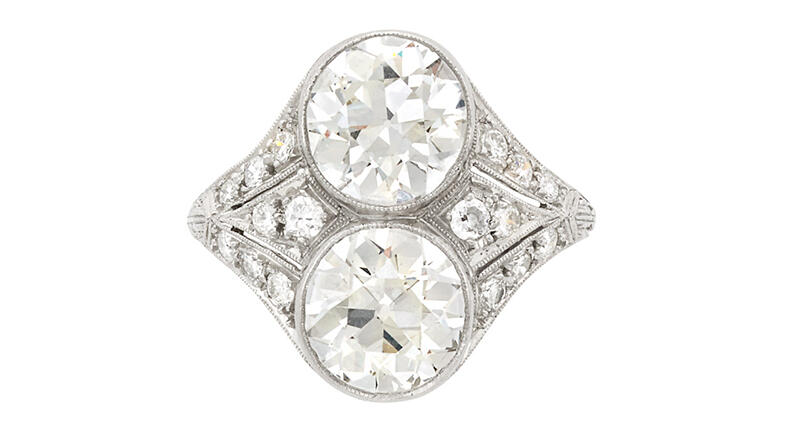
New York--When faced with increasing competition from other retailers, expanding the product mix to include estate pieces can help set a jeweler apart. But that’s not as simple as it might sound for traditional jewelry stores.
At a panel at the JA New York Spring show on Monday, Jim Rosenheim of Tiny Jewel Box and Susan Abeles of Bonhams U.S. addressed the challenges of estate jewelry and how retailers can prepare their staff to sell it. The EAB Project’s Elizabeth Anne Bonanno moderated the discussion.
Rosenheim said that “vintage is a complicated kind of business,” adding that it can be a very strong draw for people who are looking to create a unique look and also gives stores margin.
Yet one of the big challenges in the marketplace currently is the fact that there’s so much that looks estate on the market that actually isn’t, including forgeries or misrepresentation.
“Find the right sellers, people whom you can trust. Make sure you have everything in writing,” he said.
One important distinction Rosenheim made is the difference in vocabulary when it comes to signed jewelry. Pieces should read, for example, “By Tiffany” if it’s a real piece but there are instances when verbiage such as “Signed Tiffany” is used.
Abeles reiterated these thoughts, noting that there are “innumerable simulated vintage pieces out there, so it’s a guessing game.”
For this reason, asking all the important questions about a piece before buying is of utmost importance--provenance, how the piece came about, how the dealer/company came into possession of the piece and anything else pertinent to its history.
Retailers also need to have an idea of what type of estate jewelry they want to deal in, what they’ll sell and how they will do that. So education, too, is necessary, Abeles said.
This means not only reading all about the time periods and history behind the periods and eras that the store wants to deal in but also being involved with what’s going on in the trade, attending shows and seminars, and following relevant conversations and sources on social media.
When it comes down to it, retailers should trust their instincts about a piece and pay attention to signs that it might not be authentic.
Abeles also said that a good way that store owners can help both clients and salespeople in the process is by creating “tear sheets” for


This holiday season, look to pieces that will help to fill out customers’ everyday diamond jewelry wardrobe, experts say.

The Natural Diamond Council is now The Diamond Collective and has announced a new strategy under CEO Amber Pepper.

Paul’s Jewelers sells coffee, chocolate, and cookies from a custom gold-wrapped trailer parked outside the store starting at 7 a.m.

Experience gemstones with greater precision and comfort than ever before.


Part of its brand relaunch, the marketing around the campaign includes a contest involving a jacket set with 550 diamonds.


The jewelry giant has partnered with the famed makeup artist to create a colorful new collection of charms and rings.

The association will mark the milestone at its convention next month.

Submit your pieces for a chance to win in this year's competition.


The jeweler donated school supplies to Memphis, Tennessee, students during the event combining basketball and mentorship.

A federal judge denied Pandora’s motion to dismiss Foundrae’s claim for copyright infringement of its medallions.

People aren’t thinking rationally when they are buying luxury products, and we shouldn’t be selling them that way, Peter Smith writes.

The Baltimore Business Journal recognized the entrepreneur for her leadership in business and the jewelry industry.

The facility is located within SEEPZ and is GCAL by Sarine’s second location in India, joining its existing grading lab in Surat.

Offered at Sotheby’s Hong Kong, the one-of-a-kind white gold watch now holds the title of most valuable Cartier wristwatch sold at auction.

Bernstein-Gulla has been working in the jewelry industry for 40 years, most recently as chief engagement officer for Hill & Co.

The relocated Glendale store, now at The Americana at Brand, was designed to be a contemporary “timepiece haven” inspired by luxury resorts.


The top lot of the auction house’s Hong Kong jewelry sale was an Art Deco Mauboussin necklace with ruby beads, which sold for $2 million.

Retailers and manufacturers headed to the Capitol this week to discuss tariff exemptions for diamonds and gemstones, among other issues.

Our Piece of the Week is a pair of drop earrings from the “Sway” collection featuring Nanis’ first use of mirror-polished gold.

SynthDetect 2 can scan a full tray in less than five minutes, De Beers said, making it six times faster than its predecessors.

Two metal detectorists discovered the ring, which may have belonged to English noblewoman Matilda of Lancaster, in Suffolk.

The bill has a provision that allows the president to raise tariffs on countries that import Russian oil and gas to as much as 100 percent.

The American Gem Society presented the annual award to a former president of its board.

The “Chrysalis” capsule centers butterfly motifs representing growth, transformation, and the unfolding of who you are.

Jewelers of Louisiana presented Patton, the third-generation president of Pattons Fine Jewelry, with the award at its annual convention.


Two special guests join the podcast to commemorate the 10th anniversary of the designer advocate, mentor, and author’s untimely passing.


McCormack brings sea-inspired motifs from her “Beaches” collection to L’Objet’s tableware, vanity pieces, and first-ever cutlery set.



This site uses cookies to give you the best online experience. By continuing to use & browse this site, we assume you agree to our Privacy Policy