






SurveysNov 05, 2026
What Retailers Should Know About Holiday Shoppers This YearSurveysNov 24, 2026
Jewelry Continues to Shine in Bain’s Annual Luxury Report
The report also dives into the buying power of older generations, the importance of an AI recommendation, and more.


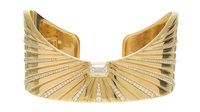
This “Rose Aurea” ring by Valaree Wahler of Elyzian Fine Jewelry was one of the many winning designs at the 2026 AGTA Spectrum & Cutting Edge Awards. Jewelry saw growth of 8 to 10 percent this year, said Bain & Company in its annual survey.
New York—Global luxury spending held steady in 2026, with jewelry standing out as the strongest-performing category, Bain & Company said.
Worldwide spending across luxury markets is expected to reach €1.5 trillion ($1.7 trillion) in 2026, increasing as much as 2 percent year-over-year, the company reported in its annual Luxury Worldwide Market Study, released last week.
That’s slightly higher than Bain’s luxury spending forecast of €1.44 trillion to €1.47 trillion ($1.64 trillion to $1.68 trillion) shared in the spring.
The luxury market improved this year despite geopolitical tensions and macroeconomic uncertainty and has expanded by 16 to 22 percent since 2019, Bain said.
“The luxury market is neither simply slowing down nor recovering; it is redefining its boundaries,” said Claudia D’Arpizio, Bain & Company senior partner, head of the firm’s global Fashion & Luxury practice, and lead author of the study.
“The consumer base remains resilient amid headwinds, but priorities and value systems are shifting. For brands, staying relevant means engaging differently with generations, markets, and categories; there is no single formula for growth. The challenge is to turn new signals and consumer journeys into lasting value, broadening desirability and access without compromising relevance or authority.”
Here are a few key takeaways from Bain’s annual luxury report.
Jewelry is the strongest category this year.
Jewelry sales are expected to grow 8 to 10 percent this year, said Bain, bolstered by people buying pieces for themselves and for everyday wear, and “renewed creativity” across price points.
“After a standout performance in 2025, the jewelry category gained further sales momentum, driven by growth across price points and a clear perception of value by consumers,” Bain said in a summary of its report.
Watches are forecast to expand by 3 to 5 percent.
Hard luxury (which is primarily jewelry and watches) is “thriving” overall, the report said, with more than 70 percent of players in the space growing.
By contrast, soft luxury, like apparel, is struggling, with around 60 percent of brands flat or declining.
“Fashion brands are navigating a more complex market, where consumers value different things at different price points: creativity and heritage in luxury, affordability and brand appeal in premium, and performance or convenience in sportswear and fast fashion,” said report co-author Federica Levato, senior partner at Bain & Company and leader of the firm’s EMEA Fashion & Luxury practice.
“At the same time, premium and sports brands are moving upmarket. The winners will be those that stay clear about whom they serve and deliver a distinctive proposition that feels worth choosing at every level.”
With growth becoming increasingly fragmented, both across and within categories, the report highlighted the importance of brands being consistent and clear about their value proposition, advising them to remain focused on the categories where they have the strongest authority.
“Luxury no longer defines only what people own; it increasingly defines how they live.” — Bain & Co., 2026 Luxury Worldwide Market Study
Luxury experiences are leading growth, while personal luxury goods are on the rebound.
Luxury experiences, including hospitality, fine wines and spirits, high-end dining, cruises, private jets and yachts, remain a key growth driver.
This segment is forecast to reach €533 billion ($581 billion) in 2026, with 2 to 4 percent growth year-over-year, said Bain.
Personal luxury goods rebounded following two years of slight declines, with demand from top customers offsetting the decline in aspirational shoppers.
The segment is expected to reach €367 billion in 2026, with 1 to 3 percent growth year-over-year (+2 to +4 percent at constant exchange rates).
“Luxury is also expanding beyond its traditional core. As consumers place greater value on longevity, sustainability, community, purpose and well-being, the opportunity is no longer limited to products: it also spans experiences, services and new categories,” said the report.
“For brands, the challenge is to identify where they can create meaningful value and earn a role in these evolving arenas, while staying focused on the expectations of high-net-worth consumers. Luxury no longer defines only what people own; it increasingly defines how they live.”
Pre-owned luxury is outpacing the primary market.
From 2019 to 2025, the compound annual growth rate for the pre-owned luxury market was 7 to 8 percent.
That’s 3 to 4 times higher than the primary market, and it’s expected to expand by another 4 to 6 percent this year.
That growth reflects different motivations across categories, said Bain, including “heritage and affordability in personal luxury goods, investment and collectability in fine wines and spirits, and accessibility in private jets and yachts.”
“Finding authentic products among dupes, reconnecting with brand heritage and archives, and the entertainment of the hunt for them, have emerged as consumer must-haves,” the report said.
Notably, these sales are not counted in the report’s headline sales figures.
Shoppers are seeking out local flavor and emerging brands.
Consumer interest in emerging luxury brands has more than quadrupled since 2024, said Bain.
Shoppers are especially seeking out luxury brands rooted in local identity and discovery.
In China, for example, shoppers’ intentions to shop local brands is six times higher now than in 2019, which Bain said is driven by cultural authenticity, compelling price-value equation, and strong execution.
Local shoppers are looking for creative and distinctive offerings, while tourists like the sense of discovery and an experience that makes them feel like a local.
The Americas and parts of Asia lead in personal luxury goods growth.
The 2026 personal luxury goods outlook is “sharply” divided across regions, Bain said.
The Americas are in the lead, driven by the United States, with sales forecast to grow 7 to 9 percent. That growth was spread across income groups, with domestic brands gaining momentum.
In the first half of the year, three-quarters of growth in the Americas was price-driven, said Bain.
Notably, American heritage brands outpaced European brands by 6 percentage points.
The second-highest growth in personal luxury goods was seen in Asia (excluding China) and Japan at 5 to 7 percent, then Europe at 1 to 3 percent.
Mainland China is expected to see a 1 to 3 percent decline.
The Middle East, Africa, and Oceania could plummet 10 to 14 percent. Local high-net-worth shoppers are supporting local demand, but uncertainty related to regional conflicts have dampened tourist and expatriate spending, said Bain.
The report noted that jewelry performed well in Japan, while jewelry sales were resilient in China, despite the country’s overall slowdown in luxury spending.
Monobrand stores and online sales continue to perform well.
Monobrand stores have remained the largest personal luxury goods channel, said Bain, increasing their market share from 36 percent to 37 percent.
Brand landmarks, or flagship stores, are where luxury retail is heading, it said, noting more than 20 stores like these opened in 2025.
This year, its data “points to a new store-network model that blends products, culture, and entertainment to serve customers across more occasions.”
Online sales, meanwhile, are forecast to grow 2 to 4 percent year-over-year.
Outlet traffic remains under pressure, said Bain, though more curated formats are resonating with value-conscious shoppers.
The luxury market could go either way next year, with renewed macroeconomic or geopolitical headwinds pushing luxury into a decline or easing tensions in the Middle East and a recovery in China bringing growth.
Longevity and AI are key to the future of luxury.
The outlook for 2027 will depend on how well demand recovers, said Bain.
The most likely scenario for the personal luxury goods market next year is flat to growth of 4 percent year-over-year.
“The outlook reflects a still-volatile environment: recent tailwinds are softening, consumer demand remains polarized, and regional performance is likely to diverge,” it said.
The Americas are expected to remain the main growth driver. Europe may stabilize as tourists return and China’s recovery outlook is muted.
It could go either way next year, with renewed macroeconomic or geopolitical headwinds pushing luxury into a decline or easing tensions in the Middle East and a recovery in China bringing 4 to 6 percent growth.
Looking ahead even further to 2035, the global luxury market is expected to grow from around €1.5 trillion ($1.7 trillion) this year to €2.2 trillion €2.6 trillion ($2.4 trillion to $2.9 trillion) by 2035, a rate of 4 to 6 percent a year.
“Growth will unfold in a changing landscape: consumers are more selective, more discerning, and spread across multiple pools. Brands that build cultural authority and influence will be best placed to capture the opportunity,” Bain said.
The report also noted that people living longer, healthier, and more active lives will impact luxury, as many members of older generations have time, money, and the freedom to spend on what they want.
Today, the combined spending of baby boomers, the Silent Generation, and Generation X represent around 45 to 55 percent of total luxury spending, Bain said.
This could mean €300 billion to €600 billion ($329 billion to $659 billion) of cumulative potential market value between 2026 and 2030.
This effect is expected to be felt in established categories, said Bain, like milestone self-gifting, advanced skincare, comfortable fashion, and multi-generational travel.
AI is also changing how shoppers find and choose luxury brands, which gives brands less control over how they show up, said Bain, noting 70 percent of AI prompts about luxury are unbranded.
“Having held their ground in 2026, tomorrow’s winners in luxury are likely to extend their businesses beyond the industry’s traditional boundaries, while adapting early to the way consumer engagement with brands is evolving, particularly through AI,” noted Bain.
Brands, of course, will want AI tools to recommend them, with AI-referred shoppers generating more than 40 percent higher revenue per visit.
“Brands will need to rethink their ecosystem, from how they engage audiences and answer queries to how they make their own sites trusted sources of truth,” the report said.
While the fundamentals of luxury remain, there are myriad challenges facing the market, with Bain highlighting “fragmenting demand and the scarcity of critical talent to the rising cost of exclusivity and attention, and a growing dependence on gatekeepers that intermediate demand.”
If luxury brands want to seize opportunities, said Bain, they must focus on who their customer is and what sets them apart as a brand.
“They must now reconnect with their consumers, awaken desire through vision, craft and storytelling, control how they are perceived, hardwire their meaning and extend the journey into one seamless, always-on experience,” the report said.
“Those that act with this clarity will be best placed to turn direction into a destination.”


More on Surveys

The Latest

CrimeNov 24, 2026
Security Measures Jewelers Need to Take This Holiday SeasonJSA’s Scott Guginsky said jewelers should train seasonal help on security and reduce the risks customers face when they leave the store.


MajorsNov 23, 2026
Bulgari Chairman Paolo Bulgari Dies at 89Paolo Bulgari, grandson of brand founder Sotirio Bulgari and chairman of Bulgari Group, is remembered as a “true creative soul.”


IndependentsNov 23, 2026
Sissy’s Log Cabin Opens New Flagship as Holidays ApproachPeek inside the new Little Rock, Arkansas, showroom, the jeweler’s largest store to date.


Brought to you by
12 Ways Independent Jewelers Can Drive More Sales and Stronger Profits in 2027These twelve tips can help retailers improve margins, convert shoppers, and make every dollar work harder.


Lab-GrownNov 23, 2026
Kira Jewels Triples Lab-Grown Diamond Production The company has increased the number of CVD reactors to 10,000, allowing its monthly production to reach 750,000 polished carats.
Weekly QuizNov 19, 2026
This Week’s QuizTest your jewelry news knowledge by answering these questions.


GradingNov 23, 2026
GIA Names Former Swarovski Exec as Board ChairStephen F. Kahler was appointed to chair of the board while Robert Andrew Johnson is GIA’s new vice chair.

SourcingNov 20, 2026
Company That Mined Angola’s Largest Diamond Has a New OwnerDubai-based AV Group has acquired Lucapa Diamond Company, which holds a stake in Angola’s Lulo mine and has a diamond project in Australia.

Brought to you by
More Information. More Confidence. One GIA Jewelry Report.The GIA Jewelry Report helps retailers answer customer questions with independent, science-based information from GIA—all in one report.


TrendsNov 20, 2026
Anabela Chan’s ‘Canary Atlantis’ Earrings Enter The Hunger Games ArenaActress Mckenna Grace wore our Piece of the Week to the London premiere of “The Hunger Games: Sunrise on the Reaping.”

Events & AwardsNov 20, 2026
Registration Open for JIS Spring 2027 Registration for the trade show, taking place March 7-9, is now open.


Supplier BulletinNov 19, 2026
Every Color, Every Cut: AGTA GemFair Tucson Returns Jan. 31 to Feb. 4, 2027Sponsored by American Gem Trade Association (AGTA)

SourcingNov 19, 2026
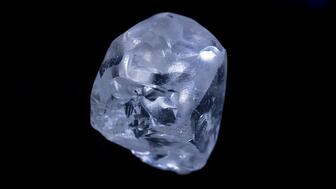
176-Carat Diamond, Second Largest Found in Namibia, Comes to US The “Owishi” made its U.S. debut in Washington, D.C. on Monday and now will return to Namibia for planning, cutting, and polishing.

CrimeNov 19, 2026
Customs Seizes Fake Kansas City Chiefs Super Bowl RingsCBP agents in Houston have seen “significant seizures” of counterfeit watches, baby toys, and FIFA World Cup merchandise, the agency said.

AuctionsNov 19, 2026
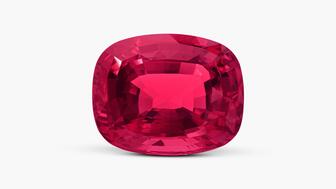
52-Carat Red Spinel Sells for $2M to Moussaieff The London high jewelry house, which bought the gemstone at Sotheby’s Geneva jewelry auction, has renamed it the “Moussaieff Spinel.”

Events & AwardsNov 19, 2026
Rio Grande Sponsors New High School Award at NYC Jewelry WeekThe Here We Are High School award will gift a Future Jewelers Academy student with $750 and a Rio Grande tool kit with bench essentials.


PodcastsNov 18, 2026
Episode 11: Are Malls Making a Comeback?Peter Smith and R.J. Hottovy of Placer.ai guest on this special pre-holiday episode of the podcast to discuss the status of shopping malls.


IndependentsNov 18, 2026
Michaels Jewelers to Close Mall Location After 15 YearsThe jeweler is closing its store in the Trumbull Mall in Connecticut, citing a decline in foot traffic.

WatchesNov 18, 2026
Paul Altieri Pens Book on Personal Rolex Watch CollectionIn “Not For Sale,” the CEO and founder of Bob’s Watches showcases his collection of 134 rare vintage Rolexes and the stories behind them.

CollectionsNov 18, 2026
Stephen Webster Debuts a Bracelet Made for 007The "Shaken & Stirred" clasp is one of seven designs in a new collection celebrating notorious male figures from the 20th century.

MajorsNov 18, 2026
Signet Jewelers Appoints Five Below CEO to Its BoardWinnie Park was also previously the CEO of Forever 21 and Paper Source.

CollectionsNov 17, 2026
Larkspur & Hawk Partners With Blanca Miró on New CollectionThe collaborative collection features rivière necklaces, layered bracelets, drop earrings, and stackable rings in four vivid colors.

CrimeNov 17, 2026
1 Man Arrested, Another Sought in Murder of Ohio JewelerTara Sinchuri was shot to death inside his store, Everest Jewels in Fairfield, Ohio, during a robbery last month.

IndependentsNov 17, 2026
A Few Snaps From Steve Quick Jeweler’s 40th Anniversary Celebration The Chicago jeweler celebrated its ruby anniversary in style.

ColumnistsNov 17, 2026
Peter Smith: Hunting for Salespeople Smith recounts notable interactions from his three-day shopping mission to recruit salespeople for a client.


AuctionsNov 17, 2026
Jewelry Alexander Calder Made for Family Members Up for Auction The five pieces on offer at Bonhams, together estimated to fetch $300,000, were made as gifts for the artist’s mother, sister, and niece.

MajorsNov 16, 2026
Step Inside Betteridge Jewelers’ Renovated Greenwich StoreLocated on the main street in Greenwich, the renovation marks Watches of Switzerland’s most significant U.S. retail investment to date.

AuctionsNov 16, 2026
A Tour of Pauline Karpidas’ Jewelry Heading to AuctionHer eclectic collection, with jewels spanning several periods of the 20th century, could fetch up to $10 million at Sotheby's next month.


