







TrendsSep 23, 2026
Holiday Diamond Jewelry Trends: Layered Looks, PersonalizationThis holiday season, look to pieces that will help to fill out customers’ everyday diamond jewelry wardrobe, experts say.




The historically significant books about gems and jewelry now are available to the public online following their digitization by staff at the GIA’s Richard T. Liddicoat Library.

Carlsbad, Calif.--The Gemological Institute of America has made 101 of the rarest and most historically significant books about gems and jewelry available to the public through a digitization project by its Richard T. Liddicoat Gemological Library and Information Center.
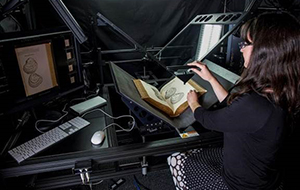
The works are available to download for free, and include major studies related to minerals, gems and jewelry spanning more than 500 years--from 1496 to the present.
The debut of the collection online includes the digitization of the oldest book in the GIA’s library, Pliny’s Natural History.
The digitization project is part of the GIA’s mission of ensuring public trust in gems and jewelry, providing global access to hundreds of years of prominent works. The organization said that it will continue to digitize its catalog of rare and unique books and estimates that it will be able to make 100 additional works available to the public each year.
The GIA’s library currently houses more than 57,000 books, 700 journals and magazine titles, 160,000 digital images and 1,900 videos, as well as the Cartier Rare Book Repository and Archives.
Highlights of the collection now available for download are as follows.
--Pliny’s Natural History, 1496: “Naturalis Historia” by Pliny the Elder (A.D. 23 to A.D. 79) is one of the earliest and most celebrated academic treatises of all time, the GIA said. Its content dates back to A.D. 77 and was considered the foundation of all science until the Renaissance.
--Marbode’s Book of Precious Stones, 1511: Marbode (1035 to 1123), Bishop of Rennes, originally wrote this manuscript in the form of a 742-line poem between 1061 and 1081. Only 100 copies are known to have been made, and this edition, called a lapidary, was the first Marbode work printed using Gutenberg’s process of movable metal type.
--Haüy’s Treatise of Mineralogy, (1801): René Just Haüy (1742 to 1822) was an ordained priest, botanist and mineralogist whose expertise lay in his ability to describe the laws that govern the structure of crystals. His mineral studies led to him creating a system to indicate the different faces of crystals.
--Sowerby’s British Mineralogy, 1804-1817: James Sowerby documented the minerals of Great Britain and drew hundreds of specimens. These images were printed using copper plates and

--Proby’s British Mineralogy, 1840: Martha Proby (1783 to 1864) created this two-volume set of books based on Sowerby’s work, meticulously hand-copying selections and illustrating her books with original watercolor paintings.
--Frémy’s Synthesis of Ruby, 1891: This book documents and illustrates the work of Edmond Frémy (1814 to 1894), a French chemist and professor. His interest in synthetic crystal growth led to his groundbreaking work with Auguste Verneuil in growing synthetic rubies using the flux technique.

This holiday season, look to pieces that will help to fill out customers’ everyday diamond jewelry wardrobe, experts say.

The Natural Diamond Council is now The Diamond Collective and has announced a new strategy under CEO Amber Pepper.

Paul’s Jewelers sells coffee, chocolate, and cookies from a custom gold-wrapped trailer parked outside the store starting at 7 a.m.

Experience gemstones with greater precision and comfort than ever before.


Part of its brand relaunch, the marketing around the campaign includes a contest involving a jacket set with 550 diamonds.


The curation, opening soon at the Crystal Bridges Museum of American Art, honors the jeweler’s heritage through a distinctly American lens.

The jewelry giant has partnered with the famed makeup artist to create a colorful new collection of charms and rings.
Submit your pieces for a chance to win in this year's competition.


The association will mark the milestone at its convention next month.

The jeweler donated school supplies to Memphis, Tennessee, students during the event combining basketball and mentorship.

A federal judge denied Pandora’s motion to dismiss Foundrae’s claim for copyright infringement of its medallions.

People aren’t thinking rationally when they are buying luxury products, and we shouldn’t be selling them that way, Peter Smith writes.

The Baltimore Business Journal recognized the entrepreneur for her leadership in business and the jewelry industry.

The facility is located within SEEPZ and is GCAL by Sarine’s second location in India, joining its existing grading lab in Surat.

The four-day show is slated for Nov. 19-22 at the Metropolitan Pavilion in New York City’s Chelsea neighborhood.

Offered at Sotheby’s Hong Kong, the one-of-a-kind white gold watch now holds the title of most valuable Cartier wristwatch sold at auction.

Bernstein-Gulla has been working in the jewelry industry for 40 years, most recently as chief engagement officer for Hill & Co.

The relocated Glendale store, now at The Americana at Brand, was designed to be a contemporary “timepiece haven” inspired by luxury resorts.


The top lot of the auction house’s Hong Kong jewelry sale was an Art Deco Mauboussin necklace with ruby beads, which sold for $2 million.

Retailers and manufacturers headed to the Capitol this week to discuss tariff exemptions for diamonds and gemstones, among other issues.

Our Piece of the Week is a pair of drop earrings from the “Sway” collection featuring Nanis’ first use of mirror-polished gold.

SynthDetect 2 can scan a full tray in less than five minutes, De Beers said, making it six times faster than its predecessors.

Two metal detectorists discovered the ring, which may have belonged to English noblewoman Matilda of Lancaster, in Suffolk.

The bill has a provision that allows the president to raise tariffs on countries that import Russian oil and gas to as much as 100 percent.

The American Gem Society presented the annual award to a former president of its board.

The “Chrysalis” capsule centers butterfly motifs representing growth, transformation, and the unfolding of who you are.

Jewelers of Louisiana presented Patton, the third-generation president of Pattons Fine Jewelry, with the award at its annual convention.



This site uses cookies to give you the best online experience. By continuing to use & browse this site, we assume you agree to our Privacy Policy