








Policies & IssuesApr 28, 2026
Tariff Refunds: How to File, What to Expect Policies & IssuesJul 20, 2026
Tariffs on Brazil to Increase But Rough Gemstones Exempt
The new tariff, imposed after a Trump administration study, is 25 percent and will stack on top of existing tariffs.


Beginning Wednesday, imports from Brazil will be taxed at 35 percent—the 10 percent tariff imposed under section 122 of the 1974 Trade Act that was implemented in February, plus an additional 25 percent tariff the Trump administration just announced.
Washington, D.C.—The Jewelers Vigilance Committee issued a trade alert Friday afternoon on a new 25 percent tariff the Trump administration is imposing on imports from Brazil that will go into effect this week.
The action followed a year-long study in which the administration determined that certain policies implemented by the Brazilian government are “unreasonable and burden or restrict U.S. commerce,” JVC stated in the alert.
Implemented under section 301 of the Trade Act of 1974, the 25 percent will be added onto the existing 10 percent tariff (which is set to expire on Friday), as well as any future tariffs.
It is set to go into effect at 12:01a.m. EDT on Wednesday, though there are some exemptions.
The two tariff codes for what the industry would describe as rough gemstones, HTS 7103.10.20 and HTS 7103.10.40, are exempt, JVC President, CEO, and General Counsel Sara Yood said.
This means that rough gemstones exported from Brazil for cutting in, for example, India or Thailand, would not be taxed at the Brazilian rate. After cutting, they become products of the country where they are “substantially transformed,” i.e., cut and polished, and are taxed accordingly.
However, Yood noted, the exemptions do not apply to polished gemstones or finished jewelry.
She said there are also exemptions for precious metals that are “pretty broad” and in line with previous policies.
They include silver, gold, platinum, palladium, and rhodium in “unwrought” and “semi-manufactured” form.
The full list of exempt products can be found here.
Related stories will be right here …
The action followed a year-long study in which the administration determined that certain policies implemented by the Brazilian government are “unreasonable and burden or restrict U.S. commerce,” JVC stated in the alert.
Implemented under section 301 of the Trade Act of 1974, the 25 percent will be added onto the existing 10 percent tariff (which is set to expire on Friday), as well as any future tariffs.
It is set to go into effect at 12:01a.m. EDT on Wednesday, though there are some exemptions.
The two tariff codes for what the industry would describe as rough gemstones, HTS 7103.10.20 and HTS 7103.10.40, are exempt, JVC President, CEO, and General Counsel Sara Yood said.
This means that rough gemstones exported from Brazil for cutting in, for example, India or Thailand, would not be taxed at the Brazilian rate. After cutting, they become products of the country where they are “substantially transformed,” i.e., cut and polished, and are taxed accordingly.
However, Yood noted, the exemptions do not apply to polished gemstones or finished jewelry.
She said there are also exemptions for precious metals that are “pretty broad” and in line with previous policies.
They include silver, gold, platinum, palladium, and rhodium in “unwrought” and “semi-manufactured” form.
The full list of exempt products can be found here.
Tariff rates reached as high as 50 percent (India) on some countries that are key links in the jewelry supply chain before the Supreme Court struck them down in February.
The Trump administration acted quickly to impose a new 10 percent tariff under section 122 of the Trade Act of 1974, which allows the president to temporarily charge tariffs to “deal with large and serious United States balance-of-payments deficits.”
The section 122 tariffs are set to expire this coming Friday, July 24.
Immediately after the Supreme Court’s ruling in February, the Trump administration began an investigation under section 301 of the 1974 Trade Act into labor practices in 60 countries.
In June, the Office of the United States Trade Representative (USTR) announced that it has determined that 54 of the 60 countries investigated have “failed to impose and effectively enforce a prohibition on the importation of goods produced with forced labor.”
The list of 54 countries includes India, China, Hong Kong, Israel, South Africa, Switzerland, Taiwan, Thailand, Turkey, the United Arab Emirates, the United Kingdom, and Vietnam, as well as Brazil.
Goods imported from these countries will be taxed at 12.5 percent, known as the section 301 tariffs or the “forced labor” tariffs.
The remaining six countries— Canada, Ecuador, the European Union, Indonesia, Mexico, and Pakistan—have “failed to effectively enforce a prohibition on the importation of goods produced with forced labor,” USTR said.
Goods imported from these countries will be taxed at 10 percent, though no official implementation date for the “forced labor” tariffs has been announced.
Yood pointed out that once the section 301 tariffs are imposed, imports from Brazil will be taxed at a total of 37.5 percent: the recently announced 25 percent tariff, plus the 12.5 percent “forced labor” tariff.
To check country-by-country tariff rates, visit JVC’s Tariff Tracker.


More on Policies & Issues

The Latest

EditorsOct 28, 2026
These Wicked Jewels Will Cast a Spell on YouFor her annual Halloween story, Senior Editor Lenore Fedow highlights bewitching jewels fit for a witch that go from day to unholy night.


CrimeOct 28, 2026
Man In Florida Who Swallowed Tiffany & Co. Earrings ConvictedJaythan Gilder was found guilty of robbery and grand theft after stealing and then ingesting nearly $800,000 worth of Tiffany & Co. jewelry.


SurveysOct 28, 2026
Consumer Confidence Up in October as Gas Prices EaseConsumer confidence remains on the long-term downward trend that’s persisted over the past few years, said a Conference Board economist.

Brought to you by
A Diamond Is Forever Launches 2026 Holiday Campaign Championing Natural DiamondsA Diamond Is Forever's holiday campaign reimagines natural diamond icons for a new generation celebrating individuality.


MajorsOct 28, 2026
Stuller’s Holiday Campaign Lets the ‘Magic of the Moment’ ShineThe holiday campaign includes key jewelry trends, a curated holiday gift guide, and resources to help jewelers prepare for holiday shoppers.
Weekly QuizOct 22, 2026
This Week’s QuizTest your jewelry news knowledge by answering these questions.

SourcingOct 27, 2026
De Beers Celebrates the Holidays With New ‘Desert Diamonds’ CampaignThe “Icons” holiday campaign spotlights four classic diamond jewelry styles reimagined in “Desert Diamond” tones.

IndependentsOct 27, 2026
Solomon Brothers Acquires Mervis Diamond ImportersSolomon Brothers, which has three stores in the Metro Atlanta area, said it may continue to acquire other independent jewelers.

Brought to you by
Open an Account, Get $50 Off Your First Order. No Code Needed.Built on Relationships. Refined by Craft.


IndependentsOct 27, 2026
Gabriel & Co. Supports Charity Partner DKMS With Gala, New JewelsThe fine jewelry brand raised $2.3 million at its annual gala that supports the nonprofit’s fight against blood cancer and blood disorders.

Events & AwardsOct 27, 2026
JFC Announces 2027 ‘Facets’ HonoreesThe annual fundraising event is slated for June 6, 2027, at The Venetian Resort in Las Vegas.

CollectionsOct 26, 2026
Bliss Lau’s ‘Vantage’ Point Is the Hawaiian HorizonIn her “Vantage” collection, Lau explores heritage, identity, and inner strength through designs featuring blue-green Guatemalan jade.

MajorsOct 26, 2026
Tiffany & Co. Takes Consumers Behind the ScenesThe jeweler gave the public backstage tours of its flagship store and its design and innovation workshop as part of LVMH’s open house.

Events & AwardsOct 26, 2026
Support JFC’s ‘Monster Mash Challenge,’ If You DareVote for which jewelry professional should dress up as a monster to support Jewelers for Children’s annual Halloween fundraiser.

MajorsOct 23, 2026
PGI USA Set to Close at Year’s EndThe closure is part of a global restructuring that also includes PGI winding down its operations in Japan, South Korea, and Hong Kong.

SourcingOct 23, 2026
Rachel Chalchinsky’s ‘Survivor Tribute’ RingThe ring, our Piece of the Week, was designed by eight-year breast cancer survivor Rachel Chalchinsky of Color Source Gems.

TechnologyOct 23, 2026
JA Unveils New Website, LogoThe website offers enhanced member benefit access, industry directories, educational resources, a job board, and access to the MJSA Journal.


FinancialsOct 23, 2026
Kering’s Jewelry Sales Up Double Digits in Q3Boucheron and Pomellato had a strong third quarter, with Kering looking at jewelry as an increasingly important part of its portfolio.

CrimeOct 22, 2026
Jeweler Shot and Killed in His Suburban Cincinnati Store Tara Sinchuri was the owner of Everest Jewels in Fairfield, Ohio, and a father of three. He was found dead in his store on Tuesday.

MajorsOct 22, 2026
Neiman Marcus Has Gifts for the Jewelry Lover Who Has EverythingBespoke experiences from Buccellati and Verdura are on the retailer’s 2026 “Fantasy Gifts” list.

Events & AwardsOct 22, 2026
JIS Fall 2026 Reports Record-Breaking Attendance The number of participants at the fall show was up 12 percent.

CollectionsOct 22, 2026
Billie Eilish, Finneas Co-Design Collection for John HardyThe Academy and Grammy award-winning siblings have collaborated with John Hardy on a new jewelry line inspired by their personal style.


PodcastsOct 21, 2026
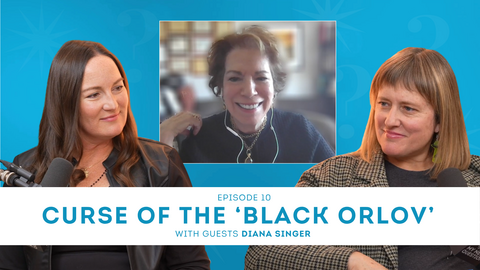
Episode 10: This Episode Is Haunted Diana Singer shared the stories of two “cursed” diamonds on this month’s podcast, which was inexplicably riddled with technical issues.

IndependentsOct 21, 2026
Gardner-Collier Jewelry to Close After 9 Decades in BusinessThe family-owned jeweler has three locations across Missouri and Iowa.

SourcingOct 21, 2026
Venetia Mines Final Carats Ahead of 2-Year ShutdownThe De Beers-owned diamond mine in South Africa is being put on ice as part of a round of previously announced cost-cutting measures.

CollectionsOct 21, 2026
Helzberg, Nordstrom Carrying New Jewelry Collection From Off-WhiteThe collection centers designs with clean geometric lines, chunky sculptural pieces, and recognizable details from the luxury fashion brand.
SourcingOct 21, 2026
Gemfields’ Mixed-Quality Ruby Auction Earns $52MThe miner said it saw particularly strong prices for larger, fine-quality rubies at the sale.

CrimeOct 20, 2026
Security Guard Charged With Murder in Shooting at Texas MallThe guard opened fire on a man who was smashing a jewelry display case at La Gran Plaza in Fort Worth last week, police said.


