
The deal closed this week, which means Instore will produce the JA NY show slated to take place this fall.
Tucson Preview 2026: Earthy Tones and Innovative Shapes
Buyers are expected to gravitate toward gemstones that have a little something special, just like last year.

Features like unique cuts or an interesting presentation of color, as well as rare pieces, are appealing to consumers and, thereby, to the retailers who sell to them.
According to vendors, it’s a trend that’s set to continue at this year’s Tucson gem shows.
Though only time will tell how much buyers purchase, a few exhibitors spoke with National Jeweler about their expectations for this year’s events, including the trade-only AGTA GemFair Tucson, scheduled for Feb. 2-6.
Kimberly Collins of Kimberly Collins Colored Gems predicts that buyer behavior at the show will likely mirror what retailers witnessed during the holiday season.
“I have heard that there was less foot traffic, but larger-ticket items were selling, which tells me buyers will be looking for larger, more one-of-a-kind pieces, and collectable pieces,” she said.
Collin said larger fine gems are increasingly hard to come by and those that are available command “exorbitant” prices.
Sapphires remain her most in-demand gemstone, and ombré pieces featuring a rainbow of sapphires are her bestsellers.
“Everything elongated is chic right now.” — Kimberly Collins, Kimberly Collins Gems
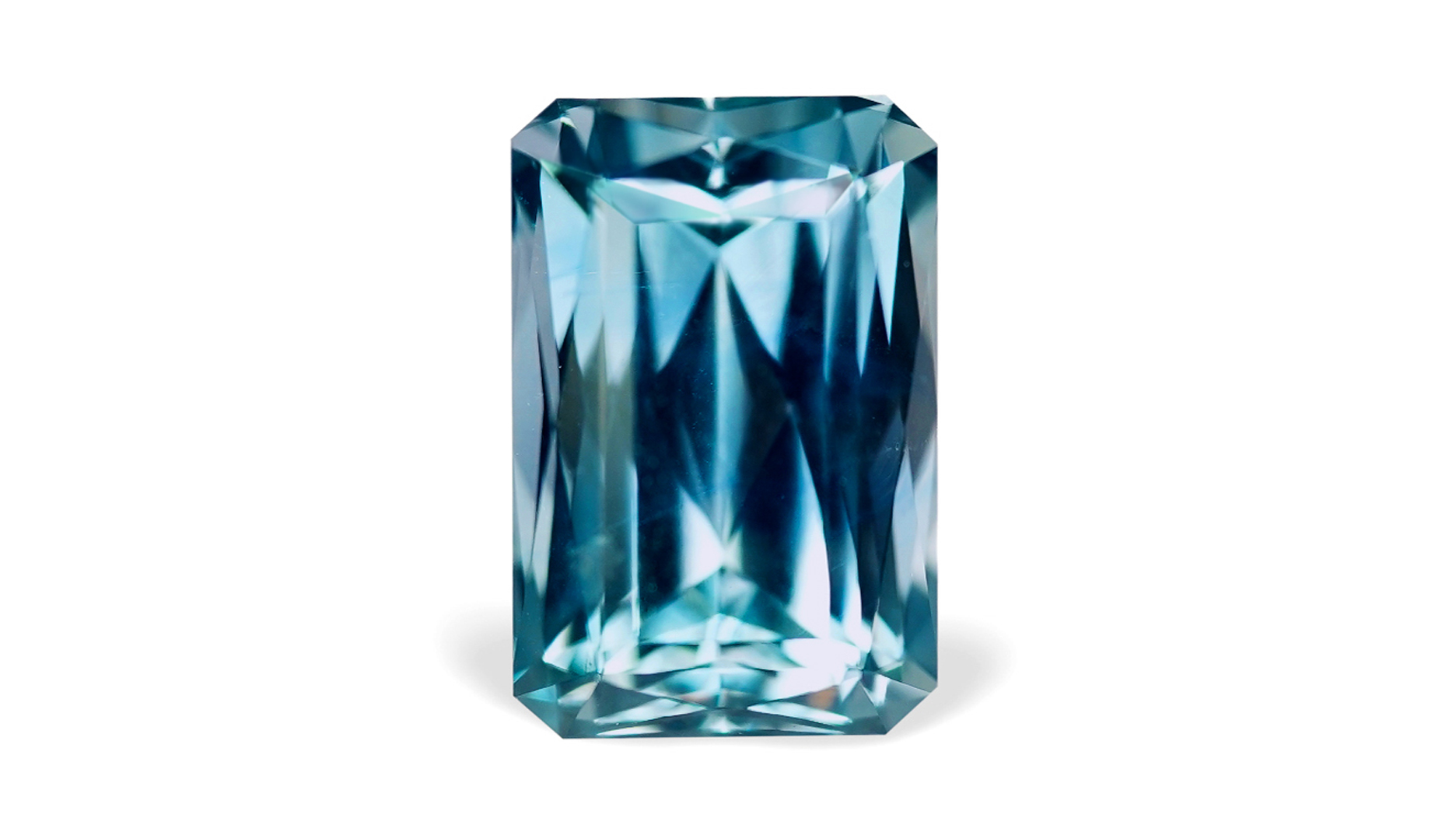
She also noted an uptick in requests for bridal pieces and has, in turn, focused on acquiring beautiful stones between 1 and 3 carats that have both durability and brilliance.
“The shift to the daily calls for bridal has changed the way I stock inventory. I am always searching for gems that I think would make an amazing engagement ring, something that would set the wearer apart,” Collins said.
Montana sapphire, garnet, tourmaline, and spinel are popular among designers as options for bridal color.
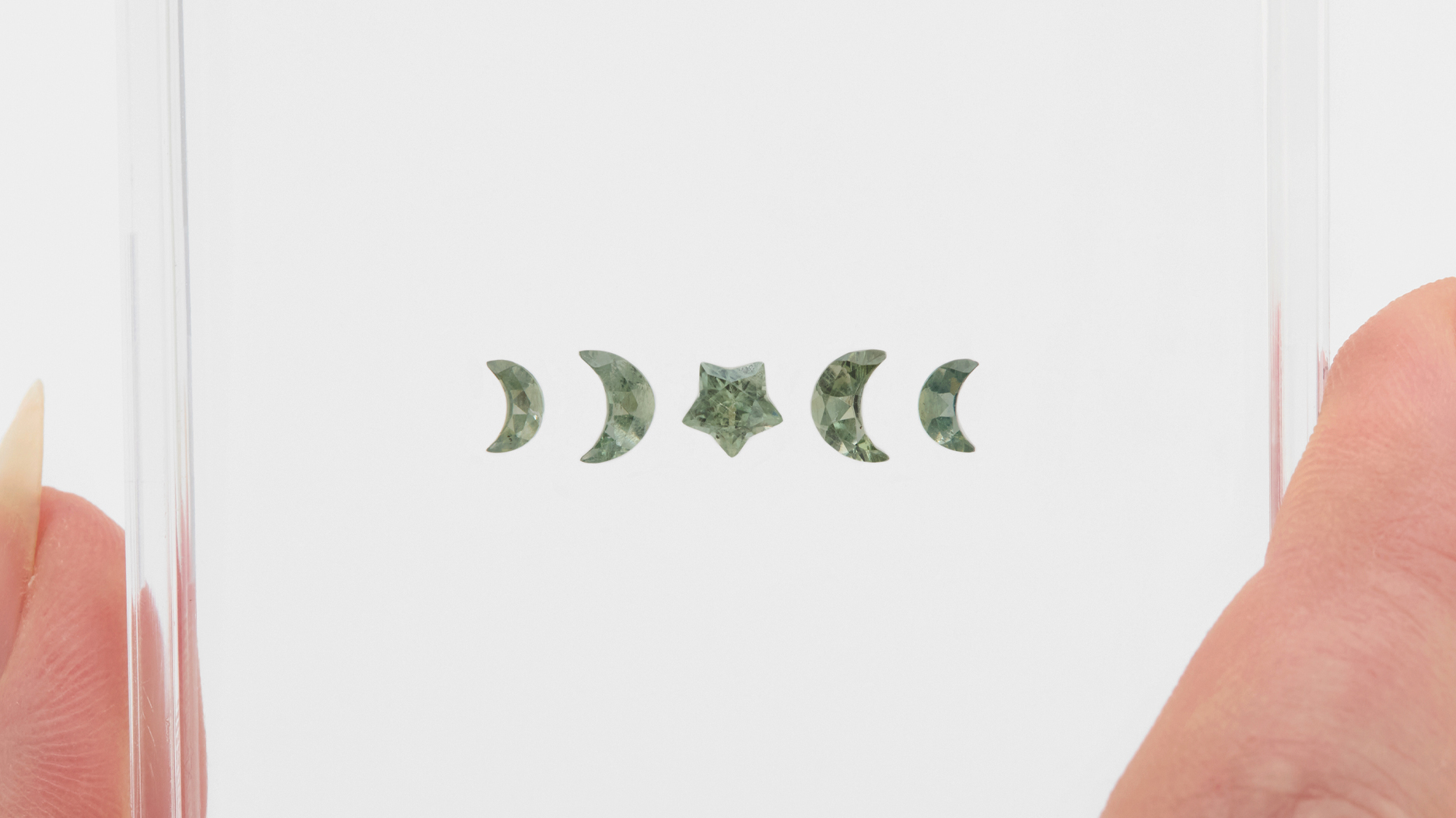
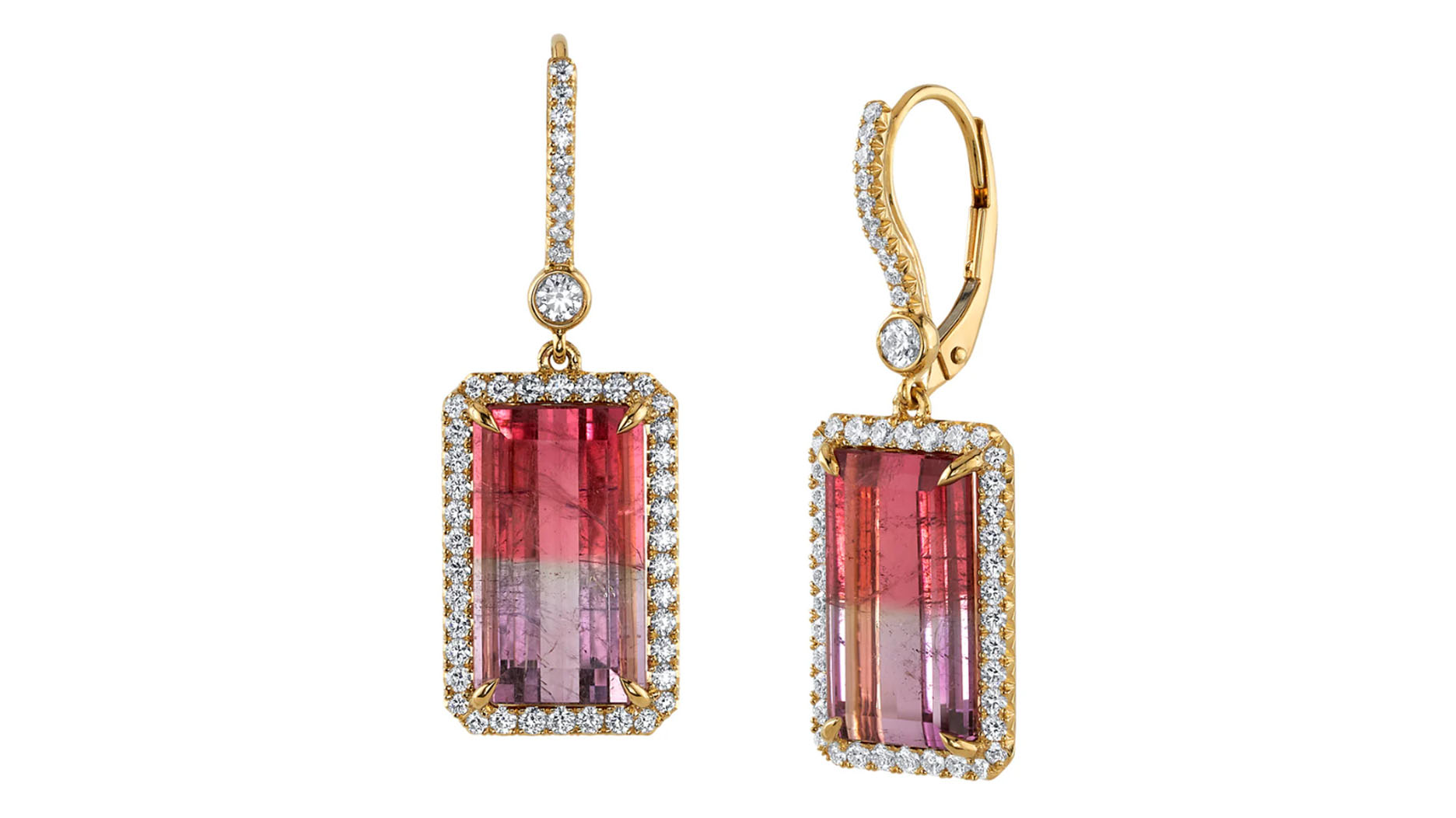
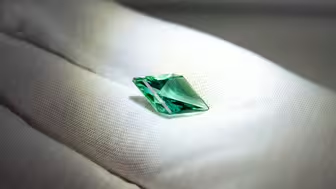
As far as shape goes, “Everything elongated is chic right now—emerald cuts, ovals, marquise, and pear shapes, as well as unusual fancy shapes like hexagon, lozenge, and kite shapes,” she said.
So far this year, an earthier color palette appears to be an emerging trend.
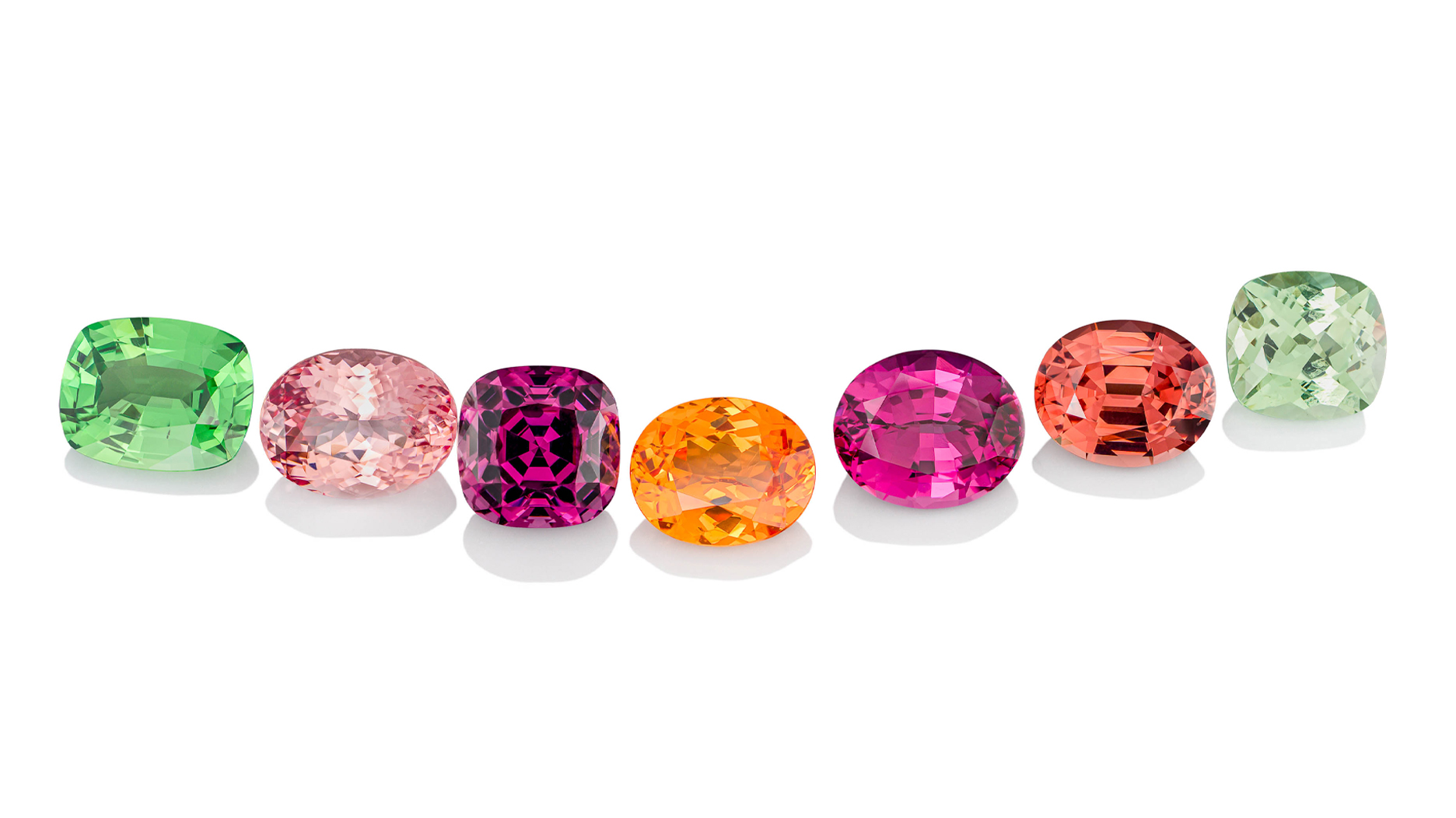
“I am seeing interest in richer greens, steel blues, raspberry—more muted shades, but not necessarily pastels—and yellows and oranges have been requested a lot lately,” Collins said.
Rachel Hill, owner of Americut Gems Inc., which deals in Montana sapphires, known for their earthy tones, said interest in the American-mined gemstone is increasing.
Blue and teal-colored rounds and ovals remain the favorites, according to Hill, with cushion shapes not far behind.
Supply has been steady, primarily constrained by the ongoing scarcity of large stones, she said.
“My impression is that demand for large stones increased significantly in 2025, and I expect it will continue in 2026,” she said.
The company is also increasing production of its “Gems of Faith” designs that represent the Christian faith, citing a notable increase in sales and growing demand for the specialized inventory.
The company will be showcasing a variety at its booth, highlights being sapphires in cornflower blue, lavender, periwinkle, deep purple, and color-change hues, as well as demantoid garnets from Madagascar in a range of colors.
Omi Gems also has spinels in cobalt, pastel shades and other colors, as well as Mahenge spinels in bright red, orange, and pink.
“Larger demand for the rare collection stones increases the difficulty to source,” said Omi Gems owner Niveet Nagpal.
“Alexandrite and fine Paraíba tourmaline, as well as ruby and sapphires, in the higher quality are harder to source.”
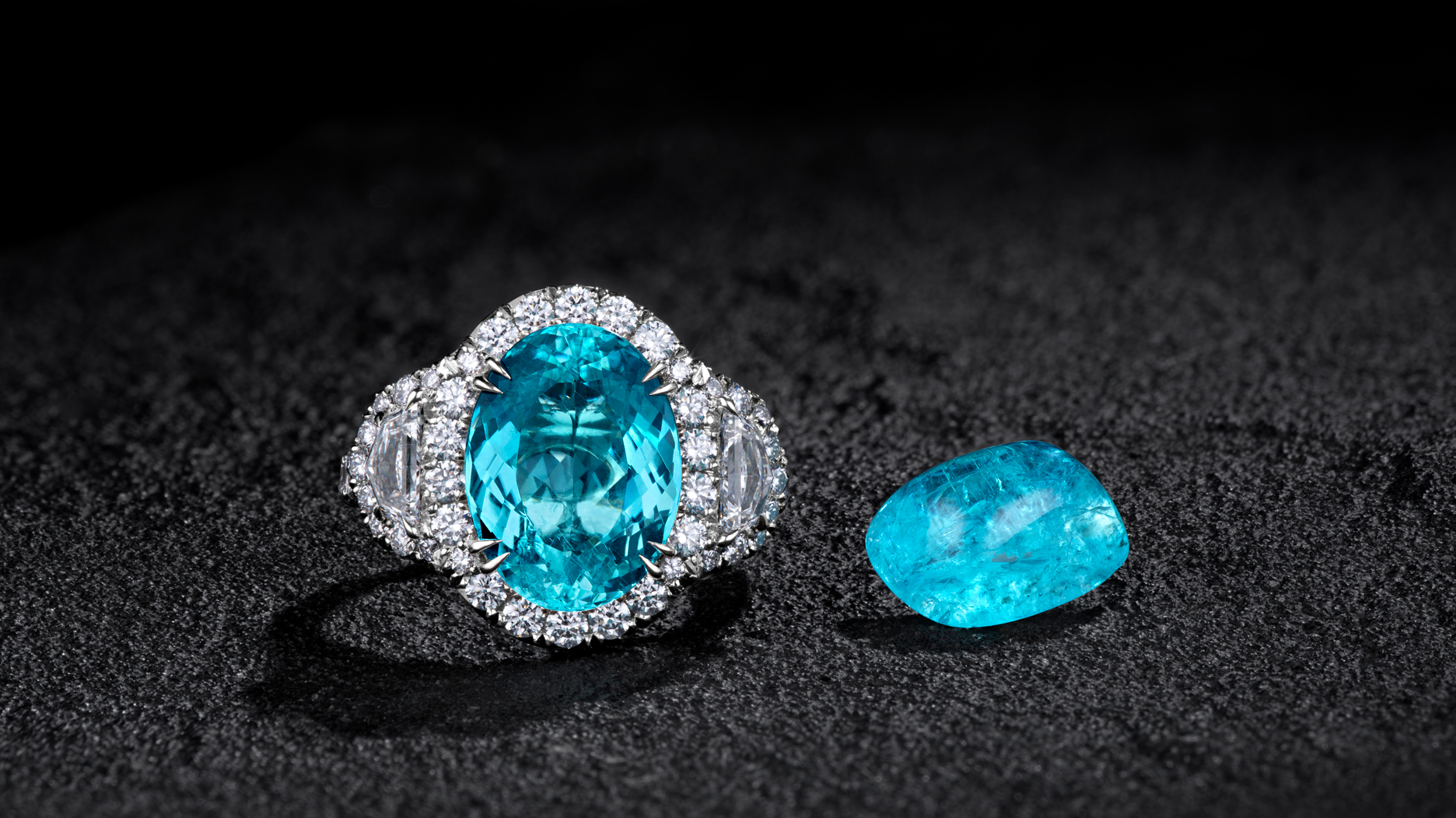
Brian Cook, CEO of Nature’s Geometry, which specializes in stones from Brazil, confirms what many in the colored gemstone industry already know—Paraíba tourmaline is “scarce and always in high demand.”
He thinks it will be among the bestsellers at the 2026 Tucson gems shows along with pezzottaite, a rare, raspberry-hued beryl.
A new deposit of pezzottaite was discovered in Madagascar in 2025.
“The movement to build trust through ethics, traceability, and social investment is also what’s hot in Tucson.” — Brian Cook, Nature’s Geometry
Golden rutilated quartz—one of his company’s principal offerings—is becoming harder to mine and harder to obtain, with prices and demand for fine material rising.
On a positive note, supply of Brazilian tourmaline from the Cruzeiro mine, a responsible sourcing-focused mine in Minas Gerais, Brazil, is steady, Cook said.
“The movement to build trust through ethics, traceability, and social investment—purposes which add value and relevance to the jewelry industry—is also what’s hot in Tucson,” he said.
The 2026 Tucson shows mark nearly a year of navigating U.S. import taxes (tariffs), including fierce lobbying by industry organizations like Jewelers of America and the American Gem Trade Association.
The tariffs, which have disrupted global supply chains, are particularly burdensome for Brazil, said Cook.
Unmounted and rough stones imported from the country are subject to a 50 percent tariff. Previously, Brazil enjoyed most favored nation status with imports from the country taxed at 0-2 percent.
Still, Omi Gems remains optimistic ahead of the shows.
“With all the uncertainty in the world, Tucson is the place to come and find what you need all in one place, so it will still be a strong market,” the company said.
“It will be different from past years but still a strong market in the higher end. Unique and rare material is always in demand and that is what we specialize in.”
Omi Gems’ prediction mirrors another trend evident in the retail market—unbothered by the rising cost of living, high-earning consumers are continuing to spend while many in the middle feel squeezed financially.
“I, like many, am looking for stones that offer possibly a big, bluffy presence or have an unusual, one-of-a-kind shade that may make them less conventional, but incredibly special.” — Nikki Swift, Nicole Mera
Though some buyers are keeping their distance—one private jeweler told National Jeweler that he is skipping Tucson this year because the prices of newly imported gemstones are too high and not enough fine, pre-tariff gems are available—other designers have wasted no time making their shopping list.
Nikki Swift of Nicole Mera generally likes to wait until she’s at the show to see what catches her eye, but she has an idea of what she’d like to buy.
“Right now, I’m looking for unusual cuts, shapes, and colors that aren’t already represented in my existing collections,” she said.
“I, like many, am looking for stones that offer possibly a big, bluffy presence or have an unusual, one-of-a-kind shade that may make them less conventional, but incredibly special. Those are the stones that tend to have added value for me and my clients because they truly feel one-of-one.”
Swift expects to gravitate to some of her bestsellers—spinel, Montana sapphire, white opal—but ultimately, she plans to be pickier this year.
“I’m trying to avoid buying material that feels too close to what I’ve already sourced in the past and instead focus on stones that feel fresh, distinctive, and hard to replace once they’re gone.”
Size and color aside, a stone must have a standout cut for Swift to consider buying it.
“Fine cutting is always at the top of my priority list,” she said.
“It’s what sets the standard in my work, and I see it as my responsibility to select beautifully cut stones that truly do justice to the final piece and to my clients.”
The Latest

The company’s jewelry sales were up in Q4 and the fiscal year, with Richemont raising prices in part because of the cost of gold.

The “Bauble” capsule collection of colorful one-of-a-kinds includes our Piece of the Week, the “Bauble” earrings, featuring rose zircon.

As gold prices rise, today’s retailers are looking for alternatives at prices that will appeal to wider audiences.

The updated catalog has a newly dedicated section for gift wrapping.


Everett covers colored stones’ surging popularity, the mellow return of the “Mellon Blue,” and his “The Devil Wears Prada” doppelgänger.

Fourth-generation CEO Lilly Mullen wants to emphasize experience, connection, and personalized service.

With the trade and customer trust in mind, GIA® developed NextGem™ – on-demand training designed specifically for retail.

The new award, created in partnership with Henne Jewelers, honors the late designer’s legacy through supporting jewelry education.

The NYPD is warning elderly New Yorkers to keep their jewelry hidden when walking outside to avoid being a target.

Designer Viviana Langhoff has realized her dream of owning a space for her Chicago jewelry store that looks and feels like her brand.

The sessions will run from Friday, May 29, to Sunday, May 31, with one being a live taping of an episode of Couture’s podcast.

Former Stephanie Gottlieb Fine Jewelry executive Morgan P. Richardson is joining the lab-grown diamond jewelry brand.

The $400 pocket watch is a blend of Audemars Piguet’s iconic eight-sided Royal Oak and Swatch’s unserious Pop watches from the ‘80s.

With gold prices on the rise, the “Modern Electrum” collection uses an alternative, non-tarnishing metal alloy composed of gold and silver.

Fruchtman Marketing has new owners, Erin Moyer-Carballea and Manuel Carballea, and will relocate to Miami.

In a column for the 2026 State of the Majors issue, Smith lists 10 time-tested principles about sales that still ring true.

In a column for the 2026 State of the Majors issue, Golan spells out how the growing economic divide in the U.S. is reshaping the market.

The “Limitless Expansion of Joy and Hope” collection evokes summer through colored gemstones and motifs of butterflies and florals.

The jewel, circa 1890, is from the late Victorian era and was owned by descendants of the last high king of Ireland.

This is what the nine recipients plan to do with the funds.

The Western star’s 14-karat gold signet ring sold for six times its low estimate following a bidding war at U.K. auction house Elmwood’s.

The discussion, "Rebuilding the Jewelry Workforce," will take place on Saturday, May 16, in Troy, Michigan.

A matching pair of 18.38-carat, D-color diamonds from Botswana’s Jwaneng mine sold for $3.3 million, the top lot of the jewelry auction.

Sponsored by A Diamond Is Forever

The next generation of lapidarists are entrepreneurial, engaged online, and see the craft as a means for artistic expression.

It was the second auction appearance for the fancy vivid blue-green diamond, which sold for $7.8 million at Christie’s Geneva 12 years ago.