



The chocolatier is bringing back its chocolate-inspired locket, offering sets of two to celebrate “perfect pairs.”
Remembering Alex Šepkus, an Artist Without Equal
A wake and services are scheduled to take place Sept. 11-13 for the designer, who died Sept. 5 at the age of 67.

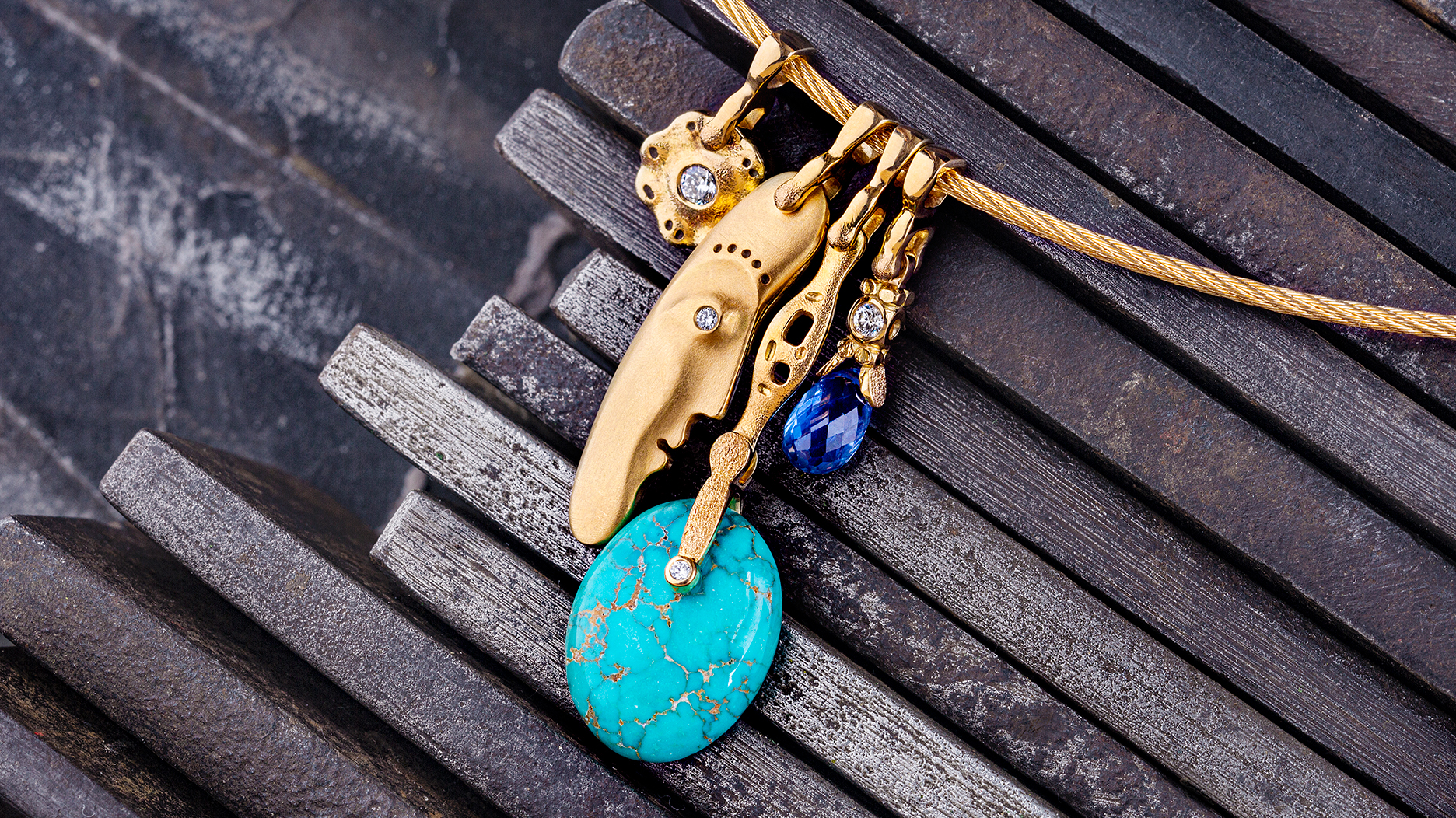
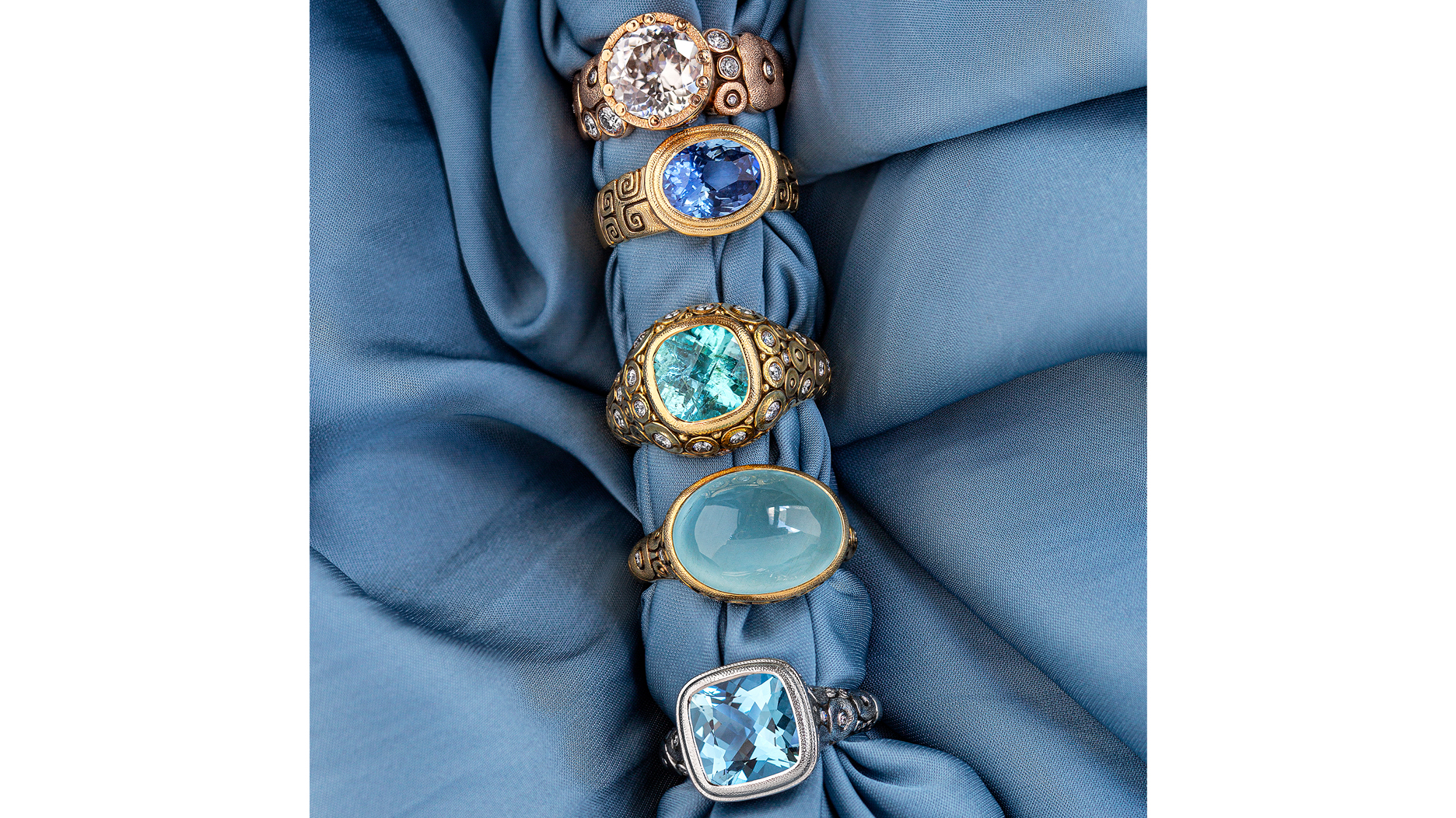
Šepkus, who died Sept. 5 at the age of 67 from a sudden complication related to lymphoma, achieved something few designers in any discipline can—he made jewelry that was decidedly Alex Šepkus and could not be mistaken for anything but.
Šepkus didn’t center his work around chasing trends and, in doing so, was able to create designs that were both unique and timeless, a duality not easily achieved, said Julie Von Bargen Thom, co-owner of Von Bargen’s Jewelry.
“What amazes me about him as an artist [is], I think it’s really difficult to be out-of-the-box and creative in a way that’s timeless. And that’s what he’s done,” Thom told me over the phone on Tuesday, shortly after Šepkus’ eponymous company had shared news of his passing over social media.
“That’s really what makes him such a great artist and what will be his legacy in jewelry.”
Vermont independent Von Bargen’s has been carrying Alex Šepkus jewelry pretty much since the line launched.
Thom’s late father, John Von Bargen, first saw the brand when Jeff Feero, Šepkus’ longtime business partner and closest friend, brought pieces to the Von Bargen’s store in Stratton decades ago.
John thought the work was amazing.; everyone does.
“You can’t see it and not think it’s incredible,” Thom said. “I think it appeals to a client who’s very sophisticated but not flashy. And that’s Vermont.”
It also describes the jewelry clientele in Washington, D.C., according to Jim Rosenheim of Tiny Jewel Box, another early adopter of Alex Šepkus’ line. D.C.-area residents are affluent but conservative; if you’re too flashy, you’re not taken seriously, he said.
Rosenheim said he was “dumbfounded” the first time he saw Šepkus’ jewelry, which was at the trade show where it premiered, in the New Designer Gallery at the JA New York show in 1993.
Examining a piece through a loupe with his heart pounding, Rosenheim knew he was seeing special jewelry, like “something from another age,” as he described it to me Wednesday.
Nearly 30 years later, Alex Šepkus is still a big business for Tiny Jewel Box and, according to Feero, one of the brand’s largest accounts in the country.
It’s a success story that has set Rosenheim out on a seemingly endless search. He’s spent the last 20 years looking for the second coming of Alex Šepkus or, as Rosenheim put it, “the next genius.”
“And I don’t use that word easily,” he said. “I’ve been looking, looking, looking … there has not been a next Alex Šepkus. We just lost a brilliant talent.”
Both Thom and Rosenheim described Šepkus as a private person—a refreshing trait in this age of endless oversharing, in my opinion—and Feero, who was among those who knew him best, concurred.
He described Šepkus’ manner as “monk-like”—polite, reserved, modest, focused and, while at times stubborn and stern, genuinely kind.
Šepkus was a “gentle soul” who had a profound effect on anyone he met and, Feero added, a “wicked dark sense of humor.”
Feero and Šepkus met in the early ‘90s when Feero was working for Julius Cohen on Madison Avenue and Šepkus was still learning his craft alongside a Polish jeweler at a shop on 48th Street that did repairs, sizing and adjustments for Bulgari.
Like Rosenheim, Feero said he was “dumbfounded” when he first saw Šepkus’ work.
He knew immediately it was time to leave his job at Julius Cohen and start a company with the man who’d become known around 47th Street as this “new guy who could repair anything.”
The two launched Alex Šepkus Co. in late 1991. Feero credits Terry Betteridge and Russell Cohen, then owner of Carlyle & Co., with giving the business the financial boosts it needed to get off the ground in those early lean years.
Today, Alex Šepkus employs 20 people, a staff of “bright, artistic, and creative people,” many of whom have been with the company for decades, Feero said.
Šepkus left behind an “extraordinary archive” of unreleased work, and the company has 15 bench jewelers who are more than capable of executing on his vision.
Feero said Šepkus was like a “musician with a huge symphony behind him,” and they will play on.
Aleksandras (Alex) Šepkus was born in Vilnius, Lithuania on March 24, 1954, the son of Valerijonas and Jania Zabielskaite Šepkus.
According to his obituary, Šepkus originally studied industrial design with the intention of becoming an architect like his father. Ultimately, though, he found it too limiting and found his way to jewelry design.
He immigrated to the United States in 1988 and resided in Ossining, New York with his beloved wife, Dangė.
Šepkus is survived by Dangė; his son, Kristupas of Lithuania; grandson, Eduardas; sister, Liucija; and extended family in Lithuania as well as many dear friends.
A wake is scheduled to take place Sept. 11 and 12 from 4-7 p.m. at Coffey Funeral Home in Tarrytown, New York.
The funeral service is Monday, Sept. 13 at 11 a.m. at the Immaculate Conception Church in Sleepy Hollow, with burial at St. Augustine Cemetery in Ossining.
A memorial luncheon will follow from 2-6 p.m. at The Briarcliff Manor in Briarcliff, New York.
In lieu of flowers, donations may be made to animal rescue organization Bideawee, as Šepkus was an animal lover.
The Alex Šepkus team shared the details of the services on the brand’s Instagram page; everyone is welcome.
The Latest

The top lot of the year was a 1930s Cartier tiara owned by Nancy, Viscountess Astor, which sold for $1.2 million in London last summer.

Any gemstones on Stuller.com that were sourced by an AGTA vendor member will now bear the association’s logo.

Launched in 2023, the program will help the passing of knowledge between generations and alleviate the shortage of bench jewelers.

The Swiss watchmaker has brought its latest immersive boutique to Atlanta, a city it described as “an epicenter of music and storytelling.”


The new addition will feature finished jewelry created using “consciously sourced” gemstones.

In his new column, Smith advises playing to your successor's strengths and resisting the urge to become a backseat driver.

Criminals are using cell jammers to disable alarms, but new technology like JamAlert™ can stop them.

The index fell to its lowest level since May 2014 amid concerns about the present and the future.

The new store in Aspen, Colorado, takes inspiration from a stately library for its intimate yet elevated interior design.

The brands’ high jewelry collections performed especially well last year despite a challenging environment.

The collection marks the first time GemFair’s artisanal diamonds will be brought directly to consumers.

The initial charts are for blue, teal, and green material, each grouped into three charts categorized as good, fine, and extra fine.

The new tool can assign the appropriate associate based on the client or appointment type and automate personalized text message follow-ups.

Buyers are expected to gravitate toward gemstones that have a little something special, just like last year.

Endiama and Sodiam will contribute money to the marketing of natural diamonds as new members of the Natural Diamond Council.

The retailer operates more than 450 boutiques across 45 states, according to its website.

The new members’ skills span communications, business development, advocacy, and industry leadership.

The jeweler’s 2026 Valentine’s Day campaign, “Celebrating Love Stories Since 1837,” includes a short firm starring actress Adria Arjona.

The new features include interactive flashcards and scenario-based roleplay with AI tools.

Family-owned jewelry and watch retailer Deutsch & Deutsch has stores in El Paso, Laredo, McAllen, and Victoria.

The Italian luxury company purchased the nearly 200-year-old Swiss watch brand from Richemont.

Micro-set with hundreds of diamonds, these snowflake earrings recreate “winter’s most elegant silhouette,” and are our Piece of the Week.

Ella Blum was appointed to the newly created role.

Sponsored by RapNet

Investment firm Enhanced Retail Funding, a division of Gordon Brothers, was the successful bidder.

It explores the history of the iconic tagline and the company’s strategy to redefine the role of diamonds in society.