








ColumnistsSep 14, 2026
Sherry Smith: Stop Waiting for December to Save Your ChristmasColumnistsSep 15, 2026
The Levels Your Website Must Clear Before AI Recommends You
Jennifer Shaheen compares this new era of AI-powered SEO to a video game: your website must clear one level before advancing to the next.


Jennifer Shaheen is the founder and CEO of Technology Therapy Group. She can be reached at 914-949-6092 or via her website, TechnologyTherapy.com.
Ask an AI assistant for recommendations on where to buy an engagement ring in your town. Then inquire about watch repair services and the stores that carry the designer lines you’ve stocked for years.
If your store doesn’t appear in any of the results, understand that this silence isn’t random or personal; it’s a product of a series of precise checks the AI performs before providing an answer.
This new era of search brings so much to understand.
To begin with, the concept of an algorithm and secret formula needs to change.
ChatGPT, Google, Perplexity, Copilot, and Claude each draw from different web indexes and rank what they find differently. What they have in common currently is a sequence.
Improving your website is like a video game: you need to clear a level before the next one matters, and like a video game, you can build up your quality one level at a time.
First Question: Can the AI Even Reach You?
This detail might seem dull, but it often silently disqualifies many stores.
According to Cyrus Shepard’s May 2026 review of 54 experiments, patents, and case studies, simple URL accessibility was the top factor among 23 citation metrics.
His insight is important, as many businesses unknowingly block AI crawlers.
A security setting tweak to reduce server load, or a plugin quietly modifying your Robots.txt file, can inadvertently block a wide range of AI crawlers from accessing your site.
Today’s web servers need to be able to handle these AI crawlers that pull bandwidth and can impact your site traffic. If you block them, you’re making your site less accessible.
Ranking First Is No Longer the Finish Line
Ahrefs examined 863,000 keywords and 4 million AI Overview URLs, discovering that just 38 percent of cited pages also appear in Google’s top 10 results.
In the earlier version of this study, the percentage was 76 percent.
Currently, almost two-thirds of AI Overview citations now point to pages outside Google’s top 10.
AI search works differently: a methodology called query fan-out, where the AI breaks one customer question into many smaller ones and finds the best answer for each portion of the question.
You do not have to outrank a national chain on “engagement rings;” what you have to have is the best answer to the narrower questions that many larger chains and stores often overlook because they are farther removed from their customers’ conversations.
Related stories will be right here …
If your store doesn’t appear in any of the results, understand that this silence isn’t random or personal; it’s a product of a series of precise checks the AI performs before providing an answer.
This new era of search brings so much to understand.
To begin with, the concept of an algorithm and secret formula needs to change.
ChatGPT, Google, Perplexity, Copilot, and Claude each draw from different web indexes and rank what they find differently. What they have in common currently is a sequence.
Improving your website is like a video game: you need to clear a level before the next one matters, and like a video game, you can build up your quality one level at a time.
First Question: Can the AI Even Reach You?
This detail might seem dull, but it often silently disqualifies many stores.
According to Cyrus Shepard’s May 2026 review of 54 experiments, patents, and case studies, simple URL accessibility was the top factor among 23 citation metrics.
His insight is important, as many businesses unknowingly block AI crawlers.
A security setting tweak to reduce server load, or a plugin quietly modifying your Robots.txt file, can inadvertently block a wide range of AI crawlers from accessing your site.
Today’s web servers need to be able to handle these AI crawlers that pull bandwidth and can impact your site traffic. If you block them, you’re making your site less accessible.
Ranking First Is No Longer the Finish Line
Ahrefs examined 863,000 keywords and 4 million AI Overview URLs, discovering that just 38 percent of cited pages also appear in Google’s top 10 results.
In the earlier version of this study, the percentage was 76 percent.
Currently, almost two-thirds of AI Overview citations now point to pages outside Google’s top 10.
AI search works differently: a methodology called query fan-out, where the AI breaks one customer question into many smaller ones and finds the best answer for each portion of the question.
You do not have to outrank a national chain on “engagement rings;” what you have to have is the best answer to the narrower questions that many larger chains and stores often overlook because they are farther removed from their customers’ conversations.
Facts Beat Adjectives
Once an engine opens your page, it needs something it can lift out and use. “We provide exceptional jewelry repair” is not usable information.
A page that explains which repairs you handle in-house, typical turnaround time, what happens during an inspection of a piece of heirloom jewelry, and which pieces you will decline to work on gives the system a dozen answers to a dozen different questions.
Proper page placement of these answers is crucial for citation.
Place responses to repair questions or other key points near the top using clear, direct headings.
The page structure influences AI citation success, as each section must stand independently.
If a paragraph only makes sense after reading previous ones, it may be lost during extraction.
Since AI systems parse web pages into chunks, your product and content pages should have clear, sectioned information with appropriate tags and quality content that addresses customer questions.
For example, TLDR boxes at the top of articles are effective for users and AI. (TLDR stands for “too long; didn’t read” and refers to the summary boxes that often appear at the top of news articles, long posts, etc.)
What the Rest of the Web Says About You
Ahrefs studied 75,000 brands and found that the strongest correlations with AI visibility were all off-site signals.
Branded web mentions correlated at 0.664, roughly 3 times stronger than backlinks at 0.218.
For your store, your Google Business Profile, dealer locators, local press coverage, association listings, and reviews all work to promote your business.
Many of us might feel we’ve already done that, and we have. But what I call “old-school” marketing efforts still have a significant effect.
These external platforms can cause consistency problems, like differing hours across listings, outdated addresses, or multiple ways of writing your store name.
Such ambiguities can lead AI systems to favor a competitor they perceive as more reliable. Consistency is not just an AI judgment; humans feel the same way.
Cited Is Not the Same as Correct
Getting named is a win, but it is not the finish.
These systems regularly state things about businesses that are outdated or simply wrong, and your customer has no reason to doubt them.
Pick the top highest-stakes questions you get asked—the ones about buying an engagement ring, your custom design process, repair turnaround time, and your return policy—and run them across two or three AI tools under a free or non-logged-in account. (Do not use your own account; the AI knows you, and you’ll skew your results.)
Write down what comes back. Do this two to three times because the results often vary from search to search.
A few cautionary notes for anyone considering an AI optimization package based on llms.txt files, which ranked lowest among 23 factors in Shepard’s analysis, or claims that schema markup alone will guarantee citations. These assertions are truly debated.
However, accessibility, genuine answers, and a consistent online presence are well-supported.
The reality is that effective AI optimization aligns with good content and digital marketing principles: focusing on quality, consistency, attention to detail, and understanding the technical requirements of your website.
This is truly positive news for you. Large operations tend to generate a lot of generic content, or “fluff.”
In contrast, you possess specific, firsthand knowledge that these operations lack.
You understand why certain settings are important, how long repairs genuinely take, and which parts are worth restoring.
Focus on the single page you most often direct customers to, and tailor it to answer the questions you receive most frequently.
Taking this initial step sets you apart, and it’s more than most competitors in your market will accomplish this year.


More on Columnists


The Latest

MajorsOct 23, 2026
PGI USA Set to Close at Year’s EndThe closure is part of a global restructuring that also includes PGI winding down its operations in Japan, South Korea, and Hong Kong.


SourcingOct 23, 2026
Rachel Chalchinsky’s ‘Survivor Tribute’ RingThe ring, our Piece of the Week, was designed by eight-year breast cancer survivor Rachel Chalchinsky of Color Source Gems.


TechnologyOct 23, 2026
JA Unveils New Website, LogoThe website offers enhanced member benefit access, industry directories, educational resources, a job board, and access to the MJSA Journal.


Brought to you by
A Diamond Is Forever Launches 2026 Holiday Campaign Championing Natural DiamondsA Diamond Is Forever's holiday campaign reimagines natural diamond icons for a new generation celebrating individuality.


FinancialsOct 23, 2026
Kering’s Jewelry Sales Up Double Digits in Q3Boucheron and Pomellato had a strong third quarter, with Kering looking at jewelry as an increasingly important part of its portfolio.

Weekly QuizOct 22, 2026
This Week’s QuizTest your jewelry news knowledge by answering these questions.

CrimeOct 22, 2026
Jeweler Shot and Killed in His Suburban Cincinnati Store Tara Sinchuri was the owner of Everest Jewels in Fairfield, Ohio, and a father of three. He was found dead in his store on Tuesday.

MajorsOct 22, 2026
Neiman Marcus Has Gifts for the Jewelry Lover Who Has EverythingBespoke experiences from Buccellati and Verdura are on the retailer’s 2026 “Fantasy Gifts” list.

Brought to you by
Open an Account, Get $50 Off Your First Order. No Code Needed.Built on Relationships. Refined by Craft.


Events & AwardsOct 22, 2026
JIS Fall 2026 Reports Record-Breaking Attendance The number of participants at the fall show was up 12 percent.

CollectionsOct 22, 2026
Billie Eilish, Finneas Co-Design Collection for John HardyThe Academy and Grammy award-winning siblings have collaborated with John Hardy on a new jewelry line inspired by their personal style.

PodcastsOct 21, 2026
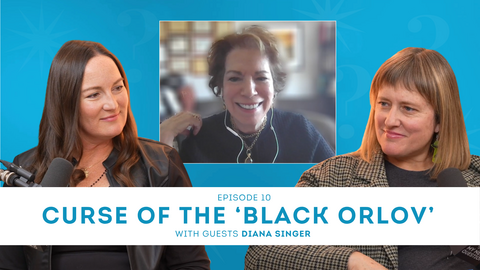
Episode 10: This Episode Is Haunted Diana Singer shared the stories of two “cursed” diamonds on this month’s podcast, which was inexplicably riddled with technical issues.

IndependentsOct 21, 2026
Gardner-Collier Jewelry to Close After 9 Decades in BusinessThe family-owned jeweler has three locations across Missouri and Iowa.

SourcingOct 21, 2026
Venetia Mines Final Carats Ahead of 2-Year ShutdownThe De Beers-owned diamond mine in South Africa is being put on ice as part of a round of previously announced cost-cutting measures.

CollectionsOct 21, 2026
Helzberg, Nordstrom Carrying New Jewelry Collection From Off-WhiteThe collection centers designs with clean geometric lines, chunky sculptural pieces, and recognizable details from the luxury fashion brand.

SourcingOct 21, 2026
Gemfields’ Mixed-Quality Ruby Auction Earns $52MThe miner said it saw particularly strong prices for larger, fine-quality rubies at the sale.

CrimeOct 20, 2026
Security Guard Charged With Murder in Shooting at Texas MallThe guard opened fire on a man who was smashing a jewelry display case at La Gran Plaza in Fort Worth last week, police said.

IndependentsOct 20, 2026
David Gardner’s Jewelers Unveils Newly Expanded, Revamped ShowroomThe Texas jeweler added 2,000 square feet to its reimagined showroom, complete with a new design studio and an event space.

SourcingOct 20, 2026
The $50M Victoria’s Secret ‘Fantasy Bra’ By The NumbersJacob & Co.'s diamond masterpiece is the most expensive Fantasy Bra ever worn on the Victoria’s Secret Fashion Show runway.

CollectionsOct 20, 2026
Mignon Faget’s Collection Chooses Handmade Over AIThe “Atelier” collection was inspired by the tools, rituals, and objects in an artist’s studio as a quiet rebuttal to an automated world.

MajorsOct 19, 2026
The Knot to Acquire Rival Wedding Planning Platform ZolaThe pending acquisition is an “exciting opportunity” for wedding vendors to grow their business, said The Knot Worldwide’s CEO.

SourcingOct 19, 2026
Jewelry Design Competition Show Airs in Thailand"The Secret Gems" features eight Thai jewelry brands paired with a team of young craftspeople who create jewelry together to win challenges.

CollectionsOct 19, 2026
John Hardy Enters the Medallion Chat With Talisman Collection The brand’s “Modern Talisman” capsule collection introduces pendants inspired by the mythology, natural world, and spiritual ethos of Bali.
IndependentsOct 19, 2026
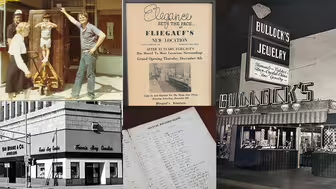
The Stories of 5 Jewelers Celebrating Their Centennials in 2026Independent jewelers from New Mexico to New Jersey answer the question: What has kept your store in business for 100 years?

SurveysOct 16, 2026
How Inflation, Gas Prices Will Affect Holiday Sales The NRF is expecting holiday sales to increase this year, but consumers and retailers alike are facing Grinch-like headwinds.

CollectionsOct 16, 2026
Christina Puchi’s Earrings Hold the UniverseOur Piece of the Week gathers the planets, represented by a variety of colored gemstones, in a pair of 14-karat yellow gold earrings.

IndependentsOct 16, 2026
Reeds Jewelers Expands, Relocates FlagshipThe New York-based jeweler is moving its Amherst flagship store to a larger location in nearby Snyder.

MajorsOct 16, 2026
Katy Chen Appointed Executive Vice President of Graff USA Chen, who worked at Cartier and Tiffany & Co., will lead retail sales and operations for the luxury jeweler’s 11 U.S. stores.