In a Q&A with National Jeweler, Simon G. CEO Zaven Ghanimian discussed the company’s stance on AI.
Artificial intelligence has found its way into nearly every aspect of modern life, from summarizing emails and making grocery lists to generating images and creating music.
The technology’s encroachment on our everyday tasks is welcomed by some, who tout the ease and convenience of AI services, while others are wary of its effects on our brains and the environment.
AI in creative spaces is especially controversial, with many debating whether art without human input is art at all, and others pointing out that what AI produces is simply a remixed regurgitation of copyrighted works.
For Zaven “Zee” Ghanimian, CEO of Simon G., AI doesn’t belong in the jewelry design space and can’t replicate the creativity and expertise of its craftspeople.
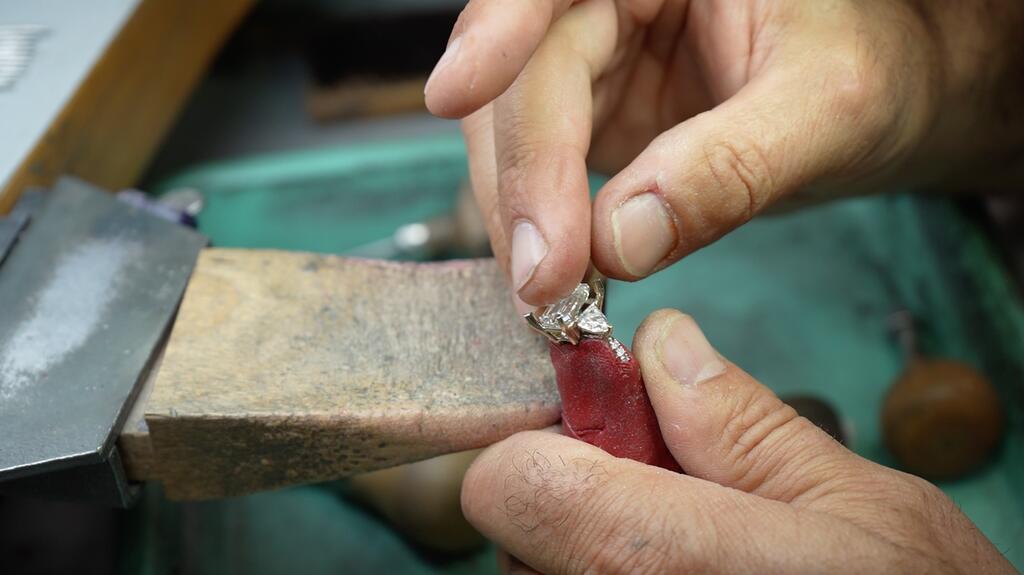
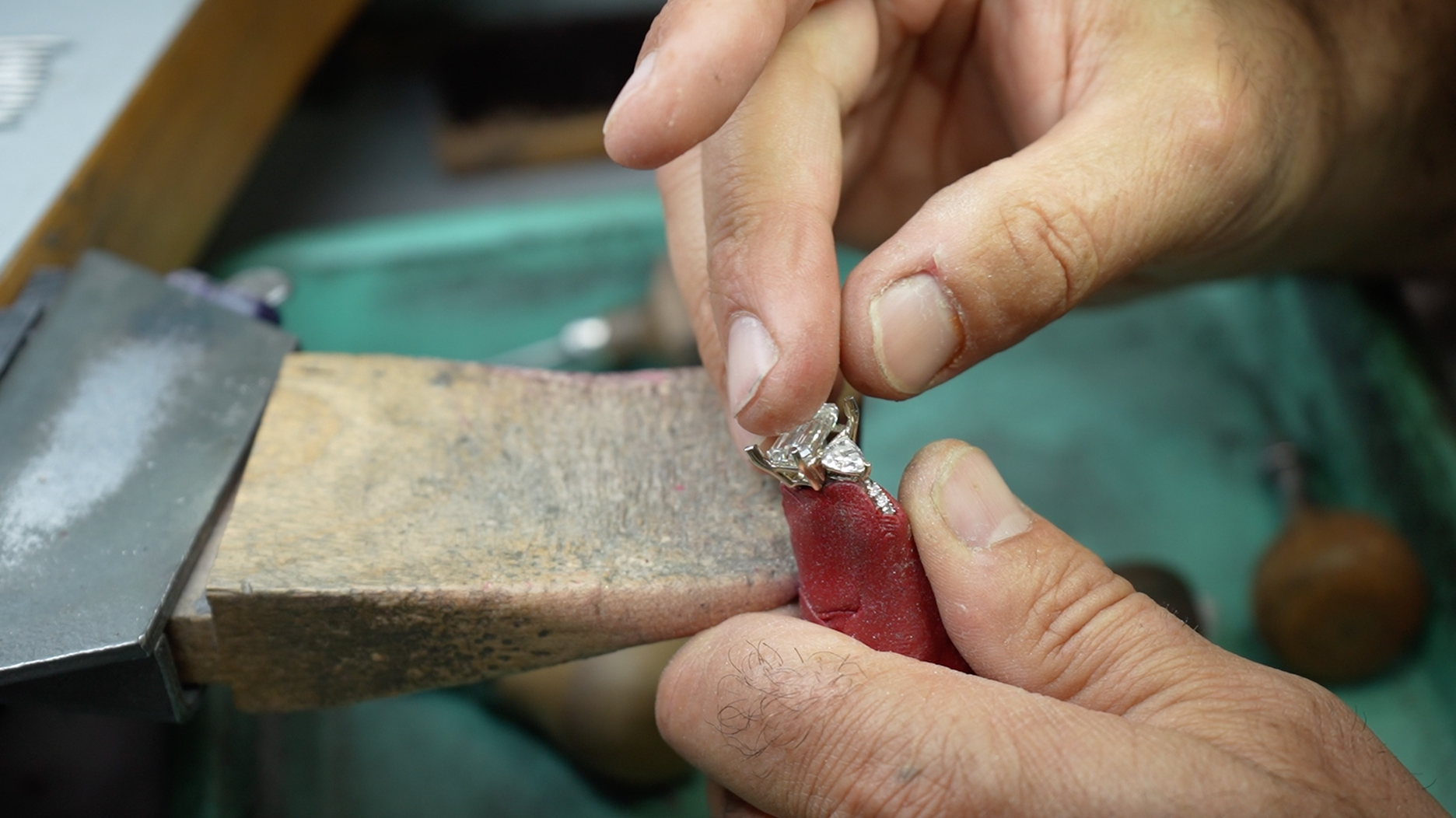
Founded in 1981 by his father, Simon Ghanimian, the Southern California jewelry manufacturer has been hand-crafting its jewelry for more than four decades.
In an interview with National Jeweler, Zee talked about Simon G.’s pro-human approach to the design process and where AI technology has proved useful.
This interview has been edited for length and clarity.
Lenore Fedow: People have a lot of opinions on AI. Some people love it, other people hate it. People are frightened by how quickly it’s moving.
What were your initial thoughts about AI when it first started gaining more mainstream popularity?
Zaven Ghanimian: We didn’t think it was as powerful as it’s become. AI, today, seems like it’s used by everybody, every industry, every business. And it’s become such a powerful tool for all of us.
LF: How did you decide that these AI design tools weren’t the right fit for your company?
ZG: I’d like to start off by saying that we’re not anti-AI, but we are pro-human and pro-human authorship.
We use the technology to improve everything around the product, but the creativity point and the final decision is definitely done by humans.
LF: So, there are spaces where you guys are using AI?
ZG: Yes, definitely. I don’t think we can evolve and keep up with what’s going on without using it.
LF: Where are you using AI? Where do you think it is a good fit?
ZG: AI is one of the most powerful tools businesses have been given in a very long time. We haven’t seen a breakthrough like this since maybe DOS or [Microsoft] Excel.
But every tool has its place. We use AI to help us understand information, to serve our retailers a little bit better, and to operate more efficiently.
We don’t want to replace the imagination of our designers, and the judgment calls our craftsmen [make] for each piece. And also the relationships that we built in the company.
We’re a strong believer that jewelry is an emotional item. It’s not something that can be replicated with AI.
“If efficiency was the only thing consumers valued, I don’t think luxury would exist.” – Zaven Ghanimian, Simon G.
LF: Was there a particular aspect of these AI design tools or the process that they use that concerned you?
ZG: We see a lot of AI being used by the consumer to come up with the design they’re looking for, and I think that’s an amazing tool, and they do really good with that.
The challenge I see is that sometimes AI makes things that are possibly disproportional or nonexistent.
It’ll come up with these unique cuts of stones that we haven’t seen or dealt with before, and trying to satisfy that consumer’s vision of that can be a challenge.
LF: Sure, I can see that, especially if it comes up with something that you guys couldn’t physically make or that wouldn’t withstand daily wear or something like that.
ZG: Practicality wise, it’s too tall, it’s too short, it’s too thin. The walls are too thin, or it has a diamond-shaped cut random stone.
[Maybe] it does exist, and we can do it, but how much resources, time, and money would that take to make that happen?
LF: There are also a lot of concerns from people that AI is going to take their jobs from them. Did your employees ever express that concern to you, that they might be replaced by AI?
ZG: No, not at all. In our field, we are very, very strong believers in the human touch, and how important that human input is. Even if you’re doing CAD or something like that, you still need that human element.
AI really helps with analyzing data. It makes it a lot faster. AI helps get rid of a lot of waste, time, and then AI helps us speed things up.
LF: What do you feel like your team brings to the process that just can’t be replicated?
ZG: We’re in a luxury business, and luxury is not built around efficiency or around the general make-and-sell product transactional relationships. That’s not what it’s about.
We believe that it’s built around meaning, trust, rarity, the connections to the maker. If efficiency was the only thing consumers valued, I don’t think luxury would exist.
People choose to buy jewelry because they want something that feels and is considered personal, something they can keep, wear, and eventually pass down.
Yes, [AI] makes it easier to generate more content and more products. But, genuine human work becomes more valuable as that happens, I believe. The imperfections, the decisions, the point-of-view behind the piece become a part of its identity.
The more automated the world becomes, the more valuable genuine human touch becomes, and the skills our craftsmen have become more and more valuable.
LF: So, you think this handcrafted aspect is a particular selling point for your customer, something they really care about and something that you highlight?
ZG: Absolutely. I think there’s meaning behind that. There’s a person who’s very skilled using their hands to make it. I think it’s really important.
“The more automated the world becomes, I feel like the more valuable genuine human touch becomes,” Simon G. CEO Zaven Ghanimian said.
LF: What would you say is your overall approach to technology when it comes to the business?
ZG: Technology is very important for our business. And we have to be very careful because we don’t want to take over the human aspect.
LF: Could there be an advancement in AI technology that would possibly change your mind, hypothetically?
ZG: I mean, short of a robot coming in with micro hands and building rings, I don’t know if I can see it in any way changing.
It definitely makes things easier. A good example: I was doing a trunk show in a store, and the guests who came in had this ring, and they wanted to know what an oval-shaped or princess-cut diamond would look like in it.
They were able to take a picture and immediately generate the general idea of what it’s going to be very quickly, as opposed to going back, re-CADing it, re-rendering it, emailing it back and forth.
It really sped things up and was a great tool to use at our fingertips.
Related stories will be right here …
LF: Is there anything else you’d like to mention that we didn’t get a chance to talk about?
ZG: I think AI is going to change our industry, big time. I believe we should be excited about its potential, not frightened by it. Every company will need to decide what it’s going to give away and what it’s going to keep using AI.
At least for our company, Simon G, technology can help us become smarter, faster, and more valuable to our retail partners. But we will not give away our human creativity to AI, or our craftsmanship, or our relationships that we made and built with our retailers and our partners.
LF: Even if that wound up being more cost effective for you all in the long run?
ZG: At this point, I would definitely say no, even if it’s more cost effective, because you can always make things cheaper, and you can always take a shortcut, but [my father] Simon Ghanimian, the founder of this company, built it on relationships, built it on the human aspect of it, and we don’t want to lose that core value.
As a company, I’m not saying we’re going to work like we’re in the Stone Age, but we definitely want to keep true to a lot of our ways.