



SourcingMay 19, 2025
State of Colored Stones: The Big Three in the Modern WorldLab-GrownMay 14, 2025
State of Diamonds: What’s Next for Lab-Grown Diamonds?
While the product has entrenched itself in the market, retailers and consultants are assessing the next phase of the category’s development.


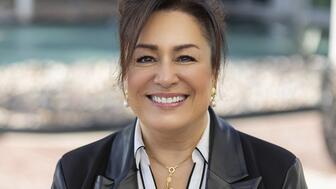
“We saw the desire among consumers, and realized it’s going to be very hard to put the genie back in the bottle,” says jeweler Constance Polamalu about her decision to open Bloomstone Jewelers, a jewelry store in Annapolis, Maryland, that specializes in lab-grown diamonds. (Photo credit: Hickok Photography)
Editor’s Note: This story first appeared in the print edition of the 2025 State of the Majors. Click here to see the full issue.
Being late to the party can be an advantage, says Constance Polamalu while relating her journey on the road to selling lab-grown diamonds.
As chief operating officer of Zachary’s Jewelers in Annapolis, Maryland, Polamalu took time during the pandemic to assess opportunities in the lab-grown market.
“Our area tends to be a bit delayed in following trends and there wasn’t a big advocate for lab grown here at the time, but it was looming,” she recalls.
“There were these hot-pocket cities like San Francisco where jewelers were disrupting the market and actively teaching consumers about their options.”
Those efforts influenced the broader shift in consumer habits that Polamalu witnessed.
Whereas consumers had once been shy about displaying wealth, the availability and affordability of lab-grown diamonds pushed them to buy larger pieces, wear them in everyday settings, and flaunt them on social media.
That spilled over in a positive way to Zachary’s natural diamond business.
The jeweler started to sell bigger pieces as consumers no longer felt it was taboo to wear them.
But it also signaled to Polamalu that people clearly were drawn to the lab-grown offering.
Meanwhile, lab-grown diamond prices were decreasing, and the trade was slowly moving away from the practice of valuing them at a discount to natural diamonds.
Given that declining value proposition, Polamalu recognized she couldn’t sell the two products side by side, since the Annapolis community strongly associates Zachary’s with natural diamond engagement rings.
“I thought, I want to try this, but as a completely separate business that’s exclusively lab grown,” says Polamalu.
She opened Bloomstone Jewelers, a store that sells only lab-grown diamonds, in April 2024.
“We saw the desire among consumers, and realized it’s going to be very hard to put the genie back in the bottle.”
No Turning Back
While lab-grown diamonds continue to spark debate around pricing, profit margins, and their position in the market, there is a consensus that the category is here to stay.
Lab-grown diamonds accounted for 14 percent of the U.S. jewelry market in 2024, according to trend analytics company Tenoris.
“Demand for lab-grown diamonds continued to soar in 2024,” Tenoris Managing Partner Edahn Golan said in January during a National Jeweler webinar outlining expectations for the jewelry market in 2025.
“However, prices are declining, and consumers are seeing them as the low-cost option.”
“There are a lot of young clients who have expressed interest in lab-grown diamonds.” — Steven Holtzman, CD Peacock
People are coming in and asking for them, added Sherry Smith, director of business development at The Edge Retail Academy, during the same webinar.
“The consumer has spoken; it’s an offering that’s not going away,” she said.
That consumer demand motivated Steven Holtzman, vice chairman of Chicago-based CD Peacock, to launch its lab-grown diamond business around 2021.
“Our goal was to go with what our customers want,” he explains. “There are a lot of young clients who have expressed interest in lab-grown diamonds.”
Ripe for Disruption
It’s a matter of giving the customer a choice, Holtzman says, highlighting the jeweler’s bridal offerings as the prime example.
CD Peacock created its own bridal collection in which it doesn’t price the product with a center stone, he explains.
It sells the setting and gives the customer options for the diamond according to their budget.
“In our initial engagement with the customer we try to get an idea of where they want to be in terms of price or spend and then we make suggestions,” Holtzman says.
Many jewelers follow this model of selling the setting and loose diamond separately, and such transactions are typically recorded as a loose diamond sale.

At its new 21,000-square-foot store in the Chicago suburb of Oak Brook, CD Peacock opted to create a separate space for lab-grown diamonds on the second floor of the store.
During the webinar, Golan reported that 45 percent of engagement rings sold in 2024 were set with lab-grown diamonds, mostly sold as loose.
Smith, meanwhile, cited similar data from The Edge that shows lab-grown diamonds made up 47 percent of units sold during the year.
Jewelers garner their highest gross margins from lab-grown diamond sales, making as much as a 70 percent margin on lab-grown loose diamonds, significantly up from the 40 percent to 50 percent margins recorded five years ago, according to Golan.
Retailer margins continue to rise as wholesale prices decline, suggesting jewelers haven’t adjusted their prices accordingly.
That makes the lab-grown diamond market ripe for disruption, says Scott Berg, president of Lee Michaels Fine Jewelry, which has chosen not to sell lab-grown diamonds at any of its 10 stores.
“We have to consider if jewelers are adding eight times value when they sell a lab-grown diamond,” he says. “Consumers will be upset when they discover how much margin the jeweler is making from them.”
It must be disrupted because there’s too much profit; the arbitrage is too big, Berg continues.
“At some point, transparency is going to happen.”
Such margins are expected to be unsustainable considering increasing supply volumes, greater levels of competition, and growing consumer awareness of lab-grown diamond price trends, De Beers Group projected in parent company Anglo American’s 2024 annual report.
Attached to Margins
Cracks are starting to show in the loose diamond model, with revenue in the category declining 7 percent in 2024 after years of double-digit growth, Golan said.
That’s largely a result of retailers having to reduce prices, albeit not by as much as wholesale prices have declined.
Jewelers are facing stiff competition from online sellers of lab-grown diamonds.
Consumers are more likely to buy something that is less expensive and less special online, as it carries less risk, said another panelist on the January webinar, Jewelers of America President and CEO David Bonaparte.
“Average lab-grown diamond retail prices do not yet fully reflect the fall in wholesale prices, so retail prices are expected to decline further.” — De Beers Group in Anglo American’s annual report for 2024
As prices continue to drop, many retailers would prefer to quit carrying lab-grown diamonds, but they can’t because they don’t want to lose the customer, Golan observed.
Lab-grown diamond wholesale and retail prices declined throughout 2024 as the product’s bifurcation from natural diamonds progresses, De Beers said in its report.
“While there are positive signs that the [negative] impact of lab-grown diamonds on demand for natural diamonds is peaking, average lab-grown diamond retail prices do not yet fully reflect the fall in wholesale prices, so retail prices are expected to decline further,” the report states.
Should margins decline, retailers might have to change their approach to the category.
Golan said jewelers are too focused on margin and should pay greater attention to ensuring revenue growth. “Cash through the register” is the real measurement and how they should be running their business, he contended during the webinar.
However, Smith argued that retailers must concentrate on gross margin because otherwise, they would have to significantly increase their sales volume to cover their operating costs.
In fact, attractive margins are the one thing keeping independents attached to lab-grown diamonds, she said.
“It’s shocking for me to look at total gross margin for lab-grown loose versus total gross margin of natural diamond loose,” she said. “That’s difficult to walk away from because at the end of the day, they need profit.”
Berg agrees with what Smith said on the webinar, noting there was never an amazing marketing campaign that made the lab-grown diamond market boom.
Rather, growth was driven by the retailer making decisions and pushing the product to their clients “based on what they thought was good for their pockets,” he says.
Memo Moves
Another factor keeping jewelers tied to lab-grown diamonds is the robust memo programs suppliers offer, which independents love, Smith said.
Retailers can take goods and hold them for as long as they like, Bonaparte noted, with the seemingly unlimited supply of lab-grown diamonds fueling the memo business in the sector.
Golan agreed, adding that the oversupply is enabling retailers to dictate terms, and even manipulate the system.
Jewelers take goods on memo, return them when prices decline, wait a few days, and pick up fresh goods at lower prices, he explained.
“This is very unhealthy,” Golan stressed. “The smart thing for [suppliers] would be to reduce their memo, especially on the lower-value items.”
Over the last year, these memo programs have shifted toward finished jewelry pieces, as opposed to loose, as growth in the lab-grown diamond segment is now being driven by sales of pendants, earrings, necklaces, and bracelets, Smith said.
Shift to Fashion?
Many see the fashion segment as the natural home of lab-grown diamonds, and North America's largest specialty jeweler, Signet Jewelers (No. 1 on this issue’s $100 Million Supersellers and Top 50 retail chains lists), amplified this message in the latter half of 2024, as it sought to reclaim the bridal segment for natural diamonds through a partnership with De Beers.
Profit from natural diamonds has been squeezed largely because they’ve been commoditized, Smith said on the webinar.
“There was a time when a diamond engagement ring was an emotional purchase and it was an emotional sale,” she said.
In a bid to counter the commoditization narrative, Signet collaborated with De Beers on a campaign to raise the profile of natural diamonds in the bridal segment, a campaign that was designed to tap into the emotions of younger consumers.
Meanwhile, Signet continues to also market lab-grown diamond engagement rings, particularly through its Zales and Kay Jewelers banners, although it is highlighting fashion as the stronger growth opportunity.
Rising demand for jewelry priced below $1,000 signals an opportunity for Signet to increase its lab-grown diamond offerings, new Signet CEO J.K. Symancyk said at the ICR Conference in mid-January.
“Lab created makes diamonds more accessible to categories of fashion that didn’t exist before,” he noted. “And that creates the phenomenon of allowing people to trade up, so it helps push average unit retail [value] up and it helps expand margins.”
Signet’s lab-grown diamond sales grew around 40 percent in the fourth quarter, he reported.

Actress and author Pamela Anderson is one of the faces of “Diamonds for All,” Pandora’s marketing campaign for its line of lab-grown diamonds. Pandora reported that its sales of lab-grown diamond jewelry grew 43 percent year-over-year in 2024.
Pandora expressed similar sentiment in its 2024 earnings as its lab-grown diamond sales grew 43 percent on a like-for-like basis to DKK 315 million ($44.2 million) during the year, though it’s worth noting the category still only accounts for 1 percent of the company’s total revenue.
While the company’s global rollout of its lab-grown diamonds collections has been slower than expected, Pandora “continues to play a significant role in democratizing diamonds for consumers,” management wrote.
Boomers to Gen Z
Such “democratization” has given retailers like CD Peacock the opportunity to embrace a younger clientele it would otherwise not have access to.
“Historically, we were always on the high end and our average sale was too high, so we needed an entry-level category,” Holtzman explains. “Being able to have that choice enables us to make more dreams come true. We’ve started so many new relationships.”
Interest in lab-grown diamonds extends beyond younger consumers, stresses Polamalu.

A peek inside Bloomstone Jewelers, Polamalu’s lab-grown diamond jewelry store (Photo credit: Hickok Photography)
“Percentage-wise, I have just as many 80-year-old clients over at our lab-grown store as we do here at Zachary’s,” she says.
Smith said as much during the webinar, noting that the product spans all generations and demographics.
Gen Z consumers are opting for a lab-grown diamond so they can spend less on an engagement ring, and baby boomers are saying they want 4 carats and are willing to buy lab-grown diamonds so they can have money left over to spend on something else, she explained.
Elizabeth Taylor Dreams
While consumers are attracted to the prospect of getting more for their money, jewelers are starting to realize the importance of explaining the differences between lab-grown and natural diamonds in terms of value, Bonaparte said.
When they do so, their sales of natural diamonds increase, especially in the engagement market where there is more emotion involved in the purchase, he added.
Maintaining value in the engagement ring is vital to sustaining the perception that the diamond reflects the promise inherent in a couple’s relationship, Berg says.
“If the thousand dollar per carat goes to $200, will the guy who’s buying that diamond for the woman still feel like that’s forever, that it’s meaningful enough to represent one’s wish for lifelong love?” he asks.
Polamalu sees different approaches among the bridal customers at Bloomstone, her lab-grown diamond store, than she does at the more traditional Zachary's Jewelers.
Zachary’s sees the classic bride and groom who might come in together but at some point, the woman steps out of the process to maintain the element of surprise.
For those couples, there is an “economic dance” being done and an expectation from the bride that her partner will spend a certain amount on the engagement ring because that’s what she’s worth, Polamalu explains.
For that bride, a lab-grown diamond would be considered too cheap.
“When we want to be Elizabeth Taylor, it’s going to be lab grown because we love big, beautiful diamonds.” — Constance Polamalu, Bloomstone Jewelers
Bloomstone unveiled a different mindset and sales flow in its bridal business.
“It’s the women coming in and selecting exactly what they want, and the men kind of arrive to pay the bill,” she summarizes.
That’s likely because the lab-grown diamond space is largely female driven, and Bloomstone’s marketing is targeted to women.
“Women want a 5-carat diamond to live their Elizabeth Taylor dream, but most of us can’t afford it,” Polamalu says.
“So, when we want to be Elizabeth Taylor, it’s going to be lab grown because we love big, beautiful diamonds.”
Linked and Decoupled
The separation of the products with exclusive stores and branding for lab-grown and natural diamonds enables Polamalu to address the needs of different types of customers.
Similarly, Holtzman says there is a separate area for lab-grown diamond jewelry in the new, 21,000-square-foot CD Peacock Mansion the retailer opened in Oak Brook, Illinois, in May 2024.
The separation helps to avoid confusion.
During the webinar, Bonaparte emphasized the importance of maintaining that differentiation.
The organization he heads, JA, has started providing member jewelers with educational materials to help them distinguish between the two products.
As the understanding of their respective values become clearer, Bonaparte said he expects natural diamonds to make a sustained comeback, while lab-grown diamonds will continue to decline in value and enter their own category.
It’s still uncertain how the market will evolve, according to a November 2024 report by management consulting firm McKinsey & Company, which laid out three possible scenarios for the budding dynamic.
“I’m a big believer that a high tide raises all ships, and it would be wise to respect both products.” — Constance Polamalu, Zachary’s Jewelers and Bloomstone Jewelers
Lab-grown diamonds could take over most of the market outside niche luxury segments.
Or, prices could drop so low that lab-grown diamonds will effectively become fashion accessories that no longer compete with natural diamonds.
In the third and most extreme scenario presented in the report, McKinsey said consumers, driven by low prices and an inability to tell the difference between natural and lab-grown diamonds, could lose their desire for all diamonds and no longer see them as a must-have for engagement rings.
Polamalu offers a different possibility.
Rather than compete, lab-grown and natural diamonds can bolster each other because they’re intimately linked, she contends.
“I’m a big believer that a high tide raises all ships, and it would be wise to respect both products,” she says. “They both chase the same diamond dream, so they have to be linked but also decoupled.”
Editors' Picks
Sponsored by


More on Lab-Grown


The Latest

MajorsOct 13, 2026
David Webb Owner Purchases Lugano JewelryThe high-end jewelry retailer was sold to private investment firm Middle West Partners and a group of longtime clients.


IndependentsOct 13, 2026
Retailer Hall of Fame 2026: Sean DunnDunn, this year’s Single-Store Independent inductee, is passionate about innovation and telling the story of natural diamonds.


AuctionsOct 13, 2026
Christie's Geneva To Auction 'Bulgari Pink' DiamondThe 24-carat fancy intense pink diamond ring could fetch up to $18 million at the November sale.

Brought to you by
Meet Gemology’s Next Generation Microscope: GIA® Gemolite® NXT Professional EditionExperience gemstones with greater precision and comfort than ever before.


IndependentsOct 13, 2026
Greenwich St. Jewelers’ New Candle Smells Like HomeThe “Island Jewel” candle honors New York City and Puerto Rico and raises money for the island’s water relief efforts.
Weekly QuizOct 08, 2026
This Week’s QuizTest your jewelry news knowledge by answering these questions.

TechnologyOct 13, 2026
GemFind Is a New JA Member Benefit Partner The partnership will give JA members access to preferred pricing, exclusive benefits, technology solutions, education, and resources.


SurveysOct 09, 2026
These Will Be the 10 Busiest Days for In-Store Shopping This Holiday SeasonStores should expect to see the most customers on Nov. 27, and Christmas week is expected to be hectic too, as Dec. 25 falls on a Friday.
Brought to you by
Your Piece Could Be the One Editors Talk AboutSubmit your pieces for a chance to win in this year's competition.


CollectionsOct 09, 2026
Elisa Solomon Collabs With Serendipity 3 on ‘Frozen Hot Chocolate’ CharmThe charm, our Piece of the Week, features brown diamond frozen hot chocolate topped with white diamond whipped cream and a ruby straw.

AuctionsOct 09, 2026
8-Carat Blue Diamond Goes Unsold at UK Jewelry Auction The top lot of Elmwood’s recent fine jewelry sale in London was a 1.84-carat, D color Tiffany & Co. solitaire diamond ring.

WatchesOct 09, 2026
Movado to Sell Majority Stake in Ebel for $66.5MThe watch company agreed to sell a 95 percent interest to a group comprised of F.P. Journe, Chanel, and Swiss watch exec Pierre Jacques.

Policies & IssuesOct 08, 2026
Third Wave of IEEPA Tariff Refunds Begins This round of tariff refunds is for importers that have sued over IEEPA tariffs in the Court of International Trade and won.

CollectionsOct 08, 2026
Brent Neale’s New Collection Goes ‘Back to Basics’It revisits the brand’s most requested silhouettes, from "Pillow"-set necklaces and bracelets to "Signature"-set rings and earrings.

SourcingOct 08, 2026
Ethical Gem Fair Heads Back to BrooklynThe trade-only event includes buying opportunities as well as educational sessions on artisanal mining, the new Paraíba source, and more.

Events & AwardsOct 08, 2026
Pattons Fine Jewelry Sweeps Local Design ContestAra Chanakian, a jeweler at Pattons, took home top honors in every category at Jewelers of Louisiana’s annual jewelry design competition.

AuctionsOct 08, 2026
Reba McEntire’s Jewelry, Watches Head to Julien’s AuctionsThe live charity benefit sale in Nashville will also feature gowns, boots, and other memorabilia from the country music legend.


Supplier BulletinOct 08, 2026
Overnight Mountings’ Bridal Builder Helps Jewelers Turn Custom Design into a Hands-On Selling ExperienceSponsored by Overnight Mountings

Policies & IssuesOct 07, 2026
The Plumb Club Amplifies Its Voice as Geopolitical Pressures MountThe supplier organization recently joined JA and JVC to have more input on political issues affecting the jewelry industry.

CollectionsOct 07, 2026
Blue Nile, Royal Asscher Collection Highlights Natural Diamond BeautyBlue Nile, a Signet Jewelers-owned brand, is now Royal Asscher’s exclusive licensed retailer in North America.

CollectionsOct 07, 2026
4 Standout Pieces in Audemars Piguet’s First High Jewelry Collection “Royal Oak” pays homage to the brand’s most popular watch model using 18-karat gold as well as diamonds, emeralds, and sapphires.

MajorsOct 07, 2026
Empire Safe & Vault Promotes Juan Morales to CEOAs part of the transition, Joseph Nicosia has stepped into the role of COO.

SourcingOct 07, 2026
AGTA Extends Deadline for 2026 Spectrum Awards EntriesParticipants now have until Oct. 14 to complete their submissions.

CrimeOct 06, 2026
6 Charged in Connection to String of New Jersey Smash-and-GrabsThe alleged thieves used crow bars and sledgehammers to smash into jewelry stores across the state.

ColumnistsOct 06, 2026
Sherry Smith: Is the Consumer Really Trading Up?Ahead of the holidays, Smith urges jewelers to take a hard look at who’s buying jewelry, what they’re purchasing, and who’s stopped buying.


SourcingOct 06, 2026
DDG Taps Influencers for ‘My Diamond Does Good’ CampaignIn the new consumer-facing campaign, four fashion and lifestyle creators share the stories behind their natural diamond pieces.

MajorsOct 06, 2026
Frederick Goldman Names COO, CMOFGI President John Orrico is also leaving the company after more than 13 years.

Events & AwardsOct 06, 2026
JIS Fall Returns to MiamiThe 2026 edition will feature presentations on alternative materials and design trends, as well as pop-up activations on the show floor.


